
Heatwaves and power grids have a simple relationship: the hotter it gets, the more electricity everybody wants. Air conditioning, fans, every fridge in the country working overtime. It’s exactly the moment you’d want every power plant running flat out.
France just did the opposite. On Sunday, EDF, the state utility that operates all 57 of the country’s nuclear reactors, confirmed three of them are sitting offline in the middle of a heatwave that has 37 French departments under red alert, with forecasts running between 37°C and 41°C (99°F to 106°F).
The machines didn’t break. Nothing tripped and nothing leaked, and EDF says plainly there is no safety issue. The reactors went dark because of the rivers flowing past them.
The reactors are fine. The rivers are the problem
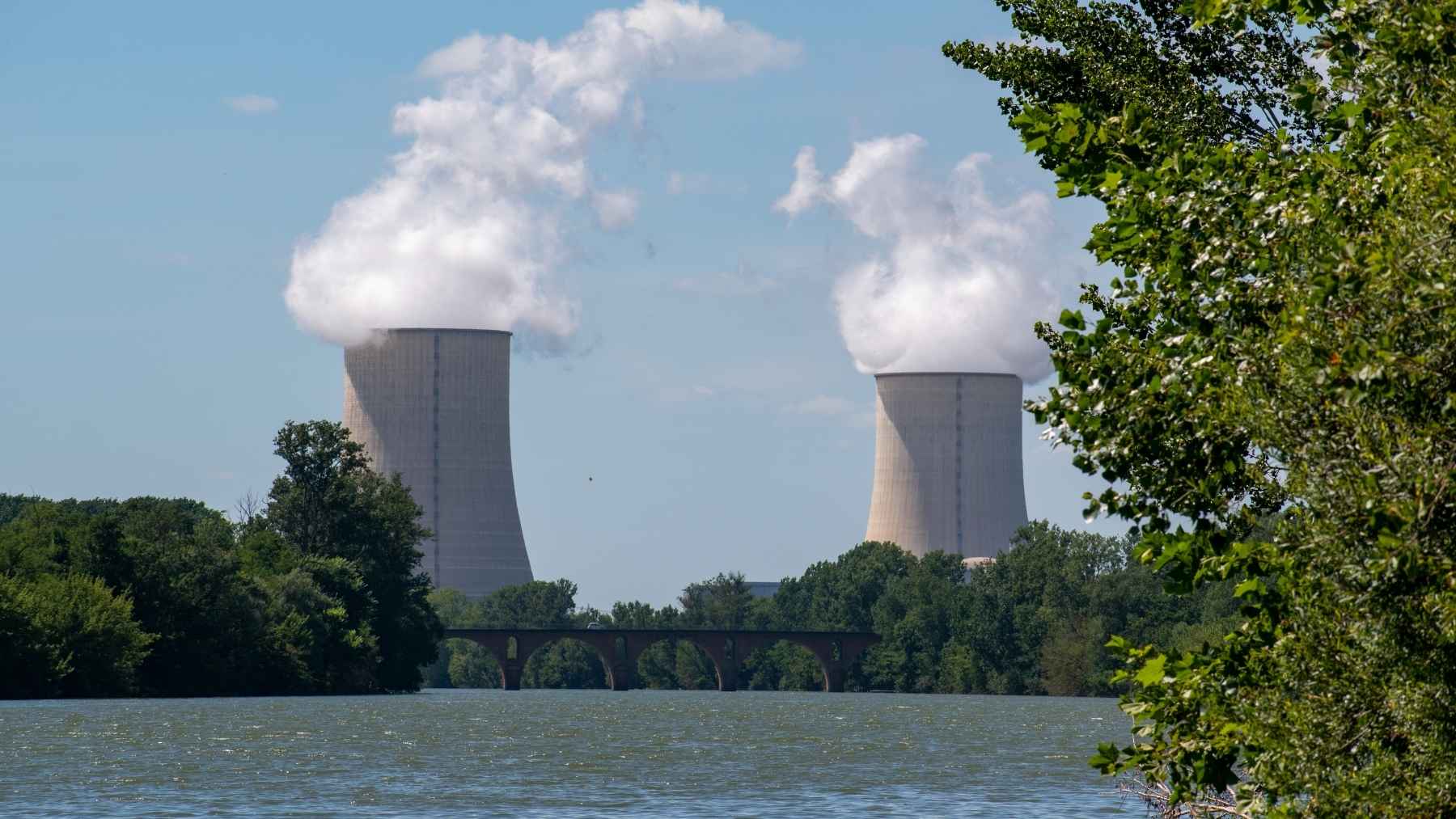
A nuclear plant on a river runs a loop you can sketch on a napkin. It pulls water in, uses it to carry heat away from the plant, and returns most of it to the river a bit warmer than it found it. According to Euronews, that difference typically runs from a few tenths of a degree to several degrees, depending on the site.
French law puts a ceiling on it. Every riverside plant carries legally binding limits on how warm its stretch of river is allowed to get, written to protect the fish and everything else living downstream.
At Golfech, in the southwest, the Garonne cannot exceed 28°C (82°F, about the temperature of a well-heated swimming pool) once the plant’s cooling water is discharged. That threshold, reported by NucNet, traces back to a 2006 decree. At Nogent-sur-Seine, the Seine can’t rise more than 3°C downstream of the plant and has to stay below 28°C on average.
In January those numbers are a footnote. In a 41°C July, the river arrives at the plant already close to the ceiling, and the margin the reactor is allowed to use shrinks toward zero. At that point the operator has two legal options: turn the reactor down, or turn it off.
EDF is careful to separate this from anything resembling a malfunction. The reactors themselves handle hot weather fine, a company spokesperson told Euronews, and there is no nuclear safety risk. “These limits are intended to protect aquatic flora and fauna,” the spokesperson said.
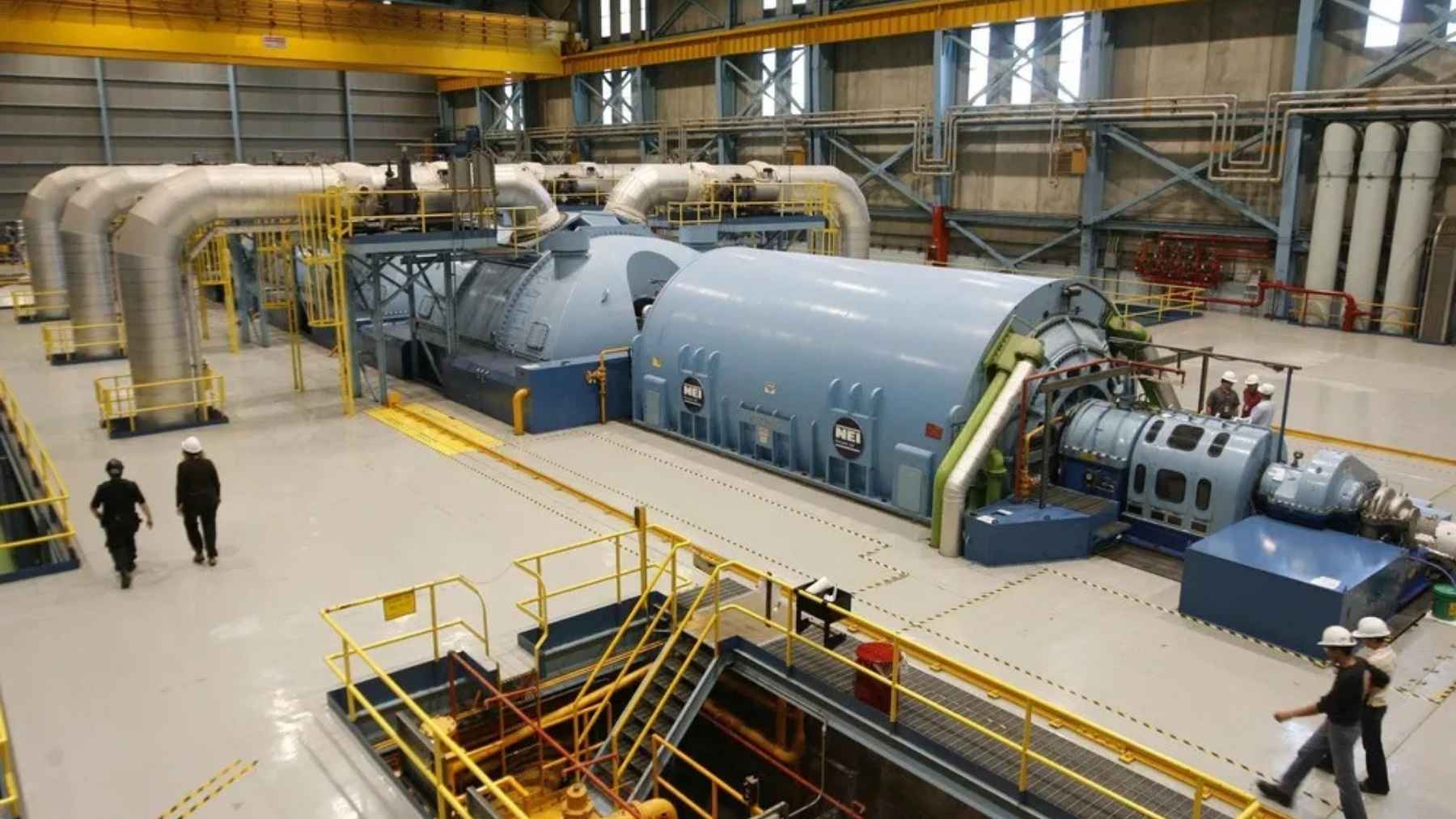
So the weak point in a 1,300-megawatt machine isn’t the uranium, the turbine or the forged steel around the core. It’s the temperature of the water next door.
Three reactors down, with return dates written in pencil
The three units offline are Golfech Unit 2 (1,300 MW) on the Garonne, Bugey Unit 3 (900 MW) on the Rhône near Lyon, and Chooz Unit 2 (1,450 MW) on the Meuse by the Belgian border. Together that’s 3.65 gigawatts of capacity, about 6% of France’s roughly 61-gigawatt nuclear fleet.
The week built up to it. Heat-related curbs stood at 3 GW on Wednesday and peaked around 4 GW, or 6.4% of the fleet, on Thursday afternoon, per Remit transparency data tracked by Montel. Bugey 3 and Golfech 2 shut down Thursday night. A power reduction hit Saint-Alban 2, also on the Rhône, the same day.
Chooz 2 joined the outage list on Sunday. EDF says seven more reactors may have to adjust their output as conditions shift through the day.
The current schedule has Bugey 3 back on July 19, Golfech 2 on July 22 and Chooz 2 on July 25. EDF is upfront that those dates will be adjusted as the weather forecast changes.
It’s the second round in three weeks. June’s record heatwave, which pushed parts of France past 43°C, forced curbs that peaked at 6.2 GW on June 24, or 9.8% of the fleet, per Montel. This is the third heatwave to hit the country since May.
Paris wrote one plant a hall pass
The rule now carries a fresh asterisk. On Saturday, France’s economy ministry issued an exemption to the Rhône temperature limits around the Bugey plant, valid through July 20, AFP reported, “to ensure the security of the power grid.”
Both things happened inside the same seven days. One regulation switched three reactors off, and one ministry switched the regulation off, at one plant, for nine days. Bugey Unit 3 stays offline through July 19 all the same, per EDF’s latest schedule.
None of this has the grid wobbling. During June’s heatwave, RTE, the operator of France’s high-voltage network, said the country had enough generation capacity to cover demand even with plants down. July 14 also lands on Tuesday, a national holiday expected to knock several gigawatts off daily demand, according to RTE forecasts cited in the French press.
EDF calls it 0.3% of output. It’s also budgeting €8.7 billion for it
EDF’s framing is that this sits close to a rounding error. The company told Euronews that since 2000, output lost to warm rivers and low flows has averaged 0.3% of the fleet’s annual generation. Three reactors down for a week or two in July won’t move that needle much.
The counterpoint is the company’s own budget. Early this year EDF put a number on adapting its French operations to climate change: €8.7 billion (about $10 billion) over 15 years, covering nuclear, hydropower and island grids. One fix under study is chilling the water that leaves cooling-tower blowdown before it reaches the river, a system EDF says already runs at its Civaux plant.
History suggests the money has a job to do. During the July 2025 heatwave, at least 7 gigawatts of French nuclear capacity was forced offline, according to Ember data cited by MIT Technology Review. June 2026 peaked near 10%. The episodes keep arriving, and every one of them runs the same collision between a discharge rule and a warming river.
The stakes are bigger for France than for almost anyone else. Nuclear supplied close to 70% of the country’s electricity last year, and EDF keeps doubling down: it’s the same company lowering 551-ton reactor vessels into place in Britain, with six more EPR2 reactors planned at home. One of those new pairs is slated for Bugey, on the same Rhône that just benched Unit 3.
For American readers keeping score, the US just took three brand-new microreactors critical in a single month, and the exotic end of the industry is designing reactors meant to burn nuclear waste itself. France, meanwhile, is running the less glamorous experiment: finding out how much of a nuclear fleet’s output actually belongs to the weather.
Bugey 3 is penciled in for July 19, Golfech 2 for July 22 and Chooz 2 for July 25, with the heat expected to hold into midweek. EDF attaches the same condition to all three dates: they move with the forecast. A roughly 61-gigawatt nuclear fleet, the backbone of French electricity, is now scheduling itself off the same input as your beach plans.
 @deviantdevil DRIVER2 months ago