
The European Union has decided that new cars must come with a camera pointed at your face, and drivers are not happy.
The goal is safer roads. The camera is part of an “advanced driver distraction warning system,” or ADDW, and it watches the driver to flag when they look tired or distracted and nudge them back to the road.
And yes, people are mad.
Why are people mad about the cameras?
First, the basics, because this is very real and very now. As of July 7, 2026, ADDW became mandatory on every newly registered car and van in the EU, under the bloc’s General Safety Regulation. It’s the same rollout that already brought in intelligent speed assistance back in 2024.
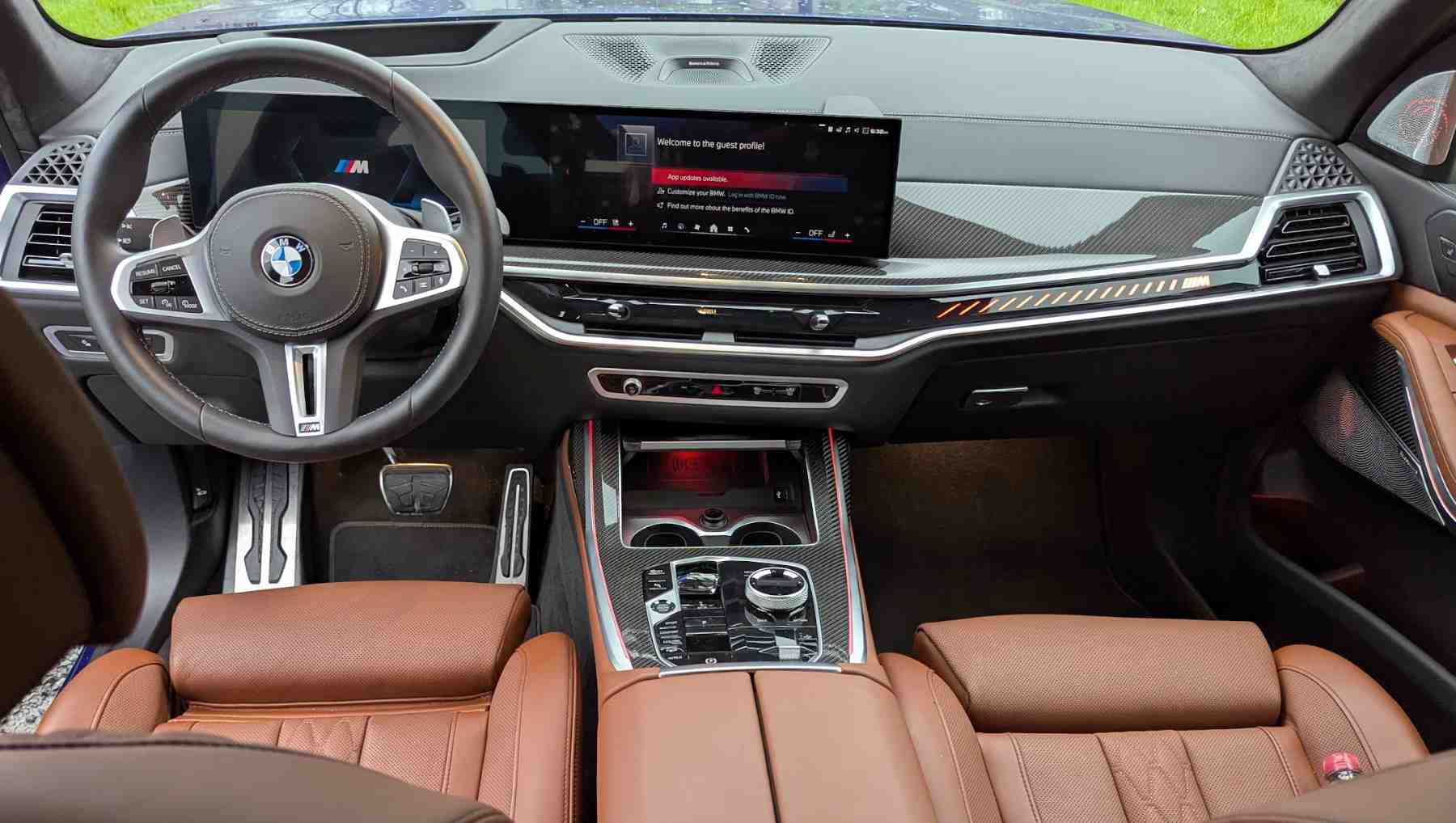
Here’s how it actually behaves. An infrared camera, usually mounted on the steering column or dash, tracks your eyes and head. Look away from the road for more than 3.5 seconds above 50 km/h, or 6 seconds below it, and it beeps, flashes, or buzzes at you. Ignore it and the warnings escalate.
Vehicles already have a pile of driver-assistance nags. There are cars that will yell at you to keep your eyes open or pull over if you seem drowsy. So… what gives? Why are people mad? We’re already dealing with this crap.
If you couldn’t already guess: privacy. What will automakers, government agencies, and data companies do with the video these cameras gather while you drive?
Early reviews suggest the system is also just annoying. Testers report it beeping when you glance at a landscape, hunt for a song, or turn to check on a kid in the back seat. On long, boring motorway stretches, the constant chirping apparently gets exhausting fast.
The “closed loop” promise, and the hole in it
The EU did address the privacy concern, on paper. ADDW systems must run in a “closed loop,” meaning the data stays inside the vehicle and isn’t transmitted to third parties. Facial recognition and biometric identification are explicitly banned, and the regulation says the data must be deleted right after it’s processed.
The principle is clear. The enforcement is not.
Per the actual text of the General Safety Regulation, no fixed retention window is defined, and there’s no independent EU-wide audit mechanism to verify any of it. So the honest answer to “where does my face data go” is: nobody has officially checked.
And that’s the part worth being nervous about, because we already know what happens when carmakers collect sensitive data under vague rules.
Car companies have already been caught selling customer driving data to brokers. The clearest case: in May 2026, GM agreed to a $12.75 million settlement with California over selling the location and driving data of hundreds of thousands of drivers to brokers LexisNexis and Verisk, which I wrote about when the fine landed. GM reportedly made around $20 million nationwide from those sales between 2020 and 2024.
That data got turned into “driving scores” and sold to insurers, who used them to hike premiums or deny coverage for people who had no idea their car was tattling on them.
And it gets weirder. A 2023 Mozilla Foundation review found that 84% of car brands examined share or sell driver data, and 76% sell it outright. Mozilla’s single worst offender was Nissan, whose US privacy policy openly listed “sexual activity” among the data categories it could collect. Kia’s policy mentioned “sex life” too, though the company later insisted it has never actually collected it. Huh.
Can you imagine what these automakers would do if they also had videos of you? That’s what has car owners feeling a bit alarmed about the new mandate.
Is the United States next?
While this is playing out in Europe, drivers elsewhere have reason to watch closely. A successful EU rollout tends to set a precedent.
The US seems like a country that would have no qualms with this. Back in 2021, the Bipartisan Infrastructure Law directed regulators to require new cars to carry technology that could passively detect impairment and stop a drunk driver from operating the vehicle, sometimes called a “kill switch.”
But here’s the thing: five years later, it still isn’t a rule. NHTSA blew past its November 2024 deadline to write the standard and, in a February 2026 report to Congress, admitted the technology isn’t accurate enough. The agency warned that even 99.9% detection accuracy could wrongly block drivers millions of times a year, and said it isn’t aware of anything close to the needed accuracy.
The mandate isn’t dead, though. In January 2026, the House rejected an attempt to strip its funding, 164 to 268, so the effort grinds on, just without a finish line. And the technology it’s circling, camera-based driver monitoring, is exactly what the EU just made standard.
So it’s really only a matter of time before some kind of camera lands in American cars too.
Which is a little ironic, given the US won’t let in Chinese EVs over fears that China is spying on drivers. I guess China can’t have videos of you picking your nose, thank god. But GM already had the data, and now the EU has the camera. The call, increasingly, is coming from inside the car.