
Remote-controlled heavy machinery gets sold as a 21st-century invention. Mining companies run driverless haul trucks across Nevada, and The Boring Company steers a tunnel machine in Dubai from a control room in Texas. The Department of Energy has been running an entire nuclear plant that way since Eisenhower’s first term.
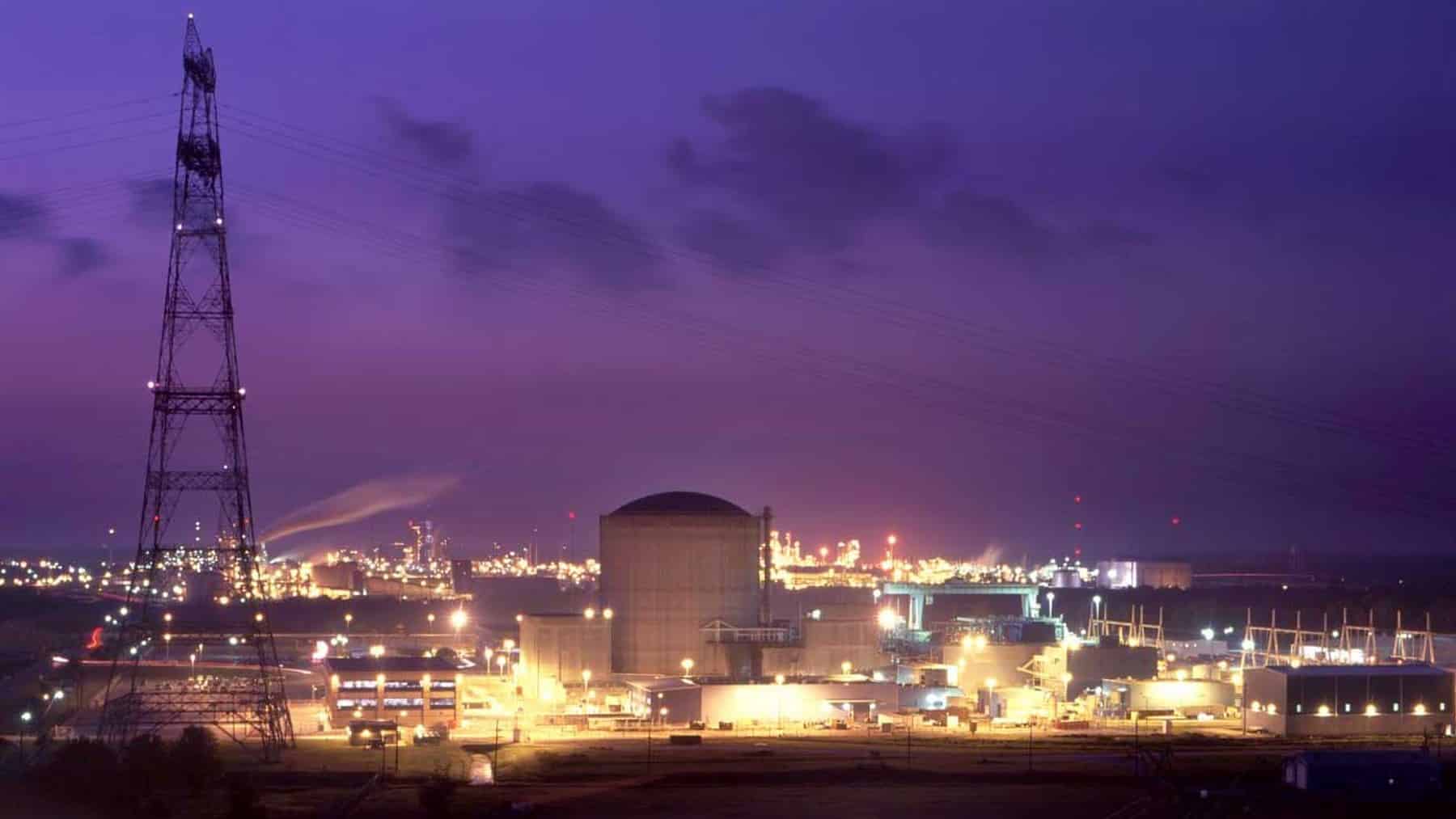
The plant is called H Canyon, and it sits on the Savannah River Site, a 310-square-mile federal reservation near Aiken, South Carolina. The building is 1,028 feet long, 122 feet wide and 71 feet tall, according to the official site factsheet. Stand the thing upright and it would be roughly the height of the Chrysler Building.
Half of it also has a house rule you won’t find anywhere else in American industry. Per the DOE, no one has been inside the “hot” side of the canyon since operations began in 1955. Nobody has gone in for repairs or inspections in all that time.
The first half of 2026 handed this 71-year-old machine two restarts and a new rulebook. Uranium recovery came back in February. A plutonium line followed in March. And on July 9, the site’s contractor confirmed it is rewriting how maintenance gets planned, cutting prep times by as much as three quarters.
The whole processing floor works like a claw machine
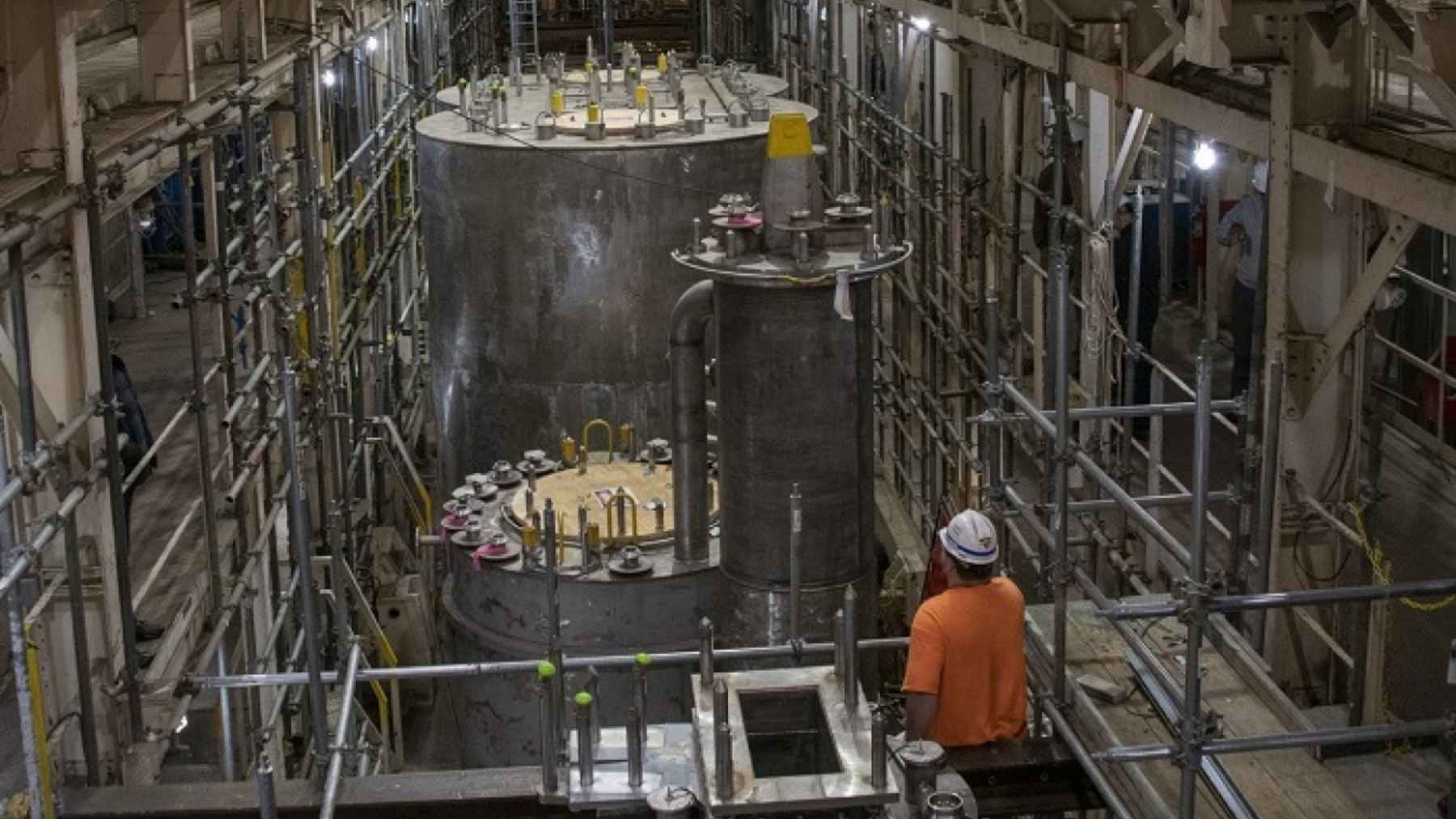
The building earned its name honestly. The DOE describes the processing areas inside as resembling a gorge running between vertical cliffs, several stories of reinforced concrete with a long open channel down the middle.
Spent fuel rods arrive from the site’s L Area storage in shielded cask cars. Once inside, they get dissolved in nitric acid, and the useful material is pulled out of that solution through solvent extraction, with the leftover impurities routed to the site’s waste facilities.
Every transfer, lift and swap on that floor is handled by overhead cranes driven from a control room. So the daily reality of the place is a claw machine where every prize is radioactive.
Workers spend entire careers in the building without ever seeing the room where the actual chemistry happens. The thick, steel-reinforced concrete walls do the protecting, and the cranes do the touching.
One side has been sealed since Eisenhower
The canyon is split down its length into two halves. One side is “warm,” with lower radiation levels. The other is “hot,” and that is the side no human has entered in 71 years.
The DOE calls H Canyon the only operating, production-scale, radiation-shielded chemical separations plant in the United States. A GAO review put the cost of keeping it running at just over $154 million a year, averaged across fiscal 2013 through 2023 and adjusted for inflation.
Its original job was Cold War work, recovering uranium and neptunium to feed the weapons complex. After the Cold War ended, the mission flipped to nonproliferation and cleanup, which mostly meant destroying or downblending the very material it once produced.
The DOE owns a few machines in this category, built around the fact that humans can’t go where the work happens. The 300-ton glass furnace in Washington State that can never be switched off is another one. H Canyon is the oldest of the family still on the clock.
February gave it uranium work again
On February 10, the DOE announced it had restarted uranium recovery operations at H Canyon, tying the move to the 2025 executive orders aimed at rebuilding the American nuclear industrial base.
The headline goal is HALEU, uranium enriched to between 5% and 20%, which is what most of the new generation of advanced reactors wants to burn. The DOE says the used fuel currently sitting at Savannah River holds enough highly enriched uranium to yield as much as 19 metric tons of it.
The recipe is the same one the canyon has used for decades. Dissolve the fuel, recover the highly enriched uranium, then blend it down with natural uranium until the enrichment lands where a reactor can legally use it. Earlier rounds of that work fueled Tennessee Valley Authority reactors for years.
Savannah River National Laboratory is planning for the first HALEU load to reach a fuel fabricator in the fall of 2027. Given how tight the race to fuel America’s next reactors has become, a domestic stockpile hiding in a 71-year-old building is not a small find.
March brought the plutonium back
The second restart landed on March 11, when the DOE announced the return of the HB Line, a specialized processing facility inside the H Canyon complex that was shut down in 2020 through a deliberately reversible process.
Its new assignment is recycling surplus plutonium and working with industry partners to produce uranium-plutonium mixed oxide fuel, better known as MOX, for advanced reactors. The DOE says the restart accelerates its plutonium disposition mission by 10 to 13 years.
The agency also expects the line to recover isotopes that barely exist in domestic supply. That part is old muscle memory for this corner of the plant, which once separated plutonium-238, the material that powers deep-space probes.
So the same building that spent the Cold War making weapons material is now unmaking it, one dissolved batch at a time, and selling the leftovers to the reactor industry. Bureaucracies rarely manage irony this clean.
Until this month, every job got the full nuclear treatment
The July news is smaller on paper and explains a lot about the previous 71 years. For decades, every maintenance job at Savannah River ran through one work-control procedure that applied full nuclear-facility rigor to every task, regardless of size or risk.
That ended with a pilot program the DOE unveiled on June 30 and contractor Savannah River Nuclear Solutions detailed in early July. Jobs now get sorted into low, medium and high risk, and the planning effort scales to match.
For equipment that is already locked out and poses no hazards, the complex work packages are being replaced with documents of two to three pages. Andy Tisler, the SRNS senior vice president overseeing the effort, projects planning cycle times will drop by 65% to 75%.
H Canyon facility manager Kevin Moeller called the change “a major step forward for mission readiness” in the company’s announcement, pointing to a facility where the operational tempo is high and the aging infrastructure demands constant attention. Nuclear News reports that once the pilot proves out in H Canyon, the same approach is expected to spread to other facilities on the site.
Seventy-one years is a long time to wait for someone to ask whether swapping a part on a machine that is already locked out really needs the same paperwork as handling dissolved fuel. Somebody finally asked.
A retirement that keeps getting postponed
None of this was supposed to be the plan. GAO reported in late 2023 that the DOE expected H Canyon’s missions to wind down around fiscal years 2035 to 2037, with costs dropping as the work concluded.
Then 2026 arrived and stacked fresh assignments on the schedule: HALEU for new reactors, MOX from surplus plutonium, scarce isotopes, plus the ongoing cleanup runs. The first hard deadline is that fall 2027 fuel delivery.
Whether the wind-down dates survive all that new work is a question the DOE hasn’t answered yet. Either way, the busiest years left in this machine belong to a building nobody has fully walked through since Eisenhower.