
Glass might be the least intimidating material humans make. It’s in your windows, your phone screen, the beer bottle you didn’t finish last night. Nobody has ever looked at a mason jar and felt a chill run down their spine.
At the Hanford Site in southeastern Washington State, glass is also the exit strategy for the worst 56 million gallons in America. The machine built to make it, a pair of 300-ton melters running at 2,100 degrees Fahrenheit, cleared its first real test this spring. On May 26, the Department of Energy announced that more than 100,000 gallons of radioactive tank waste had been turned into solid glass since operations began in October 2025.
“Treating 100,000 gallons is more than just a number,” said Mat Irwin, the Hanford Field Office assistant manager for tank waste operations, in the DOE release. He’s right, though maybe not in the way press releases usually mean it. The number itself is a rounding error next to what’s still in the ground. What the number proves is that the machine works. And for a project this cursed, that’s the part nobody was taking for granted.
Eighty years of plutonium left a very specific mess
The federal government picked Hanford as a top-secret Manhattan Project site in 1943, and the plutonium in the bomb dropped on Nagasaki came from its reactors. Production didn’t stop when the war did. According to C&EN, the site eventually ran nine reactors and produced roughly two-thirds of the plutonium in the entire US nuclear arsenal.
Separating that plutonium out of irradiated fuel rods left behind 56 million gallons of radioactive and chemical waste. All of it went into 177 underground tanks, 149 with a single steel shell and 28 with a double one, sitting a few miles from the Columbia River. Individual tanks range from 55,000 gallons to more than a million.
The contents are not one thing. Some of it is liquid, some is a solid salt cake, and some is a sludge that Hanford’s own people describe as having the consistency of peanut butter. That phrase does not get less unsettling the more official documents you find it in.
The tanks were never meant to be permanent, and they’re acting like it. When vitrification started, the Washington State Department of Ecology noted that many of the single-shell tanks are assumed to have leaked over the decades and that three were actively leaking. The state calls Hanford the nation’s most complex cleanup site, and plenty of others just call it the most contaminated place in the country.
The fix is two 300-ton melters you can never switch off
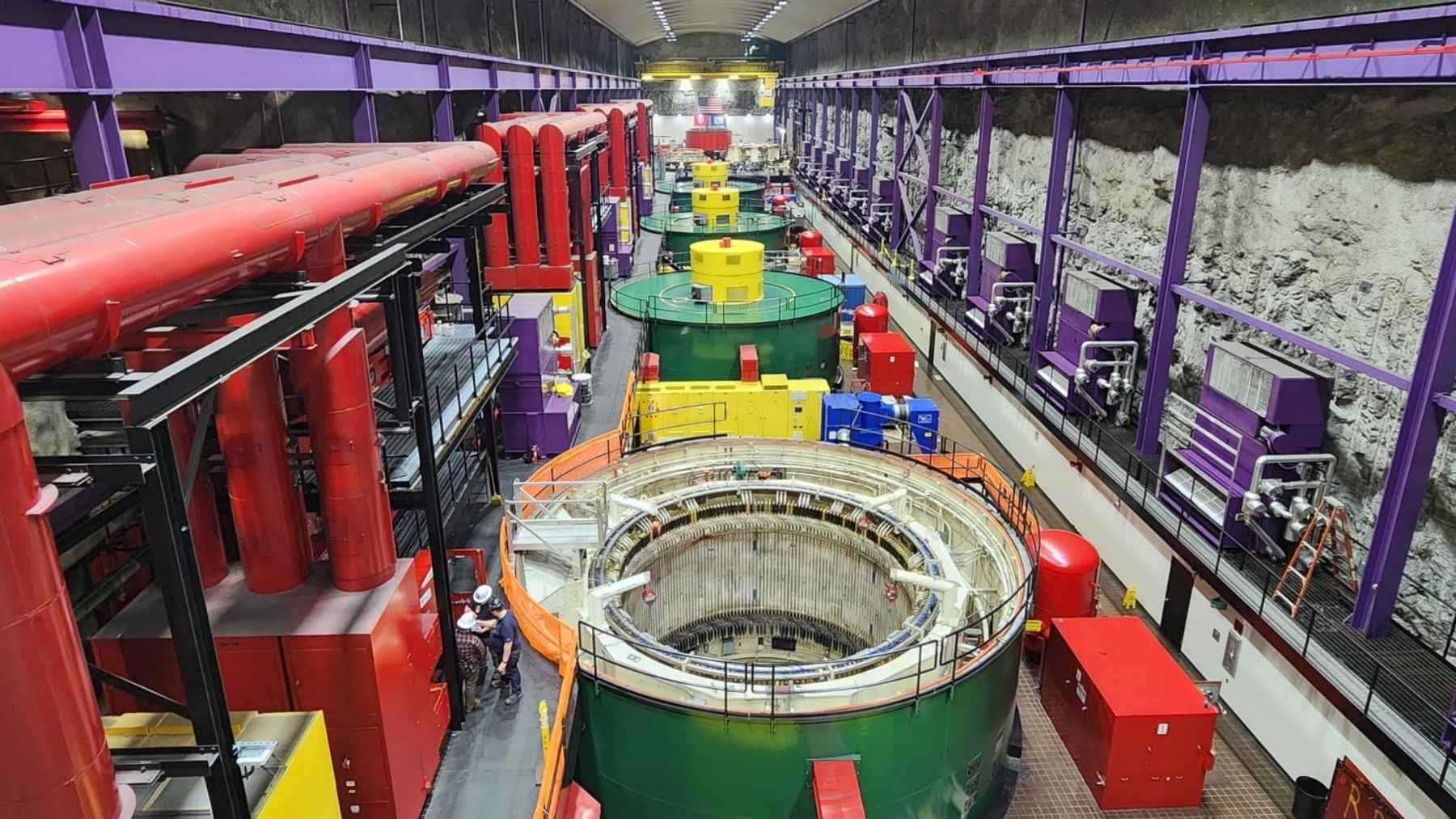
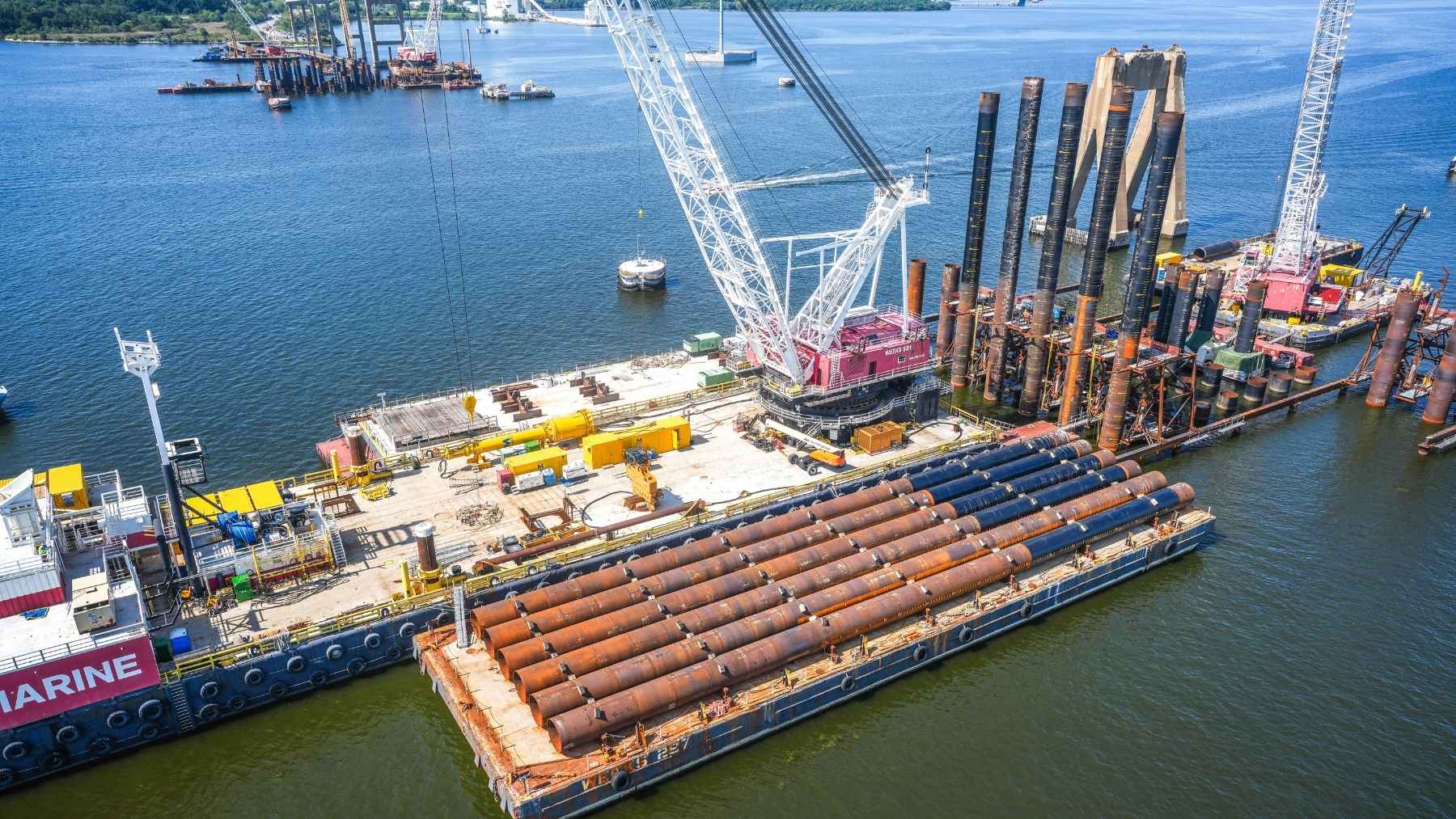
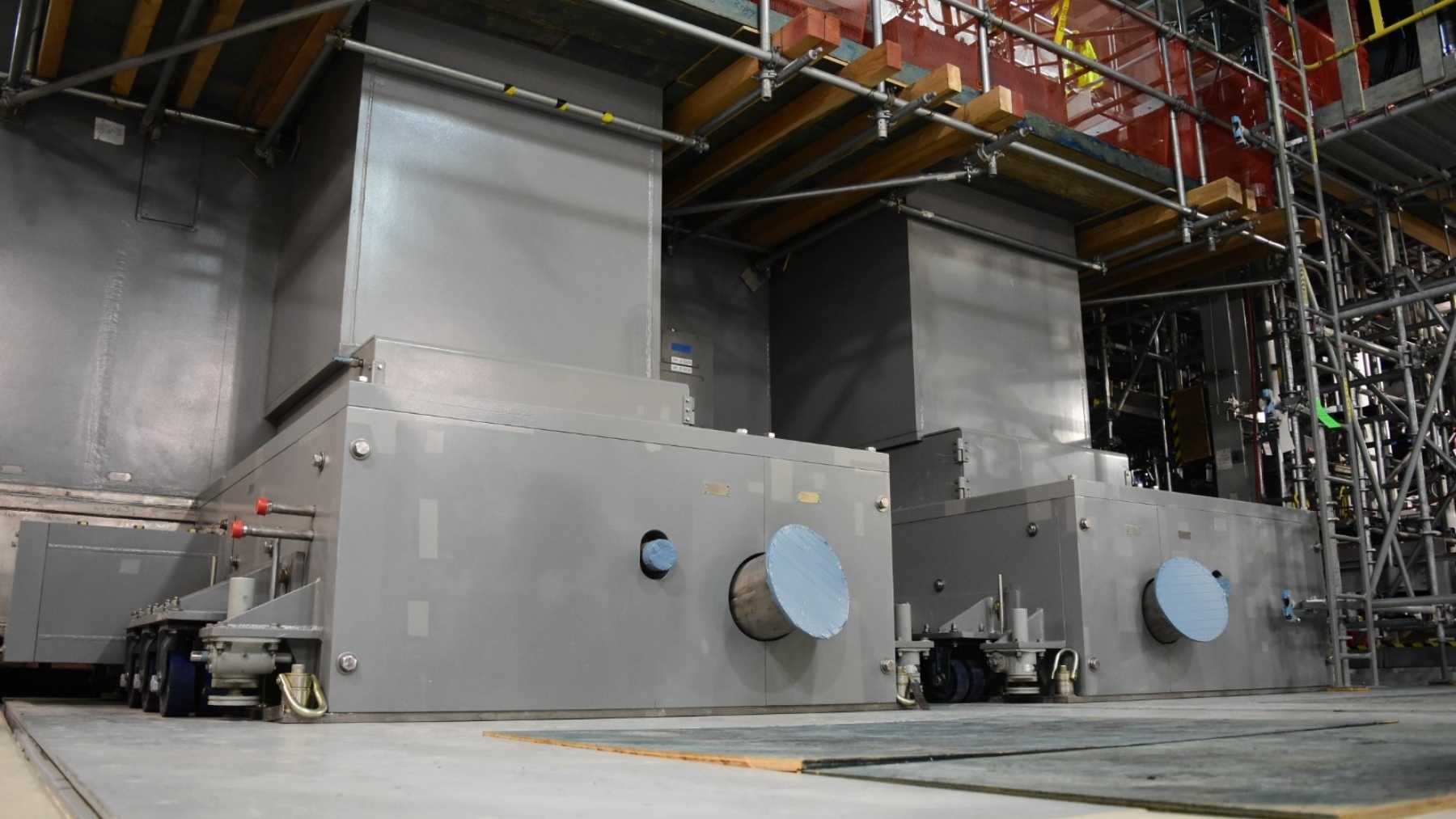
The Waste Treatment Plant, which everyone at Hanford calls the Vit Plant, is the largest radioactive waste treatment facility ever built, according to Bechtel National, the contractor that spent more than two decades designing and constructing it. The business end is the Low-Activity Waste Facility and its two melters, each one a 300-ton box of refractory ceramic and steel.
The process itself is old-school chemistry at brutal temperatures. Tank waste gets pretreated first, run through a system that filters out solids and strips out radioactive cesium. The cleaned-up liquid is then piped to the melters, blended with glass-forming materials, and cooked at 2,100 degrees Fahrenheit.
The result isn’t waste wearing a glass jacket. The radioactive components chemically bond into the glass structure itself, which is why vitrification is the gold standard for this job. Molten glass gets poured into stainless steel containers 4 feet wide and 7.5 feet tall, each weighing around 7 metric tons once filled and cooled.
Then there’s the operating quirk that makes these machines special. As Nuclear Engineering International has reported, power to the melters cannot be interrupted, because if the glass pool inside ever freezes solid, the melter is done and has to be replaced at a cost running into the millions. Hanford didn’t just build a furnace. It built a furnace that turns into a 300-ton paperweight if anyone trips over the cord.
Hot commissioning, the phase where real radioactive waste finally enters the plant, began in October 2025. That start came right up against an October 15 legal deadline between Washington State and the DOE, after years of blown schedules that had locals openly doubting the plant would ever run.
100,000 gallons is the warm-up lap
Here’s the honest math. It took the plant about seven months of hot commissioning to vitrify its first 100,000 gallons. At full operations, the facility is designed to process an average of 5,300 gallons of tank waste per day, according to Bechtel. Run that rate and 100,000 gallons is roughly 19 days of work.
Nobody at Hanford is hiding this. The DOE says hot commissioning will continue for another year while crews build production consistency and settle into a steady operating rhythm. Per C&EN, the goal once the plant is fully up to speed is at least 21 metric tons of finished glass per day.
The gap between commissioning pace and design pace is the whole story of the next twelve months. A first-of-its-kind plant handling radioactive feed doesn’t sprint out of the gate, and this one has a supply chain of its own to worry about. The pretreatment system upstream has to keep filtering solids and stripping cesium fast enough to feed two melters that eat around the clock.
And for scale, 100,000 gallons is less than two-tenths of one percent of what’s sitting in the tanks. The milestone isn’t the destination. It’s proof the production line exists.
The glass already has its own zip code
Finished containers don’t travel far. They go to Hanford’s Integrated Disposal Facility, an engineered landfill on site that’s about 45 feet deep, with a footprint measured in football fields. In early April 2026, crews lowered the first container of vitrified waste into it, with around 30 more staged on a concrete pad, as reported by Northwest Public Broadcasting.
Suzanne Dahl, the tank waste treatment section manager at Washington’s Department of Ecology, has worked on this waste for more than 30 years. Watching that first 7-ton container go into the ground, she described a feeling that “doesn’t have a place to go except in a smile.” State regulators do not talk like that about paperwork. They talk like that about things they assumed they’d retire without seeing.
It’s a different philosophy from Finland’s Onkalo repository, which is about to entomb spent reactor fuel 430 meters down in 1.9-billion-year-old bedrock. Hanford’s low-activity glass doesn’t need a mountain. The glass itself is the barrier, and the landfill is just where it sits while being chemically incapable of going anywhere.
The hard half has a court date in 2033
Everything vitrified so far is low-activity waste, the less radioactive stream that makes up most of the tank volume. The genuinely nasty fraction, loaded with cesium and strontium, is a separate problem with a separate building. Under its legal agreements, the DOE is required to start turning that high-level waste into glass by 2033, and the future High-Level Waste Facility is being designed to pour 4.2 metric tons of it per day.
That building is visibly growing right now. In a July 7 update, the DOE said construction crews are installing structural steel at the top of the High-Level Waste Facility, reshaping the skyline of the plant. The agency is also pursuing what it calls glass-plus-grout solutions, meaning some portion of the tank waste may end up cemented rather than vitrified, a cheaper route that has its own long-running debate attached.
Zoom out and there’s a strange contrast here. The rest of the nuclear world is busy inventing exotic exits for its waste, from a Swiss reactor design that promises to transmute the worst of it to a UK team sealing reactor carbon inside diamond batteries. Hanford went the other way. No frontier physics, no clever chemistry tricks. Just a furnace that never blinks, feeding a landfill, for decades.
Which might be the most American engineering solution imaginable: outlast the problem with sheer industrial patience. The most complex cleanup site in the country finally has a production line, and its product is the most boring material humanity makes. At Hanford, boring is the entire point.