
A shut-down nuclear plant is supposed to be a cleanup bill. Knock it down, ship the radioactive parts to a licensed dump, hand back a field, book the whole thing as a cost and move on.
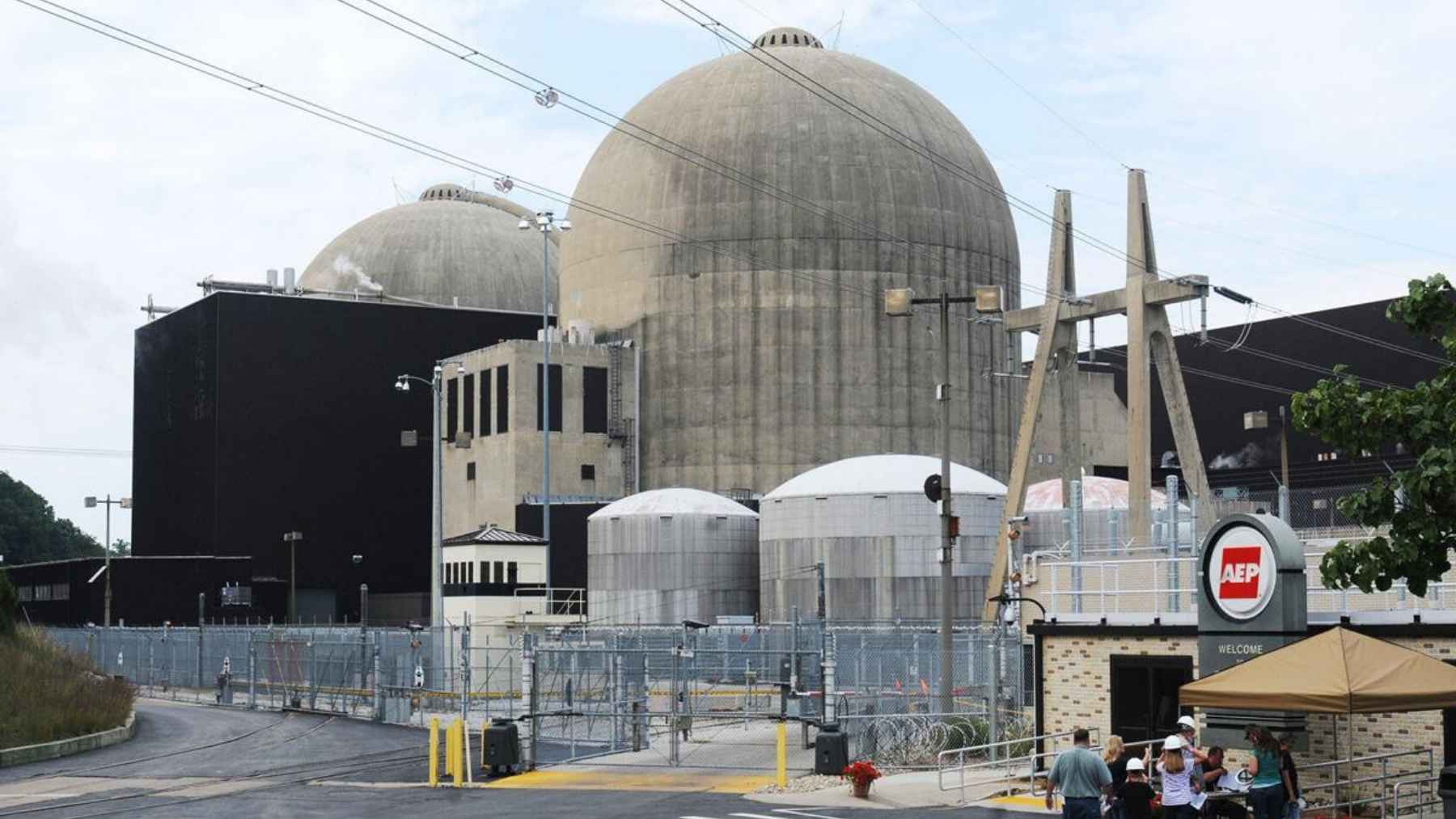
Holtec International has been running the opposite play, and it’s starting to show. The company spent years buying retired American reactors on the theory that a site which already hosted a nuclear plant is the cheapest place in the country to put a new one. On July 30 it collected the regulatory milestone that makes the theory look real at the Oyster Creek Generating Station in Lacey Township, New Jersey, where it wants four small modular reactors sitting on ground a single 1960s boiling water reactor used to occupy.
Five days later it went shopping for more of the same. Holtec signed a nonbinding memorandum of agreement with the utility Entergy and with Hyundai Engineering and Construction to jointly evaluate sites, demand and commercial structures for dual-unit SMR-300 projects across Entergy’s service region, which covers most of Arkansas, Mississippi and Louisiana plus a sizable slice of Texas, according to Nuclear Newswire.
Add the two together and Holtec isn’t a decommissioning contractor with a side project. It’s running a fleet strategy on property nobody else wanted.
An old reactor site is the shortcut everyone wants
Oyster Creek isn’t a random stretch of Jersey coast. It was the oldest commercial nuclear plant America ever operated.
The station started generating in December 1969, ran for just shy of 49 years, and was shut down for good by Exelon on September 17, 2018. Over that lifetime it put more than 192 terawatt-hours of carbon-free electricity onto the grid, per Holtec’s announcement. The company bought it for decommissioning the following year.
None of that is trivia. Half a century of operation leaves behind transmission infrastructure, a permitted cooling water intake on Barnegat Bay, security perimeters, and a local labor pool that’s spent entire careers around nuclear licensing.
That’s the entire pitch. Building nuclear on virgin land in the US means the better part of a decade in permitting before anyone pours concrete, and redeveloping a site that already hosted a reactor is a fundamentally different conversation with regulators. Holtec’s betting the difference is worth billions, and it isn’t betting on one address: its US portfolio already names Pioneer 1 and 2 at Palisades in Michigan, the four units at Oyster Creek, and prospective deployments at Pilgrim in Massachusetts, Indian Point in New York and Big Rock Point in Michigan.
The approval is a demolition document, not a building permit
Precision matters here, because “NRC approval” gets thrown around loosely.
The License Termination Plan isn’t permission to build anything. It’s the closing roadmap for the reactor that already exists, covering the final surveys and environmental cleanup the agency wants before it’ll release the property from its nuclear license. Holtec filed the plan in August 2024 and revised it in May 2025, targeting a wrap on decommissioning by 2029. The physical teardown is already past the halfway mark, per the company.
Site Vice President Jeff Dostal called the decision “a testament to the quality of our technical work,” and framed the approved plan as the roadmap for the last phase of demolition and site restoration. The four SMR-300 units need an entirely separate licensing path, and Holtec says so plainly, flagging its own plans as forward-looking and contingent on regulatory approvals and market conditions. This is a door opening, not reactors landing.
The proposal itself is four SMR-300 units at roughly 340 MW apiece, Holtec’s pressurized water small modular design, for 1,360 MW total. That’s more than double what the old 636 MW reactor produced, and the reactors wouldn’t be the whole facility either. Holtec describes a hybrid plant pairing the four units with a solar field and battery storage, which is exactly the configuration grid operators want when they’re trying to firm up intermittent generation without building more gas, the same logic driving California’s giant battery fleets.
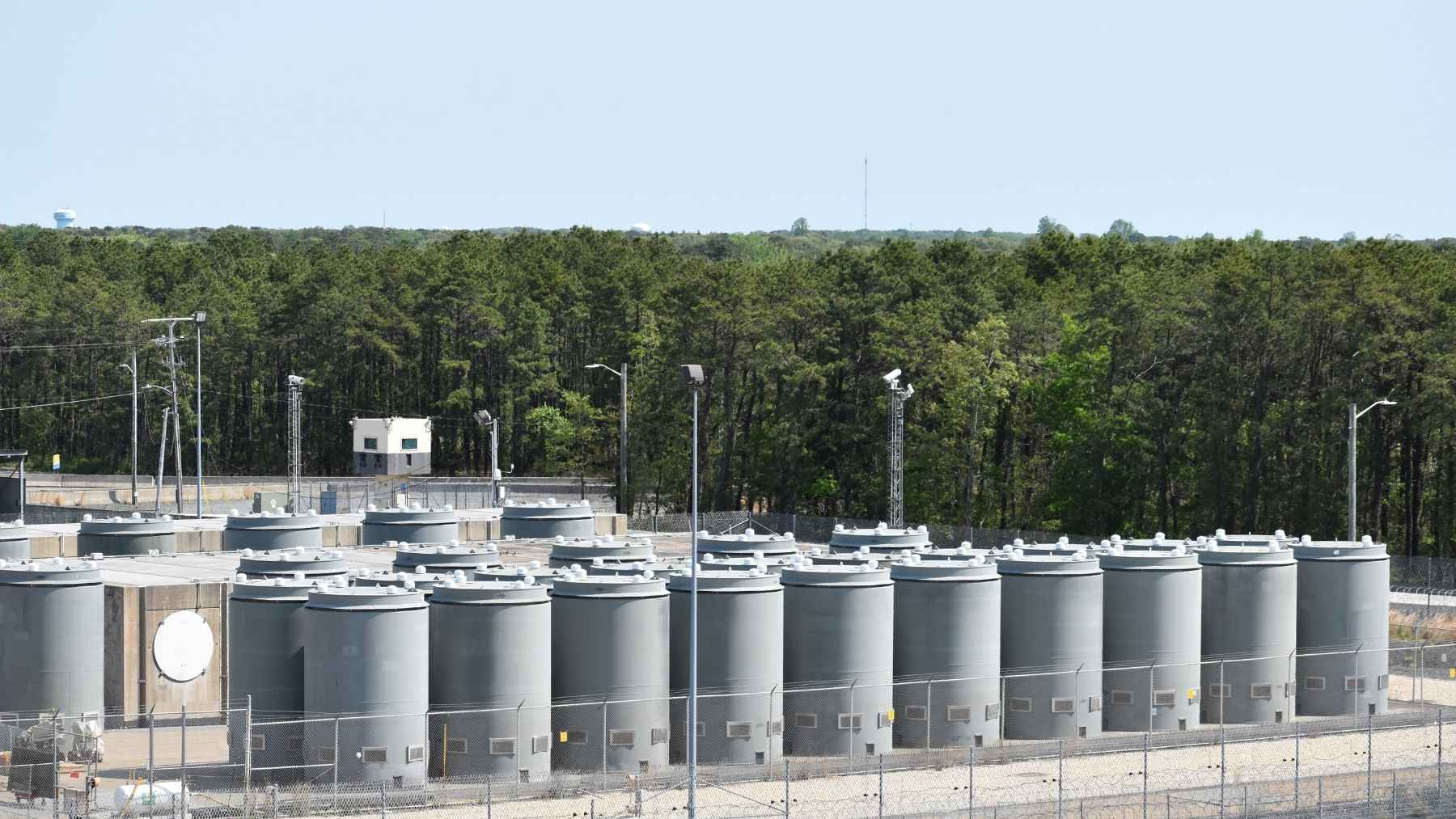
One thing that doesn’t leave when the license terminates: the spent fuel. Holtec’s own decommissioning FAQ counts 2,430 fuel assemblies that were in the pool and 2,074 already out on the dry storage pad. That storage installation isn’t part of the License Termination Plan at all. It stays fenced and under NRC oversight until the federal government provides somewhere for the fuel to go. Which it still hasn’t.
Palisades is the dress rehearsal, and it’s running late
Oyster Creek isn’t Holtec’s first SMR-300 target, and that sequencing is where the schedule risk lives.
The company owns the Palisades plant in Covert, Michigan, a roughly 800 MW pressurized water reactor that Entergy shut down in May 2022 and defueled a month later. Holtec’s trying to restart it, which would make it the first commercial reactor in US history brought back from permanent shutdown. The first two SMR-300 units, named Pioneer 1 and 2, are meant to go up next door. Holtec submitted the first part of its construction permit application on New Year’s Eve, the NRC accepted it for review in February, and the company has asked for a decision by the end of 2026, with $400 million from the Department of Energy behind it and Hyundai Engineering and Construction and Mitsubishi Electric as partners.
Now the awkward part. Palisades was supposed to restart by the end of 2025. That slipped to early 2026, then to a target of grid reconnection by the end of February, then to no date at all. Holtec’s line this summer was that the plant restarts when it’s ready for long-term operations. As of the July update, major refurbishment was finished and the site had moved into the remaining testing, inspection and readiness work, with new fuel on hand waiting to be loaded, per Nuclear Newswire.
The delays traced largely to steam generator tubes found cracked during 2024 inspections and repaired by sleeving the damaged ones. Environmental groups sued to block the restart and the cases were dismissed. CEO Kris Singh has told the Financial Times he still expects the plant back this year, ahead of a power supply contract that starts in March 2027.
So the order of operations is: restart Palisades, build Pioneer 1 and 2 there, then replicate at Oyster Creek. If any link in that chain slips, and first-of-a-kind nuclear reliably slips, 2036 slides with it. That’s not a knock on the plan. It’s how sequential builds work when the delivery model is being invented in real time, the same challenge facing TerraPower’s Natrium plant in Wyoming.
Trenton changed its mind, but PSEG is already at the table
The other thing that shifted isn’t engineering. It’s politics.
New Jersey spent five decades treating new nuclear construction as a non-starter, thanks to a provision in the Coastal Area Facility Review Act that demanded a federally approved permanent disposal method for high-level waste, a condition nobody ever satisfied. On April 8, 2026, Governor Mikie Sherrill signed legislation stripping it out. Three months later, on July 13, she signed the Power NJ Act, launching a state procurement process for at least 1,100 megawatts of new nuclear generation.
That 1,100 MW isn’t a check with Holtec’s name on it, whatever the coincidence of numbers suggests. The statute says the figure “shall not constitute a commitment,” and the process is competitive. The Board of Public Utilities and the Economic Development Authority run it jointly, and the BPU has to issue a request for expressions of interest within 180 days, which puts the deadline at January 9, 2027, followed by 60 days for proposals and a 90-day qualification period.
Holtec also isn’t the only name in the state. Officials have reportedly looked at a site near the co-located Hope Creek and Salem plants, which is PSEG ground, and Sherrill signed the April bill standing at Hope Creek. A finished Oyster Creek would clear the 1,100 MW floor comfortably. It’s still a floor, and somebody else is already standing on the more obvious piece of land.
Holtec’s leaning into the hometown angle anyway, noting the site sits 54 miles from its Camden headquarters and pitching the reactors as New Jersey technology built for New Jersey.
Jobs, data centers, and an IPO with no price on it
Every infrastructure announcement needs a jobs figure, and this one’s substantial. Holtec estimates roughly 4,000 construction jobs, more than 400 permanent positions, and additional employment through the regional supply chain.
The more revealing detail is who might buy the electricity. The company points to new tax revenue, infrastructure investment, and potential support for artificial intelligence data centers. That last item isn’t filler. Hyperscalers are hunting for firm carbon-free baseload to sign decade-long power agreements against, and a 1,360 MW nuclear campus within reach of both New York and Philadelphia is precisely the kind of address they’ve been writing checks to.
The timing is worth a look too. Holtec Nuclear Corporation publicly filed its S-1 with the SEC on July 10 and intends to list Class A shares on Nasdaq and Nasdaq Texas under the ticker HNUC. Oyster Creek shows up in that paperwork as a development-phase opportunity, per POWER, which is corporate-speak for an asset with a story and no shovel in the ground.
Six weeks on, the offering still carries no share count and no price range. There’s nothing improper about filing a registration statement and then announcing a gigawatt-scale project. It just means anyone reading the pipeline should sort it into what’s licensed and what’s ambition.
The catch nobody is hiding
Not one SMR-300 unit at Oyster Creek is licensed to be built. The approval that just landed is a demolition document. Construction and operating licenses for four new reactors require a separate NRC review that Holtec hasn’t filed for this site, let alone won.
Stack on first-of-a-kind execution risk at Palisades, supply chain risk on nuclear-grade forgings and fuel, a restart more than half a year past its own target, and a state procurement Holtec still has to win, and 2036 starts looking like the optimistic end of a wide range. Even the microreactor programs moving fastest, like the ones that took three units critical in under a month, are orders of magnitude smaller than this.
Still, this is the kind of quiet regulatory step that changes what’s possible. A shuttered American reactor site with grid ties, cooling water and a trained workforce is now a live candidate for 1,360 megawatts of new nuclear, and Holtec has three more of them on its list.
If the template works, every utility sitting on a retired plant is going to run the same math. If it doesn’t, at least the concrete will be tidy.