
Hydrogen has a supply problem. It’s the most common element in the universe, but here on Earth almost all of it’s locked up in water or natural gas, and prying it loose takes a lot of energy. So the idea that you could drill a hole and find the stuff just sitting there, the way you’d find oil, has spent decades sounding like a bit of a geology fantasy.
But a small company in Saskatchewan has now drilled four wells into what it believes is a working natural hydrogen system, and it says the fourth one came back with the best readings it’s seen yet.
We first covered this project in June, when the original Lawson well near Central Butte flowed gas to the surface on its own. Here’s what’s changed since.
The company is MAX Power Mining, a junior explorer listed on the Canadian Securities Exchange. It bills Lawson as Canada’s first natural hydrogen system confirmed by deep drilling. That word “deep” is doing some work, frankly, since a Quebec explorer had already put down shallow wells looking for the stuff before Lawson went in.
So what came out of the hole?
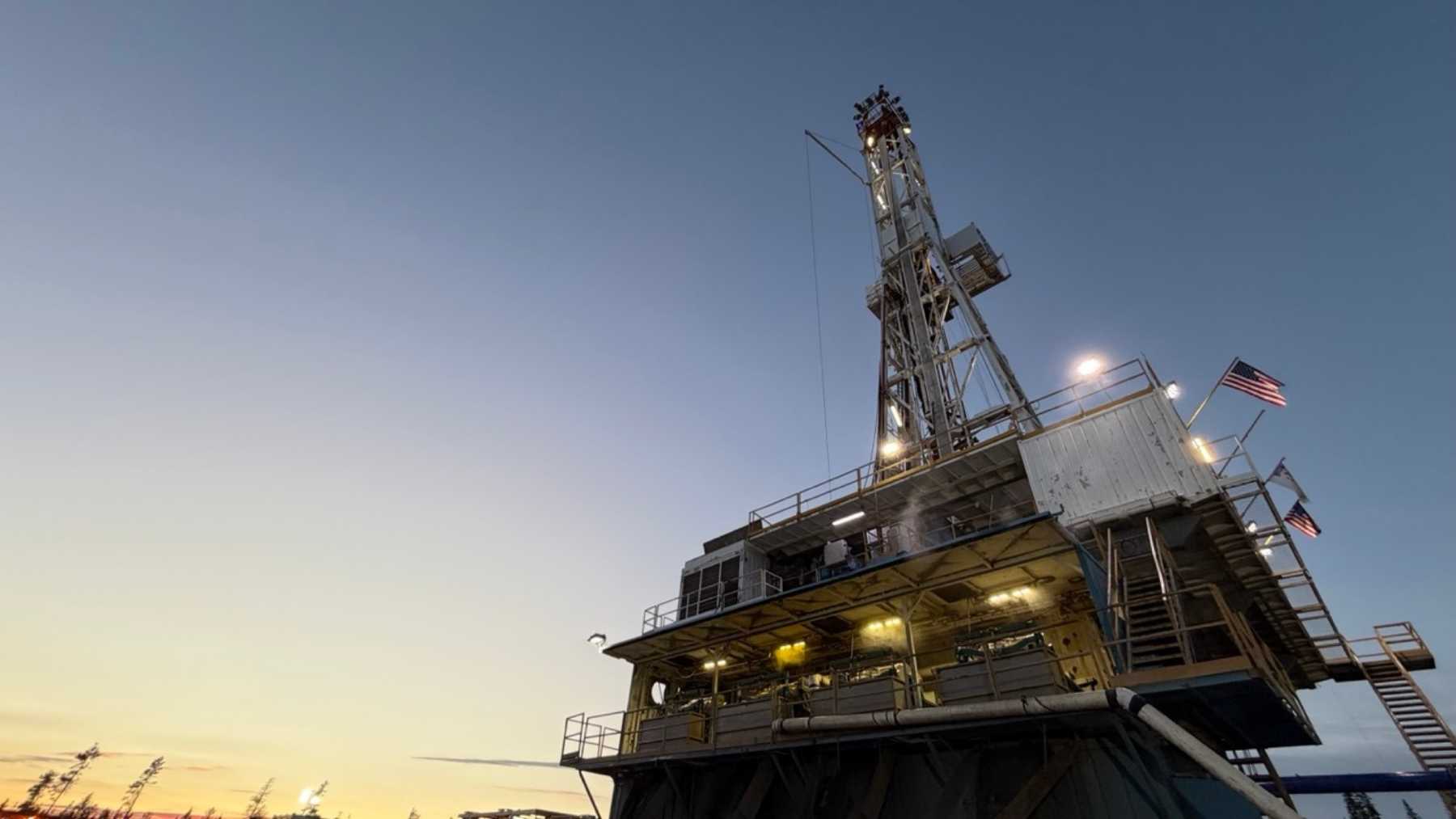
According to MAX Power’s September 15 update, Lawson 4 went down 7,874 feet, and the interesting stuff starts at about 7,500. That’s where the drill went through a layer of sandstone sitting right on top of the basement, the old crystalline rock that everything else on the prairie is piled on. MAX Power says the sandstone is porous and permeable, which basically means it’s got room to hold gas and the gaps are connected well enough for that gas to move.
The rig’s gas detectors picked up climbing hydrogen readings through a 67-foot stretch of that sandstone, topping out at the highest MAX Power has recorded anywhere at Lawson. The crew cored the whole section. Core, if you haven’t seen it, is a solid cylinder of rock cut out by a hollow drill bit, and they got 96.6% of this one back.
Then they kept going. Another 101 feet of core came up from underneath, with hydrogen readings the company still describes as very high, for a total of 169 feet of rock at 98% recovery.
Right where the sandstone ends, at about 7,580 feet, the drill hit a deep fault. MAX Power believes it runs close to vertical, but it doesn’t know yet which way it heads or how far down it goes. The company says core analysis should help with that.
Chief geoscientist Steve Halabura called the well “a discovery within a discovery,” which is about as excited as geologists get in a press release.
So how much hydrogen is down there?
That’s the number I’d most like to see, and it doesn’t exist yet. MAX Power hasn’t published a hydrogen percentage for Lawson 4.
Lawson 4’s best-yet readings come from the gas detection gear on the rig. A drilling rig pumps mud down the hole and back up again, and sensors at the surface check what gas comes out of that mud on the return trip. It’s a pretty good way to tell you’ve hit something, and a pretty bad way to tell exactly how much of it is there.
So you can’t stack these readings against the 28.6% hydrogen in the January results from the discovery well. Those came from an outside lab testing gas trapped in sealed core samples. Lab numbers on the Lawson 4 core haven’t been released.
MAX Power really likes that fault
To see why, you need the basic theory. The usual explanation for natural hydrogen is that iron-rich rocks deep underground react with water and give off the gas as they do it. MAX Power says the core from below 7,580 feet includes that kind of rock.
The gas then needs a way up, and a big crack running through the crust is a pretty obvious route. The company calls this one a conduit. If the hydrogen rises into porous sandstone and then gets stuck under something it can’t get through, that’s how you end up with a deposit.
Trapping is the hard step. Hydrogen is so small and so light that it tends to leak through rock, which is a big reason geologists long assumed it couldn’t pile up in useful amounts. Earth makes the gas in plenty of places, including an Ontario mine where it’s been seeping out of the rock for years. Finding a spot where it builds up instead of drifting off is a lot harder.
Why drill 19 miles away?
Because that’s where MAX Power thinks the lid is.
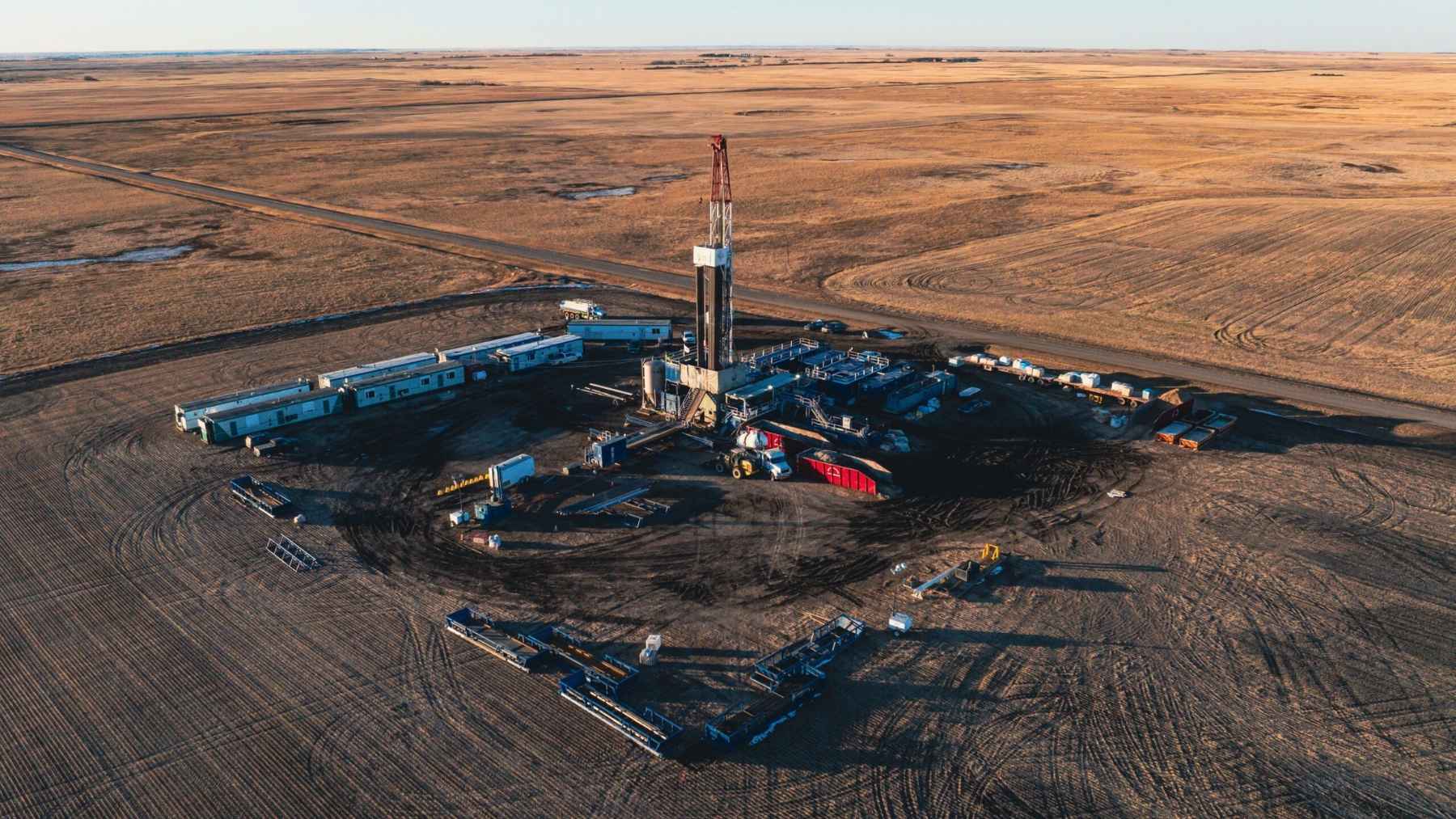
Lawson 5 sits about 19 miles northeast of the first four wells, which are all within roughly a mile and a quarter of each other. Crews have already set intermediate casing in it. Casing is steel pipe cemented into the hole in stages as it gets deeper, to keep the walls from caving in and to seal off the layers above.
The first big target below that is the Prairie Evaporite, a layer of salt best known for holding the potash Saskatchewan mines for fertilizer.
Why salt? Hydrogen molecules are tiny enough to slip through most rock, and salt is about as tight as rock gets. It’s the same reason the hydrogen storage caverns on the Texas Gulf Coast are cut into salt domes.
MAX Power’s theory is that gas has been moving northeast, up through the rock layers, toward the edge of that salt, which the company calls the Salt Wall, and collecting there. Lawson 5 is the well that tests the idea.
If it works, the map gets a lot bigger. The company says that salt edge runs about 295 miles north to south, all the way down to the North Dakota border. MAX Power’s permits are all in Saskatchewan, so that’s where its number stops. It’s a pretty big if, and right now it’s riding on one well that’s still on its way down.
When do we find out if it flows?
Not yet. Lawson 4 has been cased and cemented, which means the zones MAX Power is excited about are sealed behind steel for now. To test them, crews have to perforate the well. That basically means firing small explosive charges through the casing at the depths they want, then watching what comes up, how fast, and what it’s made of.
MAX Power calls this completions testing, and it says a big round of it is coming across the Lawson wells and at Bracken, a separate well about 202 miles southwest near the Montana border. It hasn’t said when that starts.
You should also know who’s telling this story. Every figure here comes from MAX Power’s own news releases, which are written for investors in a small listed company, and the September ones also disclosed paid investor-marketing deals. The company says independent evaluation is part of the next phase. The geology could still turn out great. I’d just wait for a lab number and a flow test before getting too excited about a rig reading.
As of MAX Power’s September 29 update, Lawson 5 had its intermediate casing set at about 3,600 feet and was drilling on toward the Prairie Evaporite.