- 1 MONTH AGO · INDUSTRYTwo hollow steel doors 689 feet long swung shut across the shipping channel into Rotterdam on 750-ton ball joints and sank to the bottom in a little over two hours, closed for a crowd with no storm in sight, and in 29 years the sea has forced them shut by itself exactly once
- 3 WEEKS AGO · INDUSTRYA 44-foot boring machine spent 25 months cutting a 2.8-mile tunnel that drops 213 feet below sea level to pass under the Panama Canal with ships still running overhead, and just came up on the far side with 2,295 concrete rings behind her, so a monorail can skip the two bridges jammed every morning
- 2 WEEKS AGO · INDUSTRYA nearly 23-foot tunnel boring machine just broke through into its first station under downtown Toronto after cutting about 4,265 feet and lining the tunnel with roughly 780 concrete rings, and its twin is due to punch through right beside it in December
- 21 HOURS AGO · INDUSTRYA second 1,680-ton boring machine with a 28-foot cutterhead has started chewing through the rock under New Jersey beside its twin, each one dragging 500 feet of gear and lining its tube with 850 concrete rings, and both get swapped out for new machines before the Hudson
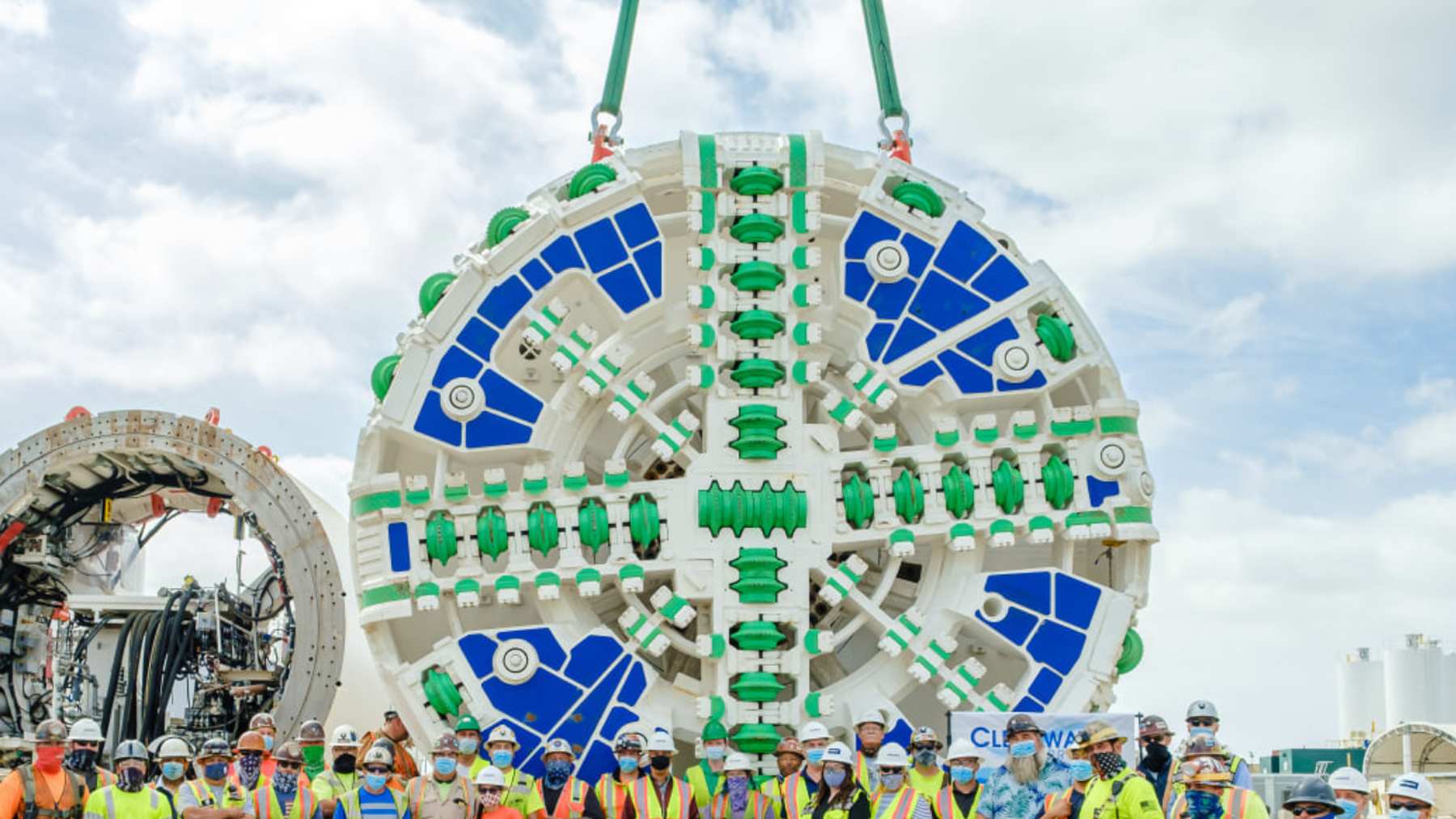
- TODAY · THIS ARTICLEA 21.5-foot boring machine has sat alone for 16 months a mile past a breach in a 7-mile wastewater tunnel under Los Angeles, and engineers now blame too little grout behind the concrete lining as officials say reaching it could take up to another year
Tunnel boring machines get names, the way ships do. When the Los Angeles County Sanitation Districts got ready to dig their new Clearwater tunnel, local students sent in ideas, and the winner was Rachel, after Rachel Carson, the biologist who wrote Silent Spring. It’s a pretty sweet bit of tradition for a machine whose job is building a tunnel for treated wastewater.
But Rachel hasn’t moved since July 9 of last year. She’s sitting in the dark about a mile past a spot where the tunnel behind her partly gave way, and no one’s gotten past that spot since.
Now we know why it probably happened. On November 13, the Districts released a root-cause report from Hatch, an engineering firm they’d hired as an outside expert in September of last year. According to the Districts, Hatch found the most likely cause was “an insufficient amount of grout” pumped in behind the concrete lining, which let the lining start to deform. The report also found that an interim fix the contractor, Flatiron/Dragados, put in wasn’t adequate, and that extra steps could have stopped it. It’s a fairly mundane cause for a pretty dramatic failure.
So what does grout do down there?
Rachel builds the tunnel wall as she goes. She’s a Herrenknecht machine built for this project, and every 5 feet she sets another ring of precast concrete segments behind her cutterhead. The hole she cuts is 21.5 feet across, and the finished tunnel is 18 feet wide on the inside.
Grout is basically a runny cement mix that gets pumped into the gap between the ground and the outside of those rings. Once it sets, the dirt pushes evenly on the whole ring instead of leaning hard on a few spots and squeezing it out of shape.
That gets more important the deeper you go. The Clearwater tunnel runs anywhere from 30 to 450 feet below the surface, and the Districts put the breach 370 feet under Western Avenue, at roughly the 5-mile mark. It happened around 7:45 p.m., near the top of the tunnel. All 31 workers inside got out. The Districts’ first update said some were treated for minor injuries, and the November update says no one was physically hurt.
I’d love to give you Rachel’s weight, too. I couldn’t find a published figure anywhere, which is a little annoying for a machine of this size.
So why would one mile take a year?
Normally a boring machine’s story ends when it breaks through into a shaft at the far end. Sometimes the far end is the ocean floor, like the one divers had to pull out through the seabed in Australia. Rachel’s problem is that she’s stuck in the middle, and her tunnel only has one way in.
Everything she needs (power, concrete segments, people) comes in from the shaft in Carson behind her. When the lining failed, water and debris got into the tunnel and cut her off from all of it. She’s basically on the wrong side of a plug.
Crews have been working their way back toward the breach ever since, with Cal/OSHA signing off on everything they do inside. By February, the Districts said crews had made it 135 feet short of the breach, about five miles in, without finding any safety concerns along the way. Next on the list was pumping out the water trapped behind the debris, clearing the debris itself, and stabilizing that stretch.
So you can’t stroll the last mile. Someone has to repair the tunnel at the breach first, inside an 18-foot tube that still has water in it. According to the Districts, no workers, equipment or investigators have gone past that point yet, so as far as I can tell no one’s laid eyes on Rachel in 16 months.
The Districts’ best estimate is that reaching her could take up to a year, and they add that every projection is subject to change. Admittedly, that’s a pretty honest number. It’s also a fairly grim one if you were counting on this thing being finished by 2027. Compare that with the machine that finished a 19-month dig under Charles de Gaulle Airport in Paris. Rachel has now spent almost that long just waiting.
The old tunnels have never had a day off
So why dig this tunnel at all?
The Districts’ Joint Outfall System serves more than 5 million people, and its treated wastewater currently heads to the ocean through two tunnels built in 1937 and 1958. Neither has ever been shut down, since they have to carry flow around the clock, and the Districts say their condition is unknown.
They also don’t meet modern earthquake standards, and they cross two known faults. They came close to running out of room during two big rainstorms, too. Frankly, moving that much wastewater through tunnels no one can shut down long enough to inspect is a bit unnerving. Once Clearwater’s done, the old pair can finally come offline for a proper look.
We still don’t know the cost or a new finish date
The Districts’ FAQ puts the project’s total budget at about $700 million, and that figure includes design and construction management. Nothing I’ve seen from the Districts puts a price on the breach, the repairs or the delay. The November update says the tunnel was supposed to wrap up around 2027 and that the breach has pushed that back, but it doesn’t give a new date.
There’s a legal side, briefly. A Flatiron/Dragados worker who was underground that night sued in July, with the Districts one of several defendants, and the Districts filed a cross-complaint against the contractor in September.
Work hasn’t stopped everywhere. At Royal Palms Beach on the Palos Verdes Peninsula, crews are getting the site ready to hook the tunnel up to the existing ocean outfall pipes, though archaeological work at the site is slowing that down.
The Districts say their next step is negotiating with Flatiron/Dragados over the repair work inside the tunnel and recovering Rachel. As of their November 13 update, the best guess is up to a year before anyone gets to her.
 A 242-pound underwater drone plugged into a wave-powered buoy at sea for the first time off California, docking twice with a float that makes about 10 times the power of a solar dock, while it and its sister drones logged almost 2,500 miles in about 2,000 hoursIndustry · 2 hours ago
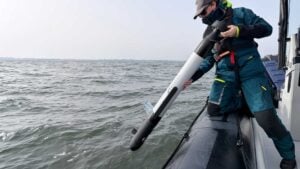 A 29-pound underwater drone 4.3 to 4.5 feet long and 4.7 inches thick is rated to 984 feet, carries a side-scan sonar plus either a magnetometer or a camera lit by 24,000 lumens, and one person can launch it to run as long as eight hours at up to 6 knotsIndustry · 1 day ago
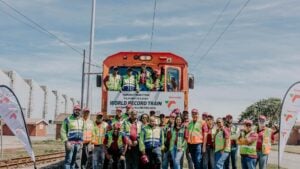 A 4.7-mile freight train of 696 empty ore cars ran 535 miles over two days with electric and diesel locomotives spread through it and synced by radio so they pulled and braked as one, and it topped a length record a 4.6-mile ore train had held for a quarter of a centuryIndustry · 2 days ago