My parents are big into trail cameras and have a bunch set up in their backyard, capturing foxes, otters, and birds. It’s pretty cool, well, until the AA batteries die. Then you gotta go back there and swap ’em out before you miss anything.
On the ocean floor, that hike is a ship and a crew, which is why people who put sensors on the seabed spend so much time worrying about power.
Zeno Power, a Seattle-based company, thinks the fix is a generator that runs on the heat from radioactive decay and keeps going for years. When we covered the company’s seabed plans in August, nothing had been switched on at the bottom of the ocean yet.
That’s changed.
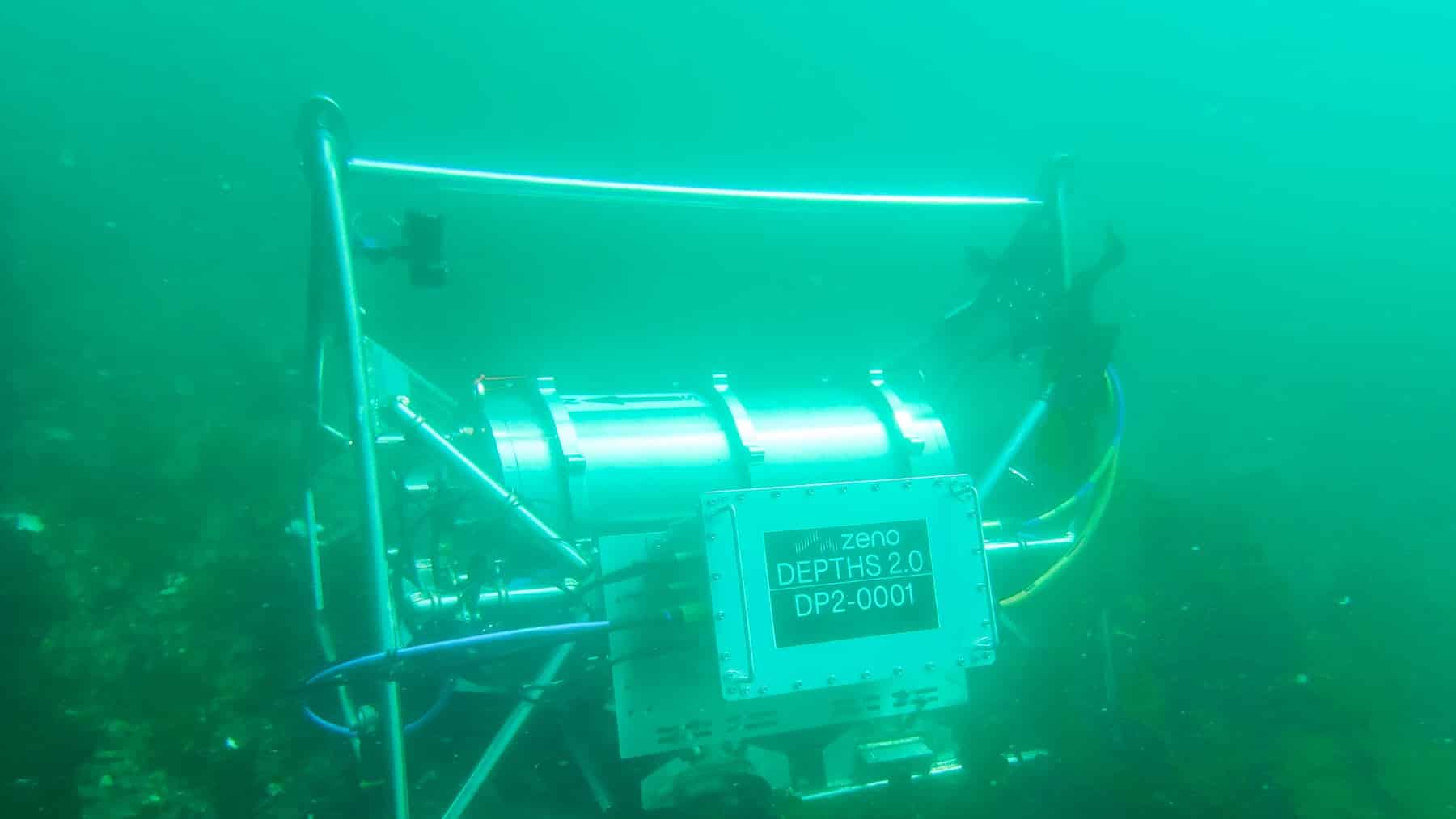
On November 19, Zeno said a prototype of its generator spent two weeks on the seabed in Washington state waters, made more than 20 watts of electricity, and was then pulled back up.
There’s a catch, however. Zeno is pretty upfront about it: the prototype didn’t have any nuclear fuel in it. An electric heating element sat where the radioisotope heat source will eventually go, so this tested the machine that turns heat into electricity, not the nuclear side of things. Makes me wonder, though… Why even bother?
Because Zeno has to prove the generator survives and works underwater before it puts anything radioactive inside it. Frankly, doing that with a heater you can switch off is a sensible approach. If a seal fails or the housing floods, you’ve lost a prototype and a few weeks, not a radioactive source sitting on the seabed.
So what’s a Stirling generator?
A Stirling engine runs on a temperature difference. You heat one end of a sealed cylinder and keep the other end cool, and the gas trapped inside expands and contracts as it shuttles between the two, pushing a piston back and forth. Hook that piston up to a generator and you’ve got electricity.
The seabed seems like a pretty friendly place for one, at least on paper, since the cold water around it gives the engine a free cooling system.
Zeno markets the finished product as a “nuclear battery,” but it’s really a generator. It doesn’t store a charge you top up. It turns a steady supply of heat into a steady supply of electricity for as long as the heat lasts.
The older way to do that with radioactive material is a radioisotope thermoelectric generator, or RTG. They use special materials that produce a current when one side is hotter than the other, so they have no moving parts at all, which is great for reliability. They just aren’t very good at turning heat into power. Zeno told GeekWire its Stirling-based systems will be at least four times more efficient than traditional RTGs, and you’ll notice that’s a target for the fueled version, not something this test measured.
Why would anyone want this on the seabed?
You wouldn’t use one of these to run anything big. On Zeno’s technology page, the fueled version (the Radioisotope Stirling Generator) is listed at anywhere from 15 watts up to the hundreds of watts, with a planned life of more than five years. That’s a small, steady trickle of power. It’s the kind a sensor network on the seafloor or a charging dock for underwater drones needs, and those were the two jobs Zeno’s original Defense Department contract was written around.
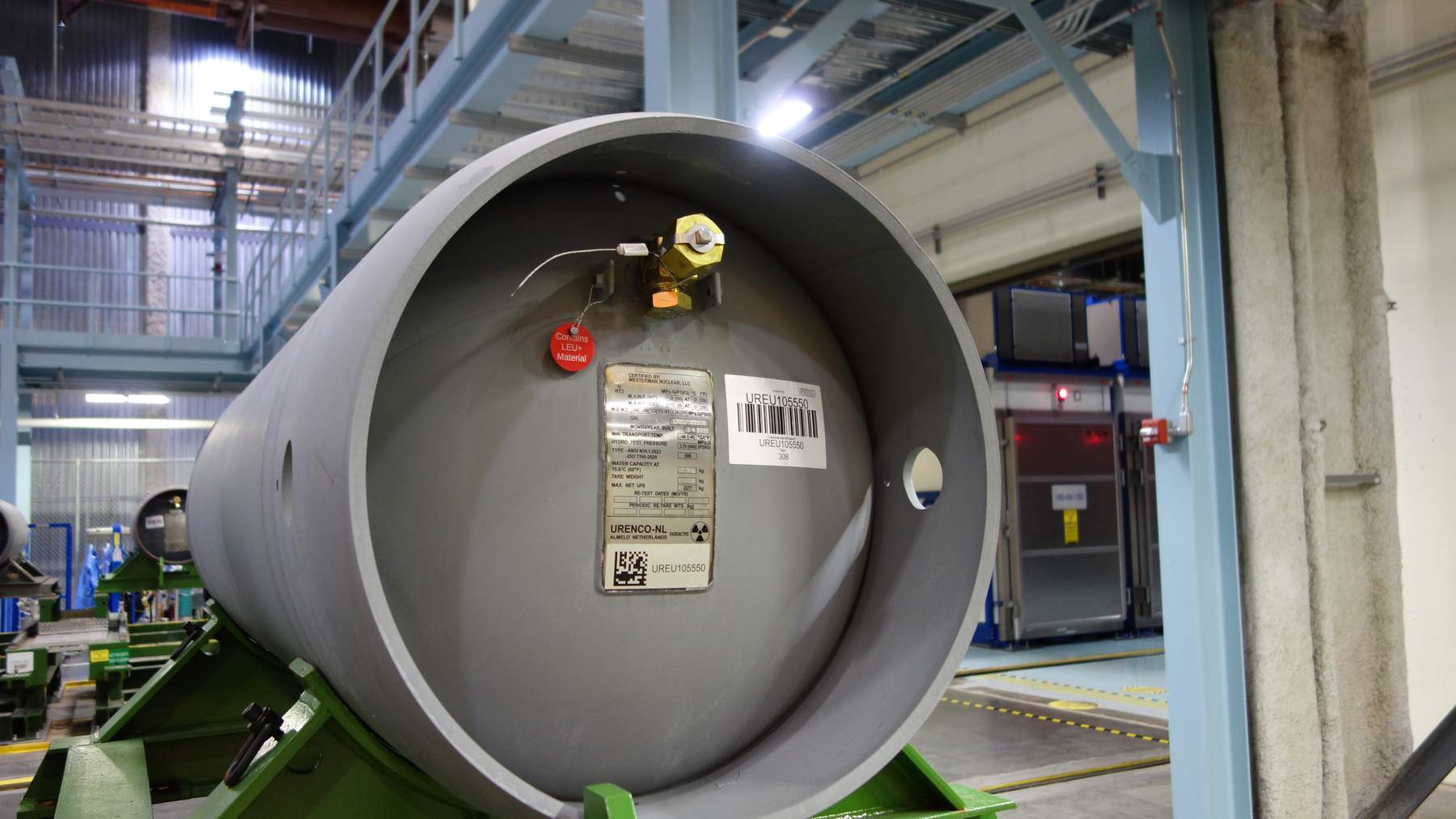
That contract, a $7.5 million award under a program called DEPTHS, was announced in October 2023 and is the backstory we went through in August, so I won’t rehash it here. The short version is that the plan has always been strontium-90 heat, a Stirling engine, and no cable or support ship.
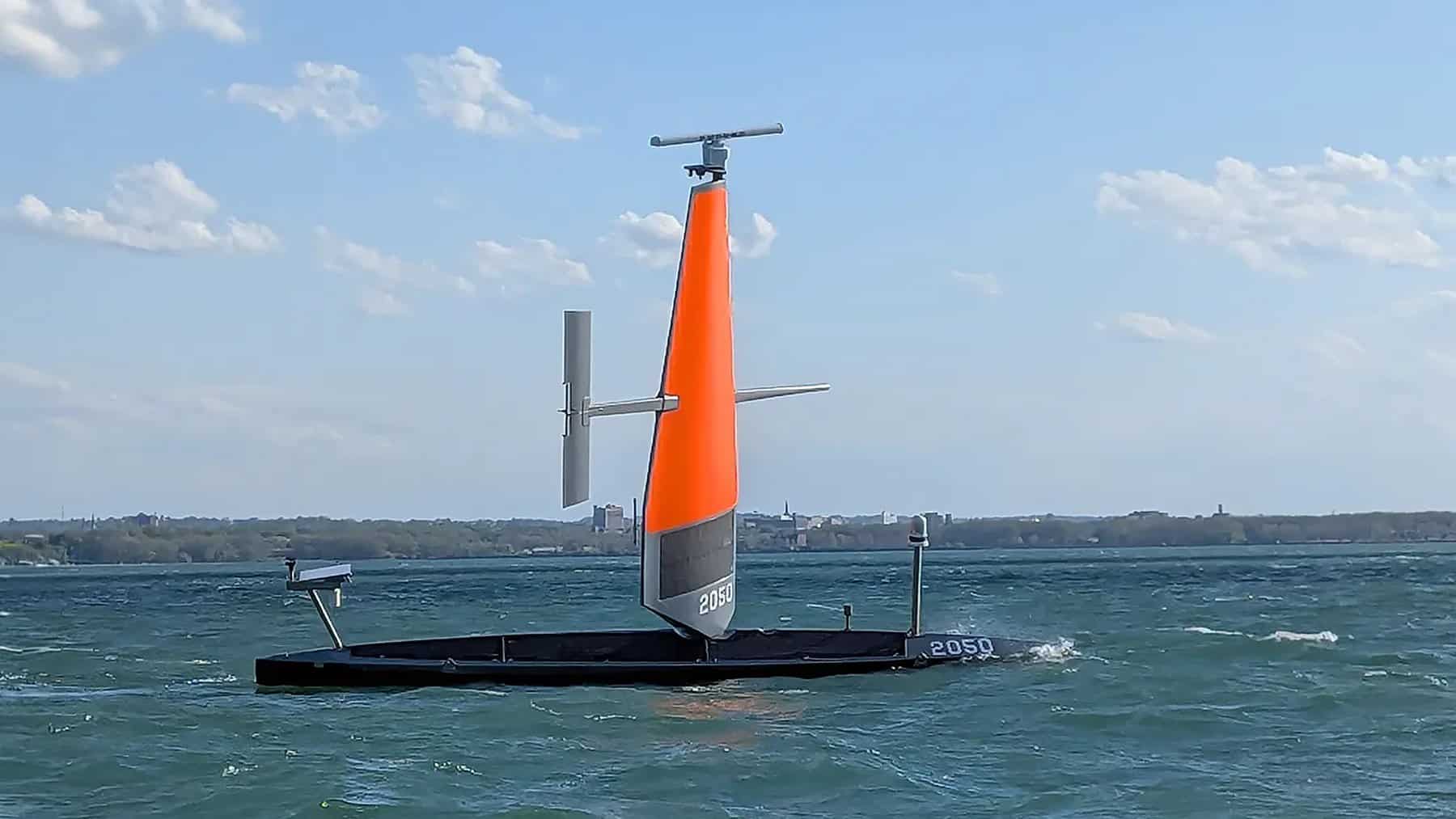
The drones that could plug into something like this already exist. We’ve written about a hydrogen fuel cell drone that stayed underwater for 16 days and about NOAA drones that settle on the seafloor to save their batteries when the weather’s too rough to pick them up. Both operate with limited onboard power.
Two weeks, 20 watts, and back on the boat
According to Zeno’s announcement, the electrically heated prototype, which the company calls an ESG, ran for two weeks in what Zeno describes as a controlled maritime setting in Washington state and produced more than 20 watts of electricity. It was lowered from a boat, left to run, and then recovered.
Zeno says an ESG had never generated power on the seabed before. That’s a company claim, and a fairly narrow one, since it covers this specific type of machine.
Twenty-plus watts won’t run a hair dryer. It’s not supposed to. It does land inside the 15-watt-and-up range Zeno lists for the fueled product, though, which suggests the converter is at least in the right ballpark.
Zeno also says the prototype took less than 16 months to get from final design into open water, and Lindsey Boles, the company’s chief product officer, described the test to GeekWire as “a really big step for us.”
What I couldn’t find was a depth. Of course… I went through Zeno’s announcement and GeekWire’s report looking for one, and for the exact spot in Washington’s waters where the generator went down, and came up empty. I’d have liked to know, since the deeper you go, the more pressure every seal has to hold back. Sorta a big deal, you’d think.
Is 20 watts on electric heat enough to trust the nuclear version?
I’d still call it a good sign, but not proof. An electric heater and a strontium-90 source both just make heat, and a Stirling engine doesn’t care where its heat comes from. So the converter, the materials, and the system have now worked underwater for two weeks, which is what Zeno says this test was built to check.
What it couldn’t check is everything that comes with real radioactive fuel, like the shielding, the handling and years of nonstop running. Two weeks is also a long way from the five-plus years Zeno is aiming for.
Zeno seems to know that, which is why the next step isn’t another trip out to sea.
A radioactive heat source goes in next
Zeno says it’s on track for a radiological test inside a controlled tank, and GeekWire reports that’s when the company plans to put a radioisotope heat source into the generator, in 2027. If the tank work goes well, Zeno wants its first fueled system working on the seabed later in 2027.
That’s a bit later than the 2023 contract had in mind. It originally planned to demonstrate a radioisotope power system by 2026. Still, for hardware with nuclear material inside, a schedule that’s moved by about a year is arguably holding up pretty well.
Zeno says it has raised more than $165 million, with $105 million of that in private capital and $60 million in contracts with the Pentagon and NASA. It employs more than 95 people across Seattle, Washington, D.C. and Sunol, California.
So the only Zeno generator to make electricity on the seabed so far is the electrically heated one the company announced on November 19, and the first fueled unit isn’t planned to go down until 2027.