- 5 MONTHS AGO · INDUSTRYAustralia just punched a 2,300-ton machine through the rock nearly a kilometer under the mountains to build the country’s largest renewable project, a power station the size of a 20-story building, turning two lakes into a battery that stores a week of power
- 4 MONTHS AGO · INDUSTRYBritain just ordered the largest boring machine ever put underground in Europe, a 5,500-ton German giant with a cutting face wider than a basketball court, built to dig both Thames tunnels alone and turn around at the far end
- 3 MONTHS AGO · INDUSTRYA 7,000-pound turbine blade spent decades holding itself out sideways in Colorado wind, got trucked to Atlanta, and now lies on its side as a 50-foot span over a creek, opening two acres of park that nobody in the neighborhood could reach on foot before
- 3 MONTHS AGO · INDUSTRYA 49-foot drone flew 10 to 16 feet over 74.6 miles of North Sea pipeline in a single pass, parked itself on a seabed dock to recharge and dump its data, and the Navy has now bought one, built for the oil companies that paid for all of it first
- TODAY · THIS ARTICLEA turbine core built for both a 42-megawatt data center generator and a 40,000-pound-thrust supersonic jet engine lit on its second try on the Colorado plains and spun to 6,500 rpm with nearly 2,000 sensors watching, a first for the largest jet engine a startup has designed
If you’ve ever sat at an airport gate and listened to an airliner start up, you know the sound. There’s a thin whine that slowly builds into a roar as the engine spools up. Most of us never think about what’s making that noise. But a startup outside Denver spent its weekend thinking about very little else, because it finally got to hear its own.
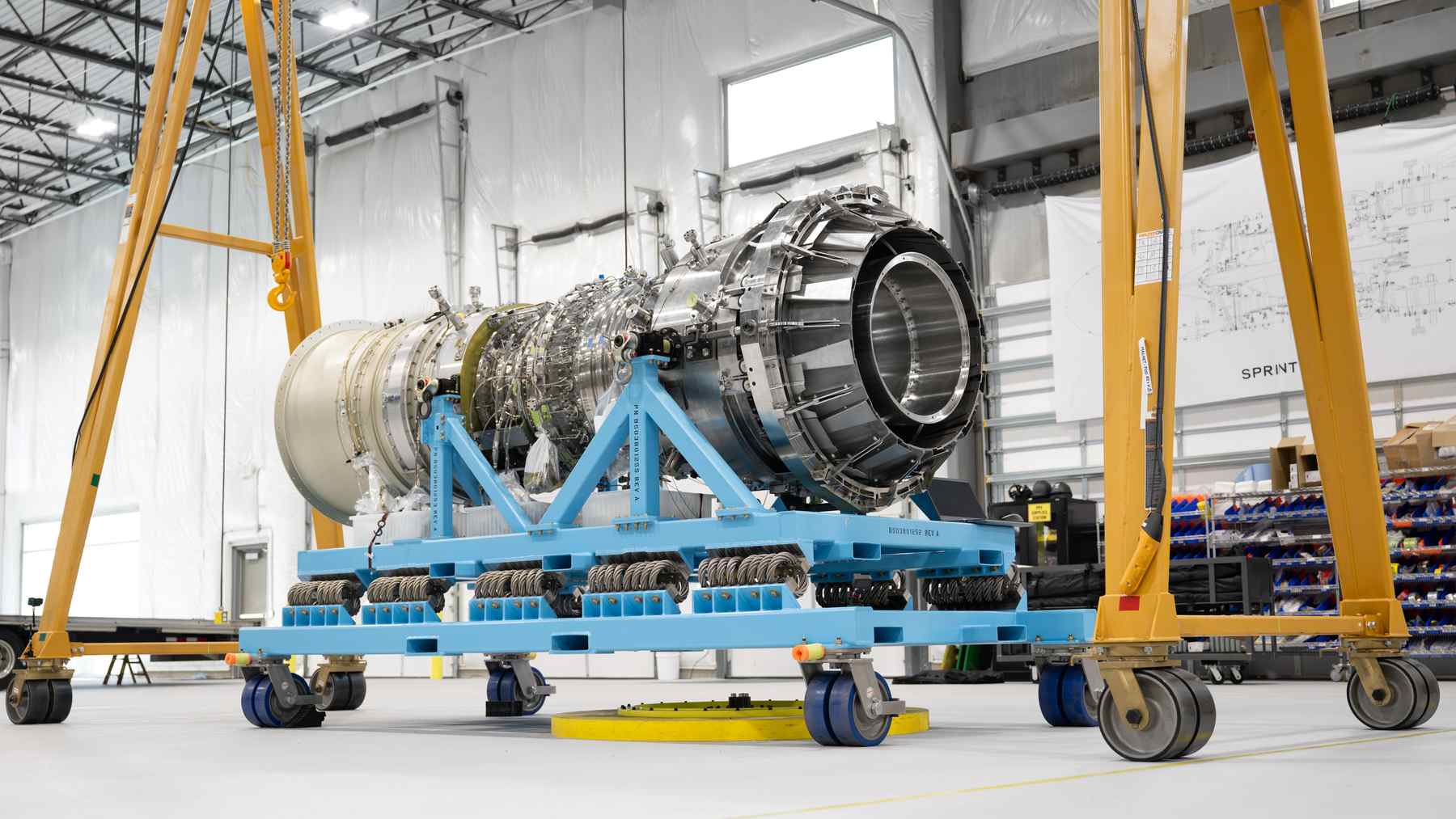
Boom Supersonic says it lit the prototype core of its new engine on Saturday, November 21, at the Colorado Air and Space Port in Watkins, east of Denver. It didn’t catch on the first attempt. It caught on the second, and the team spun it up to 6,500 rpm with nearly 2,000 sensors streaming data in real time, according to Aviation Week, which says no startup has designed a bigger jet engine.
Blake Scholl, Boom’s founder and CEO, told the magazine his team “thought there was less than a 50% chance it would work.” He also squeezed in a Prometheus reference, which I’ll allow. Setting something on fire on purpose is pretty much the job description here.
So why should you care about half an engine spinning on a test stand in Colorado?
Because this same chunk of hardware is supposed to end up in two very different machines. One is Superpower, a 42-megawatt natural gas turbine Boom is pitching to AI data centers. The other is Symphony, a 40,000-pound-thrust turbofan meant for Overture, the Mach 1.7 airliner the company wants to build. Admittedly, the airliner’s still very much a plan.
Gas turbines have been a busy beat around here lately. We’ve covered a Texas campus that wants to make its own power with roughly 35 turbines, and how a 369-ton gas turbine came ashore on an Irish beach.
So what’s an engine core, anyway?
A jet engine basically squeezes air, burns fuel in it, and lets the hot gas spin turbines on the way out. The core is the hot, high-pressure middle of that process, and every other part of the engine runs off the gas it produces.
In Boom’s case, the core is a six-stage high-pressure compressor and a single-stage high-pressure turbine, with the combustor sitting between them. Extra turbine stages behind it pull more energy out of the exhaust. On an airliner, that energy turns a big fan. On a power turbine, it turns a generator.
Power companies have been turning aircraft engines into generators for decades (the industry calls them aeroderivative turbines), so the idea isn’t new. Boom’s twist is designing both versions at the same time. Aviation Week reports that more than 75% of the parts are common between them.
The differences live at the low-pressure end. Superpower, which uses a twin-shaft layout, has four low-pressure compressor stages to Symphony’s three, it drops a turbine stage, and it doesn’t get a fan, since a generator has no use for thrust. Symphony, as you’d expect for something that has to fly, is a lot lighter. It’s a pretty clever way to get two products out of one development bill, at least on paper.
So what do you do with 2,000 sensors?
The core isn’t inside a finished engine yet, so the Watkins rig fakes the missing pieces. A vacuum pump stands in for the bypass duct. A variable exhaust nozzle plays the low-pressure turbine, pushing back on the compressor the way the real thing would. The point is to map how the compressor actually behaves and compare it against the design code, the software model Boom’s engineers used to shape it. If the real readings line up with the model, you can trust that model a lot more once you start bolting on everything else. If they don’t, you’d much rather find out now.
Boom’s October 22 release put more than 1,000 sensors on the core itself, and about 2,000 once you count the fuel and lubrication systems. Scholl told Aviation Week they kept the first run short on purpose, basically as a data grab.
That’s normal. But neither source gives a run time, so I can’t tell you whether the core spun for 30 seconds or half an hour.
There’s still a lot of engine missing
Watkins only had the core on the stand. The low-pressure compressor, the extra turbine stages and, on Symphony, the fan all still have to be built and joined to it.
Then you have the turbine blades. The blades in the hottest part of a modern engine are usually cast as a single crystal of metal, which helps them hold their shape at temperatures that would make ordinary castings stretch and crack. Scholl told Aviation Week that kind of blade can’t simply be bought off the shelf, and that supply is tight across the industry.
So Boom’s setting up what it calls an all-digital foundry inside its 200,000-square-foot Superfactory in Centennial, Colorado. It wants the foundry to pour single-crystal blades and vanes from the company’s own alloy recipes, without the hard tooling foundries normally need. The company expects its first single-crystal parts to ship in 2027.
The October release lists Boom-made compressor vanes, the central drive shaft and the turbine cases and frames as parts already in this core. It doesn’t say who made the turbine blades that spun on Saturday, and I couldn’t find that anywhere else.
The calendar is pretty ambitious
Boom wants first customer deliveries of Superpower around mid-2027, according to that same release. Aviation Week says the first test of a complete engine is also targeted for around mid-2027. Frankly, delivering a product in the same window you first run it complete is a tight squeeze, and I’d be a little surprised if both dates hold. Maybe they will.
After that, the company’s plan calls for 1 gigawatt of turbines a year (25 units) by 2028 and 2 gigawatts (50 units) by 2029. Boom presents those as targets, and the release doesn’t list customers, so we don’t know yet who’s first in line.
Still, Boom’s arguably tackling the easier market first. A turbine bolted to a concrete pad has an easier life than one hanging off a wing at Mach 1.7, which makes the data center version a pretty sensible place to start.
Before any deliveries, though, Boom says it’ll spend the next two months pushing the Watkins core harder and widening its test envelope. So far, that envelope tops out at the 6,500 rpm the core hit on November 21.
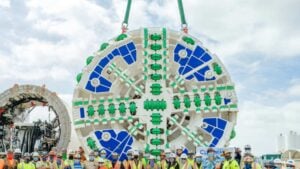 A 21.5-foot boring machine has sat alone for 16 months a mile past a breach in a 7-mile wastewater tunnel under Los Angeles, and engineers now blame too little grout behind the concrete lining as officials say reaching it could take up to another yearIndustry · 3 hours ago
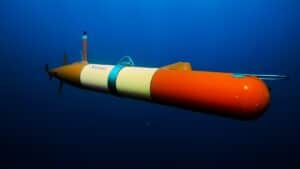 A 242-pound underwater drone plugged into a wave-powered buoy at sea for the first time off California, docking twice with a float that makes about 10 times the power of a solar dock, while it and its sister drones logged almost 2,500 miles in about 2,000 hoursIndustry · 5 hours ago
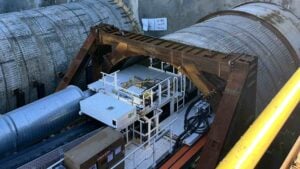 A second 1,680-ton boring machine with a 28-foot cutterhead has started chewing through the rock under New Jersey beside its twin, each one dragging 500 feet of gear and lining its tube with 850 concrete rings, and both get swapped out for new machines before the HudsonIndustry · 1 day ago