
Air-independent propulsion has been the whole selling point of German submarines for years. It is the reason a diesel-electric boat with a fuel-cell stack can sit underwater for weeks instead of days, and a large part of why Ottawa picked Germany over the Korean bid in the first place.
The Type 212CD that Berlin is selling to Canada runs a hydrogen fuel cell alongside its diesels. Which is why the latest wrinkle out of Toronto is more interesting than the usual defense-contract press release.
A small Canadian company that turns scrap aluminum into hydrogen wants a seat at that table.
The company is GH Power, and last Thursday it confirmed it is still in talks with TKMS about plugging its modular reactor into the industrial base being built around Canada’s new submarine fleet. The joint announcement lays out what is actually on the table, and it is less “hydrogen reactor bolted into a submarine hull next Tuesday” than “let us work out how this Canadian tech fits a program Ottawa insists on building at home.”
What GH Power actually makes
The reactor is not a reactor in the nuclear sense. Nothing is splitting. It is a modular chemical unit that takes scrap or recycled metal, mostly aluminum, adds water, and runs a reaction that yields three products at once.
The first is high-purity alumina, which turns up in specialty ceramics, semiconductors, lithium-ion battery separators and defense hardware. The second is hydrogen. The third is heat, usable directly in industrial processes.
For a naval program, the middle two matter most. A shipyard gets a domestic hydrogen stream it can burn or use as feedstock, plus a critical material Canada currently imports. The heat is a bonus for anyone running an energy-hungry plant on the Atlantic coast.
Whether the chemistry scales is the open question, and it is the one that decides everything else in this story.
Why TKMS is even having this conversation
Because Ottawa left it no choice.
On July 6, Prime Minister Mark Carney announced from Canadian Forces Base Halifax that Team 212CD, the TKMS-led group, had been picked as preferred supplier for the Canadian Patrol Submarine Project. Up to 12 boats. A lifecycle cost reported at up to CAD 100 billion. The largest defence procurement in Canadian history.
TKMS beat South Korea’s Hanwha Ocean and its KSS-III Batch-II design. Hanwha is not fully out either, since Ottawa kept it as reserve supplier in case negotiations on cost, technology transfer or industrial benefits fall apart.
That last phrase is the important one. The program runs under Canada’s Industrial and Technological Benefits policy, which obliges a foreign prime contractor to push equivalent economic value back into the domestic industrial base. It is not a suggestion. It is the mechanism by which the deal gets signed.
So TKMS has been assembling Canadian partners at speed, and the numbers it is quoting are enormous: CAD 167 billion in total economic activity, more than CAD 86 billion in economic impact, over 650,000 job-years across the life of the project.
GH Power is one of several names circling that pot. The Team 212CD partner list already includes Patriot Forge, an Ontario open-die forging house, and Kongsberg Geospatial in Ottawa, which has contributed more than 50,000 hours of Canadian software work to the ORCCA combat management system. So this is not a one-off flirtation. It is a pattern.
The 41-day number, and where hydrogen actually sits
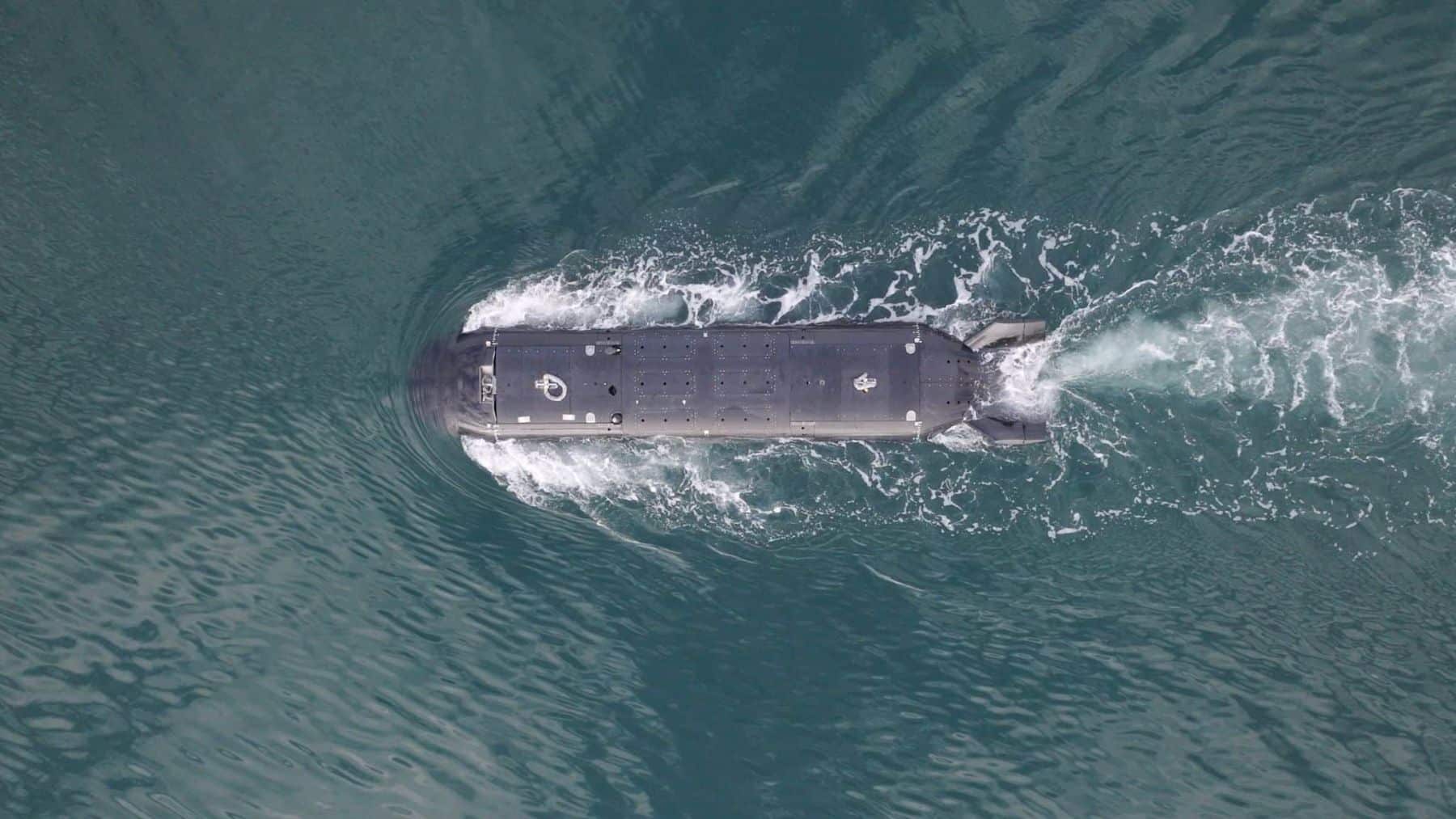
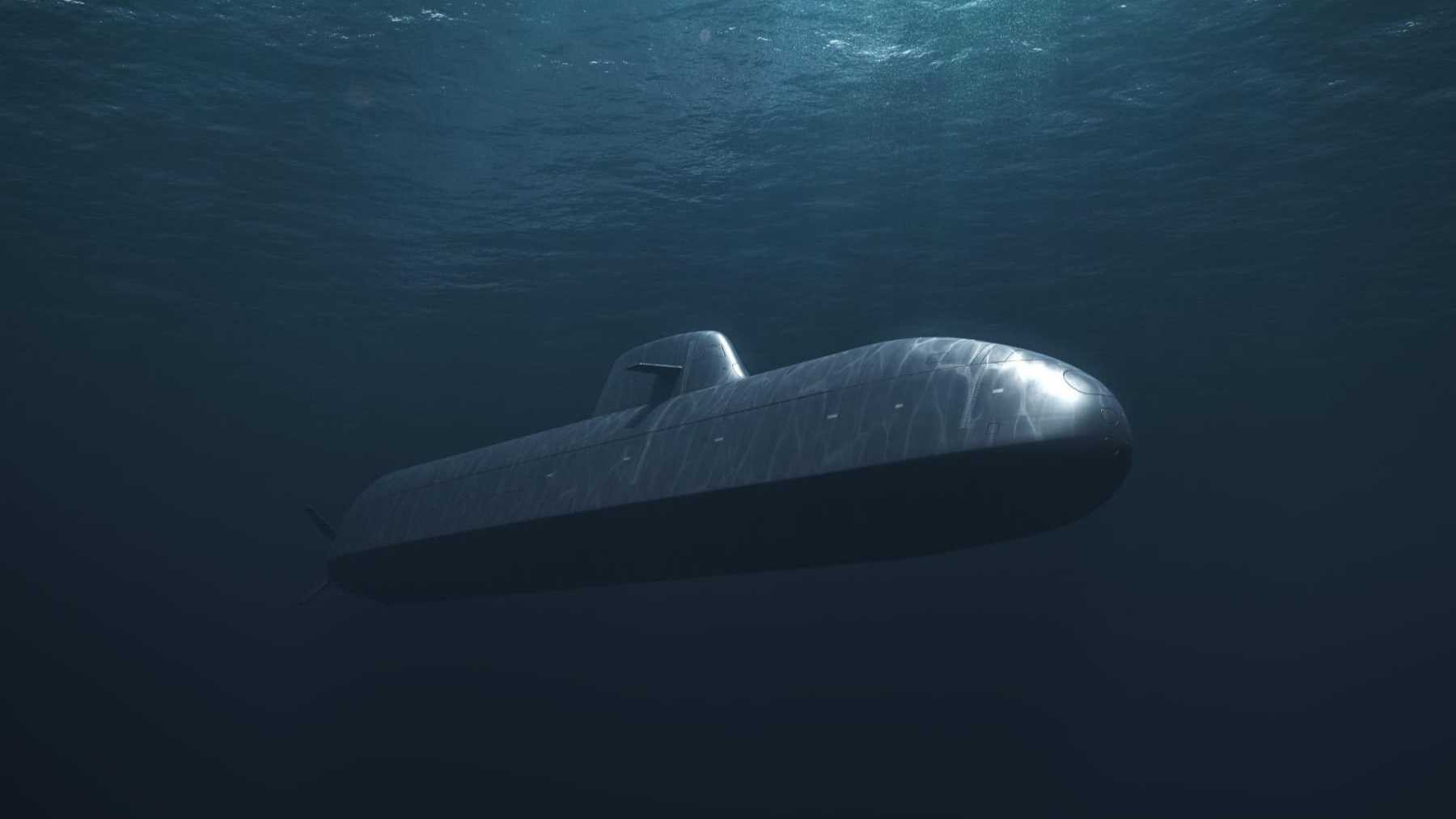
The boat is the Type 212CD, developed jointly by Germany and Norway on the bones of the proven 212A, with a larger diamond-faceted hull shaped to bounce active sonar the way a stealth aircraft bounces radar.
It displaces about 2,500 tons on the surface and 2,800 submerged, runs 73 meters (240 feet) long, does better than 20 knots underwater, and carries a crew of roughly 30. That makes it about 65% bigger than the 212A it replaces.
The propulsion is where the story lives. Two MTU diesels, lithium-iron-phosphate batteries, and fourth-generation PEM fuel cells combining hydrogen and oxygen to make electricity directly, with almost no moving parts and very little waste heat.
TKMS puts submerged endurance at up to 41 days at low speed. That is roughly six weeks without surfacing, against about three weeks for the original 212A. It is a serious number, and it is the entire reason Canada wanted the boat, because a submarine patrolling beneath Arctic ice cannot simply pop up to snorkel when the batteries run low.
Here is the detail that makes the hydrogen angle click. Because stored hydrogen is dangerously explosive, the 212 family keeps the fuel and oxidizer in tanks outside the crew’s pressure hull, between the inner and outer skins, piping it inward only as the fuel cells consume it. Only a tiny quantity is ever near the crew.
Which is a neat piece of engineering, and also a reminder of why nobody is putting a chemical reactor inside one of these things. Hydrogen aboard a 212CD is stored fuel, delivered from shore. It is not manufactured underway.
So the realistic GH Power play is not propulsion. It is supply. Somebody has to produce, purify and deliver hydrogen to a Canadian submarine base for decades, and Ottawa would very much prefer that somebody be Canadian.
The Matinas deal, in plain English
The other reason GH Power is in the news is a corporate move that looks bizarre on first read.
On July 10, the reactor company signed a definitive business combination agreement with Matinas BioPharma Holdings, a US biopharma outfit listed on the NYSE American. GH Power folds into a newly formed Ontario company expected to be named GH Power International, which becomes the public parent of both.
It is a reverse listing, not a pharma pivot. Matinas is simultaneously selling its drug unit, Matinas BioPharma Nanotechnologies, to Azurity Pharmaceuticals for $4 million up front plus up to $17.5 million in milestones. What GH Power is buying is the listing itself.
The split tells you everything: GH Power holders end up with roughly 91% of the combined company, Matinas holders about 9%, based on valuations of $250 million for GH Power against $24.73 million for Matinas.
Worth knowing, and largely missing from the coverage: Matinas had been working through a plan to regain compliance with NYSE American listing standards after facing delisting. This is not a healthy company handing over the keys. It is a shell with a ticker finding a use.
Closing is targeted for the fourth quarter and is far from automatic. It needs Matinas stockholders, GH Power securityholders, an Ontario court, an effective Form F-4 registration statement that has not been filed yet, NYSE American listing approval, and at least $15 million of fresh GH Power financing.
Why it matters for the submarine story: a public listing is roughly what you need if you are trying to scale a modular reactor platform fast enough to be useful to a shipbuilding program measured in decades.
What “exploring a collaboration” actually means
GH Power CEO David White called the TKMS selection “an important milestone for our collaboration” in the joint statement, and framed it as a foundation for talks toward a definitive agreement.
Which is polite executive-speak for: we do not have a contract, but we have a doorway.
White was also unusually candid about the appeal, describing ITB participation as non-dilutive funding attached to a large government procurement. Translated: money that does not cost him equity, which for a pre-revenue technology company is close to oxygen.
TKMS chief sales officer Thomas Keupp added the customary line about sustainability and building a long-term Canadian industrial base. You will read that same sentence in every ITB-linked announcement out of Ottawa this year.
The pattern is worth noticing regardless. Every foreign defense contractor queuing up in Canada right now is pairing itself with a domestic cleantech or advanced-materials firm, because that is the box the government wants ticked before the cheques clear.
The realistic timeline
None of this is going into a submarine tomorrow. The 212CD is still new: first boats are under construction for Germany and Norway, and TKMS expects to hand over the first one in 2033. Canadian hulls follow, with the first four targeted for 2034 and binding contracts due by the end of 2027.
If GH Power’s reactor gets validated and qualified inside that window, it can plausibly slot into the shipyard side: hydrogen for industrial processes, alumina for components, thermal energy for manufacturing. That is the ITB-compatible play, and it is the one both companies are actually discussing.
The romantic version, a Canadian scrap-aluminum reactor humming inside a German pressure hull feeding an AIP stack under the ice, is a different proposition entirely. It would need naval architecture review, safety qualification against the existing 212CD certification, and sign-off from two European navies who have spent twenty years perfecting exactly how hydrogen is handled aboard these boats. That is on nobody’s roadmap.
For anyone tracking how this shipyard deal keeps throwing off side stories, we covered TKMS’s stranger container-built crewless submarine earlier this summer. Same yard, same hydrogen obsession, very different boat.
So make of it what you will. GH Power got a real seat at a real table, which is more than most cleantech pitches manage in defense.
Whether that seat becomes a hydrogen plant serving a Canadian submarine base or just a line item in an ITB spreadsheet depends on a court in Ontario, a registration statement that has not been filed, and about six years of qualification work that has not started.