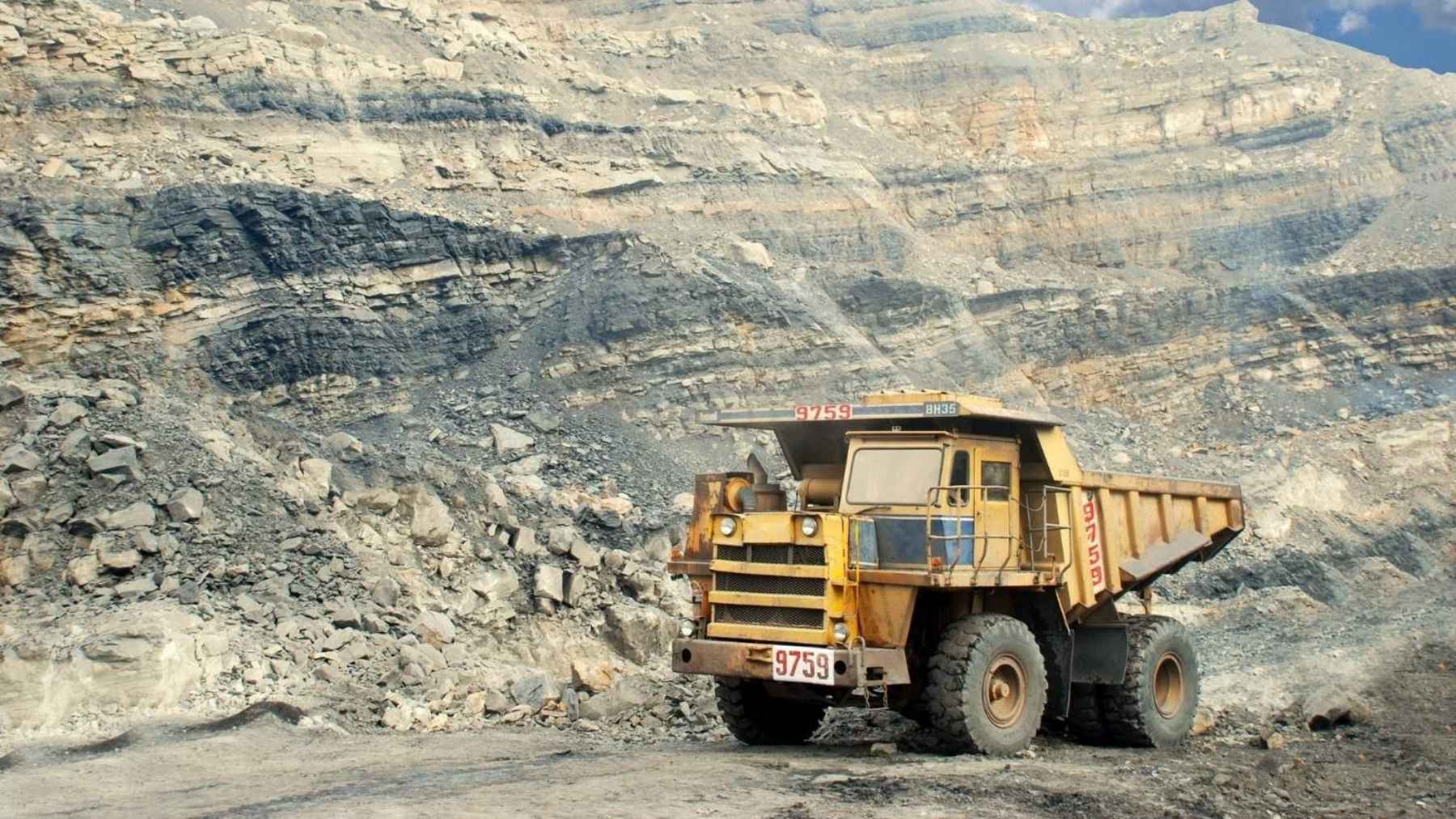

Within the Canadian Shield, hydrogen has been quietly building up in rock that is roughly a billion years old, and until last month nobody had measured how much was coming out, where it was concentrated, or how long the discharge could be sustained. A paper published in the Proceedings of the National Academy of Sciences on May 18, 2026, did all three. The work was led by geochemists at the University of Toronto and the University of Ottawa, using ten years of underground monitoring data from an operating mine near Timmins, in northern Ontario. The number that comes out of the extrapolation, more than 140 metric tons of hydrogen per year from a single site, is the first sustained multi-year measurement of natural hydrogen output from this kind of rock published in a peer-reviewed journal.
The lead author is Barbara Sherwood Lollar, a University Professor in U of T’s Department of Earth Sciences. Her co-author, Oliver Warr, is an assistant professor in the Department of Earth and Environmental Sciences at the University of Ottawa. Funding came from the Natural Sciences and Engineering Research Council of Canada, the Deep Carbon Observatory, and the Canadian Institute for Advanced Research. The release went out through the University of Toronto on EurekAlert. The paper itself is at DOI 10.1073/pnas.2603895123.
What the paper actually measured
The per-borehole figure looks small. Each borehole at the Timmins site discharges an average of 0.008 metric tons of hydrogen per year, which the University of Toronto release converts to roughly 8 kilograms, or about the weight of an average car battery. The release also notes that boreholes can keep producing at that rate for ten years or more. That sustained duration is the part that separates this study from earlier one-off measurements of natural hydrogen at other sites around the world.
The number that does the heavy lifting is the extrapolation. The site has nearly 15,000 boreholes. Scaled across all of them, the total comes to more than 140 metric tons of hydrogen per year. The authors put the energy equivalent at “4.7 million kilowatts of energy per year from a single location,” enough to cover the annual energy needs of more than 400 households. That household conversion is from the U of T release and travels with that caveat.
What “white hydrogen” actually means
Most of the hydrogen used today comes from a refinery. The dominant method is steam reforming of natural gas, which converts hydrocarbons into hydrogen and releases carbon dioxide along the way. Hydrogen made from water electrolysis powered by renewables, often called “green hydrogen,” is cleaner on lifecycle emissions but energy-intensive to produce and expensive to store and ship. “White hydrogen” is the term researchers use for hydrogen generated naturally underground, through slow chemical reactions between certain rocks and the groundwater moving through them. It is not refined and not manufactured.
The U of T release puts the existing global hydrogen market at a $135-billion industry. The single largest use is fertilizer production, which makes hydrogen a foundational input to global food security. After that come steel and methanol. Those three uses are where natural hydrogen, if it can be produced reliably and at scale, would land first. Sherwood Lollar framed the case this way in the university release: “The data from this study suggests there are critical untapped opportunities to access a domestic source of cost-effective energy produced from the rocks beneath our feet.”
The U.S. piece of the Shield
The Canadian Shield is a roughly U-shaped slab of exposed Precambrian rock wrapped around Hudson Bay. It covers on the order of three million square miles. Most of that sits in Canada and Greenland, but the Shield does cross into the lower 48.
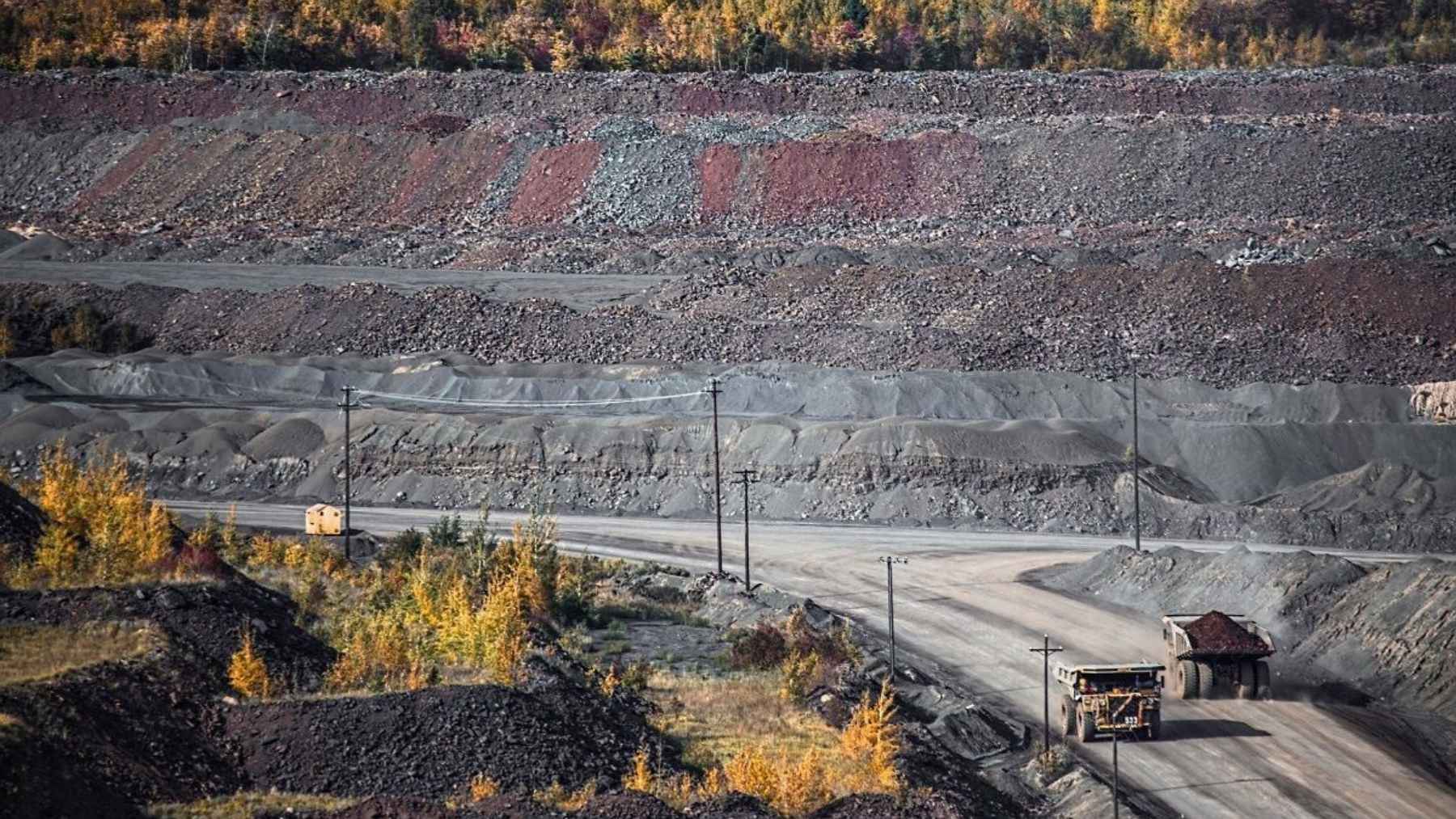
According to Encyclopaedia Britannica’s entry on the formation, the U.S. portions are small extensions into northern Minnesota, Wisconsin, Michigan, and New York. The Minnesota Geological Survey, in its own Precambrian geology brief, places the state “at the southern edge of the Canadian Shield” and treats the iron mines of the Mesabi Range as part of that same ancient bedrock. The U.S. Geological Survey recognizes the broader Laurentian Upland Province, which includes the Superior Upland across northern Minnesota, northern Wisconsin, and most of the Upper Peninsula of Michigan, plus the Adirondack Mountains of upstate New York, which sit on uplifted Precambrian rock structurally linked to the same Shield.
The Timmins mine the new paper draws on is several hundred miles above the international line. The paper does not claim that the United States hosts commercially measured white hydrogen, and the U.S. Geological Survey does not list it as a developed resource today. What the paper does provide is the first measured baseline for sustained natural hydrogen output from this kind of rock. The rock itself does not pay attention to the border.
Where this fits, and where it doesn’t
The applications the authors discuss are industrial. The U of T release talks about local and regional industry hubs in northern Canada, decarbonization of mining operations, and a way to reduce the cost of fuel transport to northern communities. The link to mining is the part Warr, the Ottawa co-author, emphasizes. He told the university release: “Natural hydrogen is produced in the same rocks where Canada’s nickel, copper and diamond deposits are found, and that are currently under exploration for critical minerals such as lithium, helium, chromium and cobalt.” That co-location of hydrogen and critical minerals is the part with the most obvious read-across to U.S. domestic supply chains. The same logic is already shaping the Nevada lithium story we covered in our GM-Thacker Pass piece, where a single rock formation turned out to host a deposit big enough to redraw the country’s battery supply map.
What the paper does not do is rewrite the case for hydrogen-powered passenger vehicles. The new measurement is about flow rates from a specific kind of Precambrian rock at one site, not about the cost of hydrogen at a retail pump. The economics of fuel-cell cars in the United States have been driven for two decades by the cost of distribution and the thinness of station networks, and a paper about underground geology in Ontario does not change either of those things.
What the paper does not claim
Three caveats sit alongside the headline numbers.
- The measurements were taken in Ontario. Whether the same flow rates exist under the Iron Range, the Upper Peninsula, or the Adirondacks is an open question, and not one the paper tries to answer. The Shield is a single geological province in name, but the specific rock chemistry, fracture systems, and groundwater conditions that produce natural hydrogen vary site by site.
- The 140-ton figure is extrapolated from per-borehole averages across one mine. The annual estimate is broadly in line with what has been reported for a separate site in Albania, but the field still lacks the kind of multi-site, multi-rock-type baseline that exists for oil and gas reservoirs.
- Nothing in the paper sets a commercial production timeline. The authors describe their work as a first measured assessment of economic viability, which is several steps short of a producing well. Geological Survey of Canada does not currently list white hydrogen among its developed resource categories, and the U.S. Mineral Resources Program does not list it at all.
What changes from May 18 on
The next step, by Sherwood Lollar’s own framing in the U of T release, is mapping. The authors say their dataset can now be applied to hydrogen-bearing geology around the world, including formations identified but not measured. The Superior Upland and the Adirondacks are the obvious places on this side of the border to look first. The Wyoming craton, which shares a Precambrian crystalline basement with the Shield even if it sits outside the same physiographic province, is another candidate.
The honest takeaway is narrow. White hydrogen has not suddenly become a producible commodity, and the industrial hydrogen market is not about to reorganize around boreholes in Ontario. One assumption underneath the global hydrogen economy has shifted, though. The idea that the molecule has to be manufactured at industrial scale, with all the energy and capital that requires, is no longer the only assumption on the table. The rock under the Mesabi Range is the same rock that has been quietly producing hydrogen near Timmins for at least a decade. Somebody is now going to go measure it.