
Say hydropower and most people picture a dam: a wall of concrete, a reservoir stacked behind it, a lake where a valley used to be. That is how the overwhelming majority of America’s water power actually gets made, and it is why the federal rulebook for licensing it was built around structures that hold back entire rivers.
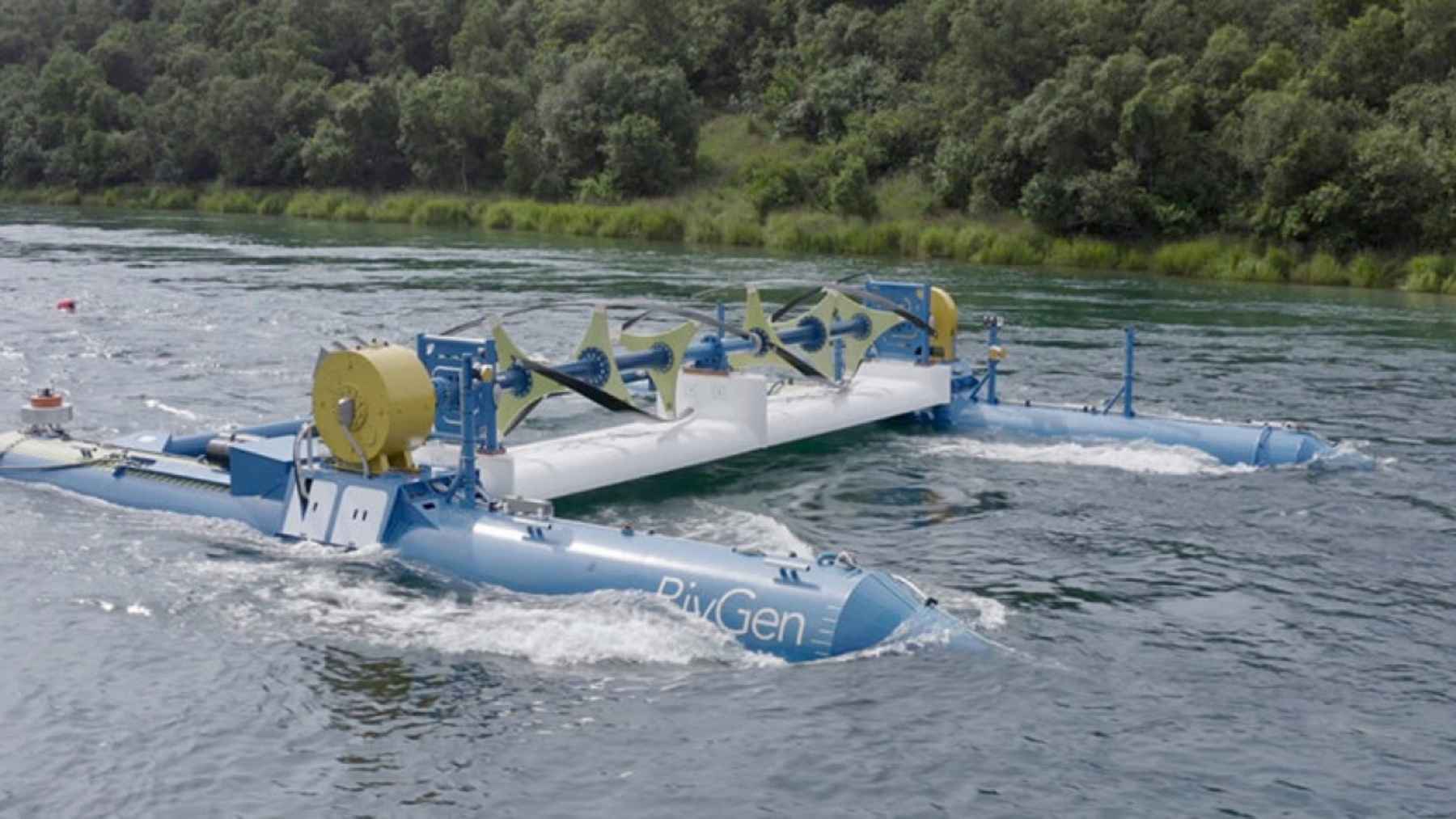
The machine on the bottom of the Kvichak River in southwest Alaska holds back nothing at all. It has the footprint of about half a basketball court, it is invisible from the surface, and it started generating electricity down there in July 2019.
On Tuesday, a bill landed in the House of Representatives that exists in large part because machines like that one keep getting handed the same paperwork as Hoover Dam.
The bill draws a hard line at 5 megawatts
The Congressional Record for July 21 lists H.R. 9806, introduced by Rep. Nick Langworthy of New York alongside Rep. Kim Schrier of Washington, and referred to the House Energy and Commerce Committee. It is the House version of the FLOWS Act, short for Fair Licensing for Operations of Water Structures.
The Senate companion, S. 3518, was introduced by Sens. Angus King of Maine and Lisa Murkowski of Alaska in January, and cleared the Senate Energy and Natural Resources Committee in June.
The part that matters here is a category the bill invents from scratch: the “micro hydrokinetic energy project,” defined as a marine energy project with under 5 megawatts of installed capacity. Wave, tidal, river current, all of it.
Projects that qualify would get a streamlined permitting pathway and shorter licenses of 10 to 20 years rather than the standard long-haul term.
Five megawatts is not a lot. A single modern onshore wind turbine can beat it on its own. Congress is bothering to write a size class that small because the machines actually sitting in American water right now are smaller still.
The turbine has been working the same stretch of river since 2019
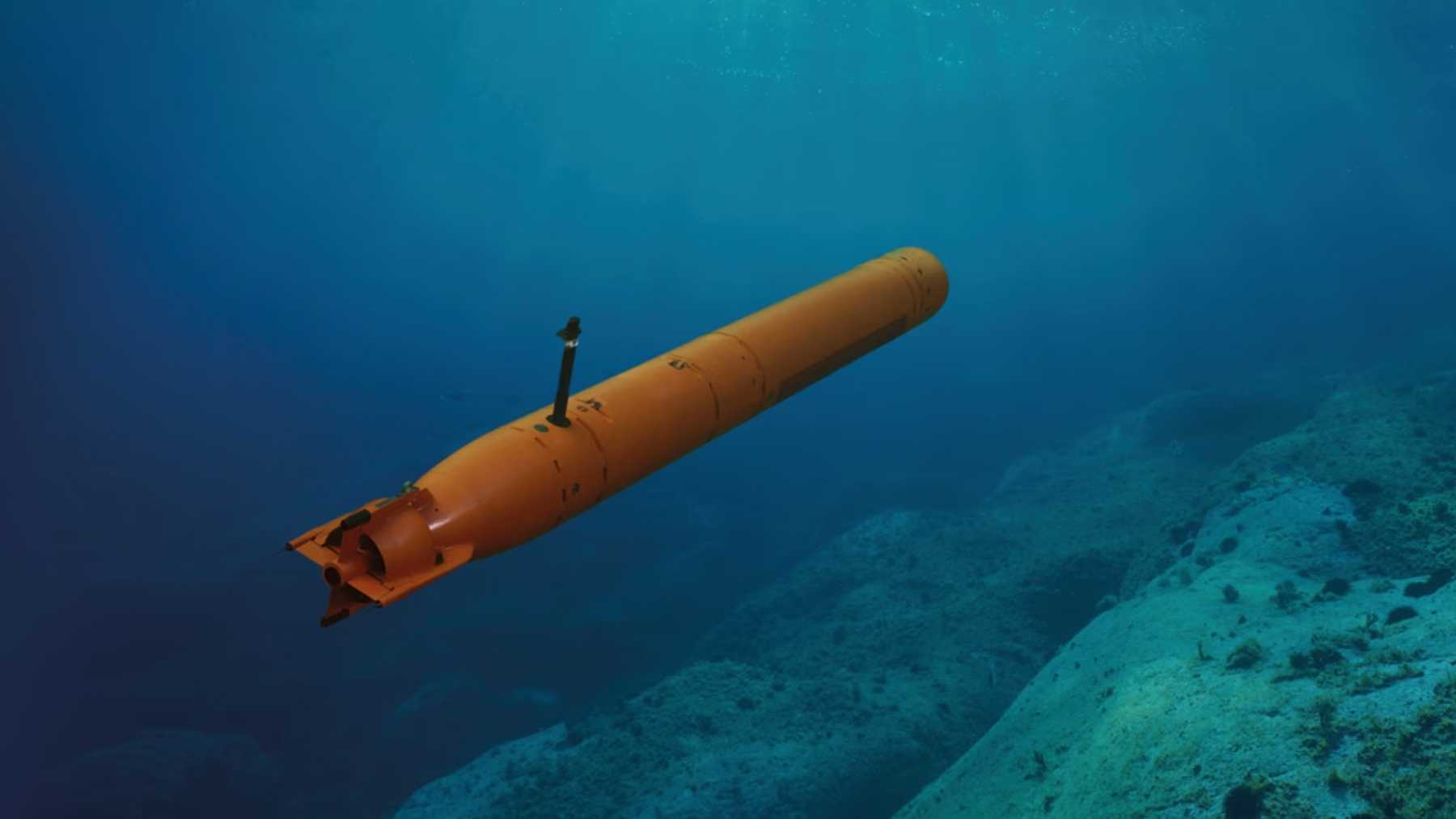
The device is a RivGen Power System built by ORPC, a company headquartered in Portland, Maine. It uses a cross-flow turbine, closer in principle to a paddle wheel lying on its side than to anything shaped like a propeller.
A Department of Energy-funded acoustic test report puts a single unit at roughly 15.7 meters long, 14.3 meters across and 3.5 meters high, or about 51 by 47 by 11 feet, with a rated capacity of 35 kilowatts at a flow speed of 2.25 meters per second.
It rides on a buoyant pontoon frame. To install it, the crew tows it out and floods the frame until the whole assembly sinks to the riverbed. To retrieve it, they blow the ballast and it comes back up. No crane barge, no heavy lift vessel, which is the entire point in a village with neither.
That village is Igiugig, about 70 people at the spot where Lake Iliamna empties into the Kvichak, roughly 2 kilometers downstream of the lake outlet in about 5 meters of water.
DOE’s Tethys project database, updated in May, records the first grid-connected unit as installed in 2019 and a second in 2023, and calls the site the longest operating hydrokinetic project in the Americas.
The license belongs to the Igiugig Village Council, not to the company. The council received a 10-year FERC pilot license on May 23, 2019, the first tribal entity in the country to hold one, and it runs to April 30, 2029.
The fish monitoring found more than a clean bill of health
The Kvichak drains into Bristol Bay, which produces the largest sockeye runs on the planet. The Alaska Department of Fish and Game’s preseason forecast for 2026 puts the Bristol Bay return at 45.32 million fish, with about 11 million of those expected in the Naknek-Kvichak district.
The escapement goal for the Kvichak alone is 2 to 10 million sockeye. That is the number of adults the state wants swimming up past the village every summer, including the one happening right now.
So the machine has to share the river. The FERC license came with a fish monitoring plan built around underwater video, which works there because the Kvichak is shallow and unusually clear.
The adult salmon result was good. After several years with no documented collisions and no evidence of impact on adult sockeye, the adult monitoring requirement was dropped in 2022, in consultation with the project’s adaptive management team and under the state habitat permit. Tethys lists the risk to adult salmon as retired.
The juveniles are a different and more interesting story, and it is the one that rarely gets quoted.
University of Alaska Fairbanks researchers published their 2021 smolt work in the North American Journal of Fisheries Management. Between May 21 and June 10 that year, cameras downstream of the turbine logged 2,374 sockeye smolts passing through frame. Most went by in a single five-day burst, and almost all of it between midnight and 4 a.m.
Some passed normally. Some passed disoriented, and the turbine’s rotational speed appeared to influence which. Blade strikes were observed, and every one of them occurred while the turbine was spinning at high production speed.
Extrapolating across the full out-migration window, the authors estimated the turbine interacted with roughly 200,000 sockeye smolts during the monitored period. That is an interaction count, not a mortality count, and the paper does not claim otherwise.
It is one of the very few hard numbers anyone has published on what a river turbine does to a working salmon run, and it came out of the site held up as evidence that the technology is benign.
The same DOE-funded acoustic work measured the Igiugig unit as the loudest ORPC device surveyed, and put its radiated noise at roughly the amplitude of a recreational fishing boat.
Diesel arrives 2,000 gallons at a time on a DC-4
Igiugig has no road. Everything flies.
A technical report published in February by the National Laboratory of the Rockies, the DOE lab formerly known as NREL, lays out the economics with more candor than any press release has managed.
Fuel is delivered 2,000 gallons at a time on old DC-4 airplanes. The village burns roughly 25,000 gallons a year to make about 350,000 kilowatt-hours of electricity, plus another 27,000 gallons or so for heat.
In 2023 that fuel reached $9.61 per gallon for generation and $10 per gallon for heating. The modeled baseline levelized cost of electricity comes out at $0.86 per kilowatt-hour. Alaska’s Power Cost Equalization program softens the residential electricity rate; the heating bill lands on households largely unbuffered.
The report also contains the best single illustration of what running a 70-person grid is actually like. During a 2023 site visit, an efficiency check at the village clinic found heat tape still energized on a well that had collapsed seven years earlier, pulling power every day since. They turned it off.
Remote operations everywhere are chipping away at the same problem from different angles. A salmon farm above the Arctic Circle now covers more than 90% of its load with floating solar, and its round-the-clock generator has barely turned over since.
A federal lab ran the numbers and the turbine did not win
The awkward finding is buried in the modeling. The lab tested a baseline plus four scenarios using the village’s own load data over a 20-year horizon, and assumed the river turbines would be out of service about two months a year, one for winter icing and one for summer maintenance.
Two RivGens at 85% availability cut diesel for electricity by 57% and brought the levelized cost from $0.86 down to $0.76 per kilowatt-hour. One RivGen plus 125 kW of solar did better: 59% and $0.64.
Solar alone, 200 kW of it, managed 36% and $0.71. Solar plus a 100 kW wind turbine came out ahead on both counts, at 63% and $0.60.
The report’s conclusion is blunt. At the modeled power purchase price of $0.47 per kilowatt-hour for the river turbine, the lowest-cost systems for offsetting diesel used for electricity do not include RivGen.
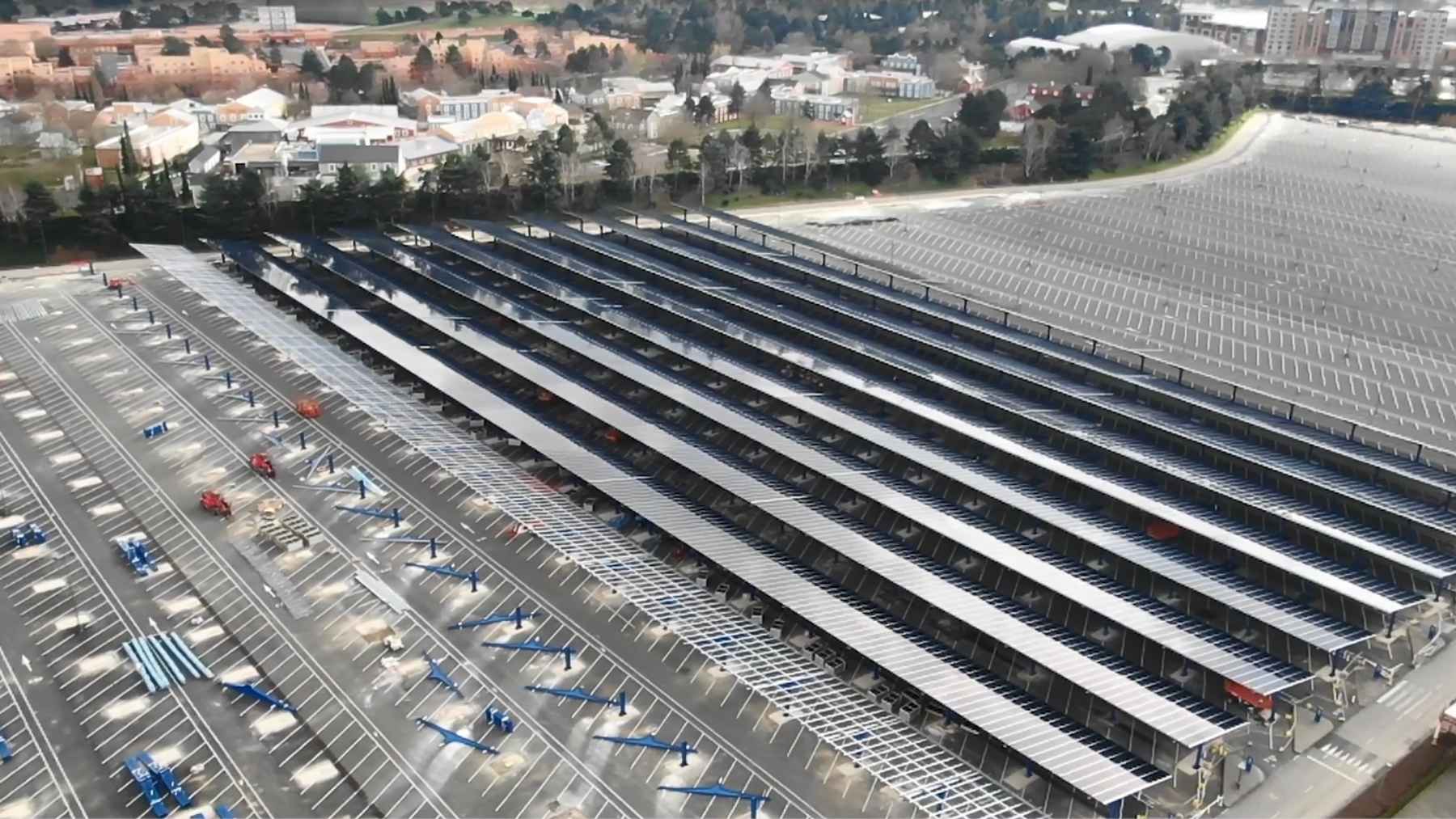
Igiugig went with solar. The village won a 2023 state Renewable Energy Fund grant for a 200 kW array that the lab expects to cut diesel for electricity by about 36% and take $0.15 off every kilowatt-hour.
The community’s stated target is now a 50% cut in diesel for electricity by 2030, measured against 2019. Earlier material around the project talked about 90% reductions and going “diesels off” by 2025. Neither happened, and the current federal documents do not pretend otherwise.
The report notes, in one line, that the ownership structures and performance of the RivGen devices and the battery system are under evaluation.
Not all of the waste is generation-side either. Smart meters put distribution losses across the village at roughly 15%, and the lab traced a significant share to a single no-load transformer sitting at the end of the feeder. Removing it could cut total losses by 30%.
Buffalo’s proposed array lands exactly on the 5-megawatt line
Which loops back to the bill.
In October 2023, ORPC filed a FERC preliminary permit application for the Buffalo-Niagara Hydrokinetic Project, No. 15329, on the Niagara River inside the city of Buffalo. The Federal Register notice describes up to 265 turbine-generators for a combined installed capacity of 5 megawatts and up to 42,050 megawatt-hours a year.
Five megawatts is the exact ceiling the FLOWS Act draws around its new micro category. Buffalo is in New York, and so is Langworthy’s district, though nothing in the bill names any project.
A preliminary permit authorizes no construction. It buys priority to study a site and file for a license, for up to four years.
Permitting friction is not a uniquely American problem, either. Six seabed turbines built for a French strait are currently stuck over a single missing document, with every other permit signed and the shipyard 20 miles up the coast.
What the machine in Alaska actually proved
None of the economics changes what the Kvichak turbine is. It is a 35-kilowatt device, serving 70 people, that has been worked in and out of the same stretch of river since 2019 and has generated a body of environmental monitoring data nobody else on this continent has.
That data is the asset. It is what let regulators retire the adult salmon risk, and it is what produced the smolt paper that keeps the honest caveats attached.
The federal lab’s own math says a solar array and a wind turbine would get Igiugig off diesel for less money. The bill sitting in front of the House is not an argument about which one wins. It is about whether the next 35-kilowatt machine has to spend years proving it is not a dam before anyone gets to find out.
 @ryancounts ROOKIE2 months ago