
“Site Area Emergency” is one of those phrases that sounds a lot scarier than it usually turns out to be. It’s Department of Energy jargon, and like most federal jargon, it doesn’t tell you much on its own. But when a nuclear complex in South Carolina declares one on a Wednesday evening, you can bet people around Aiken want to know why.
This time, the cause was a fire in a single room at the Savannah River National Laboratory. That’s DOE’s on-site research lab inside the Savannah River Site, a federal complex that covers about 310 square miles across Aiken, Barnwell and Allendale counties.
The fire is out. The site’s own fire department handled it without outside help, according to the Post and Courier. A DOE spokesperson said one employee was taken to the hospital with minor injuries, and SRS says its radiation surveys didn’t pick up any contamination. Frankly, one room, one minor injury and clean surveys is about the best version of this story anyone could hope for.
Still, the response was a big one.
SRS closed the barricades at its entrances to incoming traffic and restricted rail, river and air traffic around the site. The FAA put temporary flight restrictions in place over the Aiken area and lifted them late Wednesday. Employees in A-Area, where the lab sits, were told to stay behind the barricades for about 30 minutes, according to WRDW. Highway 125 stayed open the whole time.
SRS ended the emergency at 9:45 p.m. ET. Oncoming shift workers were told to report as usual, and everyone else to come in as scheduled on Thursday.
So what is a Site Area Emergency?
DOE sorts serious incidents at its sites into three classes. An Alert covers a hazardous release that’s stayed inside the facility. A Site Area Emergency is the next step up, for a release that could reach harmful levels outside the facility but is expected to stay inside the site boundary, so it affects nearby workers and not the public. A General Emergency is the top class, where something could travel offsite or already has.
Which means SRS was treating Wednesday’s fire, at least at first, as something that might not stay in one building. And that lines up with what the state heard.
The South Carolina Emergency Management Division (SCEMD) says SRS’s first notification described the fire as causing an “unfiltered ground-level release,” according to WRDW. On Thursday, DOE said the fire didn’t release any radiological material or expose employees to radiological contamination, and that there’s no risk to the public or the environment.
Those two statements are pretty hard to square. I can’t find any survey data from SRS or DOE that explains how the call changed between Wednesday evening and Thursday. To be fair, emergency classifications are built to err on the cautious side before anyone has measurements in hand, so a scary first notice followed by a clean survey arguably isn’t that unusual. But it’s safe to assume investigators will want to see what the first call was based on.
SRS gave two different times for its own declaration
The emergency also has a clock problem. SRS’s second news release, posted at 7:30 p.m., said officials declared the Site Area Emergency at 5:39 p.m., and a DOE spokesperson gave Newsweek the same time. Then SRS’s third release, issued when the emergency ended, said 5:07 p.m.
So which time is right?
The most recent official release says 5:07 p.m., and that’s the figure WRDW and the Post and Courier are using. SRS hasn’t explained why its earlier release said 5:39. That might look like housekeeping, but it matters for one reason. SCEMD says SRS phoned the state at 5:45 p.m., and WRDW reports that the state’s radiological emergency plan calls for notification within 15 minutes of classification.
If the declaration came at 5:07, the state heard about it 38 minutes later. If it came at 5:39, the call went out six minutes later. That’s a pretty big gap for a system that’s supposed to run on a clock, and WRDW says it’s asked both SRS and SCEMD to explain it.
The lab’s fire-water system was already on a watchdog’s list
This is where the Defense Nuclear Facilities Safety Board comes in. It’s an independent federal agency Congress created in 1988 to keep an eye on DOE’s nuclear weapons sites. It can’t shut anything down, though. It inspects, writes letters and reports, and DOE decides what to do with them.
The board has been writing about fire protection at this lab for a while. In an April 5, 2023 letter, it raised concerns about the lab’s safety documentation and how equipment supporting the fire protection system was classified. In February, its inspectors wrote that many of the follow-up items on the lab’s fire suppression system were still open.
Then came the board’s resident inspector report for the week ending August 28. A board staffer and the resident inspector walked the lab’s fire-water supply system and found several post-indicator valves that were missing their tags or had open and shut indicators you couldn’t read, along with an old impairment that should’ve been cleared. If you’ve never seen one, a post-indicator valve is basically a valve on an underground fire main with a little post sticking out of the ground that tells firefighters whether the water’s on or off. Several of those problems have since been fixed, according to the report.
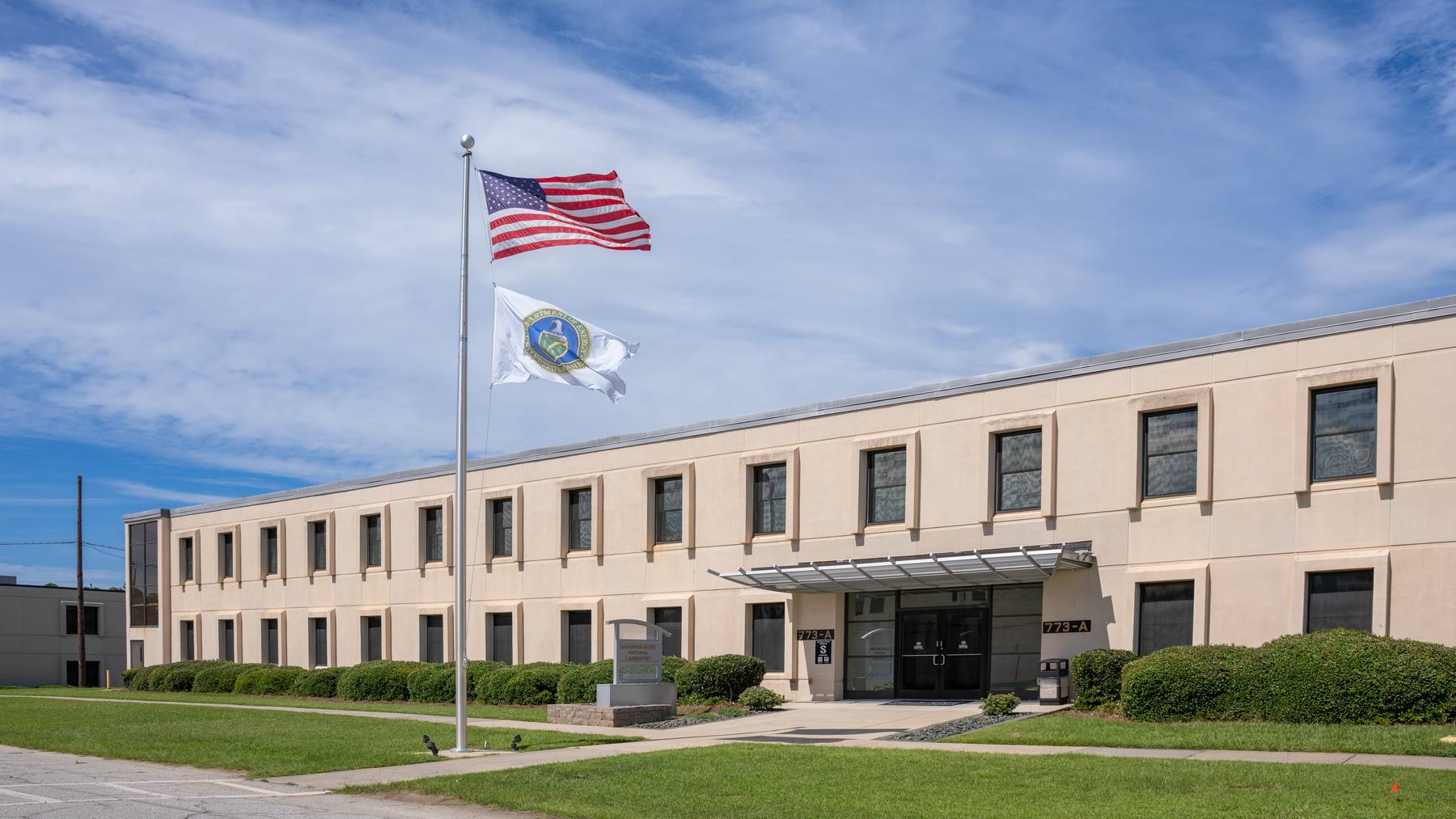
The same report described an outside review the lab had paid for. That contractor found the underground pipes feeding the fire-water system are aging and keep leaking, and it gave the lab two options. One was to replace all of that underground piping over time, with leak-rate checks and a hydrostatic test as required surveillance until the job’s done. The other was to build Building 773-A its own fire-water tank, fire pumps and underground distribution network, since that building depends on the safety-significant fire-water supply and sprinklers.
The lab’s engineers answered with a white paper. It recommended preventive maintenance or functional testing on the valves, more system-health reporting and keeping the right spare parts around, but it didn’t commit to either of the contractor’s options. The board said the lab was still weighing more controls for a future update to its safety rules.
Now, I’d be careful with all of this. Nothing DOE or SRS has said ties Wednesday’s fire to the fire-water system, and nobody has said the fire was in Building 773-A. We don’t know whether sprinklers even went off. Tom Clements, who runs the watchdog group Savannah River Site Watch, told the Post and Courier the board has been raising fire-suppression issues at the lab for more than six years. That’s a fair thing to bring up, as long as you don’t treat it as the cause.
It’s also a lot of oversight work for a board that, according to GPB News, has been down to a single member, Deborah Lee, since last year. Congress set it up to have five.
We still don’t know what burned
SRS and DOE haven’t said which room caught fire, what was in it, how the fire started or how it was put out. That’s a fairly important set of blanks for a lab like this one.
The Savannah River Site was built in the early 1950s to make plutonium-239 and tritium for nuclear weapons. These days it’s mostly cleanup work, nuclear waste, tritium operations, and storing and processing leftover plutonium and spent fuel. According to the Post and Courier, the lab’s research covers handling and disposing of nuclear materials, technology for making weapons, and making and storing hydrogen, which gives you a pretty wide range of things that could have been sitting in that room.
If you’ve followed the Savannah River Site for a while, you know it’s rarely short of big hardware stories, from the 375-foot concrete waste tank wrapped in 341 miles of cable to the 30-gallon drum it shipped to a New Mexico salt bed. A lab fire is a different kind of story, and it’ll probably take a while before we get the full one. Dave Lochbaum, formerly of the Union of Concerned Scientists, told the AP that finding a cause can take time. WRDW reports that investigations into cause and procedure at sites like this one typically run weeks or months.
SRS’s official record so far is its 7:30 p.m. release and the final release it posted Wednesday night. On Thursday, October 29, Monte Volk of DOE’s Office of Environmental Management told the Post and Courier that an investigation into the cause of the fire is underway.