
Oak Ridge, Tennessee, was one of the towns the US built from scratch for the Manhattan Project. These days, a big chunk of the work there is cleanup, and one of the stranger jobs on the list involves a stockpile of uranium-233 kept at the town’s national lab.
Now the Department of Energy says some of the canisters holding that material can’t go straight to the plant that’s supposed to process them. So the contractor running the job, Isotek, has started cutting them apart inside the storage building first.
That sounds like a lot of extra hassle. Apparently, it’s also the cheaper option by a wide margin.
So what is uranium-233?
Uranium-233 is a man-made isotope. You can’t mine it the way you can mine natural uranium. It gets made inside a reactor when thorium soaks up neutrons. According to DOE, the material stored at Oak Ridge was created in the 1950s and 1960s for potential use in nuclear reactors and proved unviable. The department doesn’t go into more detail than that.
So the material went into storage at Oak Ridge National Laboratory (ORNL) and stayed there for decades. According to an Isotek presentation posted by DOE, it’s kept in Building 3019, a radiochemical pilot plant that dates back to World War II. DOE calls it the oldest operating nuclear facility in the world.
You can probably see the problem already. The building is old, the material has to be kept safe and secure, and DOE has said that costs a lot of money. The department’s Oak Ridge cleanup office calls getting rid of the inventory its highest-priority cleanup project at ORNL.
Some canisters can’t go straight to processing
Here’s where it gets awkward. DOE’s November 3 update says part of the remaining inventory goes over the limits the processing facility is allowed to handle. The update doesn’t spell out which limit that is, and I’d rather not guess at it.
So why not just send the whole canister over and sort it out at the plant?
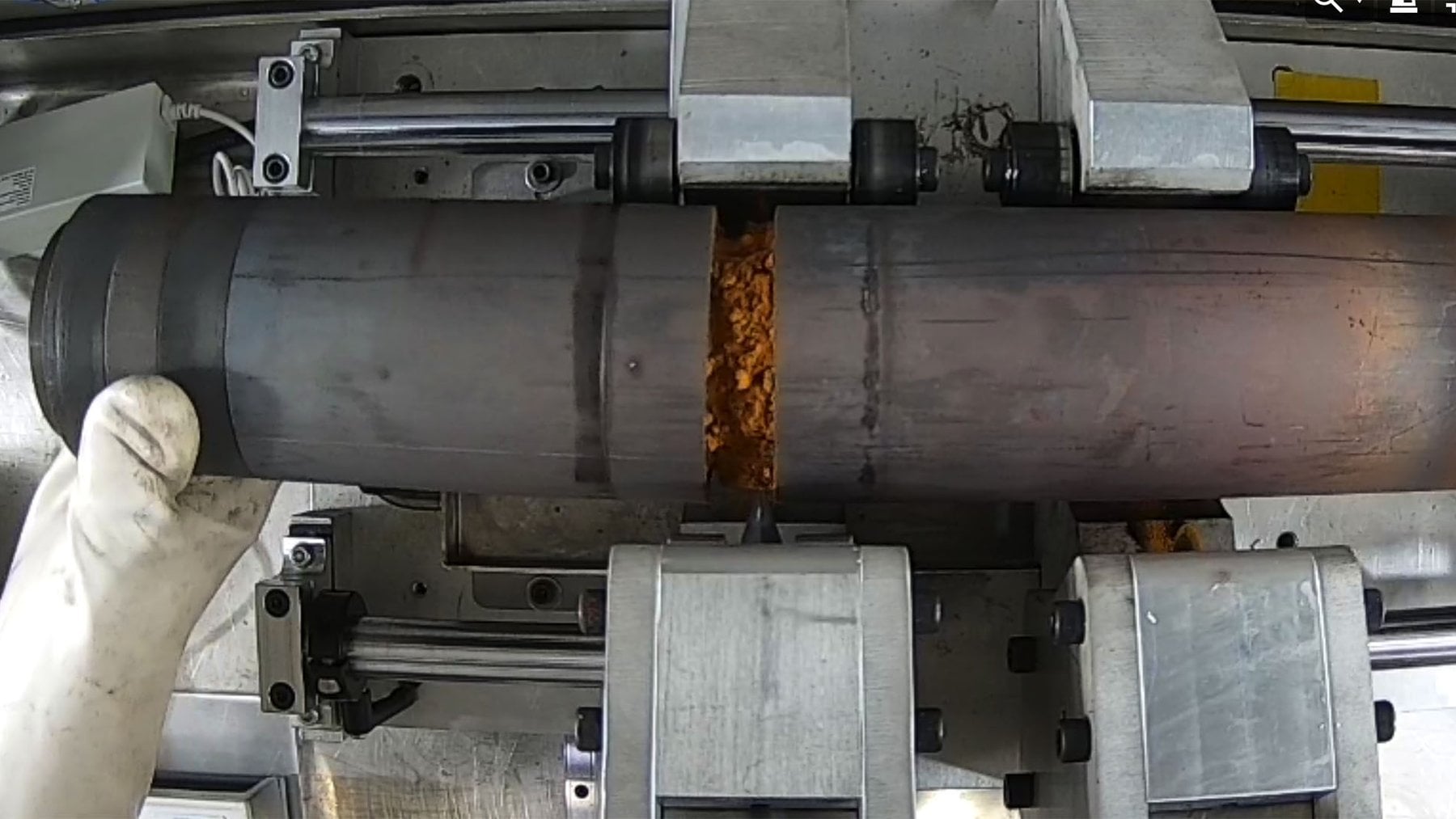
Because the plant isn’t allowed to take it in that state, at least going by DOE’s account. Isotek’s answer was to cut those canisters into segments while they’re still in the storage facility, then move the pieces on to processing. Workers do the cutting inside a glovebox. That’s a sealed box with gloves built into its walls, so you can reach in and work on whatever’s inside without touching it or sharing its air.
DOE says the approach saved the project $175 million and kept it from falling behind schedule. It’s a pretty unglamorous fix. Frankly, those tend to be the ones that work.
Gloveboxes aren’t the only setup in play here, either. DOE has said the higher-dose canisters have been handled in hot cells for a few years now, which are heavily shielded rooms that operators run from the outside (we recently took a look inside the one at Idaho National Laboratory where used fuel rods get cut open, if you want to see how they work).
The heavier stuff needs extra blending
Cutting isn’t the only extra step. Some of the material has higher transuranic activity. Transuranic just means radioactive isotopes heavier than uranium on the periodic table, and plutonium is the one most people have heard of. DOE says material with more of that activity needs additional downblending before it can be shipped for disposal.
Downblending is basically dilution. You mix the material with other material until the final product meets the disposal site’s waste acceptance criteria, which are the rules a site uses to decide what it’ll take. It doesn’t make anything stop being radioactive. It just lowers the concentration. Isotek has added more sampling and more detailed technical reviews to get a better handle on that waste stream. Once the uranium-233 has been solidified and downblended, it goes into shipping casks and leaves for permanent disposal. DOE’s update doesn’t name the disposal site.
So how far along is the cleanup?
The federal fiscal year runs from October through September, so DOE’s numbers cover the year that wrapped up on September 30. In that stretch, the Oak Ridge cleanup office processed 62 canisters of uranium-233 against a goal of 50.
Overall, Isotek has now processed and disposed of more than 78% of the original inventory. Workers have also hauled more than 700,000 pounds of processed, solidified waste away for disposal.
That second figure isn’t the weight of the uranium-233 itself. It’s the finished waste after processing, and it’s a running total for the whole campaign rather than one year’s output. I’d keep that in mind before anyone turns it into a headline about a 700,000-pound uranium stockpile.
DOE hasn’t put an end date on the project in this update, so I can’t tell you when the rest will be gone. The cleanup office and Isotek did install a new analytical laboratory, and DOE expects it to speed up disposal and boost thorium-229 deliveries.
There’s a cancer research angle, too
Then there’s the medical side of all this. As the uranium-233 gets processed, Isotek pulls thorium-229 out of it. TerraPower then uses that thorium to extract actinium-225, an isotope used in targeted cancer treatments that are still in clinical trials.
If the name thorium-229 rings a bell, it’s the same isotope physicists have been using to build the first nuclear clocks. It’s a busy little isotope.
Isotek has recovered more than 24 grams of it so far. That’s less than an ounce, which doesn’t sound like much until you look at DOE’s earlier figures. The department says that’s boosted the world’s supply by more than 2,000%, up from a 1,500% boost when Isotek had recovered more than 15 grams last year.
DOE has also said Isotek expects to extract 40 grams by the end of the project. I’d be a little careful about reading too much into that, though. These treatments are still being tested, and there’s no guarantee every one of them makes it out of trials.
DOE published the fiscal-year figures on November 3, and its Oak Ridge cleanup office still calls the uranium-233 disposal its highest-priority cleanup project at ORNL.