
The heaviest package in American nuclear right now is a steel cylinder sitting on a concrete pad in Virginia, and it has a train reservation. The Department of Energy is rebuilding a rail spur in the Idaho desert to receive it, plans an empty dry run next spring, and expects the real thing, 32 used fuel assemblies inside a 181-ton cask, to roll in by rail in the fall of 2027.
So where does a cask like that go once it gets off the train? Eventually, into a room nobody is allowed to walk into.
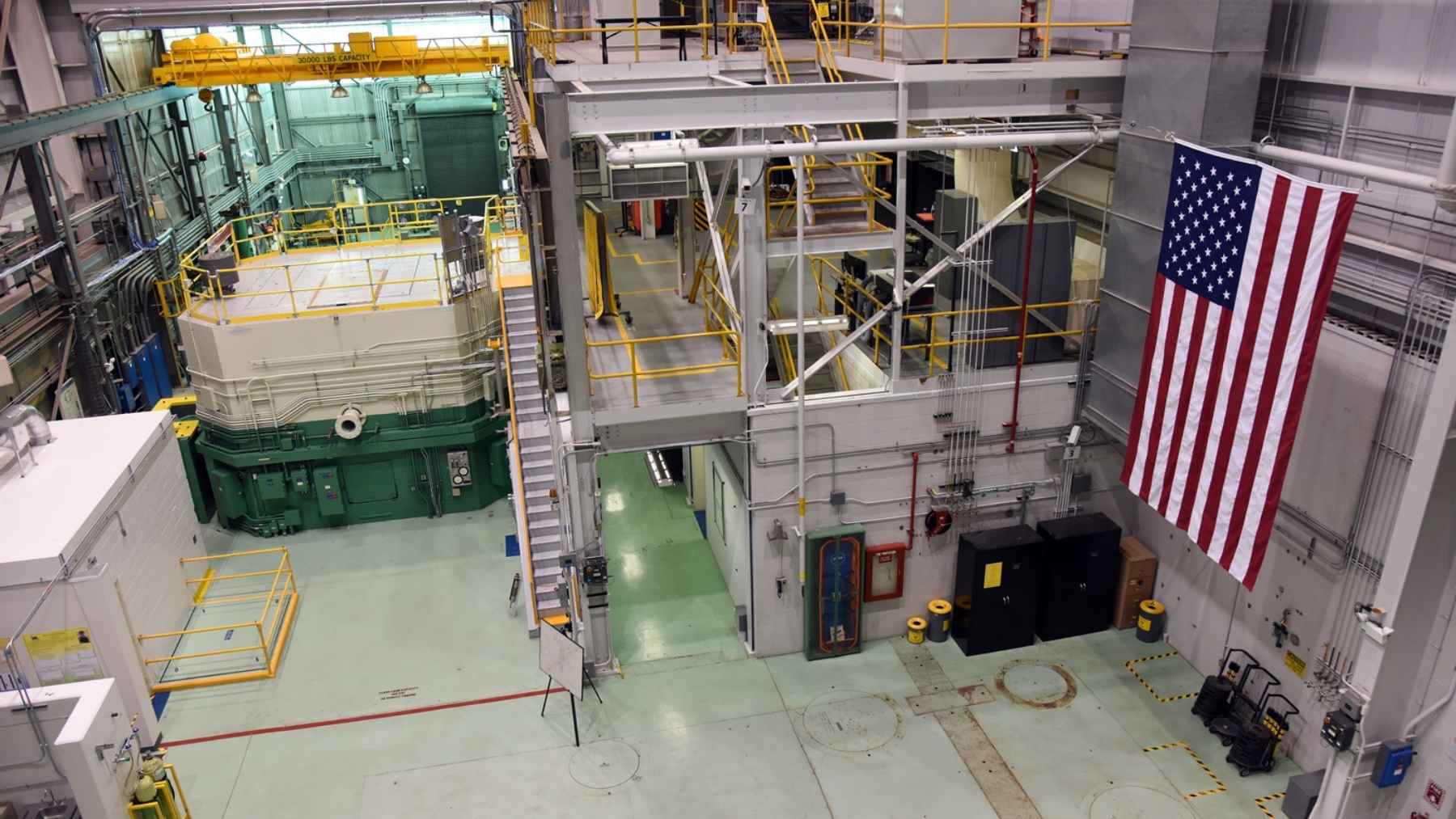
That room is the main cell of the Hot Fuel Examination Facility at Idaho National Laboratory, and if you’ve never heard of it, that’s sort of the point. HFEF opened in 1975, it’s where this country cuts open used reactor fuel to find out what the neutrons did to it, and it’s booked harder in its sixth decade than it was in its first. The American Nuclear Society put a Nuclear Historic Landmark plaque on the wall in August, which is the kind of thing you’d normally hand to a building that has retired. This one has a waiting list.
So what is a hot cell?
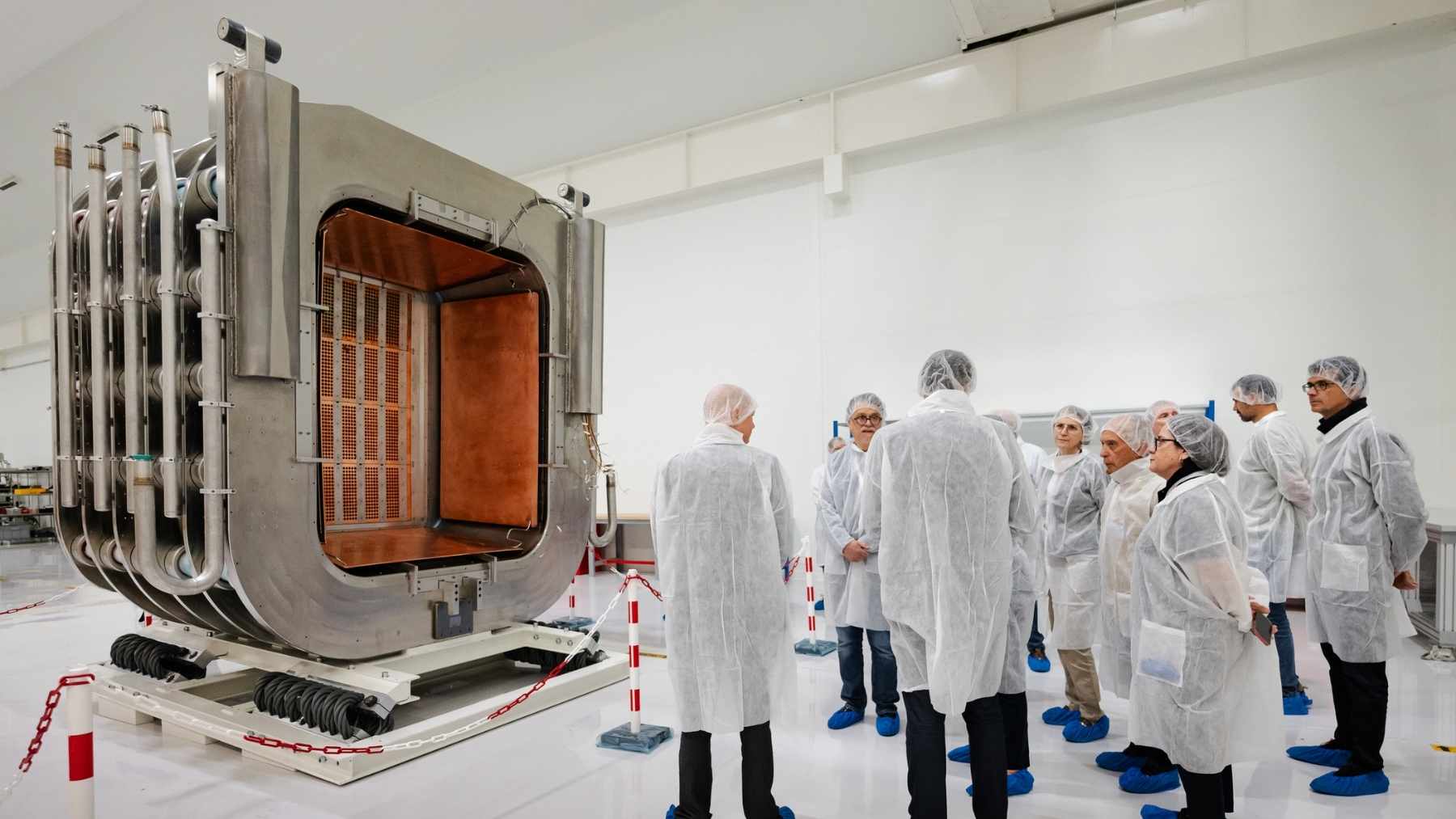
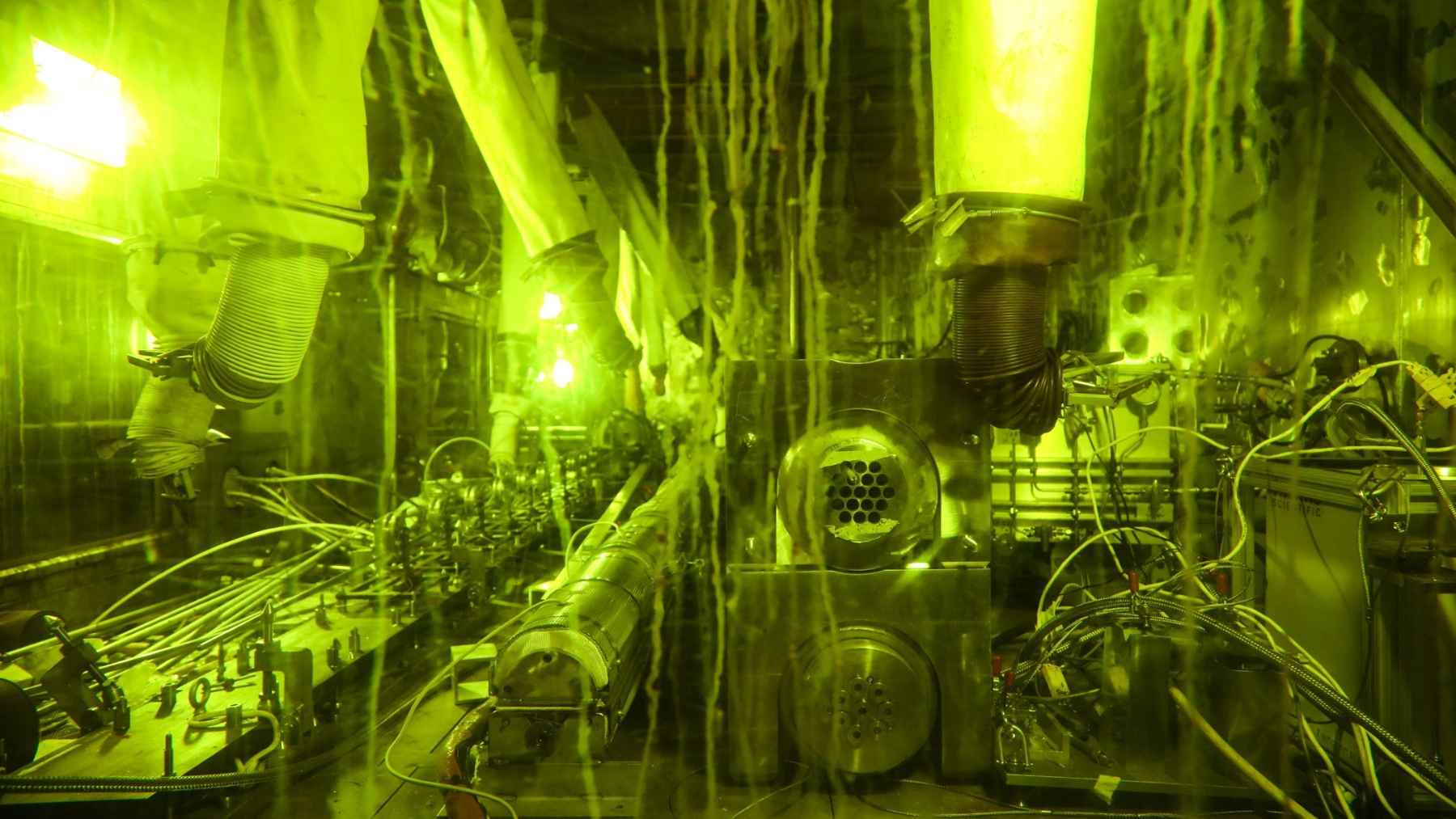
A hot cell is a sealed room you operate from the outside. Operators stand at a window, push their hands into mechanical arms that reach through the wall, and do the work by remote control on the far side of the glass. At HFEF the glass is leaded, the walls are four feet of concrete, and 15 workstations run along the main cell.
That main cell measures 70 feet long, 30 feet wide and 25 feet high, which per Idaho National Laboratory makes it the largest inert-atmosphere hot cell in the United States for nuclear materials research. Its steel liner is metallized with zinc. Next door sits a smaller air-filled cell for decontaminating and disposing of whatever comes back out.
Argon fills the big one, and here’s why that matters. Argon barely reacts with anything, so metallic fuel, sodium residue and freshly cut cladding can sit exposed in there without oxidizing or catching fire. The concrete handles the other problem, which is you. Fuel that’s been in a reactor core throws gamma radiation, and four feet of concrete plus leaded glass is what stands between that and the person working the manipulators.
The tools are less futuristic than you’d expect
Fuel rods arrive by truck. A cask comes into the HFEF bay, cranes lift the lid, and the rods go into the cell. One shipment from a commercial plant brought 25 rods, each 12 feet long, carrying about 100 pounds of heavy metal between them, mostly uranium.
Then somebody has to cut them, and this is my favorite part of the whole operation. Operators mark the cut locations with a Sharpie wrapped in tape, because the tape gives the manipulator claws something to grip. A pipe cutter of the sort a plumber owns makes the rough cut, and a diamond saw makes the fine one. A laser punctures the cladding so the fission gas that built up inside can be captured and measured. Fabiola Cappia, who directs fuels post-irradiation examinations at INL, leads that side of the work.
Why does any of this matter to a reactor startup? Because no fuel gets approved on a company’s say-so. Somebody has to pull a used rod out of a core, cut it open and measure what happened, and in this country that work lands almost entirely in this one building. Private companies are lining up for the same equipment. The uranium-zirconium samples we followed into the Advanced Test Reactor came out of the core on May 6 and are cooling ahead of their own teardown.
The reactor lives downstairs
Underneath the main cell there’s a reactor. The Neutron Radiography Reactor, NRAD for short, is a 250-kilowatt open-pool TRIGA that’s been running since 1977, and it’s the 52nd reactor built in Idaho. It exists to take pictures.
Neutrons and X-rays see pretty much opposite things. An X-ray gets stopped by dense metal and sails through light elements, while a neutron beam goes through the metal and gets caught by hydrogen and other light atoms. Aim that at a used fuel rod and you get an image of the inside of the cladding without cutting anything.
NRAD hit its 5,000th reactor run on February 18, testing a new high-resolution digital neutron imaging system. It also does work nobody would call photography. Scientists used NRAD’s north radiography station for the zero-power criticality test of Unity, the 1-megawatt microreactor that went critical on June 30 and became Idaho’s 54th reactor. Number 53, the Antares Mark-0, got there on June 4. Unity is now booked for a full-power run at the same lab in 2027, and the plan for that campaign ends with fuel disposition, which is a polite way of saying somebody will eventually want to cut that core open too.
Ten thousand pounds behind window 9M
The country doesn’t have much shielded cell space, and the quickest way to get more is to empty out what already exists. Engineers at the Materials and Fuels Complex spent the better part of two years clearing the space behind HFEF’s 9M window: jack plates, support assemblies, material baskets, heater units and a great deal of wire and cable. More than 10,000 pounds of it came out, and every piece had to be decontaminated before anyone could dispose of it.
So what’s the cleared space for?
Sodium test loop work at TREAT, the transient test reactor at the same complex. A sodium loop is a sealed cartridge that holds a fuel specimen in liquid sodium, so researchers can hit it with a burst of power and watch a sodium-cooled fast reactor accident happen with instruments running. Loading pre-irradiated fuel into that cartridge takes a big cell with remote handling, which is the piece HFEF supplies. Idaho has run this play before, decades ago, with fuel irradiated in the EBR-II breeder reactor going to TREAT for loop experiments and coming back to HFEF for examination afterward. The lab hasn’t said when the first of the new loops goes in.
The cask from Virginia is the big one
Here’s the job that makes the plaque look premature. Nearly a decade ago, Dominion loaded 32 high-burnup fuel assemblies, with four different cladding alloys among them, into a TN-32B cask at the North Anna plant near Mineral, Virginia, fitted the lid with thermocouples, and left it to age on the pad under real storage conditions. High-burnup fuel is simply fuel that stayed in the reactor longer and made more energy, and the question the whole industry wants answered is what ten years in a sealed, hot, dry cask does to it.
Idaho and the Department of Energy signed a waiver last year that lets the cask travel under the state’s decades-old settlement agreement with the federal government, the first shipment of its kind into Idaho in more than two decades. DOE’s planning documents for the shipment put the loaded cask at 361,855 pounds, moving on the department’s Atlas railcars with armed escorts, after an empty dry run from Virginia to Idaho and back in the spring of 2027. The cleanup contractor is refurbishing the rail line into the Idaho Nuclear Technology and Engineering Center to take it, and the fuel is scheduled to be opened and examined around 2029. Opening a cask like that and getting fuel out of it needs a hot cell that can swallow the cask whole, and in Idaho that’s a short list.
Doug Crawford, chief reactors technologist at the Materials and Fuels Complex, told INL that the facility’s workload in its second half-century is as heavy as it has ever been, and that “HFEF’s flexibility and continued adaptation to changing needs over 50 years is remarkable.”
I’d call handing a landmark plaque to a building with that kind of backlog a slightly odd thing to do, and I suspect the crews there took it anyway. ANS president Mark Peters unveiled it outside the facility on August 12, alongside INL director John Wagner, and it’s INL’s 10th entry on a list of 101 sites the society has kept for four decades. The 181-ton cask it’s waiting for is due by rail in the fall of 2027.
Image credit: ORNL
 @jonathonfoutch ROOKIE2 months ago