
Wooden railroad ties don’t last forever. They rot, they split, and the creosote that slows all of that down is unpleasant enough that regulators on both sides of the Atlantic have spent years trying to move away from it. Railroads replace millions of ties annually, and the replacements have almost always been more wood.
So when the rail sidings at Britain’s main nuclear waste disposal site came up for routine maintenance, the obvious move was to order another batch of hardwood and get on with it. Instead, a senior engineering technician named Andrew Little looked at the specs and recommended composite ties, each one made with about 198 pounds of recycled plastic. Nuclear Waste Services installed them and became the first site in the UK’s Nuclear Decommissioning Authority group to do so.
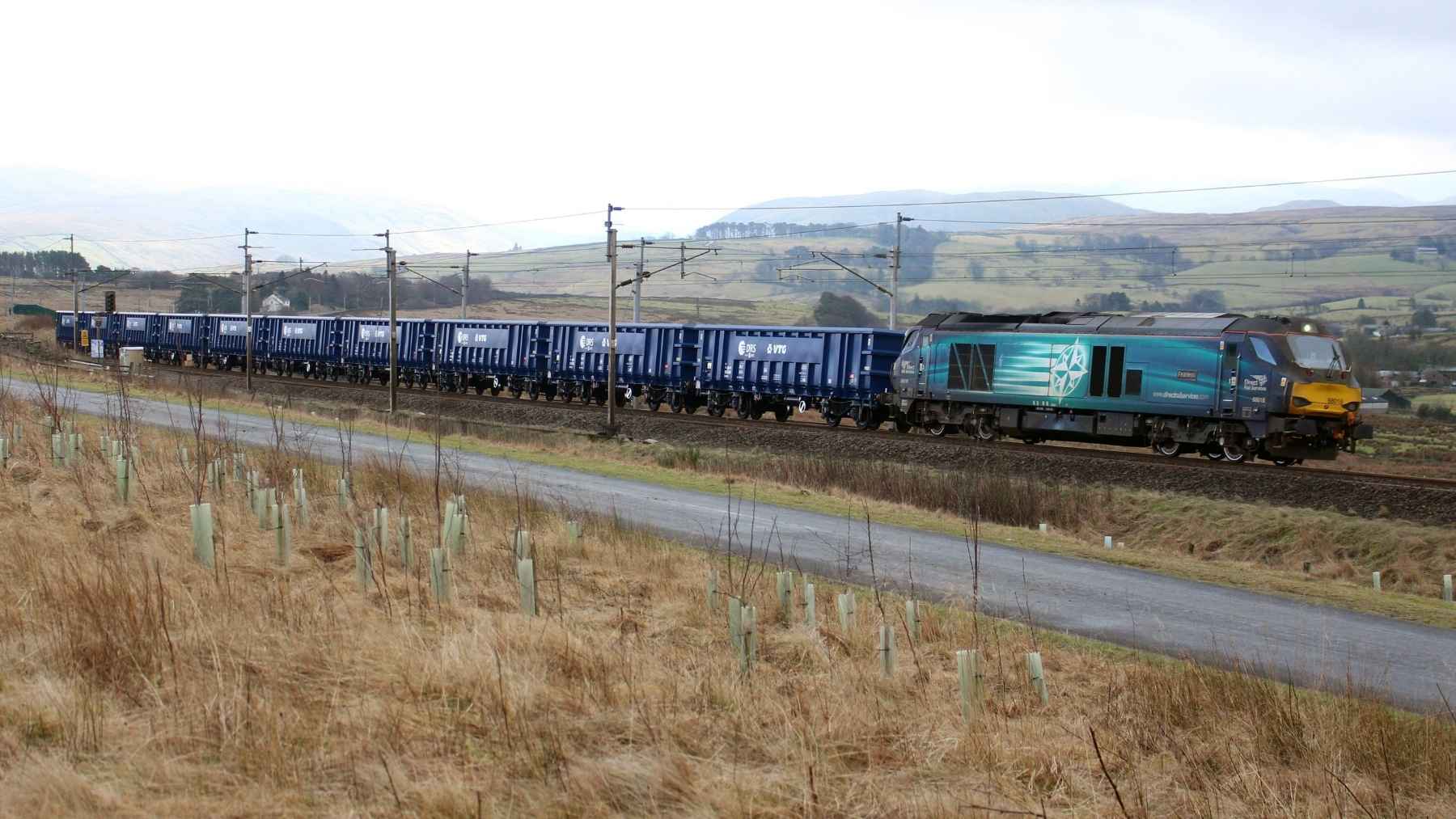
And that’s the smaller half of the story. Those same sidings just finished taking delivery of roughly 364,000 tons of stone, hauled in by 365 trains over about a year and a half, so the site can seal its oldest radioactive trenches under a clay liner that already covers more than a million square feet.
So why does a nuclear waste dump need its own freight service?
So what’s actually buried at Drigg?
The Low Level Waste Repository sits near the village of Drigg on the Cumbrian coast in northwest England, and it’s been taking Britain’s low-level radioactive waste since 1959. Low-level is the unglamorous end of the nuclear spectrum. We’re not talking spent fuel rods here. It’s mostly paper, cardboard, plastic, protective clothing, soil, rubble and scrap metal that’s picked up contamination somewhere in the nuclear industry, plus material from hospitals, universities and the military. By volume, more than 90% of the UK’s radioactive waste falls into this category.
The early decades of it went into clay-lined trenches dug straight into the ground. From 1988 the site switched to concrete vaults, with the waste grouted inside steel containers before placement. The trenches are still there, though. And they’re the reason for all the trains.
The plastic ties started as routine maintenance
NWS had booked Nuclear Transport Solutions, the government-owned nuclear logistics operation, to swap out a batch of aging ties on the site’s rail sidings. Little’s recommendation turned a maintenance job into a materials upgrade: ties made in the UK from recycled plastic waste, fully recyclable at the end of their lives, with a claimed service life of 50 to 100 years.
That 50-to-100-year figure is NWS’s number, not a century of operating data, so I’d pencil in the low end until somebody has actually run trains over these things for a few decades. Even the low end comfortably outlasts the replacement cycle that got NTS called in to begin with.
There’s also a bit of symmetry here that’s hard to miss. A site whose entire job is permanent disposal is now running its trains over plastic that got pulled out of the waste stream instead of landing in a landfill. NWS hasn’t said who manufactures the ties or what a complete tie weighs, so I can’t tell you much about the hardware beyond the recycled content. I can tell you the site plans to go fully composite as the remaining wooden ties wear out.
So what did 365 trains actually haul?
Not waste, as it turns out. Stone.
Every one of those trains carried clean aggregate, roughly 364,000 tons of it in total, for the Southern Trench Interim Membrane project, STIM for short. It’s replacing the protective liner over the southern trenches, and the thinking behind it is pretty simple. Rain falls on Cumbria a lot. Water that soaks through buried waste has to be collected and treated, and a sealed cover keeps the rain out in the first place, which protects the groundwater underneath and everyone who lives nearby.
The sealing layer is a geosynthetic clay liner, which, if you haven’t run into one, is basically a sandwich of bentonite clay between fabric layers. The clay swells when it gets wet and seals itself, which is why you’ll find the same material under landfills all over the US. Crews have laid about 1.05 million square feet of it so far, out of a planned 1.34 million, and the northern trenches can’t get their own final cap until this southern section is finished.
Why rail, though? The alternative was more than 17,000 truck trips through the villages between the main line and the site. Direct Rail Services, which ran the trains, figures the rail campaign avoided over a million truck miles and around 770 tons of carbon dioxide, and the final train showed up about a month ahead of schedule. A nuclear project finishing early isn’t something you read every day, so I’ll give them that one.
If moving industrial quantities of material by rail to deal with a nuclear legacy sounds familiar, it should. A Utah cleanup crew spent the better part of two decades doing something similar on a much bigger scale, hauling 17 million tons of uranium mill tailings away from the Colorado River in sealed rail containers. The Drigg operation runs the logic in reverse: the trains bring clean material in, and the waste never moves at all.
The Repository isn’t going anywhere either. The UK keeps producing low-level waste as it decommissions its older plants, and British nuclear sites like Hinkley Point C will keep generating work on the coast of England for decades. Final closure of the Drigg site is currently expected in 2135, which puts the plastic ties in an interesting spot. Even at the bottom of that 50-to-100-year claim, the sidings would only need one or two more rounds of replacement before the gates close for good.
Nuclear Waste Services confirmed the 365th and final train in its September 16 site update, and says the remaining liner work is scheduled for completion in 2027.