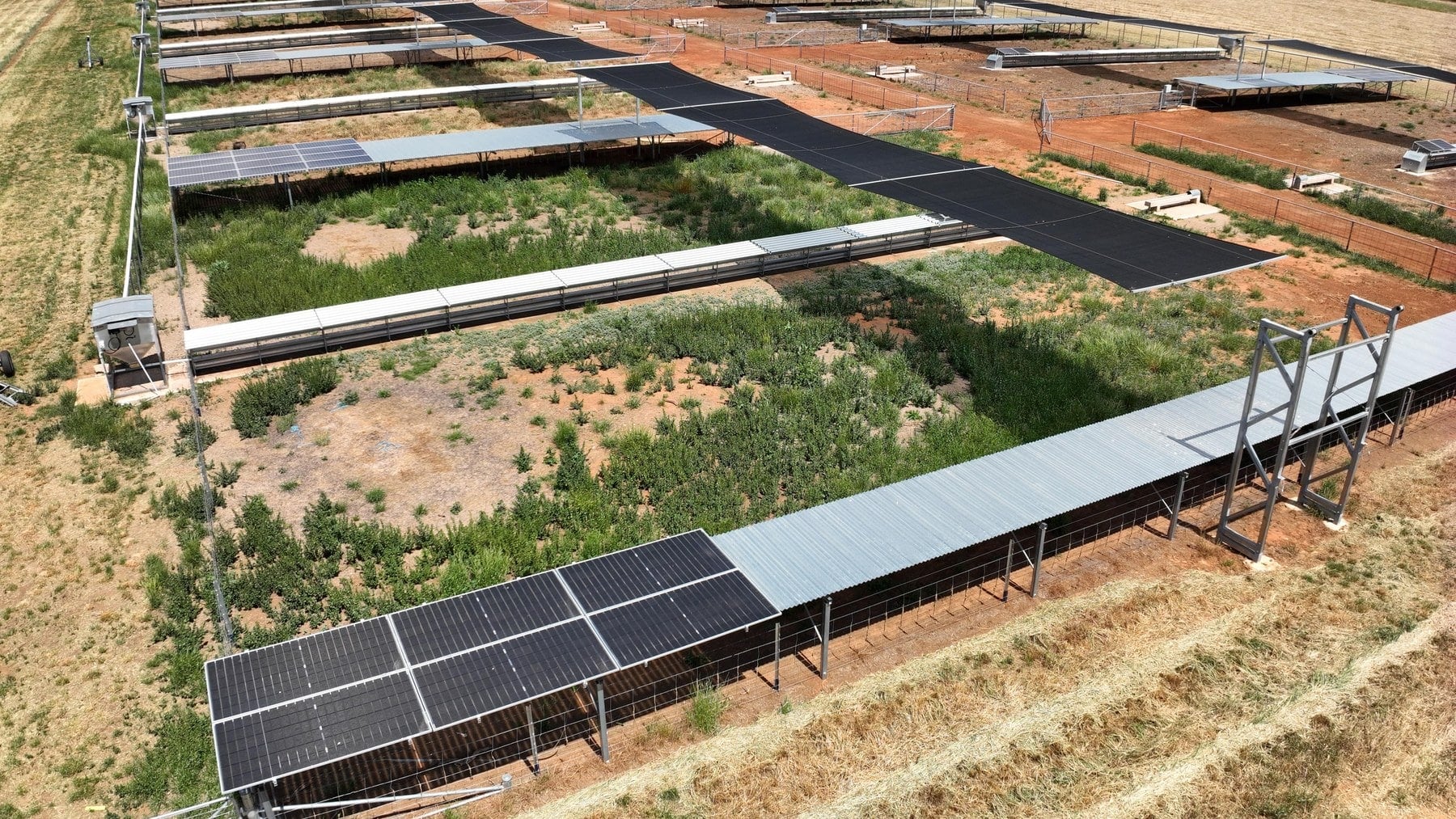

A solar panel has one job, and that’s catching as much sunlight as it possibly can. Any light that slips past it to the ground is light it didn’t turn into electricity, so you’d think the perfect panel would be about as see-through as a brick wall.
But Charles Sturt University in New South Wales, Australia, has gone the other way. It’s put 120 solar panels over the pens where it feeds its sheep and lambs, and they’re built to let some of that light through on purpose.
So why would anyone want a leaky solar panel?
Because of the sheep, apparently. Graeme Sandral, the Charles Sturt researcher leading the work, told ABC News that the array powers the feedlot’s automatic feeders, and that the cells are spaced so a sheep lying under it on a cold winter day still catches some light and a little of the sun’s warmth. In summer, that same roof is there to keep the animals cool.
Shade when it’s hot, a bit of sun when it’s cold and electricity the whole time, all from one roof. That’s a pretty tall order for a sheet of glass.
So how see-through is a see-through panel?
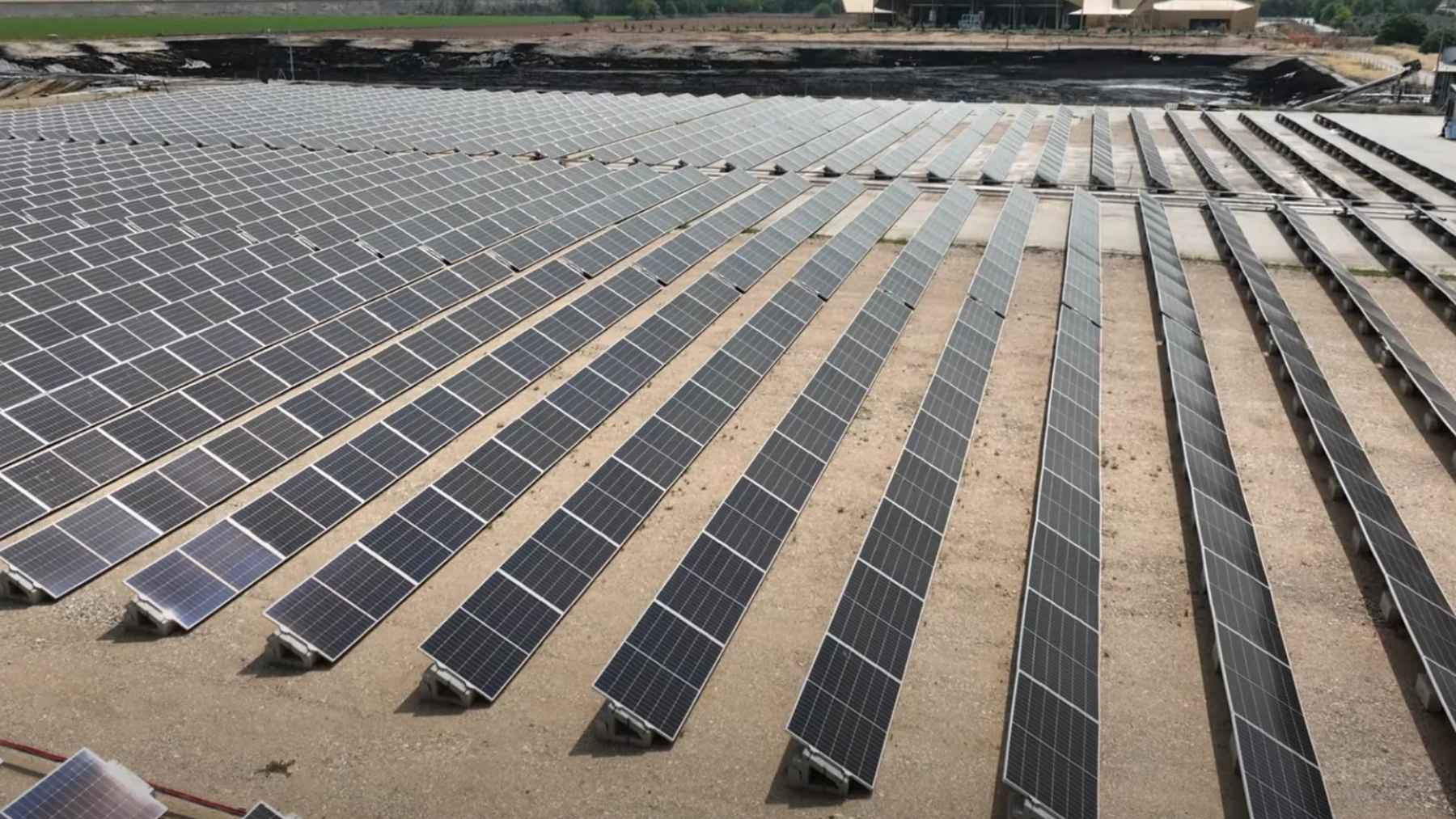
At this site, not very. Matthew Muller, the sustainability director at the university’s AgriPark, wrote in a post shared by Charles Sturt Research that the 120 panels are designed with 10 percent transparency. They add up to 64.8 kWp, and the university’s partner on the install is an Australian agrivoltaics company called Sharp EIT Solutions.
That “p” on the end stands for peak. It’s what the panels can put out in ideal full sun, so you won’t get 64.8 kilowatts at dawn, on a cloudy afternoon or at any point overnight.
If you do the math, that’s 540 watts per panel, which is pretty much in line with the big panels you see on solar farms these days. I’d love to tell you how big they are, too. But neither the university nor the installer has published dimensions or weights for these panels, at least not anywhere I could find.
Figures: Charles Sturt University researchers, ABC News.
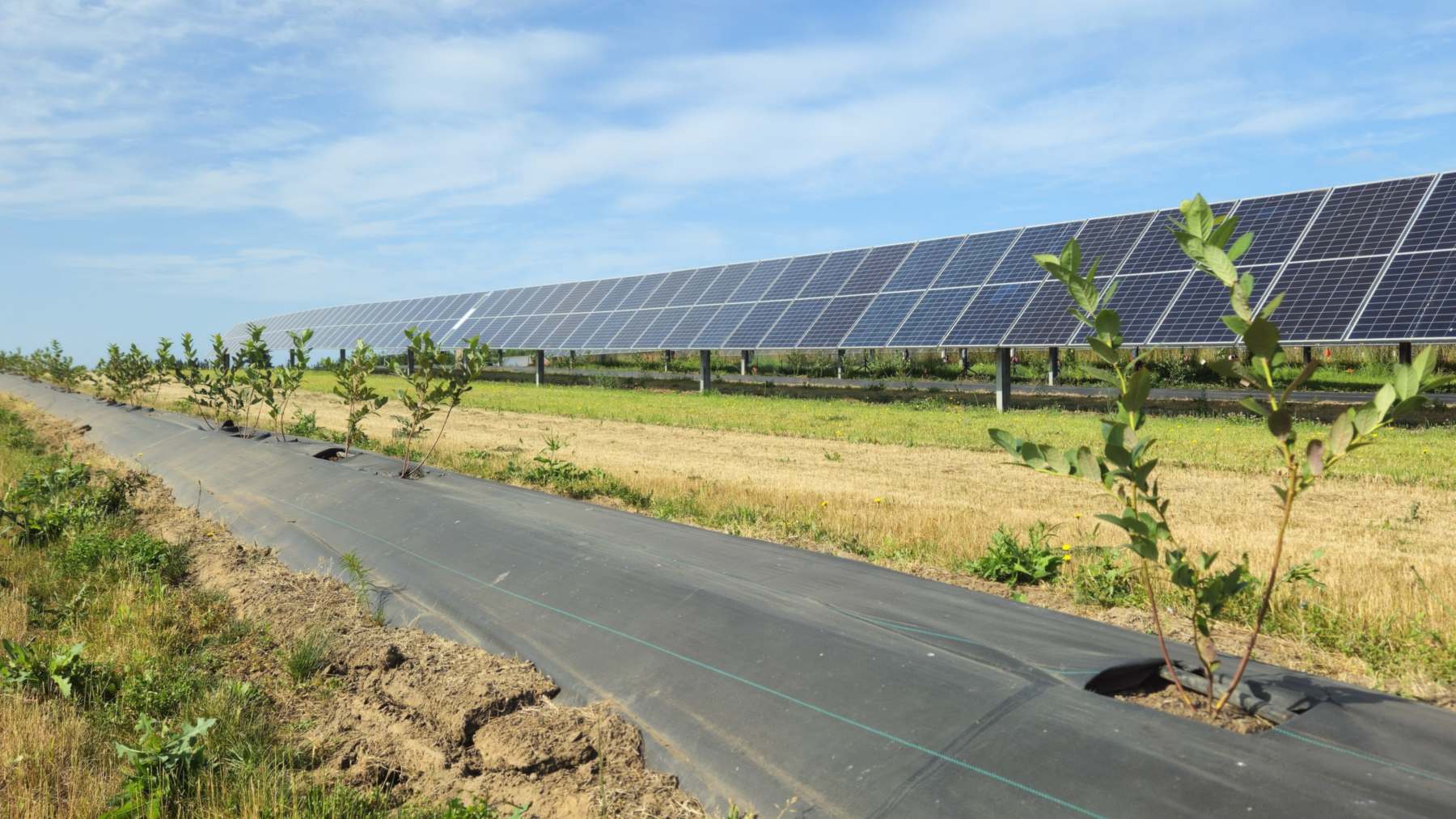
Ten percent transparent means roughly a tenth of the light makes it past the panel. The panels pull that off by leaving gaps between the photovoltaic cells, so you basically get a checkerboard of dark cells with clear glass in between.
ABC reports panels like these can be made anywhere from 10 to 48 percent transparent, depending on what’s living or growing underneath and how much power the owner needs. Sharp EIT’s own website goes even wider, at 2 to 50 percent. Charles Sturt picked the low end for its sheep, which suggests, to me at least, that the electricity is the main event here and the winter light is a bonus.
Charles Sturt isn’t the first to put see-through panels over a farm, either. We covered 6,300 of them standing over an apple orchard in Germany, where the main job is keeping hail off the fruit. A sheep’s wish list is a bit simpler. It mostly wants somewhere comfortable to lie down.
The feeders used to run on diesel
A feedlot is basically where lambs get penned up and fed a measured ration instead of wandering a paddock looking for grass. The automatic feeders that dish that ration out need power, and according to ABC, this feedlot was getting it from diesel generators before the panels went up.
If you’ve ever run a generator at a campsite or during a power outage, you know the deal. It’s loud, someone has to keep hauling fuel to it, and you pay for every gallon it burns. Muller pointed ABC to what diesel has cost farmers this year as part of the reason the university’s trying this.
What I can’t tell you is how much diesel the panels will actually save, because Charles Sturt hasn’t published a figure for that yet.
The university also hasn’t said how many sheep the facility holds, or how much of the feeders’ load the solar covers on a typical day. Muller’s post talks about generating and storing solar electricity, but there’s no battery size in it, and I’m not going to guess one. The research team described the panels as being installed in its post about a month ago, and by ABC’s report on October 30 they were up and helping run the feeders. Neither source gives a date they were switched on.
These panels cost about twice as much
Here’s the catch. ABC reports that transparent panels cost about double what regular ones do, and not everyone’s sold on paying that.
Peter Holding, an outreach officer with the advocacy group Farmers for Climate Action, told ABC that at twice the price, “I can’t see how a transparent panel would benefit anybody,” whether it’s on a roof or on spare ground.
Frankly, I think he’s got a point for most farms. If all you want is shade and electricity, a cheaper opaque panel up on a tall frame does both jobs and leaves you some change for a new water trough. The case for the pricier glass rests almost entirely on whether that winter light does anything useful for the animals underneath, and right now that’s still a hypothesis.
Europe’s been at this a while longer, though. Sharp EIT told ABC its panels are already on farms in France, Austria and Belgium. And plain old shade from solar panels has shown some pretty clear results with livestock. We wrote about a French dairy farm where cows under a raised canopy kept grazing until noon on hot days, while the herd out in the open was heading for the barn by 9:30 a.m. That’s a different company and a different farm, but it’s a pretty good sign the shade half of this idea works.
Sheep aren’t the only test, either. Sandral told ABC the team also wants to try the panels as a kind of greenhouse roof over grapevines that could be moved out of the way at pruning time, and might keep hail off the fruit while making power for a winery. Julian Marchant, the environmental, social and governance manager at Wine Australia, warned that every part of those panels would need testing for corrosion from farm chemicals. ABC didn’t say whether any panels have gone in over vines yet.
So do the sheep actually like it?
Nobody knows yet.
Keep in mind that November is late spring in Australia. Which means the first stretch of monitoring runs straight into summer, when shade is the whole point, and the winter-light question won’t really get tested until June, July and August next year. I’d want to see a full year of data, at minimum, before calling see-through panels a win for livestock.
ABC reports Charles Sturt’s monitoring at the feedlot starts this month, with the first results expected in late 2027.