
Military families move a lot. The services even have an official name for it, a permanent change of station, and anyone who’s done a few will tell you it basically means boxing up your whole life every few years and hoping the movers don’t lose the bag with the bed frame bolts in it.
So when the Navy decided it wanted one of its newer ballistic missile submarines on the West Coast, you’d expect a few hundred sailors in Georgia to start calling moving companies. That isn’t what happened.
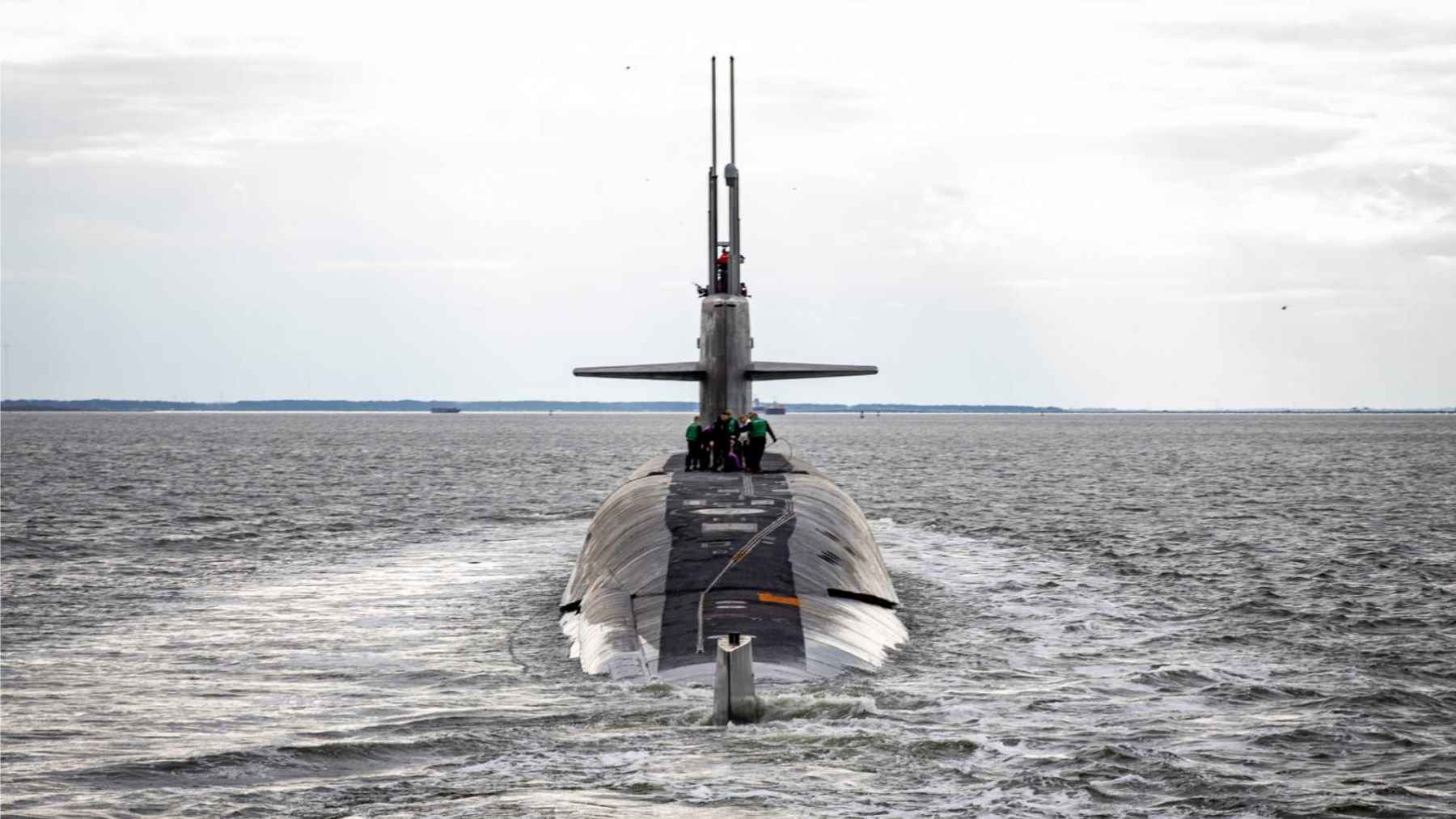
On Oct. 1, USS Wyoming, an Ohio-class missile submarine commissioned in July 1996, came through Puget Sound and moored at Naval Base Kitsap-Bangor in Silverdale, Washington. Earlier that day, USS Pennsylvania, commissioned in September 1989, arrived at Naval Submarine Base Kings Bay in Georgia. The two boats traded home ports. Most of the people who run them didn’t.
So how do you move a submarine without moving the people who run it?
What’s a hull swap, anyway?
In a normal home port change, a boat and its crew pack up and move together. In a hull swap, the boats change bases while the crews and their families stay where they are, and the sailors take the same jobs on the other boat. Which means Wyoming’s sailors stay in Georgia and now run Pennsylvania, and Pennsylvania’s sailors stay in Washington and now run Wyoming.
It’s basically the Navy version of trading cars with your cousin across the country instead of trading houses with him. And frankly, it’s a pretty sensible way to do things. The Navy plans submarine transits all the time. Getting a few hundred sailors, plus their spouses, kids, pets and couches, from one coast to the other is arguably a much bigger headache.
(Not that moving a big warship is ever easy. We recently covered a 45,000-ton battleship in Norfolk that needed a year of planning to move four feet.)
The Navy says the swap spared most of the sailors assigned to the two boats a move across the country. Most, not all. It hasn’t said how many ended up packing a truck anyway.
The whole thing is probably less chaotic than you’d think, too. Every Ohio-class missile boat already has two full crews, called Blue and Gold, that take turns taking it out on patrol. The Navy says that setup keeps each boat available more often and means it needs fewer submarines overall. These sailors are used to handing their boat to somebody else every few months. This time they just got a different boat back.
The Navy has done this with surface ships before, including two aircraft carriers that traded places in San Diego a couple of years ago. What it hasn’t said this time is who actually drove each submarine to the other coast, which way they went or how long the trip took. That’s not a big surprise, since the Navy doesn’t advertise where its missile boats are at any given moment. For a rough idea, though, the last time Pennsylvania made the trip in the other direction, its crew needed about 80 days to get from Georgia to Washington.
Pennsylvania has been to Georgia before
Pennsylvania isn’t exactly new to Kings Bay. According to USS Pennsylvania’s official Navy page, the boat spent its first 13 years based there before shifting to Bangor, and it’s been in Washington for the 24 years since. For the older boat in this deal, the swap is more of a homecoming.
Wyoming has been a Georgia boat for pretty much its whole career. It got to Kings Bay within weeks of being commissioned and has been based there ever since, apart from a 27-month refueling overhaul at Norfolk Naval Shipyard in Virginia. That’s the midlife job where a shipyard puts fresh fuel in the reactor and upgrades a lot of the gear around it, and the Navy temporarily moved Wyoming’s home port to Portsmouth, Virginia, while the work went on. So this is the first time in 30 years of service that Wyoming has called the West Coast home.
If I were on one of Pennsylvania’s crews in Washington, I’d probably be pretty happy right now. Same house, same base, same commute, and a boat that’s nearly seven years younger than the one you used to take to sea.
So why does the West Coast get the newer boat?
The Navy says the swap is part of a long-term plan to put newer ballistic missile submarines at Kitsap-Bangor, and that plan revolves around the Ohio class’s replacement. That’s the Columbia class, 12 boats that’ll take over from the 14 Ohio-class missile submarines the Navy runs today.
Now, the first two Columbia boats are expected to go to Kings Bay, because the Georgia base is further along with the upgrades it needs to handle them. Bangor’s turn comes early in the next decade. The Navy plans to base up to eight Columbia boats in Washington and swap them in one for one for the eight Ohio boats based there now.
My read, and it’s only a read because the Navy hasn’t spelled it out, is that this comes down to which coast gets new boats first. Georgia’s Ohio boats will presumably be the first to make way, so that’s where the older Pennsylvania makes the most sense. Washington has to keep its Ohio boats running for longer, so it gets the younger Wyoming.
Rear Adm. Todd Figanbaum, commander of Submarine Group 9, put the emphasis on keeping boats at sea. “A hallmark of ballistic missile submarine operations is that we are on station 24/7/365,” he said in the Navy’s hull swap announcement.
In plain English, the Navy always has some of these submarines out on patrol, and it can’t pause that to reshuffle the fleet. An Ohio boat spends an average of 77 days at sea followed by 35 days in port for maintenance, according to the Navy. There’s never a convenient week when everybody can stop and move house.
The Columbia class is a bigger boat
If you’re wondering what Wyoming actually is, it’s a 560-foot submarine that’s 42 feet wide and displaces 18,750 tons submerged.
It was built with 24 missile tubes. But every Ohio boat had four of them permanently deactivated under the New START arms treaty, so each one now carries a maximum of 20 Trident II D5 missiles, according to the Navy’s ballistic missile submarine fact file.
As for who’s inside, the Navy’s own websites can’t quite agree. That fact file says an Ohio-class crew is 15 officers and 144 enlisted sailors. Wyoming’s page on the Atlantic submarine force’s website says 13 officers and 121 enlisted, but that page apparently still thinks the boat is sitting in a Virginia shipyard, so I’d lean toward the fact file. Either way, with two crews per boat, that’s a lot of people the Navy mostly didn’t have to move.
The Columbia boats will be the same length but noticeably heavier, and they’ll carry fewer missiles. Here’s how the two classes line up.
So Wyoming’s new crews in Washington should get to keep the boat for a good while yet. General Dynamics Electric Boat says USS District of Columbia, the first of the new class, is on track for delivery in 2028, and the Navy expects the first Columbia-class boat to arrive at Bangor in 2032.