
Burying a problem is a time-honored American move, and in 1986 Los Alamos National Laboratory did it about as literally as the phrase allows. The lab took radioactive liquid left over from Cold War weapons work, locked it up in cement so it couldn’t go anywhere, poured the mix into 158 corrugated steel pipes with clean cement caps on both ends, and buried them in a mesa at a disposal site called Area G. Each pipe ran about 20 feet long and weighed between 10,000 and 14,000 pounds. Then everybody moved on.
For 36 years, that was pretty much the whole story. Crews finally started digging the pipes back up in 2022, and by 2024 all 158 were out of the ground and sheared into sections. So the dirty work’s done, right? Not quite. Los Alamos now has 792 boxes of the stuff parked on the same mesa, waiting for a truck, and the state of New Mexico has decided those trucks aren’t moving anywhere near fast enough.
So what did they bury out there?
The liquid came from a former radioactive liquid waste treatment plant at Technical Area 21, a corner of the lab where plutonium processing ran through the Manhattan Project and Cold War years. The waste itself is transuranic, or TRU, and it’s a lot friendlier to say than it is to store. Transuranic just means elements heavier than uranium on the periodic table, plutonium’s the famous one, and the label covers material that’ll stay dangerous long after everyone reading this is gone.
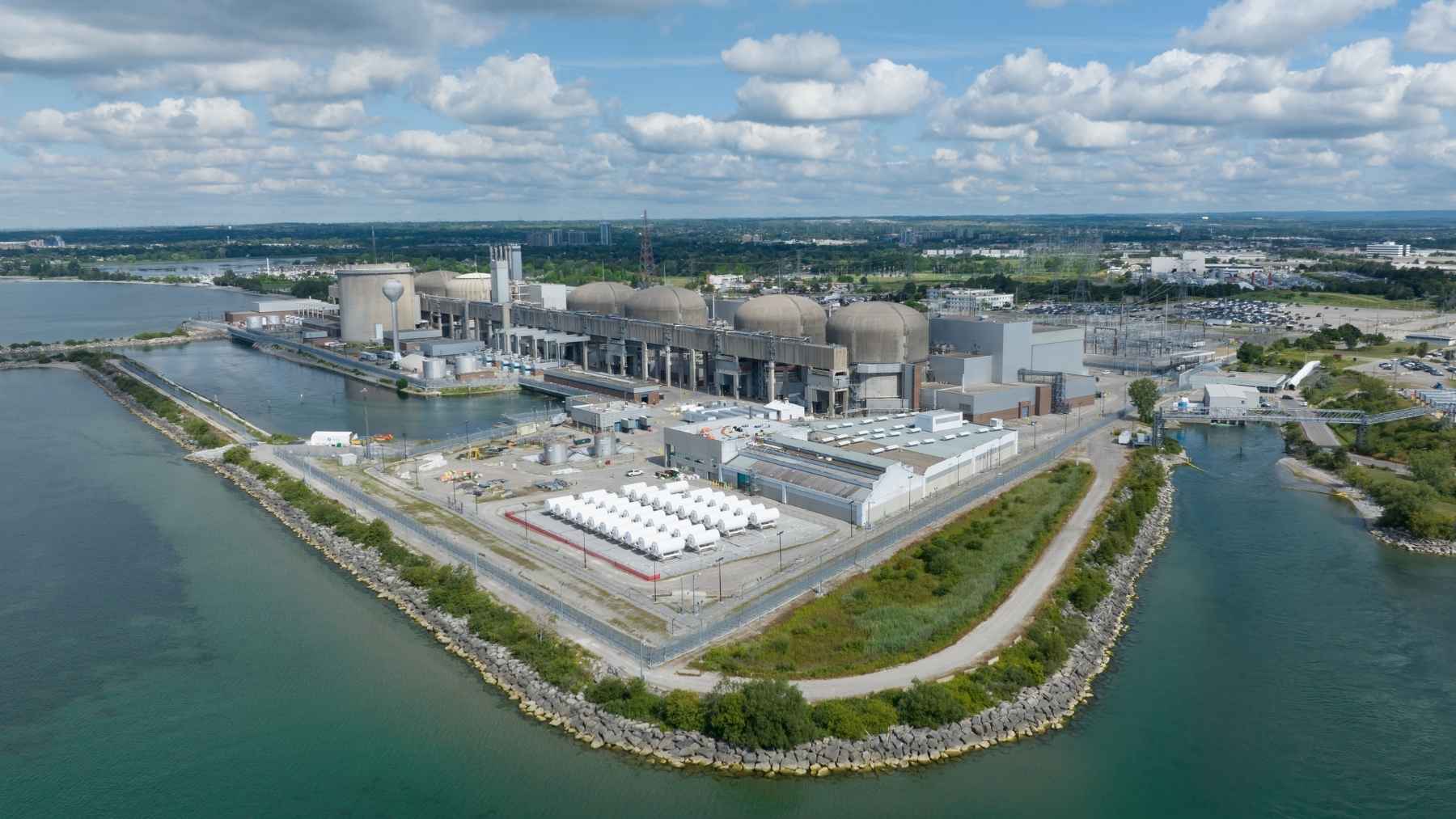
Area G’s where the lab has parked that kind of waste since 1957. The site covers 63 acres of mesa top and holds 32 pits, 194 shafts and four trenches, dug 10 to 65 feet down. Mixing the liquid into cement was arguably the sensible half of the 1986 plan, since cement doesn’t slosh or leak. Burying it in an unlined landfill was the half New Mexico’s still writing angry letters about.
How do you cut a 14,000-pound radioactive pipe?
Very carefully, and indoors.
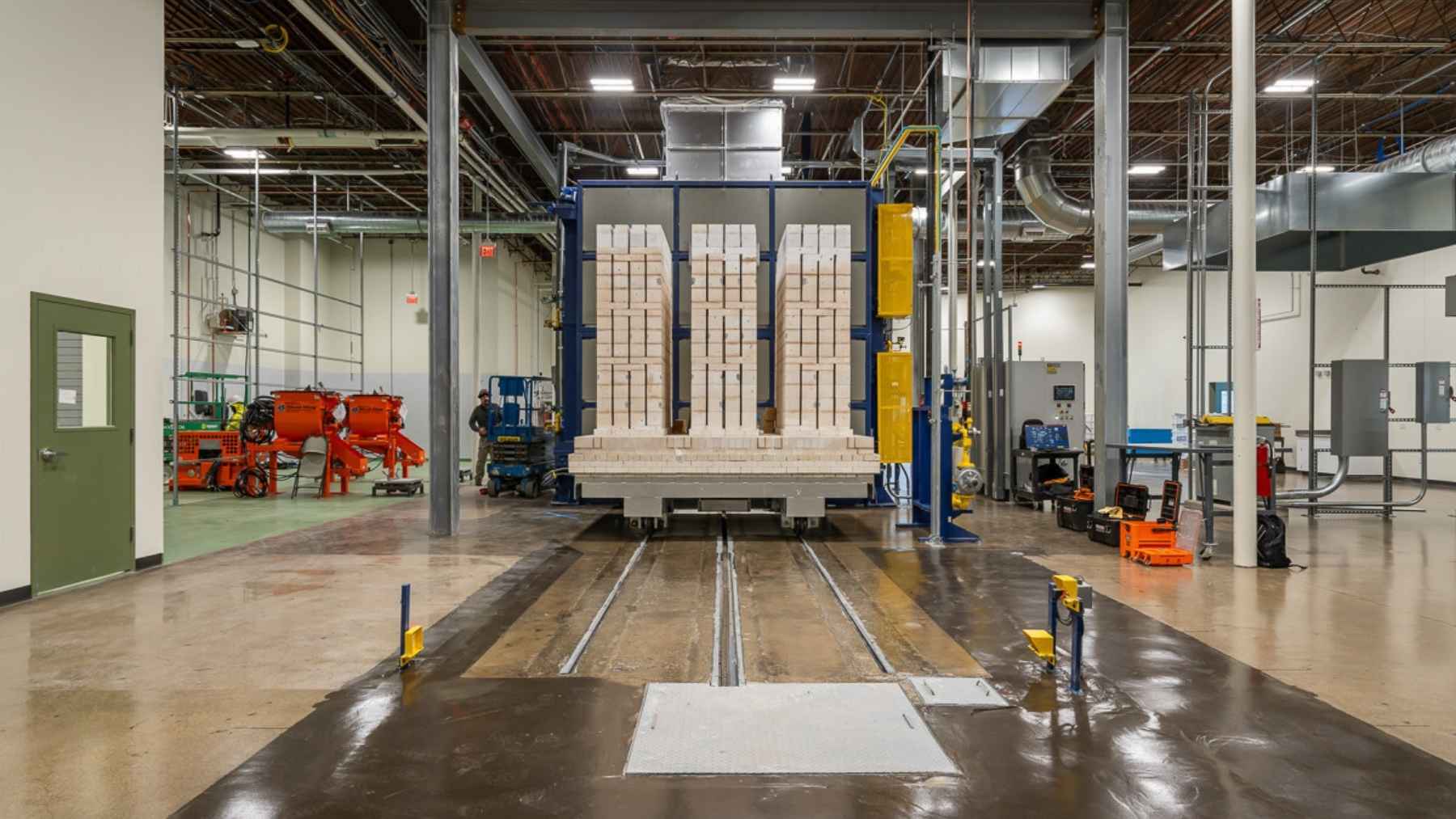
Starting in 2022, crews pulled the pipes out one at a time and hauled each to a structure called Dome 375, where a hydraulic shear sat inside an enclosure built to keep contamination away from workers and the outside air. The Department of Energy says the shear works like a cigar cutter, which gives you the general idea. Each pipe got loaded onto a roller conveyor, winched into position and cut four times, leaving five sections around 4 feet long and up to 2,900 pounds apiece. Workers rehearsed the whole routine on mock pipes filled with clean cement before touching a real one, which strikes me as exactly the right amount of paranoia.
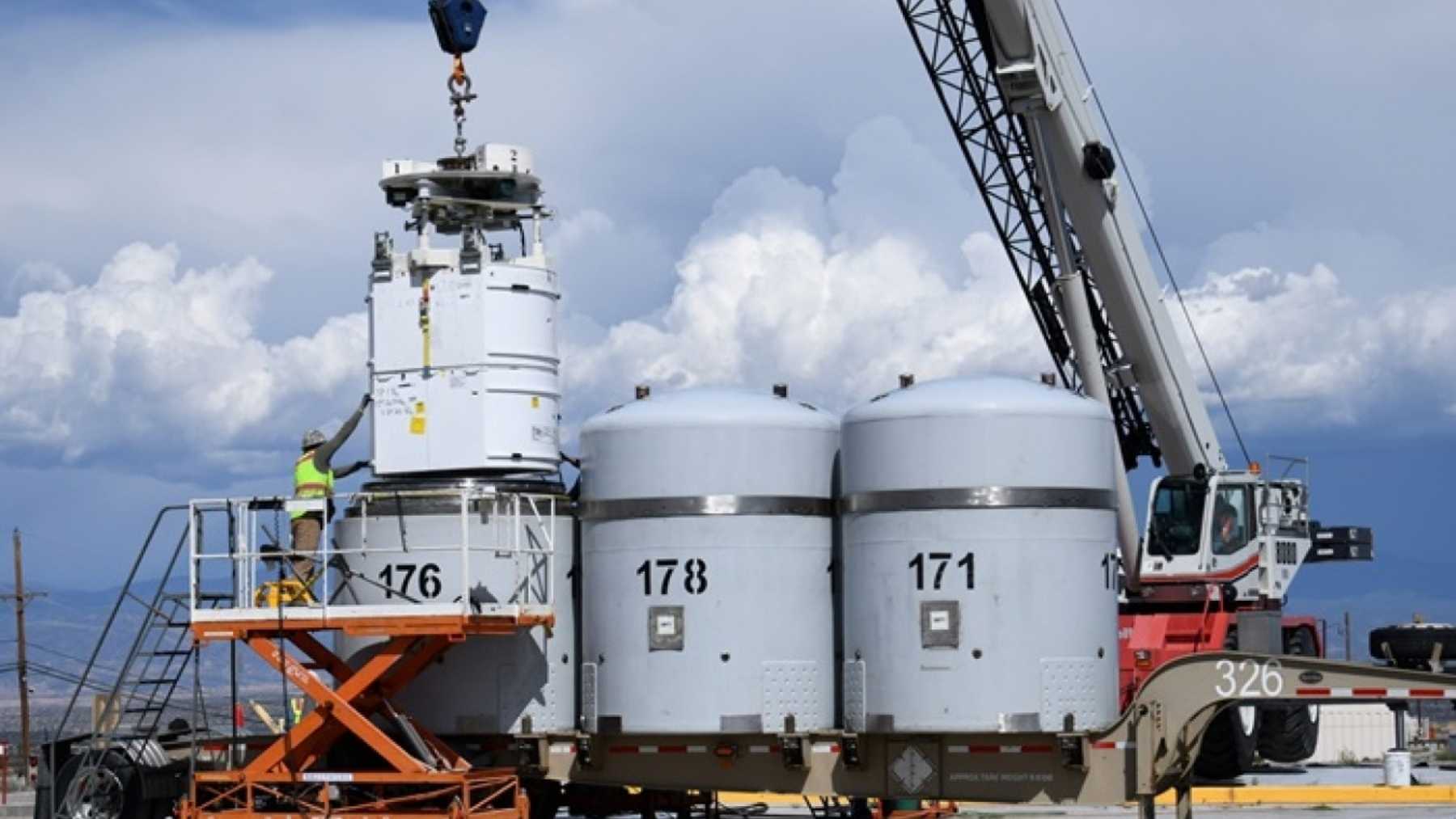
Each section went into its own container, a standard waste box, because one section’s all a box can take. That’s where the 792 comes from. It was also the first time the cleanup contractor, Newport News Nuclear BWXT-Los Alamos, or N3B, had gone after buried waste at the lab on this scale, and by 2024 the whole set was out, cut and boxed.
So where are the boxes going?
The first three left in a shipment the Department of Energy announced on June 10, 2025. They’re bound for the Waste Isolation Pilot Plant, or WIPP, and if you’ve ever wondered where this country’s Cold War waste ends up, it’s rooms mined into a salt bed 2,150 feet under the desert about 26 miles southeast of Carlsbad, where the salt itself slowly creeps in and seals the waste in place. Jessica Kunkle, who ran the DOE cleanup office at Los Alamos at the time, called the shipments “paramount to the success of the LANL legacy cleanup mission.”
So why is a job that finished its cutting in 2024 still a headache in late 2026? Because moving the boxes is slow by design. Each box travels inside a federally certified shipping cask called a TRUPACT, one section per box, and that first shipment carried all of three boxes. Run that against 792 and you’re looking at a lot of trucks over a lot of months, all of them queuing for space in the same salt bed as waste from other weapons sites.
New Mexico got tired of asking nicely
By last December, a DOE presentation to New Mexico lawmakers put the shipped share of the pipe waste at about 20 percent. Two months later the state stopped being polite about it. In February, the New Mexico Environment Department hit DOE with compliance orders carrying close to $16 million in penalties tied to legacy waste and groundwater at the lab, saying the situation “elevates the risk of waste storage failures.” Environment Secretary James Kenney’s also pointed out that over the previous two years WIPP buried waste from Idaho at five times the rate of New Mexico’s own, which has to sting when the repository sits in New Mexico.
In April the state went further and rewrote WIPP’s operating permit in draft form. The proposed permit reserves 55 percent of WIPP’s disposal volume for Los Alamos legacy waste through 2031, raises that to 75 percent in 2032, and sets a hard date: all above-ground legacy waste at Area G disposed of at WIPP by July 1, 2028. WIPP’s capped by federal law at 6.2 million cubic feet and the state says it’s already close to half full, so this is New Mexico putting a firm thumb on the scale for its own waste. DOE told Source NM it’d “carefully evaluate” the proposed changes.
The pressure seems to be working. An August 4 DOE update counted 66 transuranic waste shipments from Los Alamos to WIPP so far in the fiscal year ending September 30, which the agency called a 53 percent increase over fiscal 2025, with enough waste moved to fill about 30 dump trucks by DOE’s own comparison. N3B’s planning figure was 40 shipments a year, so the trucks are running well ahead of the contractor’s baseline. I can’t find a running tally of how many of the 792 pipe boxes specifically have left the mesa; that 20 percent figure from December’s the freshest number anyone’s put on the record.
Pit 9 is next, and it’s a messier dig
In a strange way, the pipes were the tidy job. There were exactly 158 of them, identical, sitting in known positions, and the waste inside was already locked in cement. The next target is Pit 9, an old disposal pit that N3B says holds an estimated 3,882 metal drums, 191 fiberglass-reinforced plywood boxes and six other containers, with retrieval scheduled to start in late 2026. That count opens with the word “estimated,” which I don’t find hugely reassuring for a hole full of drums.
There’s still the above-ground inventory, too. N3B lists 2,025 transuranic waste containers stored under domes at Area G, monitored and fitted with fire detection, and you don’t need me to explain why fire detection matters on a mesa in wildfire country. The pipes even jumped the line internally: federal safety board inspectors noted in May that a separate Area G job, drilling into drums to drain leftover liquids, had been running only sporadically because the pipe work had priority.
So is New Mexico actually winning this one?
The shipping numbers suggest the pressure’s landing, and DOE put out a dispatch on September 22 from a conference panel in Virginia literally titled “All Roads Lead to WIPP,” talking up faster disposal. The firmer dates sit on the calendar: N3B has Pit 9 retrieval starting in late 2026, and the state’s deadline for clearing Area G’s above-ground waste lands on July 1, 2028.