
Say “nuclear waste” and most people picture spent fuel rods glowing blue at the bottom of a pool. Most of what the Energy Department actually hauls across the country is gloves, rags, hand tools and lengths of pipe, contaminated with plutonium during the weapons program and packed into steel drums a worker can walk up to and move by hand.
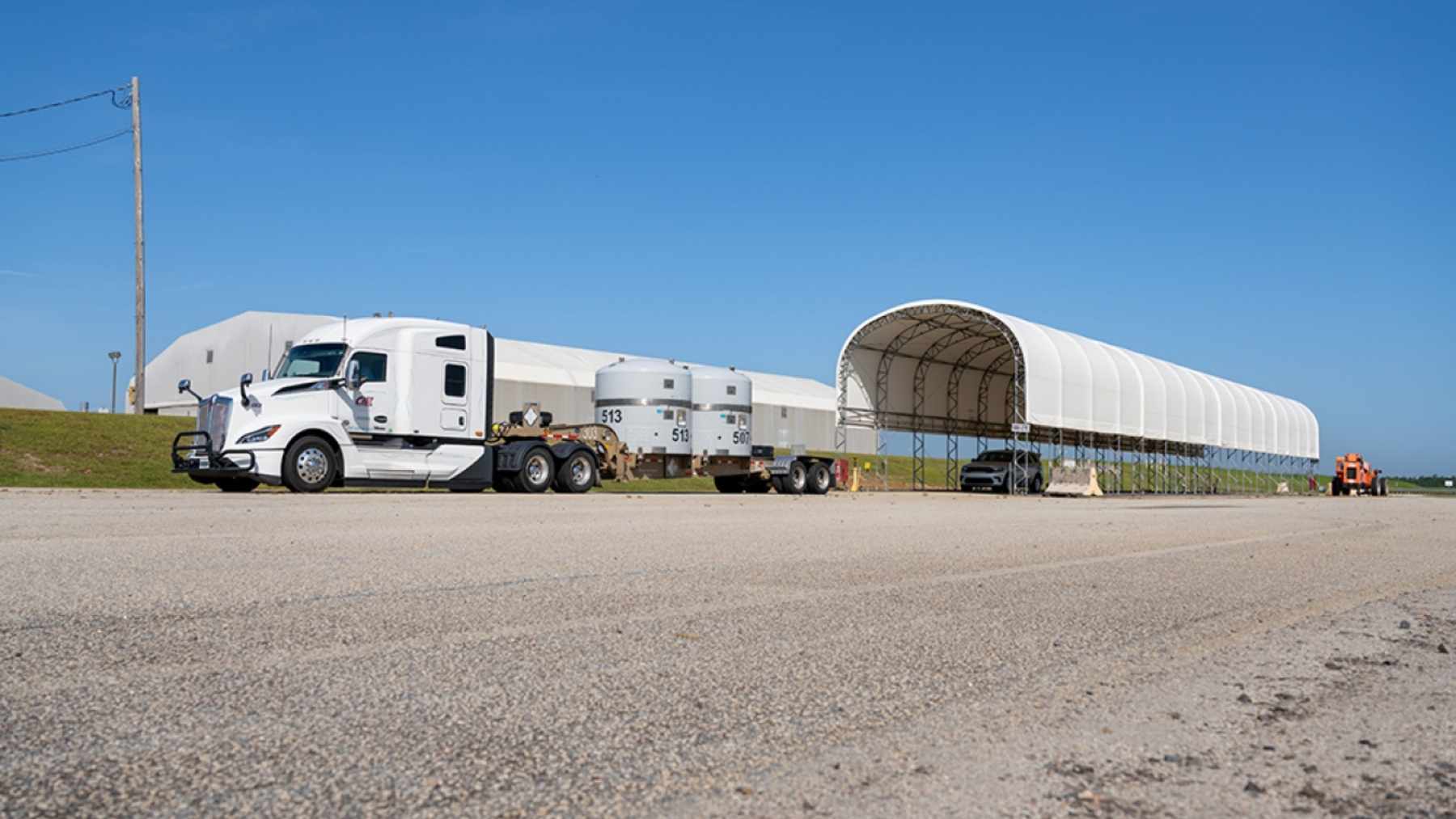
Then there’s the hotter fraction, the part nobody at the plant is allowed to touch. A load of that left the Savannah River Site near Aiken, South Carolina this month, sealed inside a steel container with an inch of lead built into the wall.
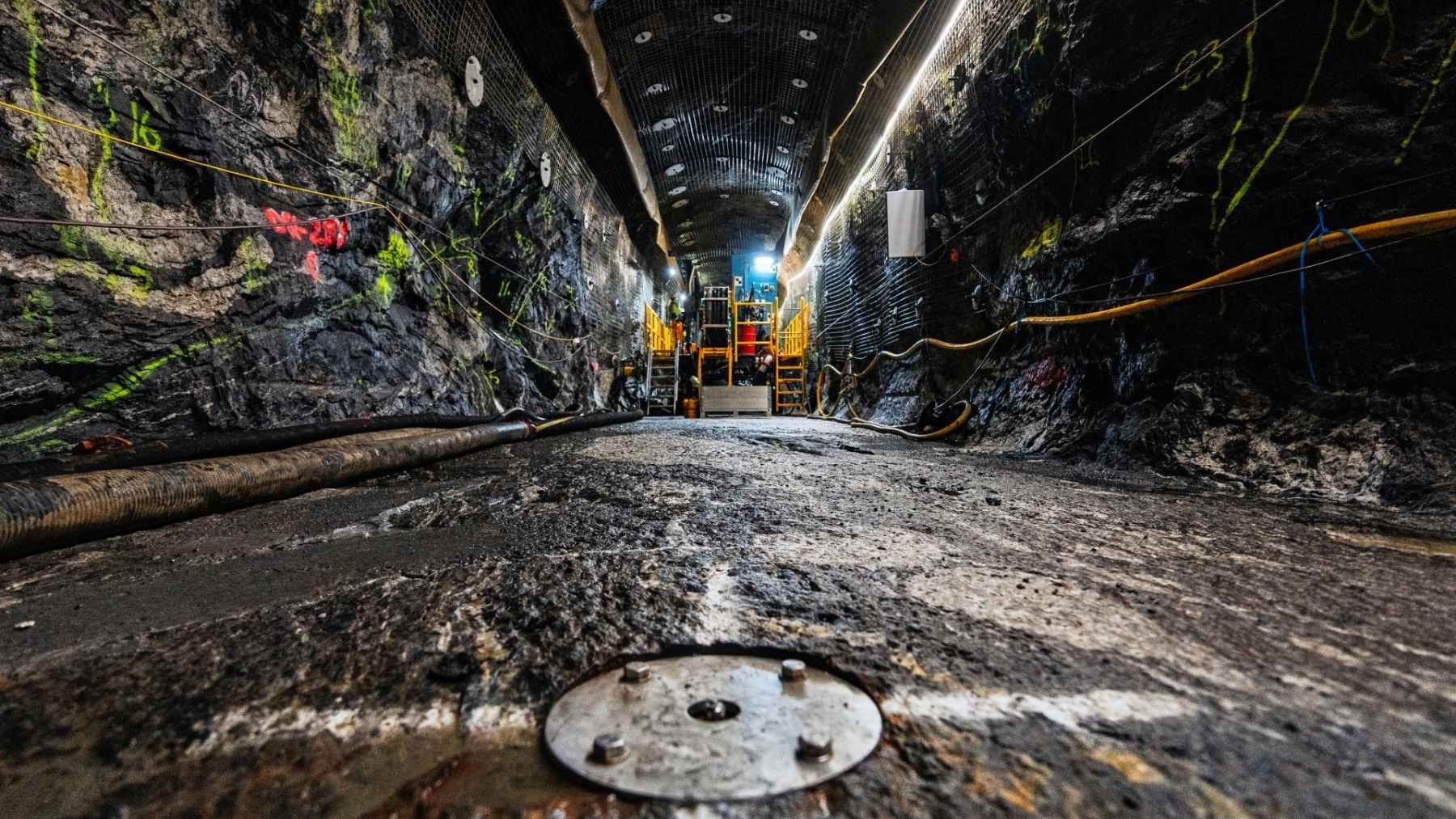
The Office of Environmental Management announced it on September 8 and called it the site’s first shipment of remote-handled transuranic waste in more than a decade. The drums finished their run at the Waste Isolation Pilot Plant in southeastern New Mexico, where the disposal rooms sit 2,150 feet down in a salt bed.
Transuranic waste is the formal name for the stuff, and it means the contamination is elements sitting further along the periodic table than uranium. The industry sorts it into two piles. Contact-handled waste is the mild majority, and that’s the kind a worker in normal gear handles directly.
Remote-handled waste is the hotter kind, and the line between them is 200 millirem per hour measured at the surface of the container. Above that line, machines do the touching.
This drum goes on the floor, not into the wall
The lead does something else too, and I think it’s the more interesting half.
Remote-handled waste at WIPP normally goes into boreholes drilled into the walls of the disposal rooms, and crews have to get it into those walls before contact-handled drums fill up the floor. A shielded container skips that entirely. It comes off the pallet and gets set down on the room floor next to the regular waste, three at a time, by forklift.
So the lead buys protection for the guy standing next to the drum, and it buys a simpler burial on top of that. For a repository where the salt is slowly crushing every room shut, and where the only new panel started in a decade won’t take waste until around 2028, that’s worth a fair amount.
So why did it take more than ten years?
The American Nuclear Society reports that DOE-EM paused the site’s remote-handled shipments more than a decade ago while these containers were designed and tested. DOE’s own explanation is narrower than that. In a July 28 notice, the department said shipments would resume once a flammable gas analysis confirmed the drums were safe to move.
Old waste drums brew their own atmosphere. Radiation slowly breaks down the plastic, the rags and whatever moisture got sealed in there, and hydrogen, methane and solvent vapors collect in the space above the waste. You don’t want that riding in a sealed cask across half the country, so crews sample the gas inside each drum before anything goes anywhere. SRS ran that campaign on its high-activity legacy containers this summer.
Kerri Crawford, who runs solid waste programs for site contractor Savannah River Nuclear Solutions, called the shipment “a significant accomplishment for our team and the site.” She also said the site’s remote-handled work started back in 2009, which tells you roughly how long a piece of packaging can take to get through design, drop testing and a regulator.
I can’t tell you what’s in the drums on this particular load, because DOE hasn’t published a breakdown of the waste streams, and it hasn’t given a route or a mileage for the trip either. Routes generally aren’t advertised in advance, for fairly obvious reasons.
There are about 150 more drums behind this one
SRS crews have already loaded 19 more remote-handled drums into shielded containers, and DOE puts the whole campaign at roughly 150 drums being prepared. Another 50 shielded containers are on their way to the site.
Savannah River isn’t slow at this in general. It’s beaten its annual goal of 12 shipments to WIPP for years running, with 24 two years ago and 18 last year, and the contractor counts 929 shipments since 2008. What’s left in South Carolina now is the awkward stuff, the legacy drums that are harder to characterize and harder to handle, and remote-handled waste is the most awkward category in that pile.
They’re not the only ones getting this restarted, either. The Idaho Cleanup Project sent its first remote-handled load to WIPP since 2014 this spring, according to the Energy Department, which suggests the packaging problem was never only a South Carolina problem.
We ought to keep this in proportion, though. Spent fuel from commercial reactors still has nowhere permanent to go in this country, and companies are still drilling test holes in Texas to argue about how that should work. Bomb-plant gloves and tools in a lead-lined drum are the solved part, and even that took ten years and a new container to move one truckload.
The Office of Environmental Management published the shipment photo on September 8, with SRS and WIPP crew members lined up in front of the trailer. Crawford’s teams have around 150 drums left to pack, and 19 of them are already sitting inside their lead.