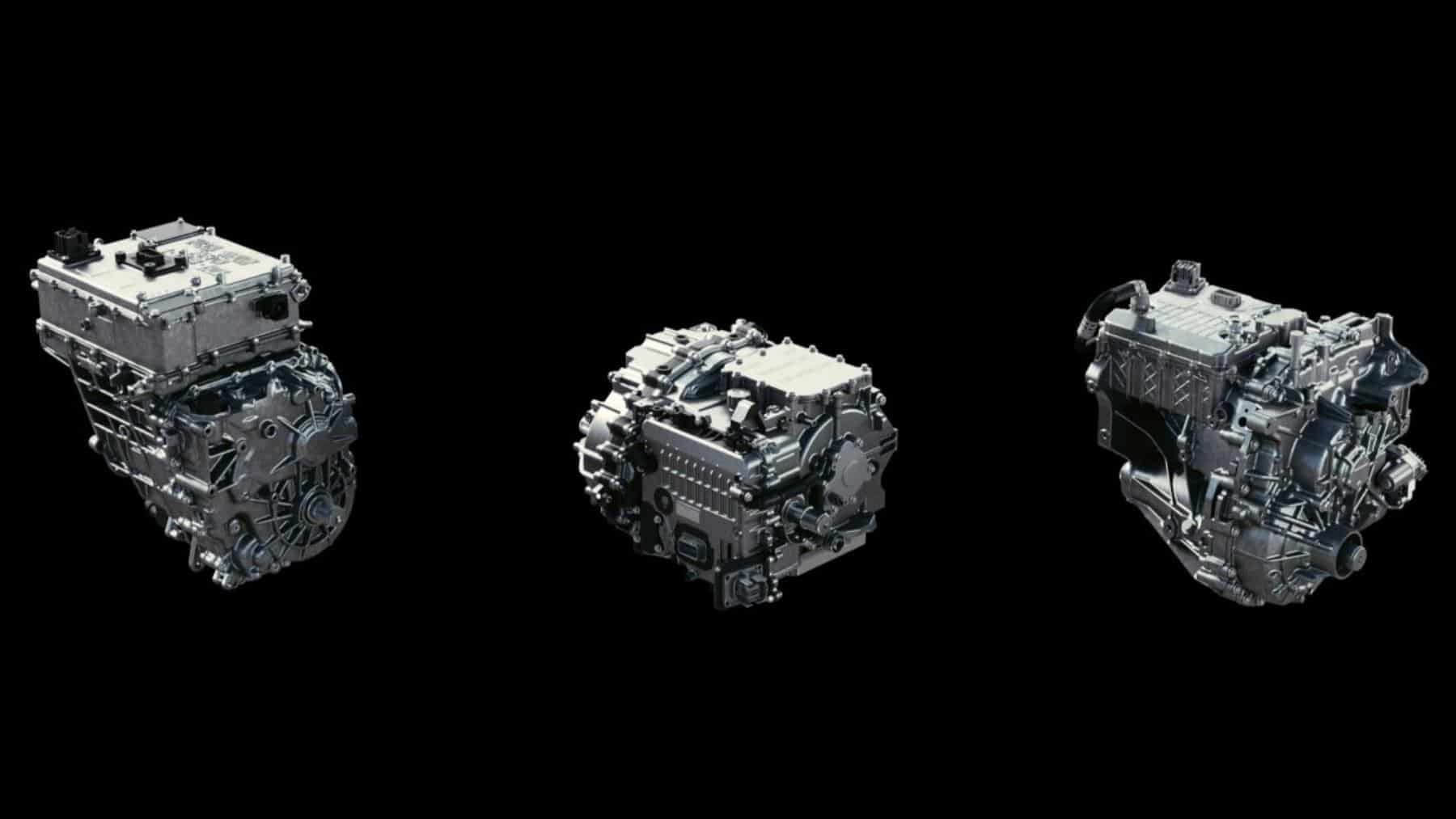

The traction motor under the hood of a 2026 Mustang Mach-E carries between one and three kilograms of neodymium-praseodymium-iron-boron permanent magnet. The dysprosium and terbium content that keeps that magnet from demagnetizing under hard acceleration runs to roughly 50 to 200 grams. The same is true of the F-150 Lightning, the Tesla Model Y, and every General Motors EV on the Ultium platform. None of that material is processed inside U.S. borders at meaningful commercial scale. About 90 percent of the world’s separated rare-earth oxide capacity sits inside China. The principal U.S. policy answer to that problem is a contract the Pentagon signed in March with an Australian mining company, at a refinery on the east coast of Malaysia.
On March 16, 2026, Lynas Rare Earths signed a binding letter of intent through its U.S. subsidiary Lynas USA to supply the Department of War with $96 million worth of rare-earth oxides over four years. The agreement includes a $110-per-kilogram price floor on neodymium-praseodymium oxide, the same magnet metal that powers the traction motors in those American EVs. The deal was announced from Sydney. The plant that does the work sits in Gebeng, on the east coast of peninsular Malaysia. Nobody in Kuala Lumpur signed anything.
What Lynas actually signed
The structure mirrors the deal the Pentagon executed with MP Materials in July 2025. In that arrangement, the Department of Defense took a 15 percent equity stake in MP Materials through a $400 million preferred equity investment, extended a $150 million loan, and locked in the same $110-per-kilogram price floor on NdPr oxide for 10 years. The Pentagon described it as a “transformational public-private partnership.” It was the first leg of a deliberate effort to build a non-Chinese rare-earth supply chain capable of feeding both the U.S. defense industrial base and the American EV industry without depending on processors in Inner Mongolia. The Lynas binding letter of intent is the second.
“Through this agreement, the U.S. Defense Industrial Base will continue to have access to light and heavy rare earth oxides that are essential for modern manufacturing,” Lynas CEO Amanda Lacaze said in the company’s statement on the day of the signing. “We thank the U.S. government for working with Lynas to reach this mutually beneficial arrangement.”
The Pentagon has been making the case in parallel. On February 24, 2026, Assistant Secretary of War for Industrial Base Policy Michael P. Cadenazzi Jr. testified before the Senate Armed Services Committee that “securing a resilient supply chain for critical minerals is fundamental to national security and the economy.” The Lynas binding letter of intent was signed three weeks later.
What Lynas brings to the deal is not hypothetical. The Lynas Advanced Materials Plant in Gebeng has been operating commercially since 2012, on a 100-hectare site in the Gebeng Industrial Estate, with three integrated processing areas: cracking and leaching, solvent extraction, and product finishing. Samarium oxide production began at the plant in March 2026, one month ahead of schedule, making Lynas the only producer of separated heavy rare earths at commercial scale outside China. Quarterly revenue for the period ending March 31 came in at A$265 million, more than double the prior year. Total rare-earth oxide production for the quarter was 3,233 metric tons.
An allied $110 floor that is not a coincidence
The $110-per-kilogram NdPr floor is no longer just a Pentagon number. It is now an allied standard. The same week the Lynas-Pentagon framework was finalized, Lynas separately signed an updated offtake with Japan Australia Rare Earths, the procurement vehicle that buys on behalf of Japanese industrial users. That agreement locks in a minimum of 5,000 metric tons per year of NdPr oxide deliveries through 2038, also at the $110-per-kilogram floor. The Pentagon’s earlier deal with MP Materials used the same number. Three of the largest non-Chinese rare-earth procurement programs on the planet now share an identical minimum price. It is a coordinated allied response to the pricing tactics that Chinese state producers have historically used to drive non-Chinese competitors out of the market.
Lynas has also been building U.S.-facing magnet supply agreements directly with American manufacturers. On October 8, 2025, Lynas signed a non-binding memorandum of understanding with Noveon Magnetics to develop a domestic U.S. supply chain for rare-earth permanent magnets across defense, automotive, and industrial sectors. Noveon, based in San Marcos, Texas, is currently the only operational U.S. manufacturer of sintered rare-earth magnets. The MOU points directly at the American EV market. It also points to the same problem the MP Materials stake is meant to solve. The processing capacity inside the U.S. border does not yet exist at scale.
Why Malaysia is suddenly the most strategically located industrial address in Asia
The Gebeng plant was built between 2010 and 2012 against vocal opposition from Malaysian civil society groups who argued the refinery would generate substantial low-level radioactive thorium-bearing residue over its operating life. By 2018 the accumulated water leach purification residue at the site stood at 451,564 metric tons, according to figures cited by Malaysia’s Environment, Science, Technology and Climate Change Ministry. That opposition produced two waves of political pressure: the Bersih anti-Lynas movement of 2011 to 2013, led by activists including Fuziah Salleh of the People’s Justice Party and Wong Tack of the Democratic Action Party; and a second wave after the 2018 election, when the Pakatan Harapan government renewed the company’s operating license despite running partly on a Lynas-shutdown manifesto. The plant has been operating under that political tension for the entire decade since.
What the Pentagon’s $96 million binding letter of intent does is turn a domestic Malaysian regulatory and environmental dispute into a U.S. national security supply contract. The Malaysian Ministry of Investment, Trade and Industry was not a signatory. The Prime Minister’s office was not a signatory. The deal sits between an Australian-headquartered, ASX-listed company and the U.S. Department of War, with the actual processing happening on Malaysian land under a Malaysian operating license. From the perspective of Putrajaya, that is awkward at minimum.
The context did not help. In February 2026 the U.S. Supreme Court ruled 6-3 that the tariffs imposed by President Trump in early 2025 under the International Emergency Economic Powers Act were unconstitutional. That ruling collapsed the legal foundation of the Malaysia-U.S. Agreement on Reciprocal Trade, signed only in October 2025. By April, Malaysian Trade Minister Johari Abdul Ghani was publicly stating that Kuala Lumpur had received no official communication from Washington on the fate of the agreement. The Lynas-Pentagon contract landed in that vacuum.
The backlash the Pentagon did not factor in
On April 13, 2026, a coalition of 57 Malaysian civil society organizations sent an open letter to Prime Minister Anwar Ibrahim opposing the deal. The letter argued the $96 million arrangement “directly links processing operations conducted on Malaysian soil to foreign military supply chains” and could implicate Malaysia “in the military activities of a State that is…engaged in armed conflicts and military operations that have attracted credible allegations of grave breaches of international humanitarian law.” Nikkei Asia and The Diplomat both covered the backlash. The New Straits Times ran a front-page report.
The argument the coalition makes is not technical. It is sovereign. The claim is that Malaysian land, water, and environmental capacity should not be used to underwrite a U.S. defense supply contract that the Malaysian government did not negotiate. The same coalition has been making variants of that argument since 2011. The Pentagon contract has given it a new and much larger institutional target. By May, MP Wong Chen had announced the issue would be raised in the Malaysian Parliament in June.
The American plant is drifting backward
The Department of War has separately invested approximately $258 million in a Lynas heavy rare-earth separation plant at Seadrift, Texas. Lynas flagged in its full-year 2025 results that wastewater treatment costs had pushed the Texas project into “significant uncertainty,” and the company is in active discussions with Washington over additional capital. A second heavy rare earths separation line at Gebeng is now slated for completion in 2028. The American-soil leg of the Lynas-Pentagon partnership is, in other words, drifting backward, while the Malaysian leg is accelerating. That is not the political position Washington intended to be in.
The Pentagon’s broader supply-chain map outside China now has four working nodes. An Australian mine at Mt Weld. The Malaysian refinery in Gebeng. A California processor at Mountain Pass that the Pentagon already partly owns. And a Saudi joint venture between MP Materials, the Department of War, and the Saudi Arabian Mining Company (Maaden). That last node is no longer in negotiation. On November 19, 2025, Maaden signed a binding term sheet with MP Materials, backed by the DoW, to build and operate a rare-earth refining and separation facility in the Kingdom. MP and the DoW will hold a combined 49 percent equity. Maaden will hold no less than 51 percent. The DoW agreed to provide full non-recourse financing for the U.S. side of the contribution.
What it means for the American driver
For the average American EV buyer, the chain runs as follows. The traction motor under the hood of a 2026 Mustang Mach-E or F-150 Lightning carries between one and three kilograms of NdFeB permanent magnet material. The dysprosium and terbium content needed to keep that magnet stable at the operating temperatures inside an electric motor under hard acceleration runs to roughly 50 to 200 grams per motor. China still controls roughly 90 percent of the global processing capacity for those elements. The MP Materials stake, the Lynas binding letter of intent, the Noveon MOU, and the Maaden joint venture are the principal mechanisms by which Washington is trying to change that ratio. All of them depend, in different ways, on supply chains the U.S. government does not directly own or operate.
The American grid, the American defense industrial base, and the American EV transition now share a procurement chokepoint that runs through an Australian mine, a Malaysian refinery, a California processor, and a Saudi joint venture under construction. Those four nodes are the working substitute for the Chinese supply chain. None of them is yet operating at the scale required. The Lynas-Pentagon deal moved one of those nodes forward by $96 million and four years. It also produced, in roughly six weeks, the largest organized civil-society pushback against a U.S. defense supply contract in Southeast Asia in years. The Pentagon will have to manage both at once. So will the Australian board of Lynas in Sydney. So will the Malaysian cabinet in Putrajaya. The American driver behind the wheel of an electric Mustang next year is the downstream beneficiary of how each of those conversations lands.