
Movies taught everybody how submarines get caught: one boat pings, everyone listens, and the quietest crew wins. That part is real. But sound is only half of how navies actually hunt submarines, because a hull is also several thousand tons of steel, and steel bends the Earth’s magnetic field around it as it moves. Sub-hunting aircraft carry magnetometers to sniff out exactly that distortion.
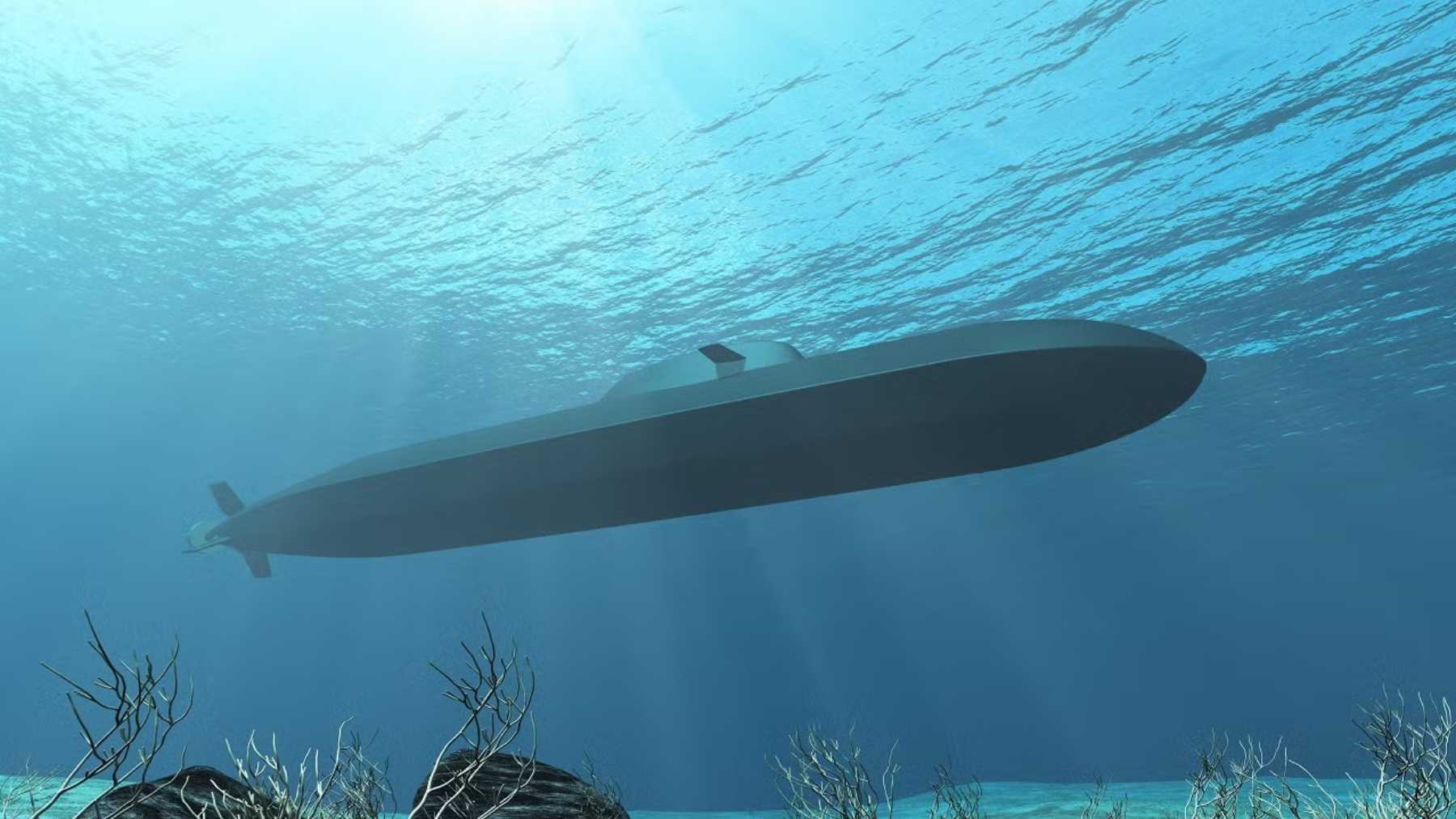
The Type 212CD is a German submarine engineered against both tells at once. Ottawa’s announcement describes ultra-low acoustic and magnetic signatures, a hull of non-magnetic steel, and fuel-cell propulsion that keeps the boat underwater without a rumbling diesel.
And Canada just decided it wants a dozen. On July 6, Prime Minister Mark Carney announced at Canadian Forces Base Halifax that TKMS (Thyssenkrupp Marine Systems) is the preferred supplier for up to 12 boats under the Canadian Patrol Submarine Project, the largest defense procurement in Canadian history.
The German yard beat South Korea’s Hanwha Ocean to get there. And the full program is estimated at as much as $70 billion, or C$100 billion, over the life of the boats, according to Defense News.
One working submarine is Canada’s entire fleet right now
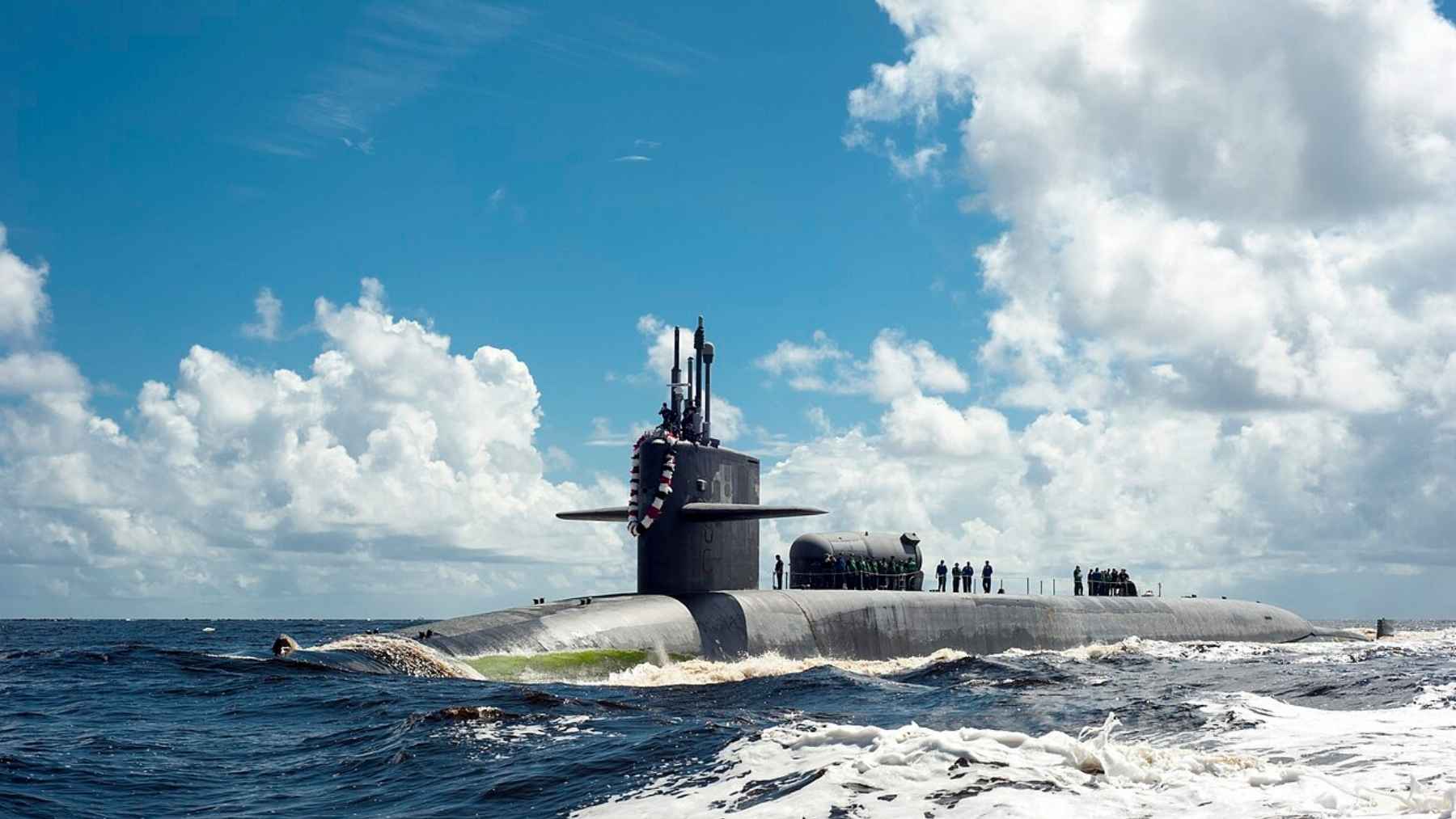
Canada currently operates four Victoria-class boats, all bought second-hand, hulls that started life in Britain’s Royal Navy as the Upholder class. Per the government’s release, exactly one of the four is seaworthy right now. For the country with the longest coastline on the planet, that is not a fleet. It’s a rounding error.
The Globe and Mail notes Canada hasn’t bought a new submarine since the 1960s and has never ordered anywhere near 12 at once. The dozen comes from ugly readiness math. Navies assume roughly one boat in four is actually available at any moment, with the rest in maintenance or training, so 12 hulls buys you three submarines at sea.
Carney’s office also spelled out why the appetite suddenly exists. The Arctic is warming nearly three times faster than the global average, per Ottawa’s own numbers, and open water up north means traffic Canada would very much like to see coming.
The 212CD is built to fool sonar and magnetometers at the same time
Start with the magnetism, because it’s the less famous half. An ordinary steel submarine stays detectable even when it’s silent, since the hull distorts the local magnetic field the way a wrench messes with a compass. The 212CD’s answer is a double hull of non-magnetic steel, wrapped in what Reuters describes as a diamond-shaped design about 74 meters long.
Naval Technology puts the boat at roughly 74 meters long and 13 meters tall, with fuel-cell air-independent propulsion driving a PERMASYN electric motor and a Kongsberg-supplied combat system called ORCCA. Ottawa’s release goes as far as ranking it among the stealthiest submarines in the world. Sellers say that kind of thing. The difference is that here the buyer wrote it, after picking the design apart for years.
The quiet half is easier to picture. Fuel cells make electricity without combustion, so nothing is knocking away inside the hull while the boat is submerged, and there’s no snorkel run near the surface to recharge batteries, which is exactly when conventional submarines get spotted.
Fuel cells are what get you under the ice
Under-ice patrol is the mission Ottawa keeps naming, and it’s the one that rules out an ordinary diesel boat. A submarine under the Arctic ice cap can’t raise a snorkel through several feet of frozen ocean. It has to make its own power, silently, for the entire visit.
Nuclear propulsion is the classic fix, and it’s the route France took with the Suffren class, whose fourth boat, the De Grasse, was delivered in June. Canada is not buying reactors.
The 212CD gets there with hydrogen fuel cells instead. TKMS says the boat was born an Arctic design, engineered alongside an Arctic navy from day one rather than winterized later. That navy belongs to Norway, which is buying the same class.
Fuel-cell submarines have quietly turned into their own little arms race. Spain’s new S-80 class chases the same prize with a different chemistry, brewing hydrogen from bioethanol inside the hull. Germany and Norway ordered the 212CD together back in 2021, and Norway’s lead boat is due in 2029.
The teacher beat the student this time
If this contest sounds familiar, it’s because we covered the bidding war in June, and it had a plot. South Korea learned to build submarines from this exact German yard in the 1980s, putting its earliest hulls together off German plans. Four decades later, the student showed up in Canada with its own design, the KSS-III, to outbid the teacher.
Hanwha did not campaign quietly. The South Korean navy sailed a KSS-III across the Pacific to British Columbia this spring, a first in its history, essentially parking the product demo at Canada’s naval doorstep. The German pitch leaned on NATO membership and a boat two allied navies are already building.
Carney called it close. “This was a difficult, close decision between two highly qualified suppliers,” he said at the announcement, per Defense News. Hanwha isn’t fully out of the picture either. The government’s release states that if negotiations with TKMS fall apart, Canada may switch to Hanwha as preferred supplier instead.
Four boats by 2034 means jumping someone else’s line
Now the schedule, which is where it gets interesting for anyone who read our June piece. The production line was booked solid. Germany and Norway had claimed the early slots, and getting Canada a boat by the mid-2030s always looked like it would require taking hulls away from somebody.
That is apparently what happened. Carney said TKMS committed to putting Canadian boats at the front of its build plan to hit four deliveries by 2034, and the Globe reported that the offer involves handing Canada slots that had been earmarked for German and Norwegian hulls. The official release calls that 2034 date ahead of schedule. Officials went further with Defense News, saying the first boat is expected in 2033 and three more in 2034.
Contract talks start now and, per the government, wrap no later than the end of 2027. Carney wouldn’t attach a price to any of it, telling reporters he had no intention of negotiating in public. The Globe puts the boats themselves at C$20 billion to C$30 billion, while the C$100 billion figure covers maintenance, infrastructure and weapons across the fleet’s lifetime.
Then there’s the alliance math. With Canada aboard, Germany, Norway and Canada end up running a shared class of as many as 24 identical submarines. Germany’s ambassador to Canada, Torven Bellmann, put it plainly: “Our crews will be interchangeable,” she said, per the Globe.
TKMS is also promising Canada a very large check. The company’s own projections, reported by Naval Technology, claim more than C$86 billion in direct economic impact, C$167 billion in total economic activity and over 650,000 job-years. Those are the winner’s numbers, drawn up while it was still trying to win, so file them accordingly.
There are caveats, because it’s a defense program. The release says “up to” 12 boats, and Carney confirmed the final count gets settled at the negotiating table. Hanwha waits in reserve if the TKMS talks collapse. And no navy anywhere has taken delivery of a 212CD yet, since the first hull only started construction in 2023 and Norway’s lead boat isn’t due until 2029.
Still, Canada lands in a spot it has honestly never occupied. The country that spent years keeping one working submarine afloat just ordered a dozen boats designed to give sonar and magnetometers nothing to grab, built for the ice cap it now has to watch. Germany and Norway get to debug the class first. Canada’s four arrive in 2034, the first brand-new submarines the country has bought since the 1960s.