
2026 Ford Mustang Mach-E
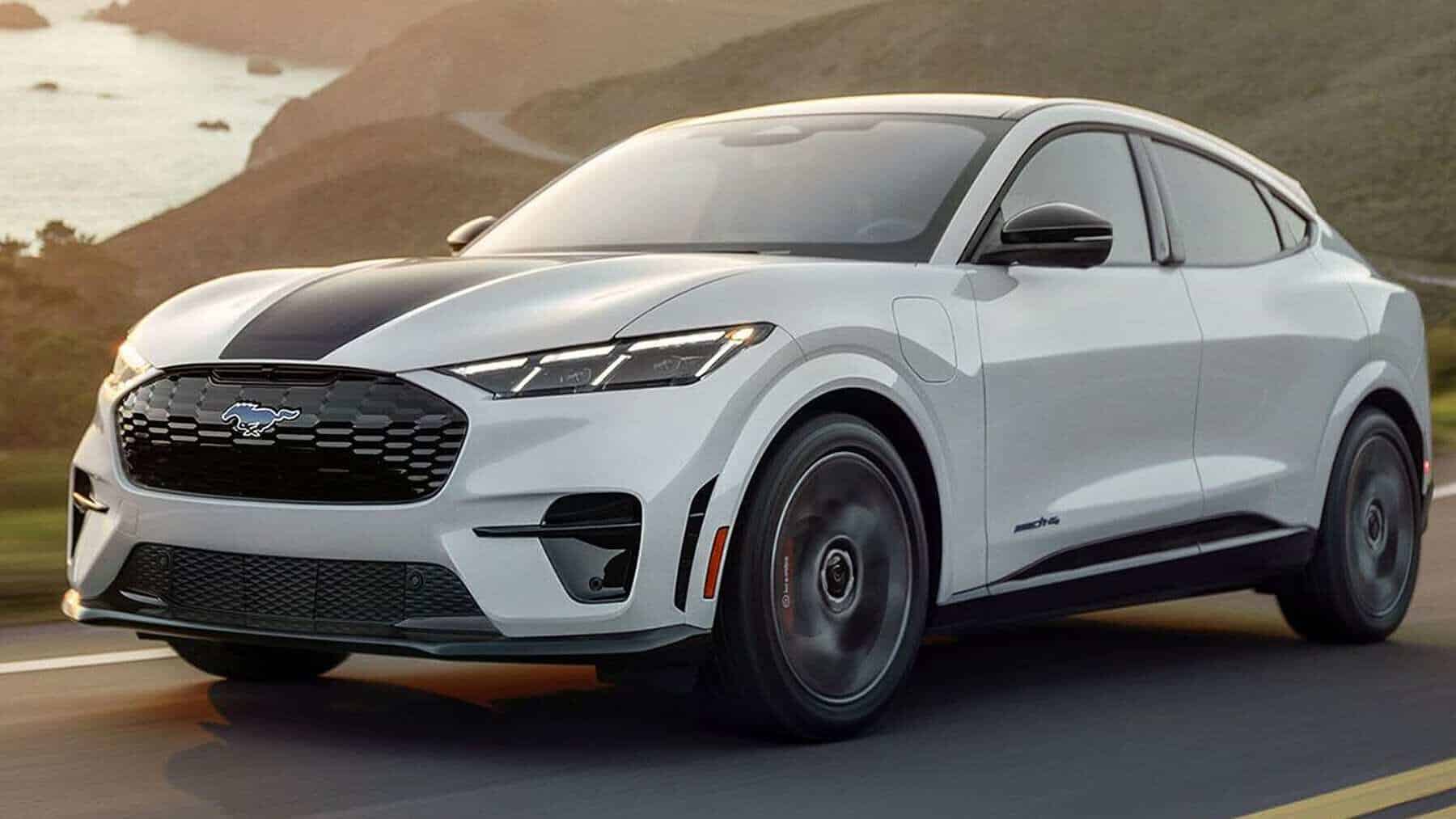
Overview
What's New for 2026
The 2026 Ford Mustang Mach-E enters its fifth model year of the electric SUV era, refining rather than revolutionizing the formula that has established this vehicle as the second-best-selling electric SUV in America (behind Tesla Model Y). Ford has enhanced charging infrastructure compatibility, adding proprietary North American Charging Standard (NACS) compatibility alongside existing charging networks. The powertrain lineup expands charging flexibility while maintaining the distinctive performance characteristics that define the Mustang heritage into the electric era.
Interior technology receives SYNC 4A integration updates, enabling seamless smartphone connectivity and over-the-air software enhancements. The infotainment system now supports third-party charging network integration directly on the dashboard display, eliminating reliance on smartphone-based navigation during charging stop optimization. Ford has refined thermal management systems, improving cold-weather charging efficiency and long-distance highway viability in northern climates.
Styling receives subtle refinement including new wheel designs and revised paint options emphasizing the Mach-E's status as the electric bridge connecting Mustang heritage to Ford's electric-future strategy. The GT and GT Performance variants receive unique black-trim design elements differentiating high-performance models from economy-focused Select and Premium variants. Available digital gauge clusters across all trims now display real-time efficiency metrics, empowering drivers to optimize range through informed driving behavior.
Overview
The Mach-E operates as Ford's electric performance SUV, addressing buyers seeking combined style, practicality, and zero-emission driving. Starting at $37,795 for the Select RWD variant (plus $2,045 destination charge), the Mach-E undercuts Tesla Model Y pricing while delivering distinct visual identity and American-focused design philosophy. The lineup extends to $55,440 for GT Performance variants, positioning premium pricing for maximum performance. The vehicle competes with Tesla Model Y, Hyundai Ioniq 5, Kia EV6, Chevrolet Equinox EV, and Volkswagen ID.4, claiming second-place market position through combination of performance, practicality, and Mustang-derived emotional engagement.
The compact SUV form factor delivers 34.4 cubic feet of cargo space behind the rear seats, expanding to 76.1 cubic feet with rear seats folded flat. Five-passenger seating accommodates typical family transportation; the sealed battery pack beneath the floor raises the vehicle sufficiently to provide genuine headroom without excessive height impacting aerodynamic efficiency. Overall dimensions measure 186.2 inches long, 74.3 inches wide, and 63.1 inches tall, positioning it between subcompact and compact SUV categories while emphasizing driver-focused performance over spacious family hauling.
The dual-motor all-wheel-drive architecture distributes electric torque between front and rear wheels independently, providing traction dynamics previously unavailable on traditional vehicles. The single-motor rear-wheel-drive configuration enables weight-optimized efficiency; the dual-motor configurations provide spirited all-weather capability. All powertrains produce peak torque instantly from standstill, delivering acceleration feel dramatically different from turbocharged conventional vehicles. Zero-emission operation addresses environmental concerns while eliminating oil changes, transmission fluid service, and traditional drivetrain maintenance.
Driving Experience
The Select RWD variant provides 266 horsepower and 317 pound-feet of instant torque from the permanent-magnet synchronous motor. Real-world acceleration reaches 0-60 mph in approximately 5.8 seconds, competent for casual driving and highway merging without thrilling performance. The rear-wheel-drive architecture establishes clear weight distribution and engagement; the instant torque delivery from electric motors feels fundamentally different from turbocharged engines, providing immediate response to throttle input without hesitation or lag. Regenerative braking captures kinetic energy during deceleration, extending range by 20-30% compared to vehicles without energy recovery. Estimated range reaches approximately 260 miles on EPA testing; real-world range varies substantially based on driving patterns (highway driving at 75 mph reduces range 15-20% versus EPA estimates; urban driving often exceeds projections by 10-15%).
The Premium AWD variant produces 290-320 horsepower depending on configuration, reaching 0-60 mph in approximately 5.2 seconds. The dual-motor architecture distributes torque between front and rear wheels, providing superior traction during acceleration and winter driving compared to rear-wheel-drive variants. The all-wheel-drive system operates seamlessly, requiring no driver intervention; torque vector bias adjusts automatically based on driving conditions and wheel slip detection. Estimated range reaches 300 miles EPA combined, practical for most daily and weekend driving without range anxiety.
The GT and GT Performance variants produce 480 horsepower combined from dual motors, enabling 0-60 acceleration in approximately 3.8 seconds (3.3 seconds with GT Performance Upgrade package)—matching traditional muscle car performance through electric propulsion. The instant torque delivery from dual motors provides acceleration feel fundamentally different from turbocharged engines; the silence combined with relentless acceleration acceleration creates unique driving sensations unavailable in conventional vehicles. The GT variants use extended-range battery exclusively (approximately 91 kWh), delivering estimated 300-320 mile range despite the additional weight and aggressive performance tuning. Launch Control optimization manages traction during maximum-effort acceleration, enabling repeatable 0-60 performance without wheelspin despite RWD traction limitations.
Regenerative braking operates through seamless integration between electric motors and hydraulic brake systems. One-pedal driving mode enables deceleration through accelerator lift-off alone, capturing maximum regenerative braking without requiring separate brake pedal engagement. Driver preference variables determine whether one-pedal operation enhances or degrades driving enjoyment; most owners find adaptation requires 50-100 miles before intuitive feel develops. Traditional brake pedal engagement remains fully operational for maximum braking authority during emergency situations.
Interior, Comfort & Technology
The Mach-E cabin emphasizes driver focus through centralized driver-oriented dashboard design and integrated technology seamlessly embedded within the cabin architecture. The steering wheel-mounted controls provide intuitive access to critical functions without requiring complex menu navigation. The infotainment centerpiece is a standard 15.5-inch touchscreen running SYNC 4A, sufficiently large for confident touch operation while remaining proportionally appropriate to the compact SUV packaging. Wireless Apple CarPlay and Android Auto appear standard across all trims; wireless charging accommodates modern smartphone use patterns.
The cabin material quality reflects contemporary electric vehicle design philosophy: soft-touch materials on upper surfaces, durable plastics on high-contact areas, and premium upholstery options reflecting trim positioning. Select and Premium trims feature cloth seating; GT variants receive leather upholstery. The interior color options include traditional black and available modern off-white, reflecting contemporary minimalist design trends. Storage remains optimized for electric architecture; the frunk (front trunk) provides 4.7 cubic feet of additional storage below the hood, valuable for charging cables or emergency equipment.
Climate control systems integrate intelligent thermal management optimizing battery performance and cabin comfort simultaneously. Cold-weather conditioning pre-heats the battery while the vehicle is still plugged in, dramatically improving range during winter driving. Heated seats and steering wheel appear on Premium and above trims; ventilated seats maintain comfort during summer driving. Heated windshield defrosts automatically during winter startup, eliminating manual ice scraping.
Technology integration includes available Co-Pilot360 with adaptive cruise control, lane-keeping assist, and automatic emergency braking. The Mustang Mach-E's information dashboard provides real-time efficiency metrics, enabling drivers to optimize driving patterns through awareness of instantaneous consumption rates. Navigation integration with charging network information enables automatic route planning between charging stations, addressing range anxiety through seamless infrastructure coordination. Ford's FordPass app enables remote vehicle monitoring including battery status, lock/unlock capability, and climate pre-conditioning from smartphones.
Trim Levels & Pricing
The 2026 Mach-E's trim structure reflects powertrain primary differentiation and battery capacity secondary choices. Select models emphasize value and efficiency; Premium trims add comfort and technology; GT variants prioritize performance. Battery capacity defaults based on trim and range requirements; extended-range batteries appear standard on GT variants and optional on Premium trims.
| Variant / Configuration | Starting MSRP | Key Features |
|---|---|---|
| Select RWD (Standard Range) | $37,795 | 266 hp RWD, ~70 kWh battery, 260-mile EPA range, 15.5-in SYNC 4A |
| Premium RWD (Standard Range) | $40,595 | Enhanced comfort, leather seating, heated seats, premium audio |
| Premium RWD (Extended Range) | $42,295 | ~91 kWh battery, 320-mile EPA range, extended-range efficiency |
| Premium AWD (Standard Range) | $43,595 | 290-320 hp dual-motor AWD, superior winter traction, 280-mile range |
| Premium AWD (Extended Range) | $45,295 | ~91 kWh extended battery, 300+ mile range, optimal balance of range and efficiency |
| GT (480 hp, Extended Range) | $53,395 | Dual-motor, 480 hp, 0-60 in 3.8 sec, extended range standard, performance focus |
| GT Performance (Extended Range) | $55,440 | Performance upgrades, 0-60 in 3.3 sec with Launch Control, premium Recaro seats |
| Rally (Extended Range) | $57,690 | All-wheel-drive capability, all-terrain aesthetic, extended range battery |
Value analysis reveals compelling positioning relative to competitors. The Select RWD at $37,795 (before federal tax credit) provides authentic electric performance at accessible pricing. Federal tax credit eligibility of up to $7,500 reduces effective pricing to $30,295, undercutting comparable gasoline SUVs while eliminating fuel costs. The Premium AWD Extended Range at $45,295 ($37,795 after tax credit) represents optimal value-to-capability balance, providing dual-motor all-weather capability and sufficient range for extended road trips. The GT at $53,395 ($45,895 after tax credit) delivers muscle-car acceleration through electric propulsion; the GT Performance at $55,440 represents the ultimate performance variant. Range-focused buyers should evaluate extended-range batteries; performance-focused drivers might prioritize standard-range configurations requiring strategic charging planning.
Safety
The Mach-E incorporates comprehensive safety architecture including eight airbags, electronic stability control, and collision avoidance systems. Available Co-Pilot360 driver-assist features include forward-collision warning with automatic emergency braking, lane-departure warning, lane-keeping assist, and blind-spot monitoring with cross-traffic alert. The electric architecture inherently improves structural integrity; the battery pack integrated beneath the vehicle lowers center of gravity, improving rollover resistance compared to gasoline vehicles.
Electric vehicle architecture introduces unique safety considerations: high-voltage electrical systems require specialized training for first responders; Ford provides standardized training to emergency personnel nationwide. The battery pack remains enclosed within secure housing with multiple safety mechanisms preventing thermal runaway or coolant leakage during accidents. Real-world crash data demonstrates that electric vehicles perform comparably or better than equivalent gasoline vehicles in collision scenarios.
For comprehensive safety ratings and crash test results, visit NHTSA.gov and IIHS.org for the most current independent testing data. These resources provide detailed information about real-world accident outcomes and safety system performance for the Mach-E.
Warranty & Ownership Costs
Ford's warranty structure provides comprehensive coverage specifically addressing electric vehicle unique characteristics. The battery warranty extends eight years / 100,000 miles, protecting against capacity degradation (with guarantee of at least 70% original capacity retention). The basic warranty covers three years / 36,000 miles for manufacturing defects; the powertrain warranty extends five years / 60,000 miles for electric drivetrain components.
| Coverage | Duration |
|---|---|
| Basic Warranty | 3 years / 36,000 miles |
| Powertrain Warranty | 5 years / 60,000 miles |
| Battery Warranty | 8 years / 100,000 miles (70% capacity guarantee) |
| Corrosion Perforation | 5 years / unlimited miles |
| Roadside Assistance | 5 years / 60,000 miles |
Real-world ownership costs dramatically differ from conventional vehicles. Electricity costs at $0.12-$0.15 per kilowatt-hour and approximately 0.25 kWh per mile consumed translate to roughly $3.00-$3.75 per 100 miles—dramatically lower than gasoline's $12-$15 per 100 miles at typical fuel prices. Annual fuel-equivalent costs for 12,000 miles approach $360-$450, representing approximately 80% savings compared to gasoline vehicles. Insurance premiums approximate gasoline equivalents ($1,400-$1,700 annually), as electric vehicle insurance risk profiles now approach conventional vehicles. Maintenance costs become negligible; electric motors require virtually no scheduled service beyond brake fluid replacement and cabin air filter changes. The absence of oil changes, transmission fluid service, and traditional drivetrain maintenance eliminates approximately $800-$1,200 in annual maintenance costs compared to conventional vehicles. Over seven-year ownership, total cost of ownership calculations demonstrate 25-35% savings compared to equivalent gasoline SUVs, even accounting for battery replacement costs (rare within warranty period). Federal tax credit of up to $7,500 further improves value proposition.
The Bottom Line
The Verdict: The 2026 Ford Mustang Mach-E successfully bridges American performance heritage into the electric era through compelling combination of style, practicality, and zero-emission driving. The dual-motor GT variant delivers muscle-car acceleration; the Premium AWD Extended Range provides balanced capability for diverse driving demands. The federal tax credit of up to $7,500 transforms pricing advantage against gasoline competitors while delivering superior long-term ownership economics through elimination of fuel costs and traditional maintenance.
Who Should Buy: Buyers with home charging infrastructure prioritize Select or Premium RWD Extended Range, optimizing efficiency and cost-effectiveness for daily commuting. Those in regions with adequate charging networks benefit from Select's lower price and 260-mile range for urban/suburban operation. All-wheel-drive buyers should evaluate Premium AWD Extended Range, balancing all-weather capability with range requirements. Performance enthusiasts seeking electric muscle should prioritize GT or GT Performance, delivering 3.8-3.3-second 0-60 acceleration through instantaneous electric torque.
Who Should Look Elsewhere: Buyers without access to Level 2 home charging should carefully evaluate charging availability; the Select's 260-mile range becomes limiting without convenient charging infrastructure. Those prioritizing maximum cargo space should evaluate larger electric SUVs or traditional SUVs. Buyers unable to commit to charging planning or requiring unlimited spontaneous long-distance driving should maintain gasoline vehicle or evaluate upcoming electric platforms with faster charging infrastructure. Those prioritizing absolute lowest purchase price should evaluate lower-trim ICE alternatives, though total cost of ownership typically favors electric variants.
Frequently Asked Questions
How does cold weather affect Mach-E range and performance?
Cold temperatures reduce electric vehicle range by 20-40% compared to temperate conditions due to battery chemical efficiency losses and increased cabin heating energy consumption. A Premium RWD Extended Range rated 320 miles in temperate conditions might achieve 200-240 miles in 20-degree Fahrenheit conditions. Ford's pre-conditioning system addresses this through intelligent battery warming while still connected to charging; many owners plug in 30 minutes before departure in winter, enabling battery warming and maximizing available capacity. The heated steering wheel and seats reduce cabin heating energy demand, partially offsetting range losses. Winter driving efficiency varies substantially based on driving patterns; highway driving at elevated speeds exacerbates range loss compared to urban driving. Most owners planning winter excursions should assume 25-30% range reduction and plan charging stops accordingly.
What federal tax credit is available for the 2026 Mustang Mach-E?
The 2026 Mustang Mach-E is eligible for up to $7,500 federal tax credit if certain criteria are met: new vehicle purchase, qualified buyer income (subject to annual limits), and assembled vehicle content requirements. Point-of-sale rebates may be available through some dealers, enabling immediate discount rather than tax-filing delay. The $7,500 credit applies to Select RWD, Premium, GT, and Rally variants; some trims may have restricted eligibility based on sticker price caps ($55,000 for SUVs). Verify current eligibility requirements at IRS.gov, as regulations change annually. Some states offer additional incentives; California provides $2,000-$4,500 rebates; other states offer tax credits or HOV lane access. Timing purchase strategically around incentive availability can reduce effective vehicle cost by $10,000-$12,000.
How does regenerative braking actually work and what's the real benefit?
Regenerative braking captures kinetic energy during deceleration, converting motion into electrical energy that recharges the battery. When the accelerator is released, the electric motor switches to generator mode, slowing the vehicle while simultaneously charging the battery. The system seamlessly transitions between regenerative braking and hydraulic friction brakes based on deceleration rate and brake pedal force. Real-world benefit: regenerative braking can extend range by 20-30% compared to vehicles without energy recovery, particularly in urban driving with frequent stop-and-go cycles. One-pedal driving mode enables deceleration through accelerator lift-off alone, capturing maximum regenerative potential; highway driving at constant speed provides minimal regenerative benefit since steady-state driving doesn't create deceleration opportunities. Most owners report that regenerative braking feel takes 50-100 miles to master; the unique sensation of vehicle slowing through motor braking (not friction) requires adaptation but becomes intuitive with familiarity.
Is charging speed adequate for road trips?
Home Level 2 charging (240V) requires approximately 8-10 hours for full battery recharge from empty, impractical for frequent rapid charging. Public Level 2 chargers (shopping centers, workplaces) provide similar 8-hour charge times, appropriate for opportunistic charging during errands. DC fast charging networks (Tesla Supercharger, Electrify America, Evgo) charge 10-80% capacity in approximately 25-35 minutes depending on charger power output (150-250 kW). Real-world road trip dynamics: 300-mile range enables 3-4 hours of driving between charging stops at highway speeds; each charging stop requires 30-45 minutes, extending cross-country drive times compared to gasoline vehicles. Strategic planning using navigation apps (FordPass, Google Maps) that integrate charging information enables successful long-distance travel. Owners accustomed to gasoline vehicle road trips should budget additional time for charging stops; most find this acceptable for reduction in fuel costs. East and West Coasts have superior charging infrastructure; central regions require more careful planning.
Should I prioritize rear-wheel-drive or all-wheel-drive for winter driving?
All-wheel-drive variants provide superior traction during snow and ice through independent torque distribution to all four wheels, providing confidence during winter driving. The dual-motor architecture enables each wheel to receive optimal torque based on wheel slip detection, improving extraction from snow and reducing understeer compared to rear-wheel-drive variants. Real-world winter driving advantage: all-wheel-drive models enable confident acceleration in moderate snow (4-6 inches) without electronic intervention; rear-wheel-drive models require more careful throttle modulation. However, all-wheel-drive reduces range by 10-15% through additional motor weight and drivetrain losses. Buyers in moderate winter climates (occasional snow, infrequent icy conditions) can manage with rear-wheel-drive using winter tires; those in regions with frequent snow and ice should budget for all-wheel-drive despite range penalty. Winter tire selection (dedicated winter rubber rather than all-season) provides more traction improvement than all-wheel-drive for both variants.
What makes the GT Performance variant worth $2,045 more than the standard GT?
The GT Performance Upgrade package ($2,045) enables Launch Control optimization and advanced suspension tuning, improving 0-60 acceleration from 3.8 seconds to 3.3 seconds through electronic torque vectoring and launch-optimized wheel slip management. The upgrade also includes Recaro performance seats providing superior lateral support during aggressive driving, upgraded cooling systems enabling sustained high-power operation, and unique black trim differentiating performance focus. Weekend track-day enthusiasts benefit from improved handling precision and sustained performance cooling; daily drivers may find standard GT adequate for normal driving. The 0.5-second 0-60 improvement satisfies performance optimization enthusiasts; casual performance drivers may not perceive meaningful practical difference in daily driving. Consider your driving pattern; pure road-course performance benefits justify the upgrade; casual highway driving doesn't.
Key Highlights
- Electric SUV with up to 320 miles EPA rangenStarting at $37,795 is competitive for electric SUV segmentnGT variant with 480 hp dual-motor AWDnAvailable single-motor RWD or dual-motor AWDnDC fast charging up to 150 kWnUp to $7,500 federal tax credit eligiblen8-year/100,000-mile battery and drive unit warranty
Powertrain Options
| Engine | Horsepower | Torque | Fuel | MPG |
|---|---|---|---|---|
| Single Motor RWD (Select) | 264 hp | 317 lb-ft | Electric | 260 mi range (EPA est.) |
| Dual Motor AWD (Premium) | 325 hp | 428 lb-ft | Electric | 300 mi range (EPA est.) |
| Dual Motor AWD (GT) | 480 hp | 600 lb-ft | Electric | 270 mi range (EPA est.) |
Transmission: Single-speed direct drive
0-60 mph: 3.5 seconds
Specifications
Pros & Cons
✓ Pros
- $37,795 starting price competitive for an EV crossovernUp to 320 miles range eliminates most range anxietynGT model delivers genuine sports car accelerationn$7,500 tax credit dramatically reduces effective costnSpacious interior with modern technologynFord dealer network provides convenient service access
✗ Cons
- 150 kW charging slower than competitors with 350 kWnRange drops significantly in cold weathernGT range reduced versus standard modelsnInterior materials don't quite match premium pricingnOTA software updates occasionally create temporary issuesnNo third-row seating limits family versatility