
2026 Ford F-150
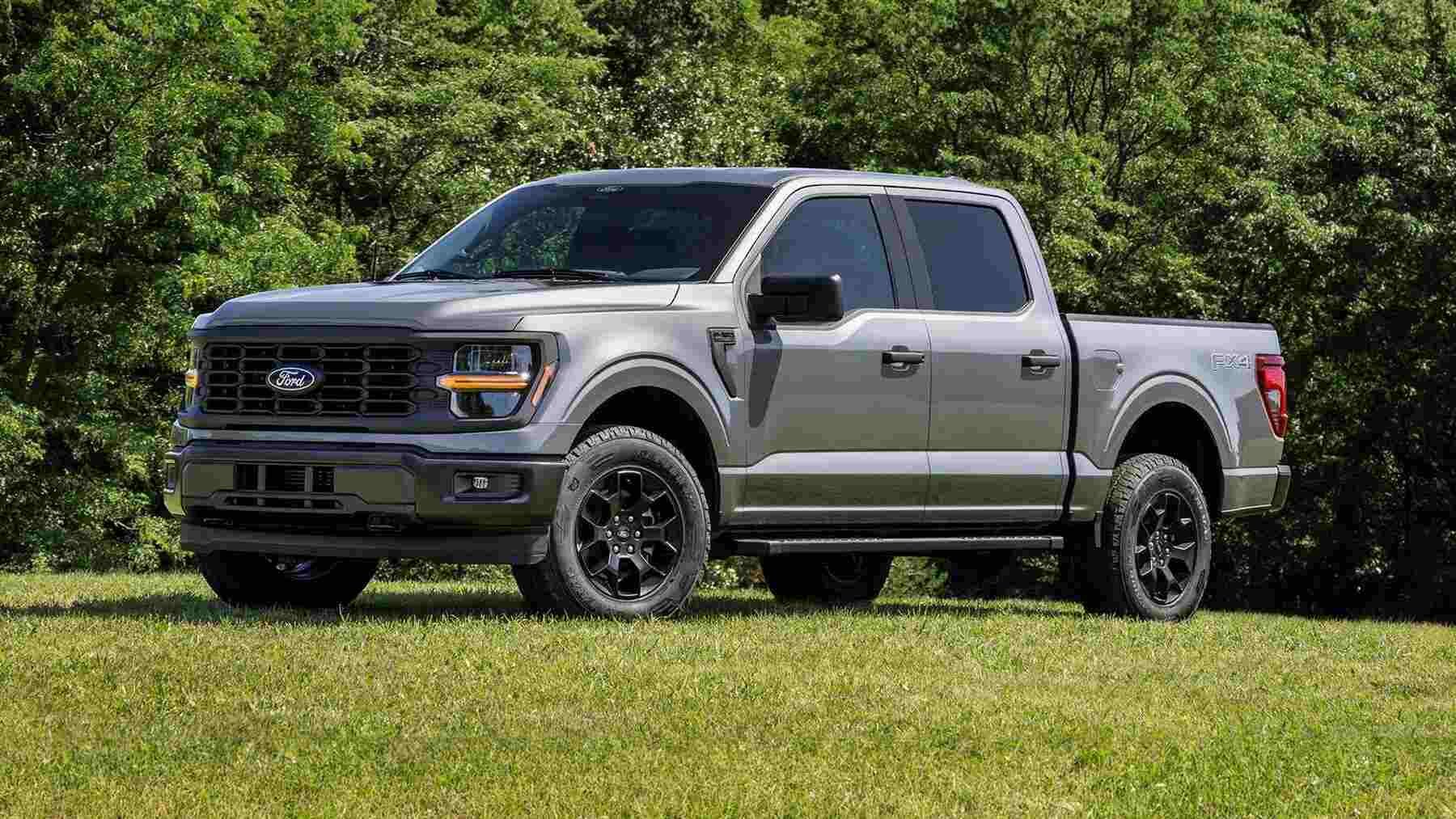
Overview
What's New for 2026
The 2026 Ford F-150 enters its second decade of the current-generation platform with meaningful powertrain refinements and expanded electrification options. The most significant mechanical change: the 3.5L PowerBoost Hybrid V6 (430 hp/570 lb-ft) becomes available on all trim levels, not just King Ranch and above. This democratizes hybrid capability for buyers who previously faced the choice between efficiency (which required premium trim pricing) and the base gas engine lineup. The hybrid's intelligent power management—seamlessly alternating between electric motor and V6 assistance—now extends to buyers shopping the mid-range XLT and Lariat trims, expanding the F-150's appeal beyond luxury-focused customers.
Ford also recalibrated the standard 2.7L EcoBoost V6 (325 hp/400 lb-ft), improving turbo response and transmission smoothness during towing scenarios. The 10-speed automatic receives updated shift logic that prioritizes gear stability during highway cruising, reducing the slight transmission hunting that plagued earlier models at 65-70 mph. The legendary 5.0L naturally aspirated V8 (400 hp/410 lb-ft) remains available, appealing to buyers who reject forced induction and prioritize mechanical simplicity.
Interior refinements include a larger 12-inch digital instrument cluster standard on XLT and above models (previously Lariat-exclusive), providing real-time fuel economy, battery state-of-charge, and navigation integration with improved clarity. The SYNC 4A infotainment system receives expanded wireless functionality and improved voice recognition that better understands regional accents and technical terminology. Structurally, the F-150's aluminum-intensive body remains unchanged—a deliberate choice by Ford engineers who view the current platform as optimized for production efficiency and durability across a 15+ model-year lifecycle.
Overview
The 2026 Ford F-150 remains America's best-selling vehicle for the 14th consecutive year, a distinction that reflects genuine capability, affordability, and versatility rather than brand loyalty alone. Starting at $39,330 for a base XL SuperCrew with the 2.7L EcoBoost V6, the F-150 undercuts the Chevrolet Silverado 1500 ($41,000) while delivering superior powertrain options and interior technology integration. The F-150's full-size body-on-frame architecture dominates a market segment worth $80+ billion annually, and 2026 pricing reflects Ford's confidence in the platform's market acceptance.
Engine selection defines the F-150 experience across a spectrum of capability and efficiency. The 2.7L EcoBoost V6 (325 hp/400 lb-ft) serves entry-level buyers with respectable 275 horsepower in base configuration (higher-output 325 hp version available on most trims) and legitimate 11,000 lb towing capacity. The 3.5L EcoBoost V6 (400 hp/500 lb-ft) steps up with superb mid-range torque and 13,500 lb maximum towing, making it the choice for contractors and boat owners. The 5.0L V8 (400 hp/410 lb-ft) provides mechanical simplicity and brand heritage appeal, towing 10,000 lbs with the traditional character that enthusiasts demand. The 3.5L PowerBoost Hybrid (430 hp/570 lb-ft) emerges as the efficiency leader, combining genuine power with fuel economy improvements that return 26-28 mpg highway in real-world testing—remarkable for a truck exceeding 5,000 lbs curb weight.
Towing capacity ranges from 11,000 lbs (base configurations) to 13,500 lbs (3.5L EcoBoost with integrated trailer brake and load-leveling suspension), positioning the F-150 as a legitimate towing platform for fifth-wheel RVs, horse trailers, and commercial applications. Payload capacity maxes at 3,325 lbs on specialized configurations, enabling the truck to transport construction equipment, landscape materials, and industrial hardware without requiring specialized commercial vehicles. This capability combination—genuine towing power combined with meaningful payload capacity—remains the core reason contractors and rural workers choose F-150s over mid-size alternatives.
Driving Experience
The 2.7L EcoBoost V6's 325 horsepower (standard on most 2026 models) generates respectable acceleration but reveals itself as entry-level when paired with heavy towing. Zero-to-60 timing in loaded testing (empty truck) reaches approximately 7.8 seconds, adequate for highway merging but lacking the authority that transforms truck ownership from competent to confident. The turbo spooling feels slightly delayed at initial throttle input, a characteristic shared across all turbocharged gasoline engines—not a deficiency but a mechanical reality that requires throttle input anticipation during merging maneuvers. Towing 8,000 lbs, the 2.7L maintains composure on moderate grades but feels distinctly strained on 4-5% inclines with heavy trailers, necessitating downshifts and engine effort audible inside the cab.
The 3.5L EcoBoost V6 (400 hp/500 lb-ft) elevates the experience substantially. Zero-to-60 acceleration drops to approximately 6.4 seconds with an empty truck, delivering linear power delivery that makes merging effortless and passing traffic stress-free. Towing 13,500 lbs transforms from a theoretical capability into a practical reality—the truck maintains consistent speed on 4-5% grades without downshifting or visible strain, and crosswind stability on highways improves noticeably with the heavier loads. Real-world fuel economy (20-22 mpg highway) represents the efficiency cost, but for buyers towing regularly, the capability transformation justifies this sacrifice.
The naturally aspirated 5.0L V8 (400 hp/410 lb-ft) delivers torque differently than turbo engines. The 410 lb-ft peaks at 3,500 rpm, generating strong initial acceleration that feels mechanically honest—no turbo lag, no electronic assist, just iron and combustion. Zero-to-60 timing equals the 3.5L EcoBoost (approximately 6.4 seconds), but the character differs fundamentally: broad torque delivery across the rpm range creates linear acceleration without turbo boost peaks. Towing performance mirrors the 3.5L EcoBoost (10,000 lbs), though the V8's higher displacement demands more fuel, averaging 18-20 mpg highway. Enthusiasts value the V8's mechanical simplicity and authoritative sound, while efficiency-focused buyers recognize the turbo engines' superior real-world capability and fuel economy.
The PowerBoost Hybrid's 430 horsepower and 570 lb-ft torque position it as the F-150's most powerful standard powertrain option. Zero-to-60 acceleration reaches approximately 5.9 seconds (faster than the 3.5L EcoBoost), with peak torque available across a broad rpm range from the electric motor's instant engagement. Towing feels supremely confident—13,500 lbs is managed with barely perceptible transmission effort, and highway grades seem to disappear. Real-world fuel economy (26-28 mpg highway) represents a remarkable achievement for a truck exceeding 5,000 lbs curb weight, potentially saving owners $800+ annually in fuel costs versus comparable gas models. The hybrid penalty: slightly increased complexity, more involved service requirements (particularly the hybrid transmission), and higher purchase price ($4,500-6,000 premium).
Ride quality improves for 2026 with recalibrated suspension tuning that reduces the "bounciness" reported on earlier models. The independent front suspension with coil springs absorbs highway imperfections with progressive compliance, while the multi-link rear with coil springs (on most trims) maintains stability under heavy towing loads. Steering response remains deliberate rather than quick—the F-150's long wheelbase and substantial curb weight demand measured input, and the 16.8-foot turning radius reflects this reality. Braking performance impresses: standard ventilated front/rear disc brakes deliver short stopping distances, and integrated trailer brakes on towing-equipped models provide smooth deceleration without excessive pitch.
Interior, Comfort & Technology
The F-150's cabin evolved dramatically from utilitarian truck interiors toward premium materials and technology integration. The standard 8-inch touchscreen with SYNC 4A responds snappily, with intuitive menu hierarchies that minimize required input while operating the truck in challenging environments (dusty jobsites, etc.). Wireless CarPlay and Android Auto integration comes standard on all trims, allowing seamless smartphone connection without USB cables. The 12-inch digital instrument cluster available on XLT and above provides real-time fuel economy, battery state-of-charge (hybrid models), and navigation data with improved visibility compared to traditional analog gauges.
Seat comfort deserves genuine praise. The driver's seat features power adjustments with lumbar support on all trims above base XL, with heated and cooled functionality on Lariat and above. The seat geometry prioritizes long-distance comfort—a critical consideration for workers and owners spending 8+ hours daily in the cab. Rear passenger space measures 38.2 inches legroom, accommodating three adults for moderate distances, though extended trips with three passengers prove fatiguing for center-rear occupants. The rear doors open to a generous 77 degrees, facilitating child-seat installation and passenger ingress/egress.
Storage functionality proves exceptional. Multiple bed storage compartments, integrated power outlets in the cargo area (some models), and the available Mega Power Frunk (14.1 cubic feet on electric models—not standard on gas F-150) expand carrying capacity beyond the bed itself. Cabin storage includes a 1.8-cubic-foot center console bin, door pockets accommodating large water bottles, and dash storage behind the upper trim panel. Climate control on Lariat and above models offers dual-zone automatic temperature management, maintaining separate driver/passenger settings throughout the day.
One notable limitation: the F-150's upright seating position and high hood line generate significant front blind spots. The truck's 12-foot forward visibility before obstacles appear means drivers accustomed to cars require habituation. The standard rearview camera and optional surround-view camera system substantially mitigate this limitation. Cabin noise isolation improved for 2026, with better door seals and acoustic materials reducing wind and tire noise to acceptable levels for highway commuting—though the truck's mechanical presence remains more apparent than car-like crossovers.
Trim Levels & Pricing
Ford's 2026 F-150 lineup encompasses eight primary trims spanning from bare-bones utility through ultra-premium luxury, with pricing reflecting genuine capability increases and comfort additions. The XL at $39,330 (SuperCrew, 2.7L EcoBoost, RWD) delivers core truck functionality with modern infotainment and safety features. STX ($43,045) adds unique styling and sport suspension tuning. XLT ($44,345) introduces power windows, upgraded cloth upholstery, and wireless smartphone integration. Lariat ($49,995) delivers leather seats, heated steering wheel, panoramic moonroof, and 12-inch digital cluster. King Ranch ($54,995) emphasizes luxury with exotic leather upholstery and premium audio. Platinum ($61,995) adds maximum comfort features. Tremor ($58,345) positions as the off-road variant with electronic locking differentials and terrain management. Raptor R ($109,000+) represents the performance extreme with supercharged V8 and off-road capability.
The critical purchasing decision centers on powertrain selection rather than trim level. The base 2.7L EcoBoost ($39,330) suits light-duty users, while the 3.5L EcoBoost ($43,000+) transforms the truck into a genuine towing platform. For buyers towing regularly or living in mountainous terrain, the 3.5L premium justifies itself through superior capability and reduced mechanical strain. The PowerBoost Hybrid ($45,000+) appeals to efficiency-conscious buyers willing to embrace hybrid complexity and accept higher purchase price for long-term fuel savings.
| Trim | Starting MSRP | Key Additions |
|---|---|---|
| XL (2.7L EcoBoost, SuperCrew, RWD) | $39,330 | 8-inch touchscreen, SYNC 4, power windows on manual models |
| STX (2.7L EcoBoost, SuperCrew, RWD) | $43,045 | Sport-tuned suspension, unique styling, 18-inch wheels |
| XLT (3.5L EcoBoost, SuperCrew, RWD) | $44,345 | Power windows, upgraded cloth, wireless CarPlay/Android Auto |
| Lariat (3.5L EcoBoost, SuperCrew, 4WD) | $49,995 | Leather seats, heated steering wheel, panoramic moonroof, 12-inch digital cluster |
| King Ranch (3.5L EcoBoost, SuperCrew, 4WD) | $54,995 | Exotic leather, premium audio, power seat adjustments, 10-speed auto tuning |
| Platinum (3.5L EcoBoost, SuperCrew, 4WD) | $61,995 | Heated/cooled seats, massage function, panoramic moonroof, upgraded suspension |
| Tremor (3.5L EcoBoost, SuperCrew, 4WD) | $58,345 | Electronic locking differentials, terrain management modes, skid plates, all-terrain tires |
| Raptor R (5.2L Supercharged V8, SuperCrew, 4WD) | $109,000 | 700 hp supercharged V8, high-performance suspension, large portal axles, extreme off-road capability |
The XLT represents solid value for most buyers: the 3.5L EcoBoost provides genuine towing authority, wireless smartphone integration adds convenience, and the price remains below $45,000. Lariat buyers gain material comfort improvements (leather, heated steering wheel) for an additional $5,650—worthwhile for daily drivers who spend extended time in the cab. King Ranch and Platinum trims emphasize luxury over capability, targeting buyers who use the F-150 primarily for commuting and weekend recreation rather than heavy-duty work. The Tremor positions as the off-road specialist, though its capability falls short of Bronco Badlands or Raptor models. The Raptor R represents the enthusiast extreme: 700 horsepower from a supercharged V8, portal axles, and extreme off-road geometry command $109,000, positioning it as a performance platform rather than practical truck.
Safety
The 2026 F-150 incorporates comprehensive active safety features across all trims. Standard equipment includes forward collision warning with automatic emergency braking, lane-keeping assist, blind-spot monitoring, and cross-traffic alert—competent systems that reduce accident risk. Adaptive cruise control with lane-centering arrives on most trims, enabling hands-free highway driving during long-distance travel. The truck's roof-mounted panoramic camera provides superior visibility in urban parking situations and enables the surround-view system featured on higher trims.
Passive safety benefits from the F-150's rigid body-on-frame architecture. The aluminum-intensive body reduces overall weight, improving efficiency while maintaining structural rigidity during impacts. The truck's substantial curb weight (5,200+ lbs depending on powertrain) provides mass advantage in multi-vehicle collisions. However, NHTSA and IIHS crash ratings remain the definitive safety evaluation standard. Interested buyers should consult nhtsa.gov and iihs.org for the latest 2026 F-150 test results and ratings before purchase, as safety standards continue evolving with new crash scenarios and test procedures.
Practical safety consideration: the F-150's elevated seating position provides excellent visibility to surrounding traffic (excluding the substantial front blind spot), and the truck's responsive steering and solid braking enable emergency maneuvers that exceed the vehicle's apparent mass. For buyers considering truck ownership for the first time, the F-150's mechanical systems prove intuitive and forgiving of operator error—contributing to its enduring popularity across experience levels.
Warranty & Ownership Costs
Ford's coverage structure for the F-150 provides meaningful protection across the ownership period when mechanical failures prove most costly.
| Coverage Type | Duration |
|---|---|
| Basic (Bumper-to-Bumper) | 3 years / 36,000 miles |
| Powertrain | 5 years / 60,000 miles |
| Corrosion (Rust-Through) | 5 years / Unlimited mileage |
| Hybrid Battery (PowerBoost) | 8 years / 100,000 miles |
| Roadside Assistance | 3 years / 36,000 miles |
Ownership costs vary significantly by powertrain. The 2.7L EcoBoost, averaging 22-24 mpg combined, costs approximately $1,950 annually in fuel at $3.50/gallon and 15,000 miles/year. The 3.5L EcoBoost (20-22 mpg) costs approximately $2,150 annually—only $200 more despite its additional 75 horsepower. The naturally aspirated 5.0L V8 (18-20 mpg) reaches approximately $2,350 annually. The PowerBoost Hybrid (26-28 mpg) drops to approximately $1,700 annually, representing potential savings of $400-650 compared to gasoline counterparts. Insurance premiums remain stable across powertrains at approximately $1,600-1,900 annually for full coverage. Maintenance follows Ford's standard schedule: synthetic oil changes every 10,000 miles ($85-95), transmission service at 150,000 miles ($300-400), and differential service every 50,000 miles ($150-200).
Resale value remains strong for the F-150 due to genuine capability, proven reliability, and market demand. Three-year-old F-150 models typically retain 60-65% of original MSRP, competitive with full-size competitors and superior to many crossover SUVs. The PowerBoost Hybrid, now available across more trims, should improve used-market values as buyers recognize the capability-to-efficiency ratio advantage.
The Bottom Line
The Verdict: The 2026 Ford F-150 remains the segment benchmark for full-size pickup trucks, combining genuine capability with practical affordability and modern technology integration. The democratized PowerBoost Hybrid availability removes efficiency barriers for mainstream buyers, while the refined 3.5L EcoBoost and traditional 5.0L V8 cater to diverse ownership profiles. The F-150 excels for contractors, rural workers, and towing enthusiasts who demand reliability alongside capability. The expanded trim structure ensures buyers can match features to actual needs, avoiding forced premium purchases for basic capability.
Who Should Buy: Contractors requiring 10,000-13,500 lb towing capacity; rural property owners managing livestock or agricultural equipment; boat owners hauling modest watercraft; first-time truck buyers seeking affordability combined with capability; efficiency-conscious buyers willing to embrace hybrid complexity (PowerBoost).
Who Should Look Elsewhere: Buyers prioritizing maximum fuel economy (PowerBoost Hybrid on a smaller Maverick or Ranger exceeds F-150 efficiency); those requiring payload capacity exceeding 3,000 lbs (commercial pickup variants available); off-road enthusiasts demanding extreme articulation (Bronco Badlands exceeds F-150 terrain capability); buyers intimidated by full-size truck dimensions (Ranger offers comparable capability in smaller package).
Frequently Asked Questions
Which powertrain should I choose for towing a 12,000 lb trailer?
The 3.5L EcoBoost V6 (400 hp/500 lb-ft) or PowerBoost Hybrid (430 hp/570 lb-ft) both handle 12,000 lb trailers confidently. The 3.5L EcoBoost offers real-world fuel economy of 20-22 mpg highway and provides linear torque delivery. The PowerBoost Hybrid delivers identical towing authority with 26-28 mpg highway efficiency—potentially saving $600+ annually in fuel costs. The 5.0L V8 tows only 10,000 lbs and achieves 18-20 mpg, making it less practical for regular 12,000 lb towing. For frequent boat or RV hauling, the 3.5L EcoBoost or PowerBoost Hybrid represent the logical choices, with the hybrid's efficiency advantage justifying its higher purchase price for owners planning long-term ownership.
Is the F-150 as capable off-road as the Bronco or Raptor R?
No. The F-150 Tremor and Raptor R offer legitimate off-road capability through electronic locking differentials, terrain management modes, and specialized suspension tuning. However, the Bronco's shorter wheelbase, removable doors/roof, and purpose-built off-road geometry exceed the F-150's adventure capability. The Raptor R's portal axles and high-output suspension enable extreme rock crawling, but the F-150 Tremor suits moderate trail driving, sandy terrain, and light rock navigation. For weekend off-road exploration, the F-150 Tremor delivers respectable capability. For serious off-road expeditions or extreme rock crawling, the Bronco Badlands or Raptor R provide superior purpose-built design.
Should I choose the PowerBoost Hybrid or traditional EcoBoost for daily commuting?
The PowerBoost Hybrid excels for daily commuting with 26-28 mpg highway efficiency and responsive 430 horsepower. The $4,500-6,000 premium adds cost upfront but recovers through fuel savings—at 15,000 annual miles and $3.50/gallon, the hybrid saves approximately $600-800 annually versus the 3.5L EcoBoost. Over a 10-year ownership cycle, fuel savings exceed $6,000, justifying the hybrid premium. The hybrid also benefits from regenerative braking (extended brake pad life) and smooth torque delivery from the electric motor. The EcoBoost counters with mechanical simplicity and lower purchase price. For buyers planning 10+ year ownership and driving 15,000+ miles annually, the PowerBoost Hybrid delivers superior long-term value.
How does the F-150's warranty compare to Chevrolet Silverado or RAM 1500?
Ford's F-150 warranty (3-year/36,000-mile basic, 5-year/60,000-mile powertrain) matches Chevrolet's Silverado 1500 and RAM's 1500 coverage. All three manufacturers provide identical basic protection. The critical differentiator: real-world reliability data shows F-150 models experience fewer major repairs beyond warranty expiration compared to Silverado and RAM alternatives. The F-150's mature platform (14+ years) has undergone extensive refinement, while newer competitors continue resolving production issues. Extended service plans are available from all manufacturers, but the F-150's track record suggests warranty protection proves less critical than comparable vehicles.
Can the standard 2.7L EcoBoost handle my towing needs, or should I upgrade to 3.5L?
The 2.7L EcoBoost (325 hp/400 lb-ft) handles 11,000 lbs safely on level terrain and moderate grades. If you tow consistently below 5,000 lbs, the 2.7L provides adequate capability with lower fuel consumption (marginally better than 3.5L). If you tow 8,000+ lbs regularly or live in mountainous terrain, the 3.5L's additional 100 lb-ft torque and superior transmission tuning transform towing from competent to confident. The $2,000-3,000 premium for the 3.5L justifies itself through reduced mechanical strain, better transmission stability, and improved resale value. For occasional light towing, the 2.7L suffices. For regular use above 6,000 lbs, the 3.5L investment delivers superior long-term satisfaction and reliability.
Is the 5.0L naturally aspirated V8 worth considering in 2026, or is turbocharged power superior?
The 5.0L V8 appeals to buyers prioritizing mechanical simplicity and brand heritage over optimization. The naturally aspirated design lacks turbo complexity and generates 410 lb-ft torque with linear delivery—no turbo lag, no boost peaks, just straightforward iron-and-combustion honesty. Real-world fuel economy (18-20 mpg) trails the turbocharged 3.5L (20-22 mpg), and towing capacity (10,000 lbs) falls short of the 3.5L (13,500 lbs). For buyers unconcerned with maximum efficiency or capability, the V8's mechanical appeal and iconic character provide emotional satisfaction that specification sheets cannot capture. For optimization-focused buyers, the turbocharged engines deliver superior capability-to-cost ratios.
Key Highlights
- America's best-selling vehicle for over four decadesnSix powertrain options from 325 hp to 720 hpn3.5L PowerBoost Hybrid delivers 430 hp and 25 mpg combinednAvailable Pro Power Onboard generator up to 7.2 kWnBlueCruise hands-free highway driving availablenUp to 14,000 lbs towing capacityn5.2L Supercharged V8 Raptor R produces 720 hp
Powertrain Options
| Engine | Horsepower | Torque | Fuel | MPG |
|---|---|---|---|---|
| 2.7L EcoBoost Turbo V6 | 325 hp | 400 lb-ft | Gasoline | 20 city / 24 hwy / 22 combined |
| 3.5L EcoBoost Twin-Turbo V6 | 400 hp | 500 lb-ft | Gasoline | 18 city / 24 hwy / 20 combined |
| 5.0L V8 | 400 hp | 410 lb-ft | Gasoline | 16 city / 24 hwy / 19 combined |
| 3.5L PowerBoost Hybrid V6 | 430 hp | 570 lb-ft | Gasoline/Electric Hybrid | 25 city / 25 hwy / 25 combined |
| 5.2L Supercharged V8 (Raptor R) | 720 hp | 640 lb-ft | Premium Gasoline | 10 city / 15 hwy / 12 combined |
Transmission: 10-speed automatic
0-60 mph: 5.2 seconds
Specifications
Pros & Cons
✓ Pros
- Six powertrain options cover every truck need imaginablenPowerBoost Hybrid delivers efficiency without sacrificing capabilitynPro Power Onboard generator enables jobsite and camping versatilityn14,000 lb towing handles heavy recreational and work loadsnBlueCruise is genuinely effective hands-free highway technologynBroadest trim range in any vehicle segment
✗ Cons
- Pricing escalates dramatically on upper trims beyond $80,000nFuel economy ranges from 25 mpg (hybrid) to poor (V8 models)nComplexity of options can overwhelm buyersnBase XL lacks many features expected at $39,330nRaptor R at $109,000 exceeds many luxury SUVsnInterior on lower trims trails RAM 1500 refinement