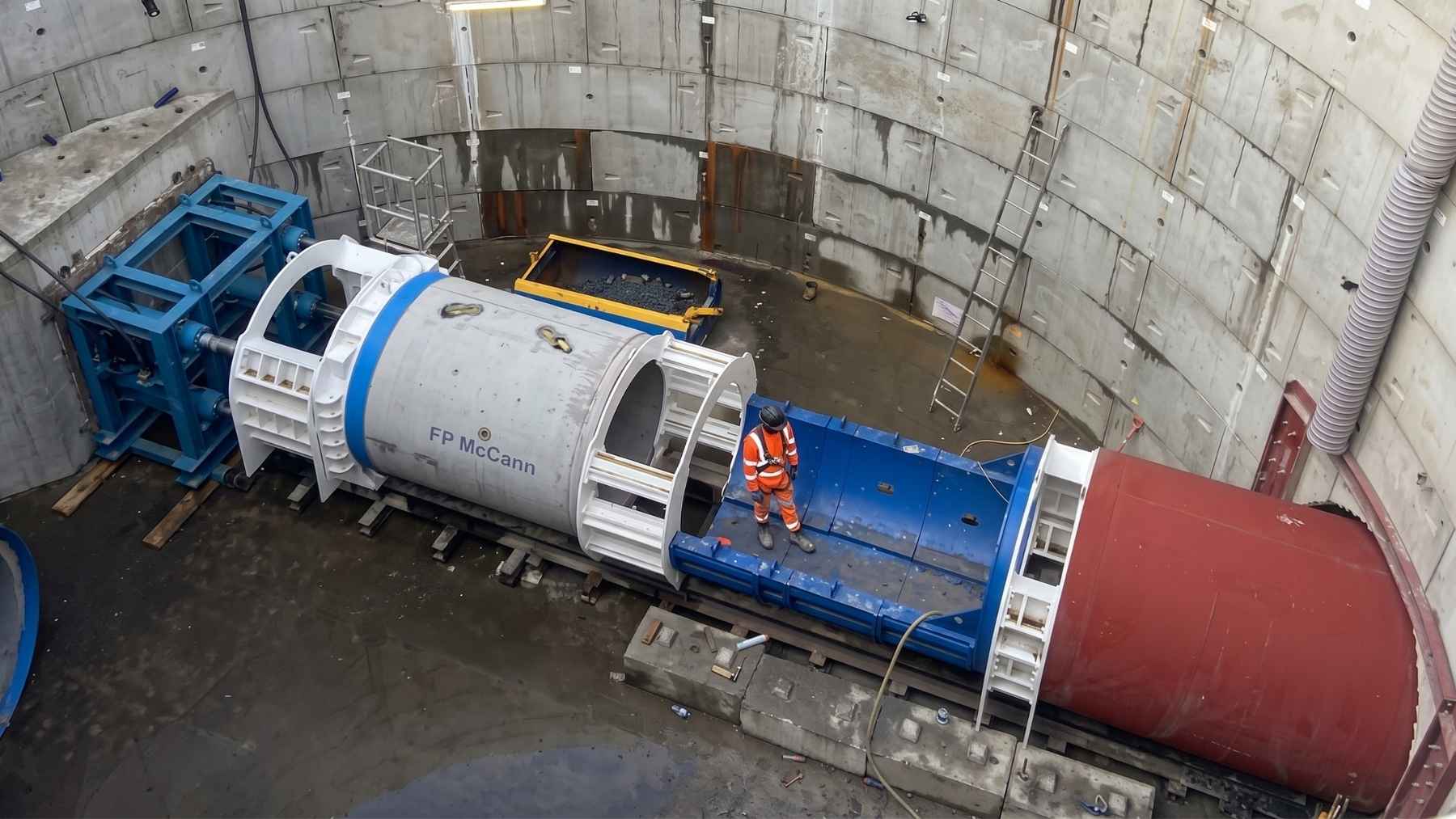

Odds are you’ve sat behind a cement mixer at a red light and watched that big drum turn. The Department of Energy uses that same drum as a yardstick for a piece of uranium hardware called a converter, and according to the agency, each one is nearly twice its size.
There are close to 500 of them in a single building at DOE’s Paducah Site in western Kentucky. On October 6, the agency announced that workers had pulled out and cut up the first one. DOE didn’t say what day the cutting actually happened, only that it’s done.
That sounds like pretty routine demolition news. It’s a bit more interesting than that, because this converter is the first of a batch DOE has to handle differently from the 497 it already chopped up in a sister building.
So what’s a converter, anyway?
Paducah made enriched uranium, and it did it the old-fashioned way. Natural uranium is mostly uranium-238, with well under 1% of the uranium-235 a reactor actually wants. A gaseous diffusion plant turns the uranium into a gas and pushes it through porous barriers over and over again. The lighter U-235 gets through a hair more easily each time, so every pass leaves the gas very slightly richer. Basically, you need a ridiculous number of passes to get anywhere, which is why these plants are so enormous.
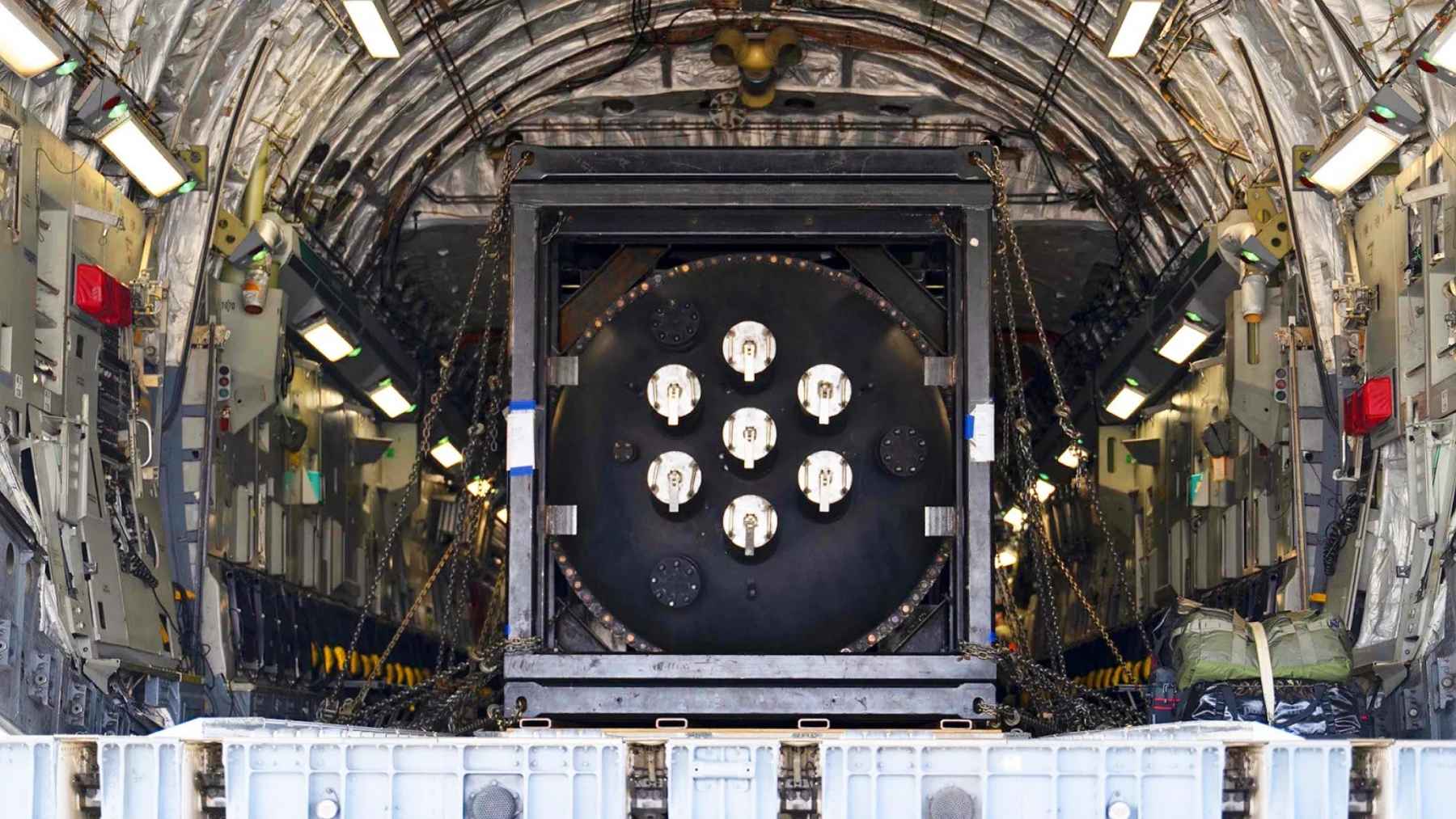
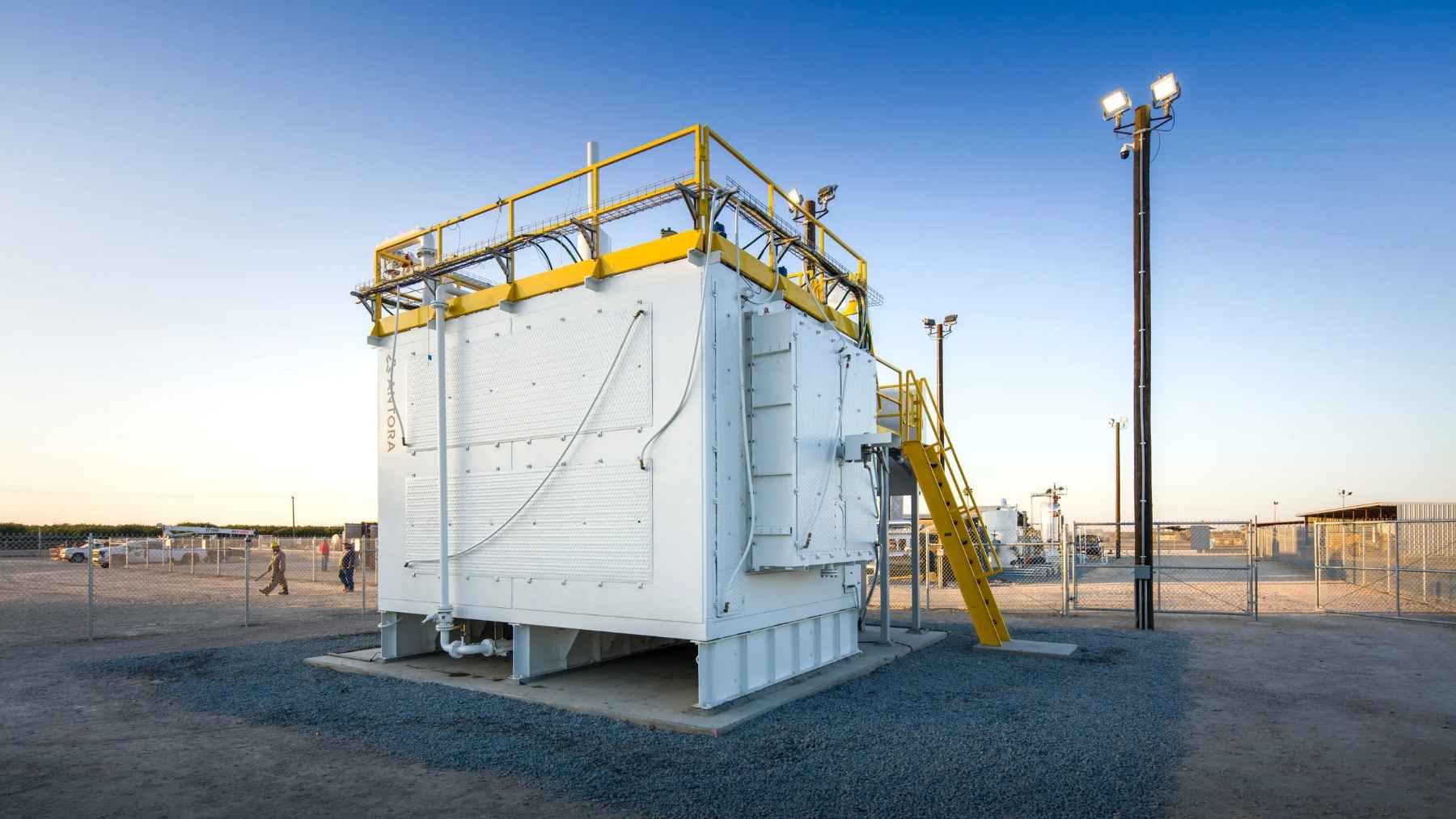
The converter is the tank where each of those passes happens. DOE’s cleanup contract breaks one down into a tube bundle, a cooler and the steel shell around them, and the porous barrier sits in those tubes. It’s a pretty brute-force way to sort atoms, and it’s a big part of why the industry moved on to centrifuges.
Paducah kept doing it this way until it shut down more than a decade ago. By then it was the last government-owned enrichment plant running in the country.
The building holding this batch is C-337, and DOE puts it at 2.1 million square feet. It’s the second of Paducah’s four big process buildings to go through deactivation, and the first one slated for demolition. Before it can come down, the converters have to come out.
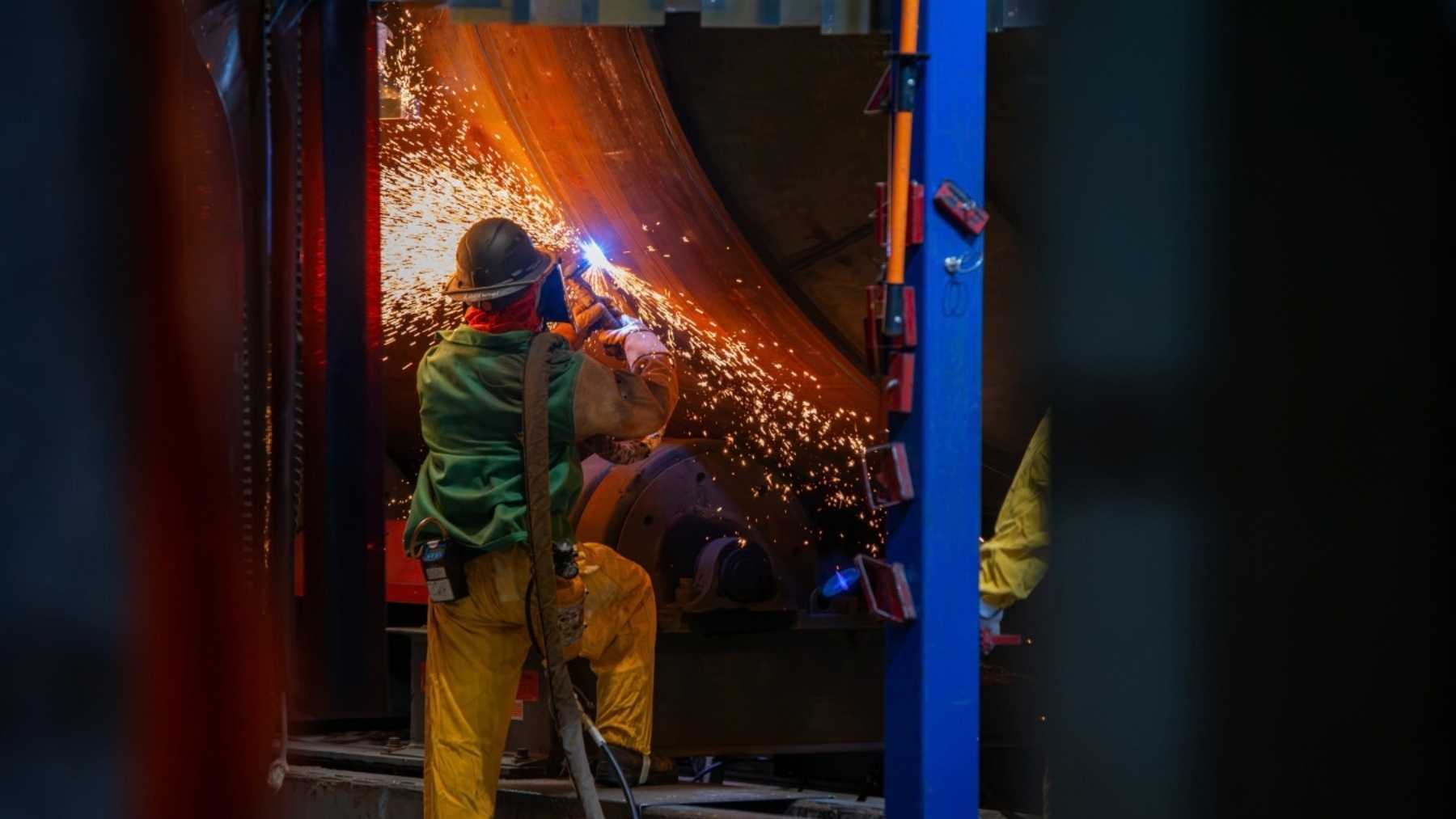
DOE calls that step segmentation, which means removing a converter from where it’s installed, cutting it up and downsizing it into pieces that can be packed away. We’ve covered a couple of nuclear teardowns like this lately, including Crystal River’s reactor vessel getting sawed into three pieces and Vermont Yankee’s reactor building leaving as 28,000 cubic yards of concrete. Paducah’s version is less dramatic and a lot more repetitive.
What makes C-337 different?
C-337’s converters are classed as fissile. The 497 that came out of C-333, the first building DOE emptied at Paducah, weren’t.
Fissile material is the kind that can keep a nuclear chain reaction going, which is the whole reason anyone enriches uranium in the first place. In a cleanup, it mostly means you’ve got to track how much uranium-bearing material ends up in one spot and what shape it’s in. DOE says its controls look at mass, volume and geometry, and the agency’s October announcement adds enhanced monitoring, strict containment and specially trained workers to the list. It’s a counting and spacing job more than anything, which is about as unglamorous as nuclear safety gets.
Training those workers is its own project. Paducah stopped enriching uranium so long ago that a lot of its newer employees never saw the place running, so a group of veteran staff with more than 300 years of combined experience built a training course on handling fissile equipment. That strikes me as a pretty smart use of the people who actually remember how this stuff worked.
As far as I can tell, DOE’s public write-ups don’t explain why one building’s converters count as fissile and its near-twin’s don’t. I’m not going to guess.
So how do you know what’s inside a converter before you take a torch to it?
Until recently, the answer involved a lot of unbolting. Crews have to check each component for uranium deposits using nondestructive assay, which basically means measuring radiation without opening anything up. In C-337, there was no way to do that with the equipment still in place, so DOE says crews would partially take it apart or move it first, then measure. That’s slow, and it puts people closer to the hazard for longer.
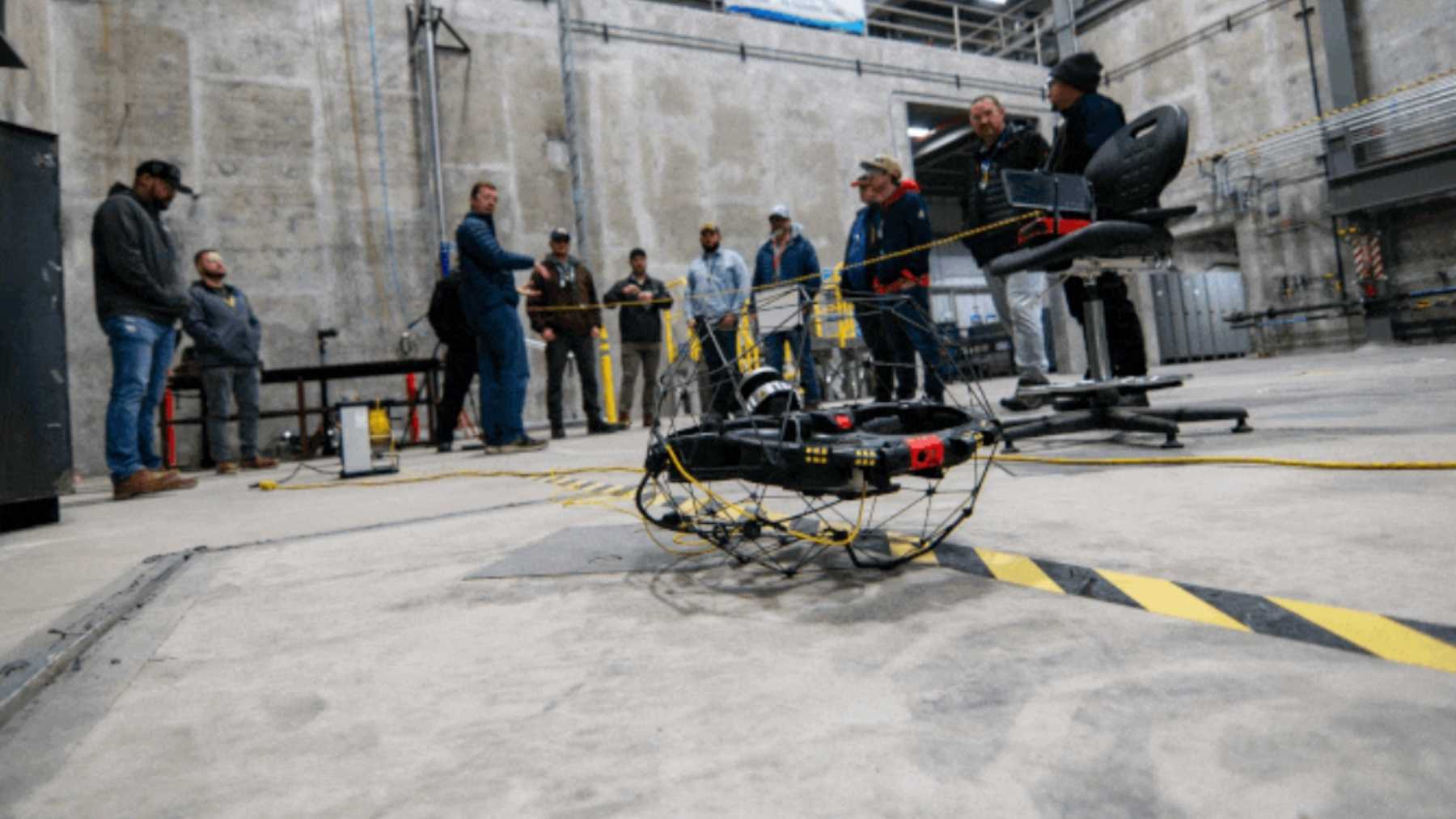
Paducah’s answer is a method called RISCC (Rapid In Situ Screening for Converters and Compressors, because of course it’s an acronym). It scans the equipment where it sits, and DOE said in February it’s using it on nearly 1,000 components in C-337. It’s basically the difference between running a suitcase through the airport X-ray and making every passenger unpack on the floor. April Ladd, then the Paducah Site lead, said at the time that it delivers “effective, defensible measurements without dismantling equipment.”
Checking everything up front also lets DOE’s analysts sort the equipment against their own criteria before anyone unbolts it, and the agency says some of it could end up free of the special handling and spacing rules that slow down removal and shipping. That’s arguably the most useful part of the whole thing, because anything that clears those rules can move a lot faster.
Will it go as fast as last time?
C-333 is the obvious benchmark. When DOE started cutting up that building’s converters, each one took roughly 14 days. By the end, crews were doing as many as two a day, according to DOE.
Those weren’t small, either. DOE says C-333’s converters weighed upward of 70,000 pounds, or about 35 tons apiece.
DOE hasn’t published a weight for the C-337 converters. It does describe the two buildings as similar in construction, so I’d be surprised if the new batch turned out much lighter, but that’s my guess and not DOE’s number.
Would I bet on two a day in C-337? Probably not, at least not early on. Every converter in this building needs the extra monitoring and containment that C-333’s never did, and I can’t find a target pace or a finish date for C-337 in anything DOE has published. DOE’s press office calls all this “cleanup momentum,” which is exactly the kind of phrase press offices love, but it hasn’t attached a schedule to it.
The site’s crews also aren’t starting from scratch. Paducah borrowed know-how from DOE’s Portsmouth Site in Ohio, which is working through the last of its own three process buildings, and C-333’s lessons are baked into how C-337 is being tracked and mapped.
Then the building comes down
Emptying C-337 is what gets it ready for demolition, and the agency frames the whole effort as clearing ground for new industry. DOE says companies are investing $100 billion to turn portions of the Paducah Site into a data center campus with new energy infrastructure, so it’s not hard to see why the agency wants the old buildings cleared.
Four Rivers Nuclear Partnership, the site’s cleanup contractor, is the one doing the cutting. DOE announced the first fissile converter out of C-337 on October 6, which leaves the rest of the building’s close to 500 converters for those crews to work through.