
If you’ve ever put up a bird feeder, you already know how a war with a squirrel ends. You buy the baffle, you grease the pole, and three days later the squirrel’s sitting in the feeder working through your sunflower seeds. CORE Electric Cooperative, the electric co-op serving Castle Rock, Colorado, south of Denver, just lost that same war at substation voltage. Twice, in two days.
On Tuesday, September 15, a squirrel got past the wildlife protection at CORE’s substation off Ridge Road and touched live equipment. The contact killed the animal, faulted the system, and made a bang loud enough that the town of Castle Rock reported it on social media as an explosion. About 4,400 members lost power for more than two hours. The next day, a second squirrel got into the same gated yard, damaged distribution equipment, and put roughly 1,300 more in the dark for 40 minutes.
That’s a rough 48 hours for everyone involved, and the squirrels had it worst.
So how does a squirrel beat a fenced substation?
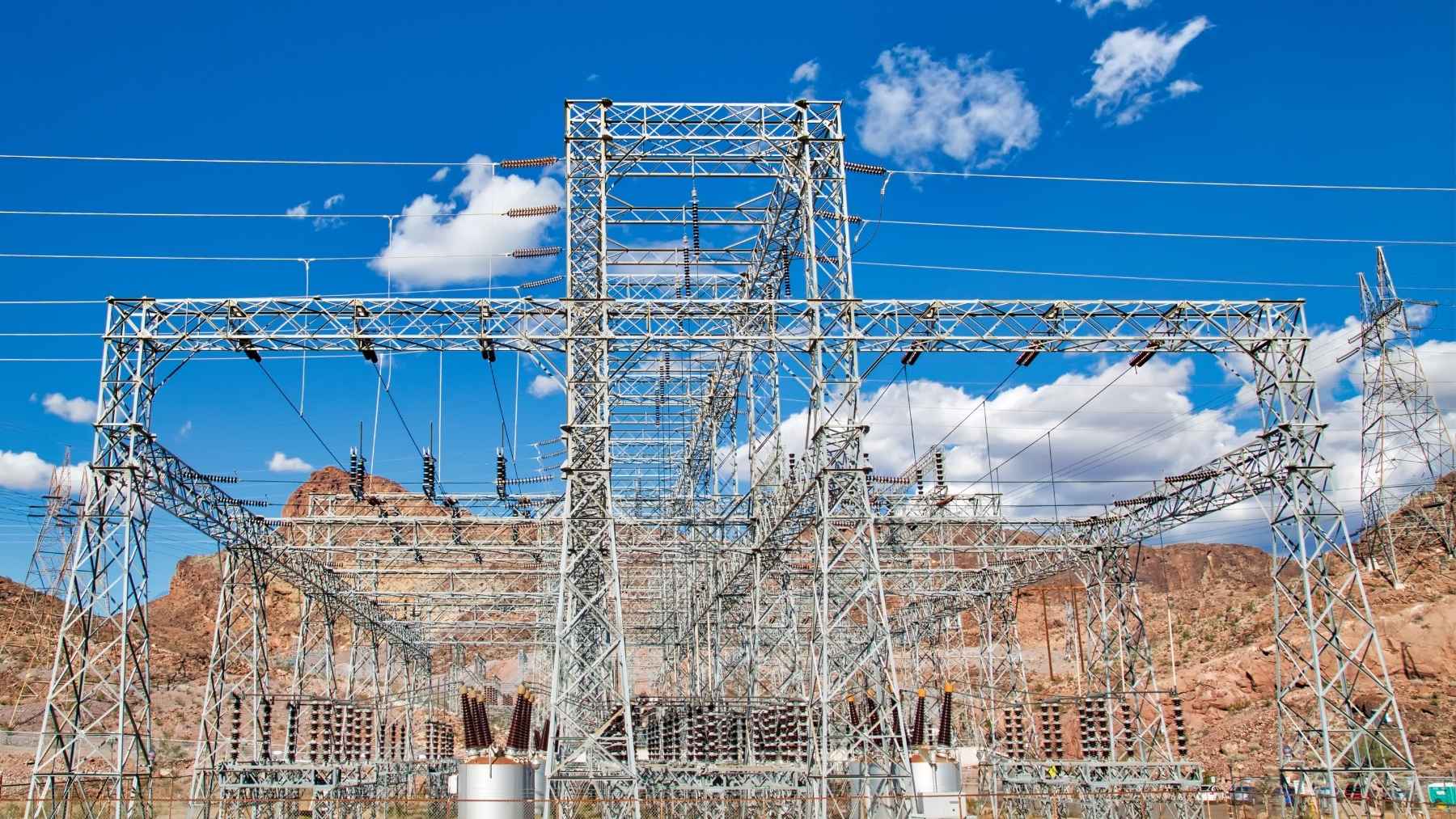
A substation is basically the grid’s middleman. High-voltage power comes in from the transmission lines, big transformers step it down, and distribution lines carry it out to your neighborhood at something your house can actually use. Most of that gear sits outdoors with live parts exposed on purpose, because open air is part of the insulation, and the fence around it all is mainly there to keep people out. Against an animal that treats chain-link as a ladder and a power line as a sidewalk, a fence does pretty much nothing. When a squirrel bridges the gap between something live and something grounded, the electricity takes the shortcut, the protective gear trips, and everyone downstream loses power. Put enough current through that shortcut and you get the bang Castle Rock heard.
CORE hadn’t skimped on defenses, either. Cindy Newsome, the co-op’s director of communications and strategy, told Colorado Public Radio that most of the equipment at that substation was already covered and protected, but “where there’s a will, there’s a way.”
After round two, the utility told 9News that “we can’t cover every piece of equipment, especially on a substation,” and that its network is built to switch load to other areas so crews can restore service while repairs happen. The co-op said its people found and fixed both faults quickly, and the restoration times back that up. Frankly, that’s the right way to run a grid. You’re never going to rodent-proof every last bushing in an outdoor yard, so you design for fast recovery instead, and from the looks of things the switching did its job both times. Two-plus hours still isn’t fun if you’re working from home, but the alternative, sitting dark with no way to reroute power, runs a lot longer.
Wildlife takes out more of the grid than you’d think
Newsome told CPR that animals cause somewhere between 5 and 10 percent of all outages on CORE’s network in a typical year, and the culprits rotate. Last summer it was mostly birds. This year, squirrels and other rodents are the ones getting into trouble.
Is 5 to 10 percent a lot? For a single cause, yeah, I’d say so, because unlike a storm you can’t watch it coming on a radar. And this isn’t a Castle Rock quirk. An analyst with the American Public Power Association told 9News after the first outage that squirrels rank among the leading causes of power outages nationwide, year after year. It’s not even the first squirrel to make our pages, and to be fair to the animal kingdom, we’ve also covered honeybees put to work hunting landmines, so it’s not all sabotage.
There’s a wildfire angle, too
A 40-minute blackout is an inconvenience. A fire isn’t. Newsome told CPR the bigger worry is up on the power poles, where an animal that makes contact can end up burning on its way down, and anything on fire landing at the base of a pole in Colorado is a wildfire waiting for a breeze. That risk is a big part of why CORE pays for protective covers and regular inspections in the first place. The co-op also follows an Avian Protection Program built on current conservation guidance, which means it’s trying to keep the animals alive, not just the lights on.
CORE said it was evaluating both incidents, and as of September 18 it had promised CPR a detailed debrief within days. As far as I can tell, that debrief hasn’t been published yet, so we don’t know whether squirrel number two found the same gap as squirrel number one or opened up a brand-new route. My money, for what it’s worth, is on a new one. Squirrels don’t share notes.
Power is back on for the nearly 5,700 homes the two animals managed to darken between them, and CORE told CPR on September 18 that a full review of both events was underway. The squirrels weren’t available for comment.