
A mothership has always been a ship with people on it. Carriers, submarine tenders, survey boats dropping an ROV over the side: something big carries something small, puts it in the water, and keeps track of it. Sailors do the lifting. ZeroUSV ran a trial in Plymouth this month where nobody did the lifting, because nobody was aboard anything.
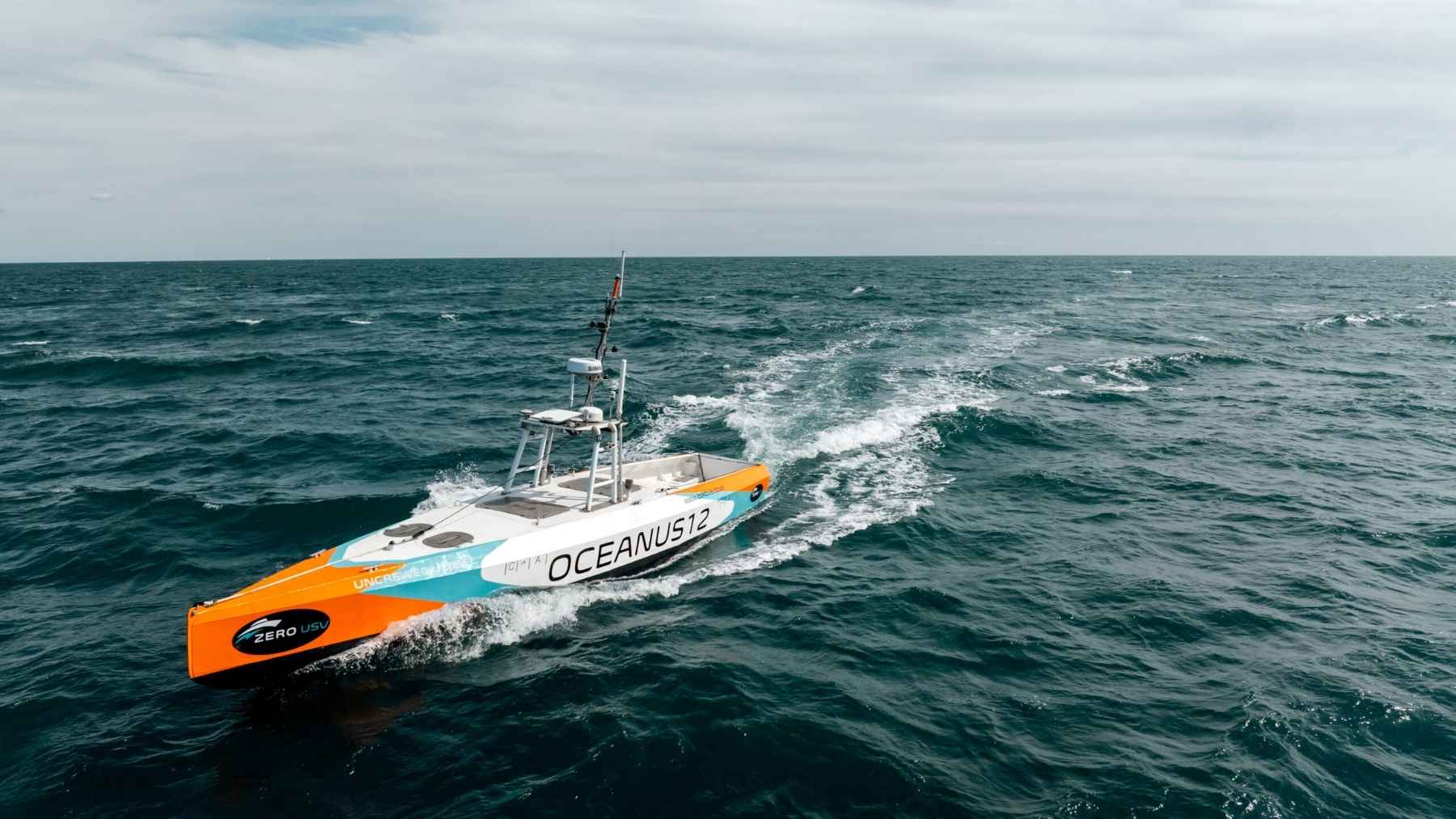
The British company launched two Oshen C-Star robot sailboats off the deck of its Oceanus12, a 39-foot (12-meter) uncrewed boat, with software running the sequence. ZeroUSV announced it on August 25 and called it a world first. Naval Technology put the phrase in quote marks, which is fair, since the claim comes from the company that made the boat.
The claim looks solid anyway. Crewless boats have been launching aerial drones for a couple of years now. Launching other boats is new.
Two robot sailboats went over the side and nobody threw them
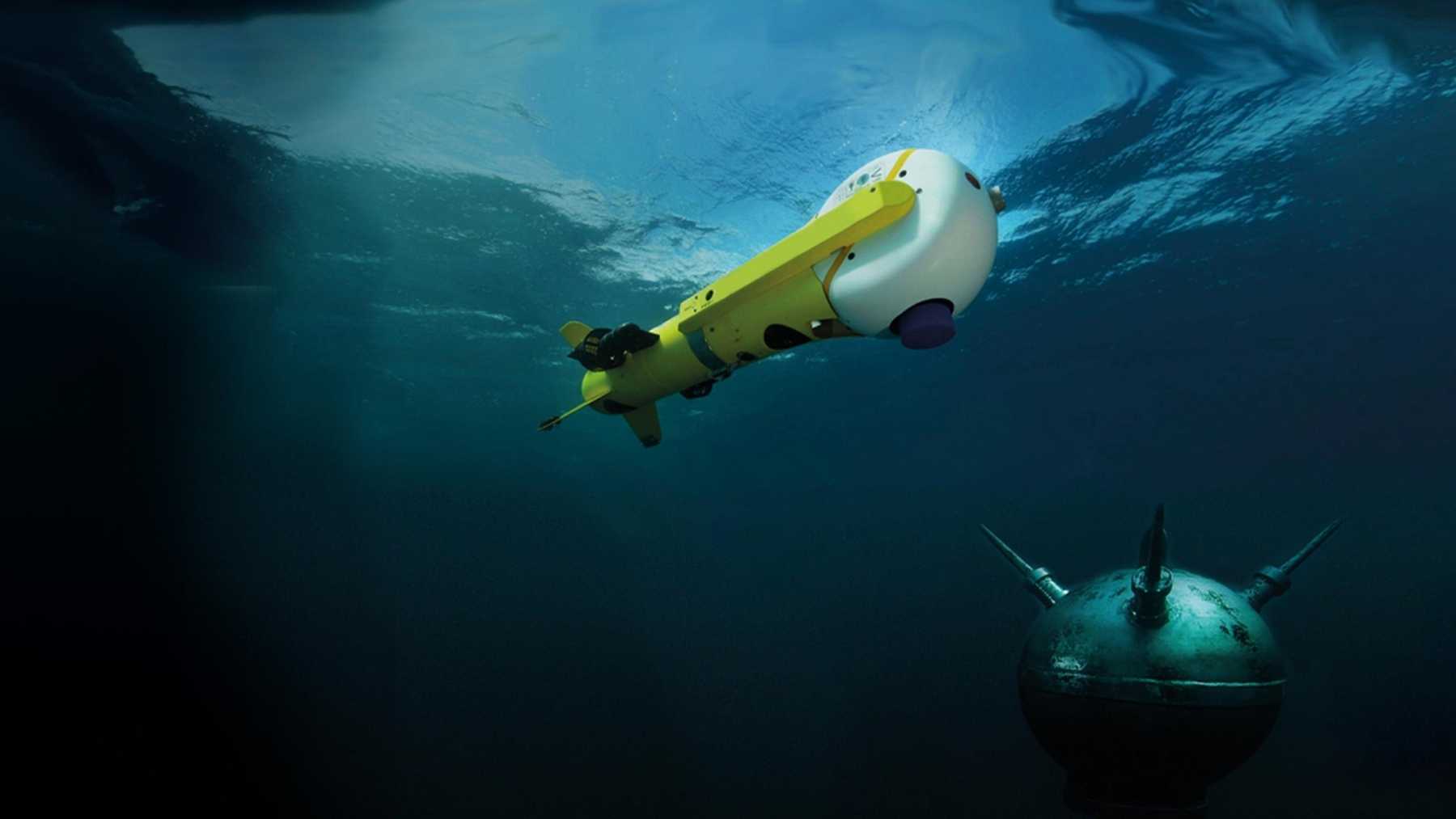
Oshen puts the C-Star at just under 4 feet (1.2 meters), running on wind and sun. The company builds them in Plymouth. The U.S. Navy’s Naval Meteorology and Oceanography Command, which has been testing them off Mississippi under a research agreement, put the weight at 100 pounds. One person can pick one up and drop it off the back of a boat.
For the Plymouth run, both C-Stars carried acoustic sensors. They sail out, spread apart, and listen. Oshen says a C-Star can stay out for months without anyone touching it, and the company’s longest mission so far ran eight months.
Two boats is a small number. ZeroUSV says the next phase puts four in the water simultaneously, and Oshen CEO Anahita Laverack described the pair as “the tip of the iceberg” in the announcement, saying the company wants to demonstrate hundreds working together.
Oshen has the factory arithmetic to back some of that up. Its first 15 C-Stars took three years to build. It now turns out 15 every six weeks, has 100 more on order, and raised $5 million on August 21 to triple the rate again. Headcount went from seven people in September 2025 to almost 30.
The mothership tops out at 14 mph, and that is the real constraint
Oceanus12 carries 2,200 pounds (1,000 kg) of payload in a bay measuring 13 by 7 feet, which is how two C-Stars and their launch gear fit with room to spare. Twin hybrid-electric drives push it to 12 knots (about 14 mph) flat out. Cruising at 6 knots (about 7 mph), Naval Technology puts its range at 3,600 nautical miles, or roughly 4,140 statute miles.
Six knots is walking pace for a naval asset. A frigate does three times that without trying.
So the Oceanus12 is not sprinting anywhere to respond to a crisis. It plods out, sits, works, and plods back, which suits patrolling a cable route or a stretch of continental shelf and suits almost nothing that involves hurrying. Naval Technology’s John Hill made the point that those numbers pin the boat inside its own country’s exclusive economic zone if anyone wants a timely response out of it. Northern Europe happens to be exactly where the cable-cutting worry lives, so the limitation lands softer than it sounds.
ZeroUSV has a bigger hull for the jobs the small one cannot reach. The Oceanus17 carries 8,800 pounds (4,000 kg) and runs past 5,000 nautical miles, and we covered the 20-foot container slot cut into its middle earlier this month. The Royal Navy has contracted ZeroUSV to explore what that one can do, though exploratory trials are not a purchase order and nobody has suggested otherwise.
Nobody has said whether the C-Stars came back
Every version of this announcement covers the launch.
None of them covers the recovery.
That gap matters, because getting a small craft off a moving deck is the easy half. Picking it back up is the half that has kept most maritime drone work tied to a crewed ship with sailors standing by. When a German firm called CiS demonstrated a sealed hangar that catches an aerial drone on a deck doing 15 knots, the catching was the whole story, not the throwing. The Pentagon’s Defense Innovation Unit wrote the same requirement into its $100 million crewless-boat competition in July, telling bidders the aircraft has to land back on the boat while it is moving, over and over, without an operator flying it down.
ZeroUSV’s original project description from February said Oceanus12 would deploy and recover a cluster of C-Stars, and MarineAI’s job on the program includes integrating a launch and recovery system. Recovery is in the design. It is not in this month’s announcement.
There is also a decent chance recovery matters less here than it does for a $40,000 quadcopter. Naval Technology describes C-Stars as expendable, and that word does a lot of work. A boat you build 15 of every six weeks, that sails itself home on wind and sunlight, is not a boat you send a mothership to retrieve mid-mission.
Two of the three companies involved have the same parent
ZeroUSV, Oshen and MarineAI all work out of Turnchapel Wharf, a business park on the water in Plymouth that the UK government has designated the National Centre for Marine Autonomy. Lord Coaker announced £50 million (about $66 million) for maritime drone work in the city during a visit there on April 8.
ZeroUSV is a subsidiary of MSubs. MarineAI is a sister company inside the same MSubs group. So the boat, the software and the corporate structure holding both come from one house, and Oshen is the outside party supplying the cargo.
MSubs also built XV Excalibur, the Royal Navy’s first extra-large uncrewed submarine, which displaces 21 U.S. tons (19 metric tons) and was handed over under Project Cetus in December 2025. Excalibur was launched at Turnchapel Wharf in February 2025.
Which closes a loop that none of the coverage has mentioned. The C-Stars in this program are meant to listen for underwater platforms, and the reference platform the program uses is Excalibur itself. The same wharf that built the submarine is building the robot boats that hunt for it, and the software judging whether they can hear it belongs to the submarine builder’s sister company.
None of that is improper, and co-location is the stated reason the integration has moved fast. It does mean the trial ran with a fairly friendly set of variables. Nobody has published independent verification of the acoustic results.
Where the money comes from
UK Defence Innovation funds the program. The Ministry of Defence launched UKDI on July 1, 2025, folding in the Defence and Security Accelerator, the Defence Innovation Unit and several command-level hubs, with a ringfenced budget of at least £400 million a year, around $530 million. Dstl, the MoD’s research lab, also backs the project.
Britain is buying a specific thing here. Tracking submarines in the North Atlantic currently means frigates towing sonar arrays, which ties up a billion-pound warship and its whole crew for the duration. A constellation of 100-pound sailboats listening passively across a wide area covers that water a different way, and the Oceanus12 exists to put them out there without sending anyone.
Whether it works at scale is unproven. Two C-Stars sailing off a deck in Plymouth Sound and hundreds coordinating in the North Atlantic are separated by several years and a lot of engineering.
ZeroUSV named its first Oceanus17 The Lady of the Lake at a ceremony in Plymouth on August 18, with MP Rebecca Smith doing the honors during the city’s fireworks championship. That vessel sailed for Portugal to join REPMUS, NATO’s maritime robotics exercise off Tróia and Sesimbra, which runs from August 31 to September 25 with around 3,500 personnel from 22 nations.
 @martindupslaff ROOKIE1 month ago