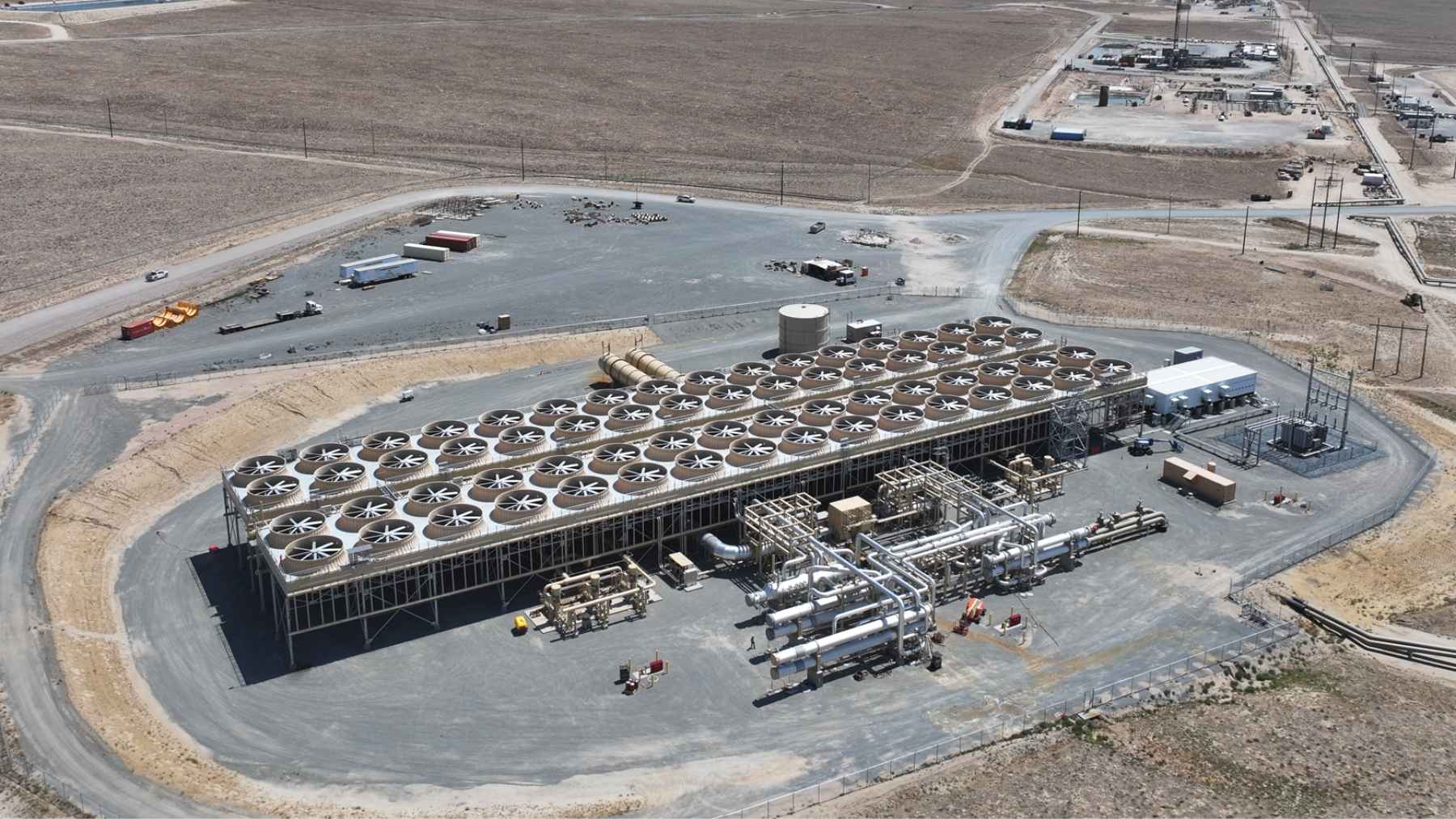

Every new power plant goes through an awkward in-between stretch where it’s already putting electricity on the grid but hasn’t officially started the job it was built for. It’s basically a very large, very expensive test run. Fervo Energy’s Cape Station in Utah just got through that stretch, and it did it a day early.
The first power block at the Beaver County site synced to the grid on September 24. Fervo declared it in commercial operation six days later, on September 30, which was one day before its contract said it had to be. The company made it official in its October 1 announcement, and it says the block is earning revenue under its power contract now.
We’ve written about Cape Station’s deep wells and its Google deal before, so I’ll skip the backstory and stick to what’s new.
So what does “commercial operation” mean?
It’s a contract milestone, and it comes after the plant has already switched on. Syncing to the grid means the plant’s generator is spinning in step with the grid’s 60-hertz rhythm, so it can push power onto the lines. Commercial operation is the date in the contract when the plant has shown it can deliver what it promised and the power deal formally kicks in.
The company says the first block produced 33 megawatts net, which met the production threshold in its contract. Net is what’s left after the plant runs its own pumps and equipment, so it’s the number the buyer actually gets.
So who’s buying it?
According to Canary Media, this first block’s power goes to Shell Energy, which sells electricity to retail customers in California and signed a 15-year deal for 31 megawatts. Southern California Edison is the main customer at Cape Station overall, Fortune reports. You won’t find a price per megawatt-hour for any of them, because Fervo hasn’t disclosed what these buyers pay.
Is it really the world’s first?
Sort of. Fervo’s wording is pretty careful, so it helps to read it closely.
The company calls Cape Station the “first greenfield enhanced geothermal development in the world” to reach contractual commercial operation. A week earlier, in its first-power announcement, it said Cape Station was the first utility-scale enhanced geothermal project anywhere to hit first power, which just means electricity flowing onto the grid. Enhanced geothermal, if you need the refresher, means fracking hot, dry rock so water can circulate through it, instead of hunting for a natural underground pocket of hot water.
Those qualifiers matter, because Fervo already sells enhanced geothermal power. Its Project Red pilot in Nevada, a 3.5-megawatt plant, has been feeding the grid for close to three years. But Project Red’s wells were drilled into an existing geothermal field and tied into a plant that was already running. Greenfield means Cape Station was built from scratch on a site with no geothermal plant of its own. Dawn Owens, Fervo’s head of development and commercial markets, told Canary that “traditional geothermal would have never been done in southern Utah.”
So I’d call it the first new-build enhanced geothermal plant at utility scale to start earning under a power contract. That’s a mouthful. As far as I can tell it’s still a genuine first, and frankly it doesn’t need the bigger “world’s first power plant” label some headlines gave it.
So how hot is the rock?
A few of you asked about the temperatures the last time we wrote about these wells, so here’s the plain version. It’s the rock that’s hot. The plant pumps water down one well, pushes it through cracks in rock that sits at around 400 degrees Fahrenheit, and pulls it back up another well carrying that heat. So the water goes down cooler and comes back up hot, and the hot side is what the plant runs on.
The wells feeding this first block use Fervo’s second-generation design, and they average 14,483 feet of measured depth, according to Fervo’s own well-design breakdown. Measured depth is the full length of the hole, so you can’t read it as how far down the well goes. Each of these wells turns and runs about 5,000 feet sideways through the hot rock, so a good chunk of that length is horizontal.
The 19,448-foot well we covered over the summer isn’t one of them. That’s Sawtooth 7, built to Fervo’s third-generation design for Phase II, with a 7,500-foot sideways run in 460-degree rock. It isn’t scheduled to make electricity until 2028.
The water doesn’t spin the turbine itself, either. Cape Station uses organic Rankine cycle units, where the hot water runs through a heat exchanger and boils a second fluid with a much lower boiling point, and that vapor drives the turbine. The geothermal water, now a bit cooler, goes back underground to pick up more heat. It’s a pretty roundabout way to make electricity, but it means the water from deep underground never touches the expensive spinning parts.
Two more blocks are on the way
The company says it built and commissioned this first block in 23 months, which TechCrunch counts from groundbreaking. It also says it’s confident future blocks can get down to 18 months. CEO Tim Latimer pointed out that it all came in ahead of schedule, in a business where late power plants are pretty much expected.
I’ll admit that’s not something you hear from power companies very often. My guess is the 18-month figure is mostly for the benefit of data center developers, who’d happily take power in chunks if it shows up sooner.
Fervo could use the good news, frankly. Fortune reports its market value shot past $10 billion after its May IPO and had slid to about $5 billion by the time Cape Station synced to the grid.
The other two 33-megawatt blocks in Phase I are still being commissioned. After that comes Phase II, which adds another 400 megawatts. Fervo says that phase is already under construction, and Canary reports it’s backed by the Google deal we covered last month.
How big does Cape Station get in the end? Honestly, it depends on who you ask. Fortune describes a possible third phase that would take the site to 900 megawatts. Fervo has permits for up to 2 gigawatts, and it’s told TechCrunch the site could eventually hold as much as 4. None of those bigger numbers has a date on it yet, so if you’re keeping score, I’d only count the 500 megawatts that do.
So how long does a plant like this last?
Another reader asked about lifespan, and it’s a fair question. I can’t find a design life for Cape Station’s wells in anything Fervo has published. The closest thing to a timeline is the contracts, and Shell’s runs 15 years.
The best real-world data comes from Project Red. Fervo reported this spring that after about 600 days of operation there, the temperature had dropped by roughly 2.5 degrees, which it says lines up with what its reservoir models predicted.
Not everyone’s convinced. GeoExPro, a geoscience trade magazine, has run several pieces arguing that Fervo has made very little long-term well test data from Cape Station public. One of them pointed out that the flow data Fervo released from its first Cape Station production well covered 24 hours of a 30-day test. I’d expect we’ll learn a lot more once Fervo starts reporting what Cape Station actually earns in its quarterly results.
Dawn Owens says Fervo expects the last two Phase I blocks to reach their contract start dates by January 1, 2027. If it gets there, Cape Station will be running at about 100 megawatts right around the time the ball drops in Times Square.