
Western allies have spent the past couple of years handing Ukraine proper minehunting ships. Five so far, two from Britain and three Alkmaar-class boats from Belgium and the Netherlands, with the fifth transferred this June.
And if you’re wondering how much Black Sea mine clearing those five ships have done, the answer’s none, because Turkey closed the Bosporus to warring countries’ warships back in 2022 and hasn’t budged since. The ships train out of Western European ports. The mines float somewhere else.
Belgium’s newest purchase for Ukraine goes at that problem from a different angle, and a much smaller one. On September 14, the Belgian Ministry of Defense awarded Exail Robotics Belgium a €9,866,476 contract for three TRIDENT mine countermeasure systems, and the procurement notice names the recipient outright: Ukraine’s defense forces. Naval News pulled the award off Belgium’s e-Procurement platform and reported it on September 24.
Belgium skipped the tender entirely, going with a negotiated award and no competing bidders, and justified that by pointing at the urgency of the war and at Exail’s exclusive intellectual property. The contract runs 24 months. When Naval News asked Exail about it, the company declined to comment, which tells you roughly nothing, and that’s pretty standard for hardware headed to that particular war.
So what exactly is a TRIDENT?
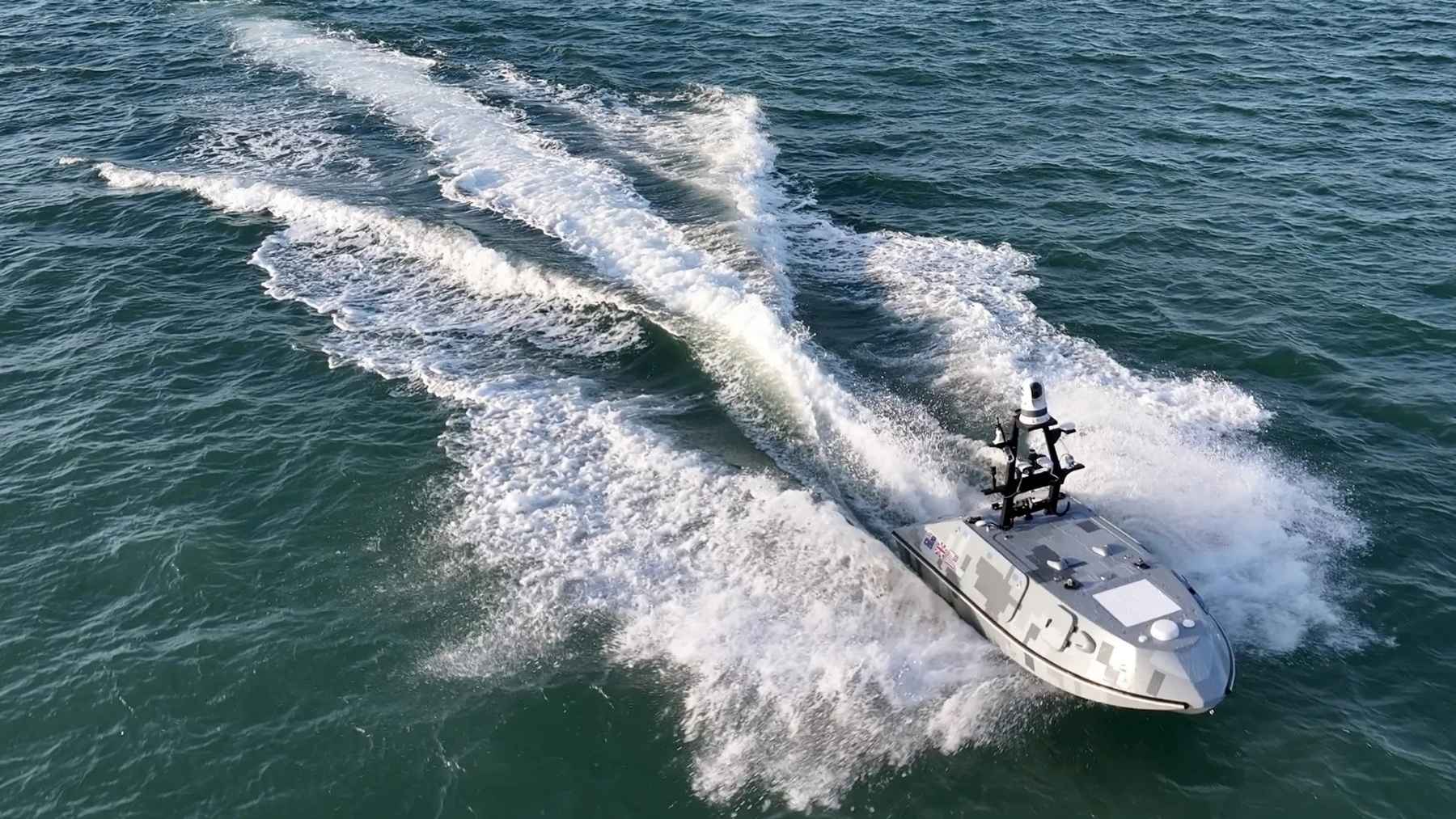
The name’s an acronym: Tactical RHIB for Identification and Disposal of Explosive Naval Threats. A RHIB, if you haven’t spent much time around navies, is a rigid-hulled inflatable boat, basically the fast workboat with the inflatable collar you’ve seen strapped to the side of every warship and Coast Guard cutter.
Exail hasn’t published a TRIDENT spec sheet. Naval News reports that its sources place the name inside Exail’s UMIS light product line, and that lines up suspiciously well with a contract Exail announced on July 15: three light mine countermeasure systems for a European navy it wouldn’t name, each built around a 31-foot (9.5-meter) RHIB. Same product family, same count of three. I’d bet these are the same boats, but that’s my read on top of Naval News’ suggestion, and neither Exail nor Belgium has confirmed it.
Going by that July announcement, each boat carries up to three underwater vehicles, a mix of Exail’s Seascan inspection drone and the K-Ster C, plus a drone piloting console, a launch-and-recovery berth and an acoustic positioning system, and a crew of three runs the whole thing. Exail built the setup for very shallow water and for places with little working port infrastructure. That’s a fair description of Ukraine’s coastline right now.
The drone is the ammunition
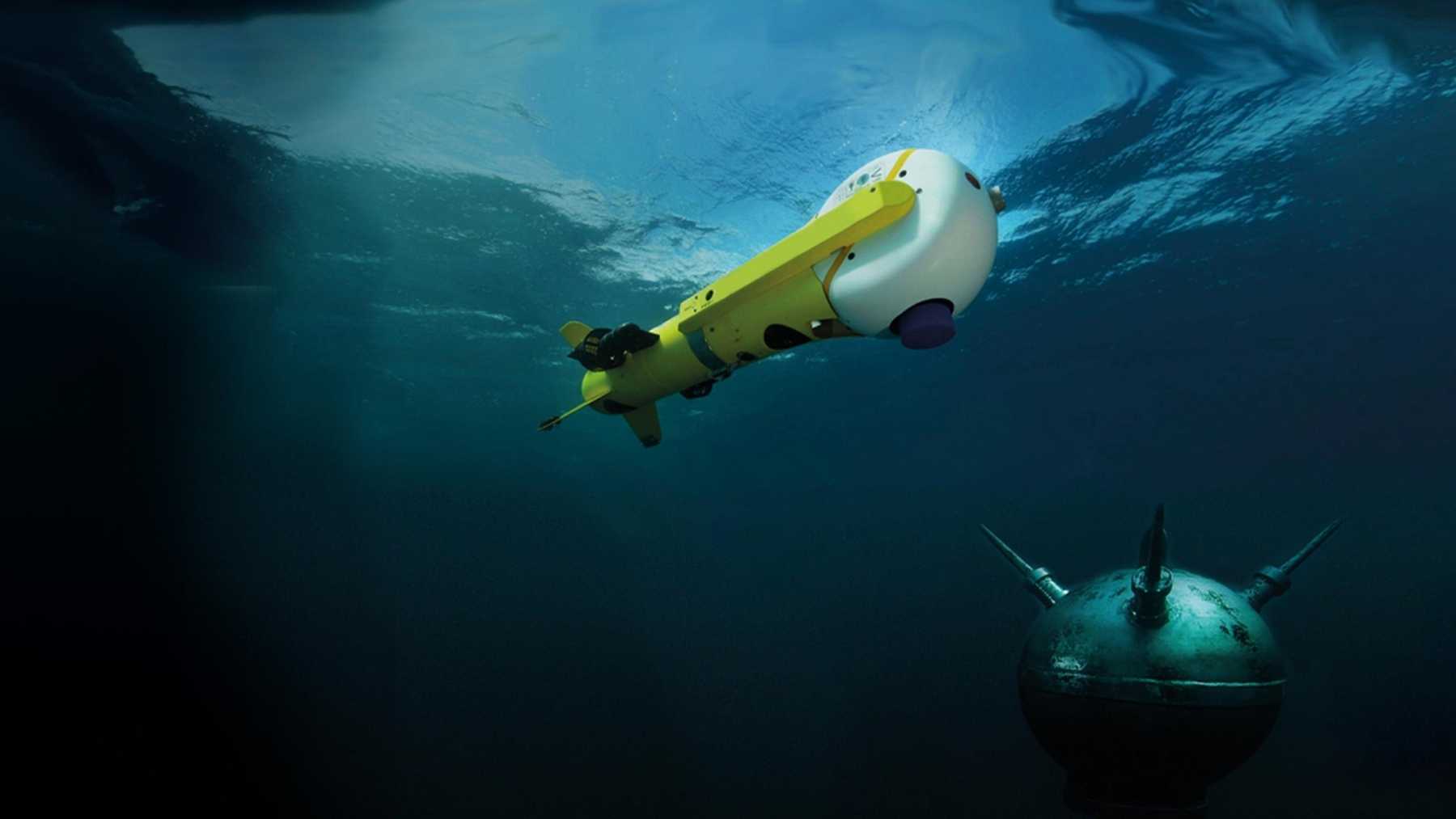
The boats are the delivery trucks. The thing doing the actual work is the K-Ster C, a French-designed underwater drone about 110 pounds (50 kilograms) and five feet long that exists to be used exactly once. An operator sitting outside the minefield steers it down onto a mine, and the drone tilts its head, which pivots through 90 degrees in either direction and houses a shaped charge, per Exail’s own product page.
A shaped charge focuses its blast into a narrow jet instead of a general bang in all directions, and that focused jet is why a 110-pound machine can take out a mine built to break a warship’s back. The drone goes up with the mine. That’s by design.
We took a longer look at the K-Ster C back in August, when the July contract first surfaced with no buyer attached.
Why blow up a perfectly good drone? Because the slow, dangerous half of mine disposal has always been getting your gear, or worse, your diver, back out of the water after the job. A one-way drone doesn’t make the trip home, and the operator just reaches for the next one in the rack. The US Navy has spent years chasing an expendable mine-killer of its own, so this isn’t some niche European idea.
Exail’s refreshingly honest about what that turns the drone into. The company’s own January press release files K-Sters under consumables, the recurring revenue that keeps flowing as long as navies keep finding mines. It’s ammunition with thrusters, basically.
And it sells like ammunition: in January, Exail booked an order for several hundred K-Sters at around €40 million, its second-biggest K-Ster deal after a €60 million NATO buy in 2024, and said its backlog had passed 1,000 autonomous drones. All of them come out of Ostend, on the Belgian coast, built by the same Exail Robotics Belgium subsidiary that just signed the Ukraine contract. So Belgium is technically buying from a French maker, and the hardware still ships from a factory on Belgium’s own shoreline.
Ukraine’s big minehunters can’t get in
Now, back to those five donated minehunters. Turkey refused the two British-donated boats passage in January 2024, citing the Montreux Convention, the 1936 treaty that lets Ankara close the straits to warships of countries at war, and they’ve sat in Portsmouth ever since, with the Belgian and Dutch donations joining the same waiting room.
The mine clearing that actually happens in the Black Sea gets done by divers, drones and small boats, according to NATO personnel quoted by Forces News. Belgium knows the problem firsthand, since one of the five stranded ships is its own former minehunter Narcis, now sailing as Mariupol.
A modern minehunter’s already a stand-off machine, a ship built to stay away from the mines it hunts and send something else in to touch them. The TRIDENT shrinks that doctrine until it fits on a trailer. An Alkmaar-class minehunter is 169 feet long and needs Ankara’s permission slip to reach the Black Sea; a 31-foot RHIB is a boat you can move by road. Belgium hasn’t said how or when the three systems will actually get to Ukraine, and frankly the how matters less than the fact that this size of hardware has options a warship doesn’t.
The award to Exail Robotics Belgium went out on September 14, 2026, the execution window runs 24 months from there, and the Ostend factory these drones come from is already sitting on a backlog of more than 1,000 of them. Ukraine’s three boats just joined the line.