
If you know the Danube at all, it’s probably from “The Blue Danube,” the Johann Strauss II waltz Stanley Kubrick used to dock a spaceship in 2001: A Space Odyssey.
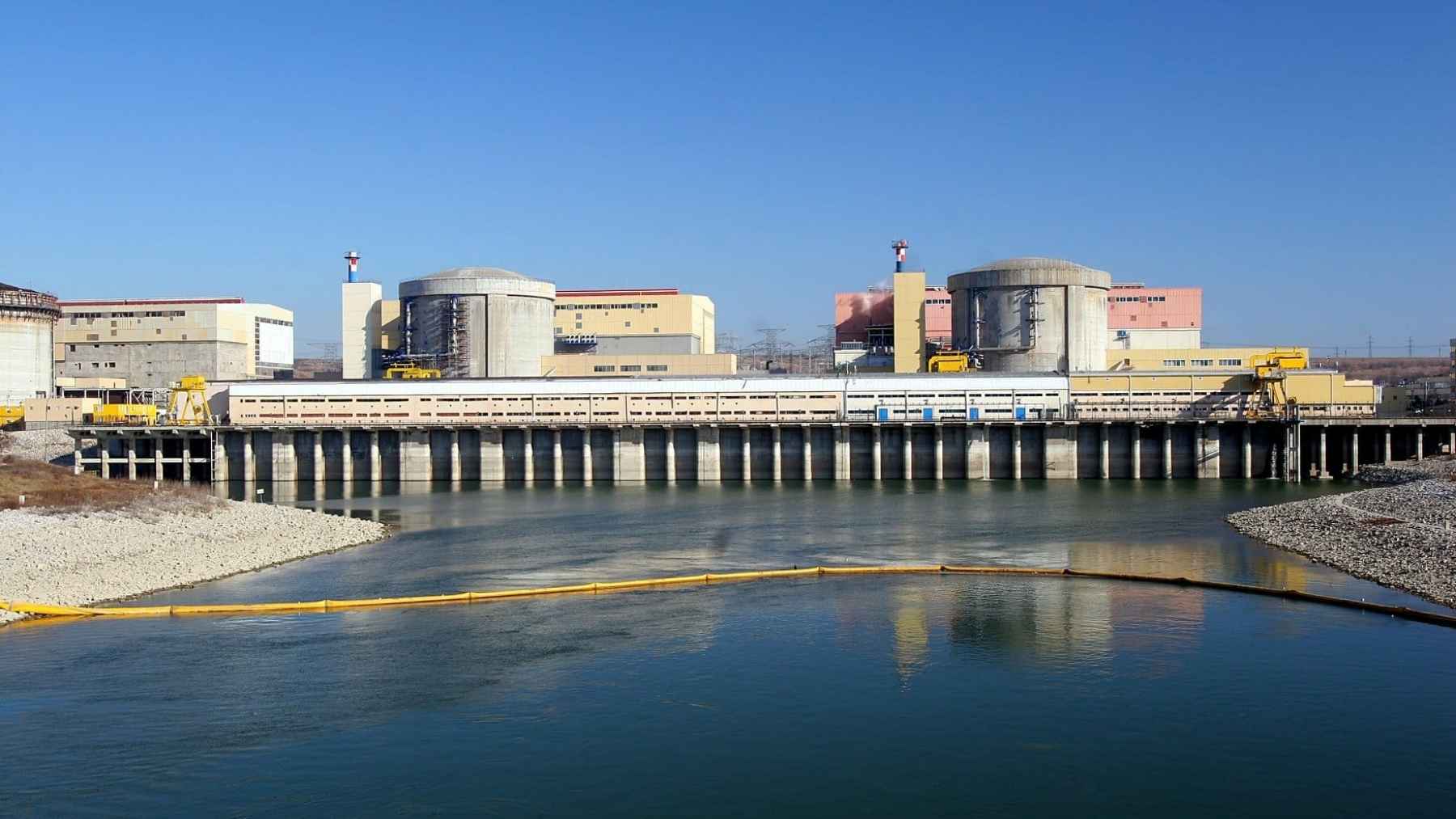
Romania’s relationship with the river hasn’t been nearly as romantic this year. Both reactors at Cernavodă, the country’s only nuclear power plant, have been switched off since the summer, because the Danube dropped too low for the plant to pull in the water it needs.
And they’re staying off for now. Cristian Bușoi, a state secretary at Romania’s Energy Ministry, said on October 7 that neither unit can restart before October 15. Three days later, the country’s water agency started letting extra water out of three reservoirs to protect the plant’s cooling-water supply.
The river came up an inch short
There’s an old joke that a nuclear plant is just a very expensive way to boil water, and it isn’t exactly wrong. The reactor’s heat makes steam to spin a turbine, and a huge supply of cold water then cools that steam back down so the loop can start over. At Cernavodă, that water comes from the Danube, and it’s kept in its own pipes, separate from anything that touches the reactor.
The plant’s pumps draw it from an intake basin at the start of the Danube-Black Sea Canal, a shipping shortcut to the coast. Those pumps sit at a fixed height, so when the water in the basin drops below a certain mark, they can’t get enough of it.
Unit 1 went offline on July 28, in what Nuclearelectrica, the state-controlled company that runs the plant, called a preventive move to protect its equipment. Unit 2 held on into August. On August 12, the river dipped a little over an inch below the level the plant needs to run normally. Unit 2 started shutting down the next morning, according to Nuclearelectrica’s filing with the Bucharest Stock Exchange, and operators brought its power down gradually over a few hours.
Both units are Canadian-designed CANDU reactors, each rated at roughly 705 megawatts, and about 650 of that reaches the grid after the plant powers its own equipment, according to the World Nuclear Association. Together, they normally supply about a fifth of the power Romania uses. They haven’t both been off at once since the second unit came online 19 years ago, and drought had only shut the plant down once before, back when it had a single reactor.
Cooling water tends to be where nature picks its fights with nuclear plants. French operators have had to take reactors offline by hand to get ahead of jellyfish swarms. At Cernavodă, there just isn’t enough river.
Four barges went to the bottom on purpose
Upstream of the plant, the Danube splits, and a side channel called Bala pulls part of the river away from the branch that feeds Cernavodă. So in early August, Romanian authorities tried to make Bala a little harder to get into.
The country’s navy set off underwater charges to break up a submerged rock formation near the Bala branch, and crews dredged the riverbed. Then they flooded four barges loaded with stone and let them settle on the bottom, two about 1,600 feet from the entrance to Bala and two farther upstream, angled across the current. The idea was that they’d work as two artificial sills, basically low walls on the riverbed that nudge more of the flow where you want it. The government set aside more than €2 million for the effort, according to Euronews.
It sort of worked. The barges pushed the water up about 3 inches at first, and then the gain drained away within days. Romeo Urjan, the plant’s director, told Romanian broadcaster Digi24 that the reason is still being studied.
Still, Urjan said the dredging, the blasting and the barges together kept Unit 2 running about a week longer than the forecasts had allowed. Radu Miruță, Romania’s acting defense minister, had predicted at least nine extra days right after the barges went in. He also cited Nuclearelectrica’s numbers showing the whole operation would’ve paid for itself even if it had only bought one extra day of power. That’s what made sinking barges in a river an easy sell, frankly.
We covered Hungary’s version of this upstream at Paks, where crews followed the barges with a rock wall across the whole river.
The Danube hit a new low in October
The river’s still dropping. On October 10, the Danube entered Romania carrying under 42,400 cubic feet per second, less than a third of its October average of about 137,700, according to Apele Române, the national water agency, and the country’s hydrology institute.
On September 20, the Cernavodă gauge hit its lowest reading since modern monitoring began, and it’s gone lower since. The agency’s reading on October 10 put the river there a little over an inch above the line it treats as the limit for the plant’s cooling-water pumps. Back in August, the agency said the plant needed that same gauge about a foot higher than the limit just to keep running. (The plant reads its own intake on a different scale, so the figures you’ll see in Romanian news won’t line up. I’m sticking to the gaps.)
So why would a reactor that’s been off since summer still need river water?
Because the fuel doesn’t go cold the moment you stop the chain reaction. It keeps giving off heat for a long time afterward, so the plant has to keep water moving past it, just not nearly as much as it needs when it’s making power. Nuclearelectrica says the plant was designed with multiple backup cooling systems, and that keeping the shut-down reactors cool carries no risk.
Apele Române is propping the river up anyway. It’s releasing roughly 700 extra cubic feet per second from the Iezer reservoir in the Mostiștea valley through October 18, plus more from Izbiceni, a reservoir on the Olt, and Mihăilești, on the Argeș. Both rivers flow into the Danube upstream of the plant.
Petre Min, who heads emergency response at CNCAN, Romania’s nuclear regulator, said on October 10 that the plant has enough water in reserve to stay safe for three days even without more help for the river, Romanian news agency Mediafax reported. If you ask me, that three-day cushion deserves a lot more airtime than the inch does. Min also said work is underway on a barrier to steer more water toward the intake, though I couldn’t find anything official on how big it’ll be or when it’s due.
Figures: Nuclearelectrica, Apele Române, Romania’s hydrology institute and Energy Ministry, plant director Romeo Urjan.
So when do the reactors come back?
Not before October 15, and probably a good while after that. Bușoi also told Digi24 that the most reliable forecasts, the ones covering the next 10 days, don’t show a lasting rise in the river and actually show more drops. The longer-range forecasts, which he called less reliable, don’t have the flow climbing until the end of October or early November.
If you’re wondering why they don’t just restart once the water creeps back up, Bușoi covered that, too. He said the final call belongs to the plant’s specialists, and that no one’s going to gamble with the cooling pumps, because replacing them could take months, maybe a year.
Big pumps really don’t like running short of water. Let the level drop too far and they start pulling in air and vapor bubbles along with it, which can chew up the metal in a hurry.
Romania’s government said much the same on October 1, when it called the river forecast too shaky to count on restarting even one unit in October. When the second reactor went down in August, Urjan told AFP, “We do not foresee a restart within the next ten days.” It’s been nearly two months. If I had to bet, it wouldn’t be on October.
Until the reactors come back, Romania’s grid is missing 1,200 to 1,300 megawatts, which it’s covering with imports and extra wind, solar, gas and coal power, according to Romanian news site Informat. Officials don’t expect to restrict electricity use, but they’ve warned that the imports could push bills up. In early August, the government also said Dacia and Ford would pause their car plants in the country until August 19 to ease the shortfall.
The plant’s director wants a dam
Urjan’s been pretty candid about the bigger problem. He told Digi24 in August that the plant was designed around a low flow that comes about once every 30 years, and that a company can probably live with losing power that rarely. But he said droughts are coming more often now, and that keeping Cernavodă viable will take new engineering on the river itself. His pick is a proposed dam at Bala, which he said would also make the two extra reactors Romania plans at Cernavodă workable.
Apele Române plans to keep the extra water flowing out of Iezer through October 18, and Nuclearelectrica has said it’ll file a notice with the Bucharest Stock Exchange when units 1 and 2 reconnect to the grid.