
A sea mine doesn’t have to be clever to be a problem. Plenty of the ones navies worry about are simple and cheap, and they’ll sit in the water for years waiting for a hull to come along. Getting rid of them is slow, expensive and dangerous work.
So when the Pentagon’s Defense Innovation Unit and the Navy went looking for new ways to deal with mines this spring, they asked for gear that keeps sailors out of that water altogether. On October 1, they named three winners. One of them is a drone you could carry to the end of a pier yourself.
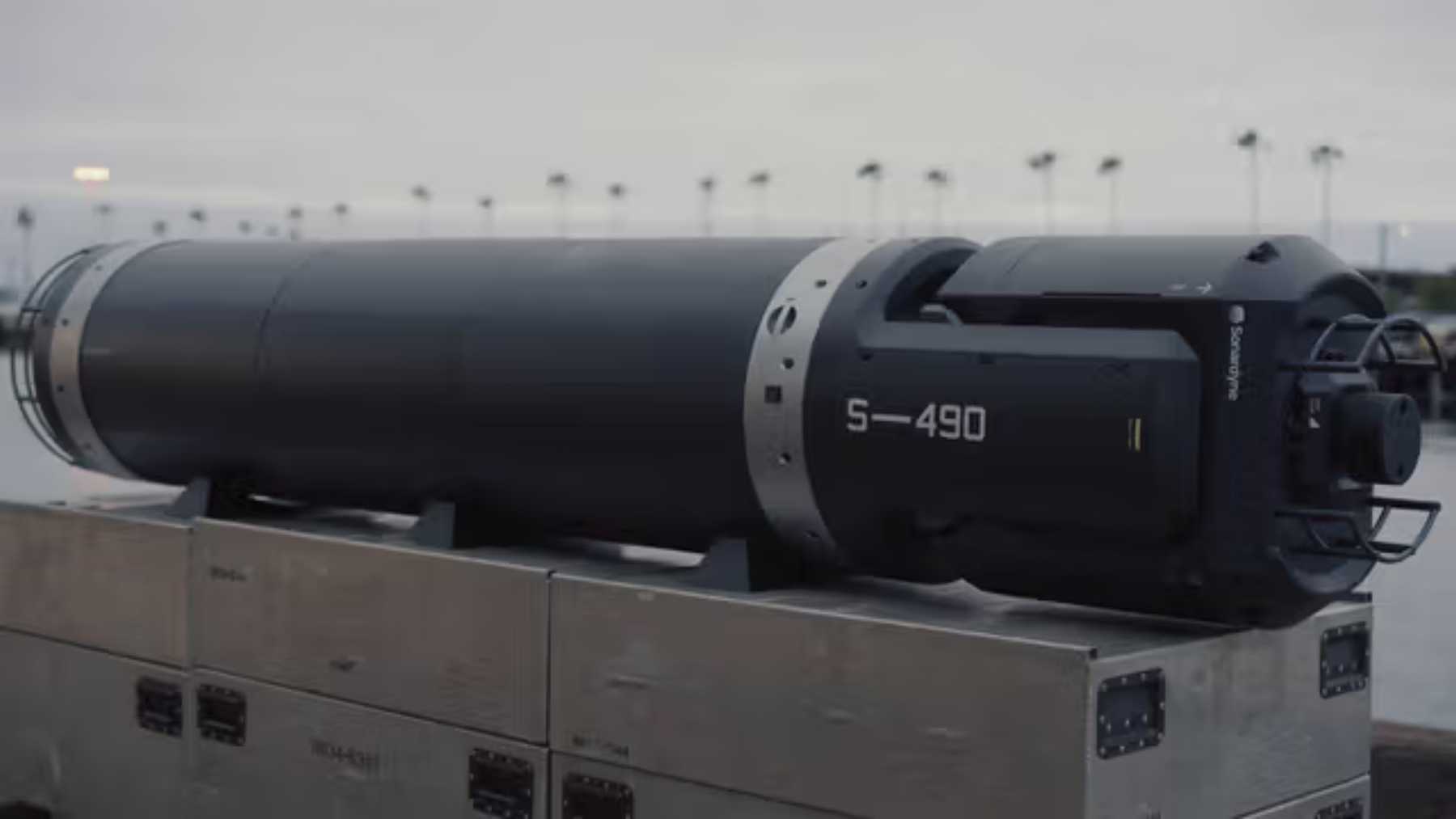
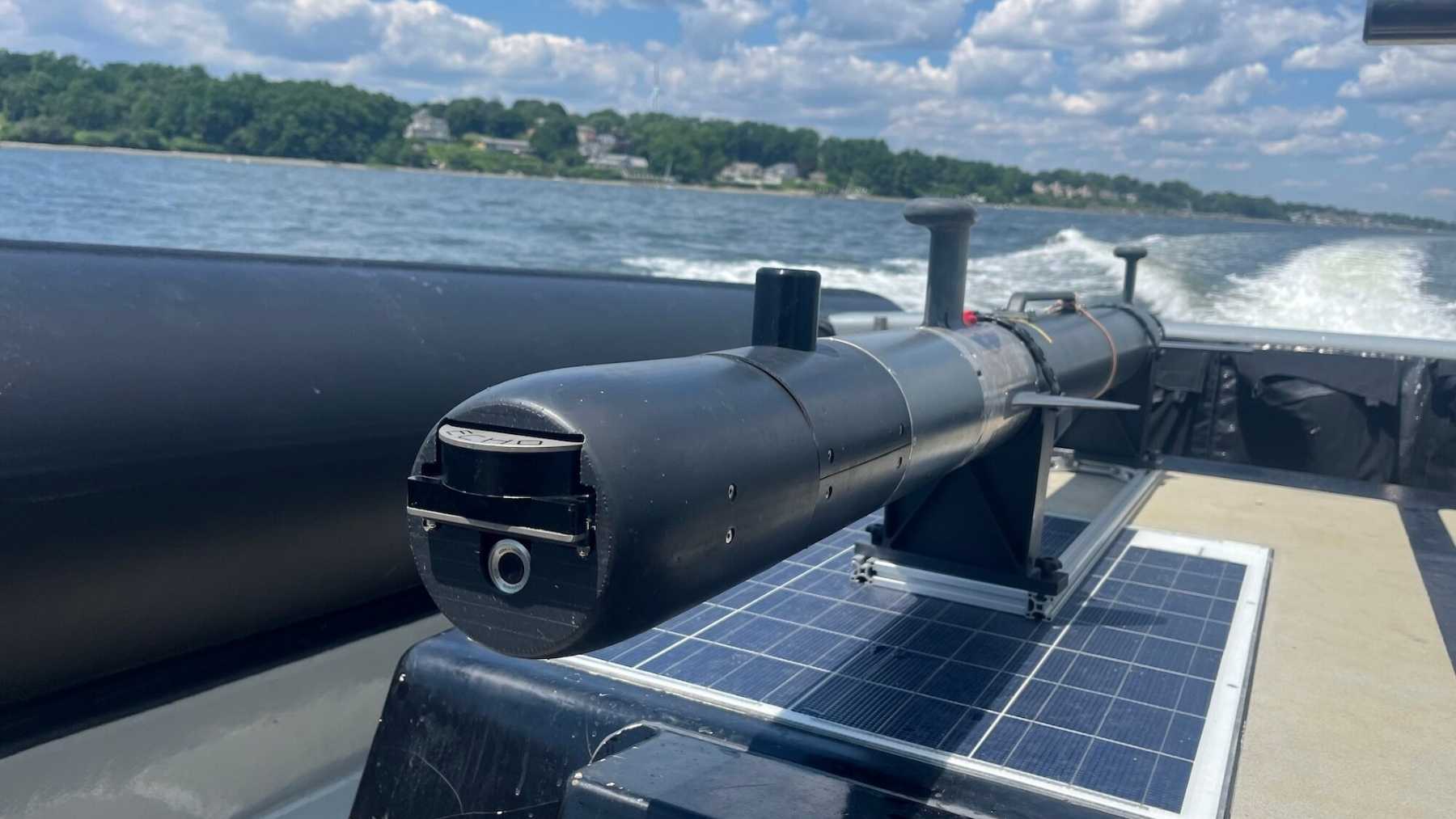
It’s called SIGURD, and it’s built by Vatn Systems, a startup based in Bristol, Rhode Island. The company’s spec sheet puts it at 6 feet long and under 55 pounds, and it lists launching by hand right alongside launching from a small boat, a drone boat or the shore.
I’d guess that’s about as much drone as anyone would want to lug down a dock. DIU’s rules allowed vehicles that need a launcher to weigh up to 500 pounds, with 250 as the goal. SIGURD’s under 55.
So what did SIGURD actually have to do?
DIU split the contest into three tracks. Two of them dealt with bottom mines, which sit on the seafloor and wait for a ship to pass over. SIGURD competed in the other one, against near-surface and moored mines.
In case you’ve never had a reason to think about moored mines, they’re basically explosive cases tied to anchors on the seabed. The cable sets how deep each one hangs, so a moored mine can float just under the surface or wait much farther down. DIU’s track covered both, from the surface to about 164 feet.
The drone didn’t have to search the whole ocean, either. Each run started with a rough position for the target, give or take 16 to 33 feet, and the drone had to find it again with its own sensors and navigation. In mine-hunting speak, that’s called reacquiring a target. It’s a bit like someone telling you your keys are somewhere in the kitchen. You still have to go put your hand on them.
GPS won’t help with that, by the way. Satellite signals don’t make it through seawater, so an underwater drone has to keep track of where it is on its own from the moment it leaves your hands.
A person still has to say yes
Did SIGURD actually blow anything up?
Not in this contest. Under DIU’s rules, each drone had to send back enough sensor data for an operator to positively identify the target, and it couldn’t go after anything until that person approved it. Then it had to make its approach while holding its position to within about 6.5 feet, in currents of up to 2 knots, which is roughly the pace of a slow walk. The drones did the neutralizing with inert payloads, against practice mine shapes at a Navy warfare center. DIU hasn’t said how many targets each drone faced.
Frankly, that’s how you’d want a test like this to run, even if Vatn’s announcement makes it sound a bit more hands-off. “SIGURD autonomously detected, reacquired and neutralized mine threats,” said Nelson Mills, the company’s co-founder and CEO. By the company’s account, the drone handled the finding and the final approach on its own. The company also says operators can set SIGURD to engage fully autonomously, but DIU’s mission profile called for an operator’s go-ahead first.
DIU put $10 million on the table for the whole contest, with up to $3 million per track for the top performers. It hasn’t said how much of that ended up in Bristol. I also couldn’t find anything saying whether SIGURD is meant to come home after an engagement or go out with the mine.
Small mine-killing drones tend to go one of two ways. Raytheon’s 26-pound Barracuda, which we looked at in August, steers into the mine and detonates with it. A 38-pound drone that Ukrainian forces have already used in combat fires a charge into the mine instead and backs away.
Figures: Vatn Systems, Defense Innovation Unit, U.S. Navy.
This all happened pretty fast
DIU opened the contest on May 29 and gave companies 12 days to apply. Its schedule had on-water testing running from late July through most of August, and the winners were named on October 1. The Navy’s partner in all this was its Direct Reporting Portfolio Manager for Robotic and Autonomous Systems, an office that, understandably, goes by DRPM RAS.
George Saroch, the office’s program manager for mine warfare, said the partnership took the Navy “from open call to on-water testing, to contracting options” in under four months. Out of 80 companies that applied, 11 were picked to compete. Three won: BeeX, BlackSea Technologies, which is now part of AEVEX, and Vatn.
SIGURD’s a new machine, too. Vatn unveiled it this summer and says it built the system in a few weeks by taking its existing Skelmir S6, a roughly 6-inch-wide underwater drone, and turning it into a dedicated mine-clearing system. The company also says former Navy bomb disposal technicians designed and tested it, and I’d say that’s pretty much the crew you’d want for the job.
I’d argue the speed is more impressive than the drone itself. The Navy’s been paying for Barracuda for more than eight years, and the most recent formal schedule from Raytheon’s parent company, RTX, has it reaching initial operational capability (basically, the point where the first ones are ready for sailors to use) by 2030.
Admittedly, that’s not a fair fight. Barracuda’s a full Navy weapons program that has to get through years of formal testing with a real warhead, and nothing SIGURD did in this contest involved a live charge.
Still, the Navy could use the help. According to Military Times, the Navy retired four of its Avenger-class minesweepers last year, and the four it still has are all stationed in Japan. DIU’s rules also said winners could land a follow-on prototype deal, and that the Navy had set aside extra money, on top of the prizes, to award the top performers right away.
When it unveiled SIGURD on July 14, Vatn said it expected the system to be ready to deploy before the end of the year. As of this week, that’s a little under 12 weeks away.