
When you think of a dangerous dam, you probably picture something like Hoover. Hundreds of feet of concrete, a lake stacked up behind it, and a drop that makes your stomach turn just looking at the photos.
That’s fair. But the dams that officials in the Cincinnati area have spent years trying to get rid of look a lot less dramatic. One of them is finally coming out.
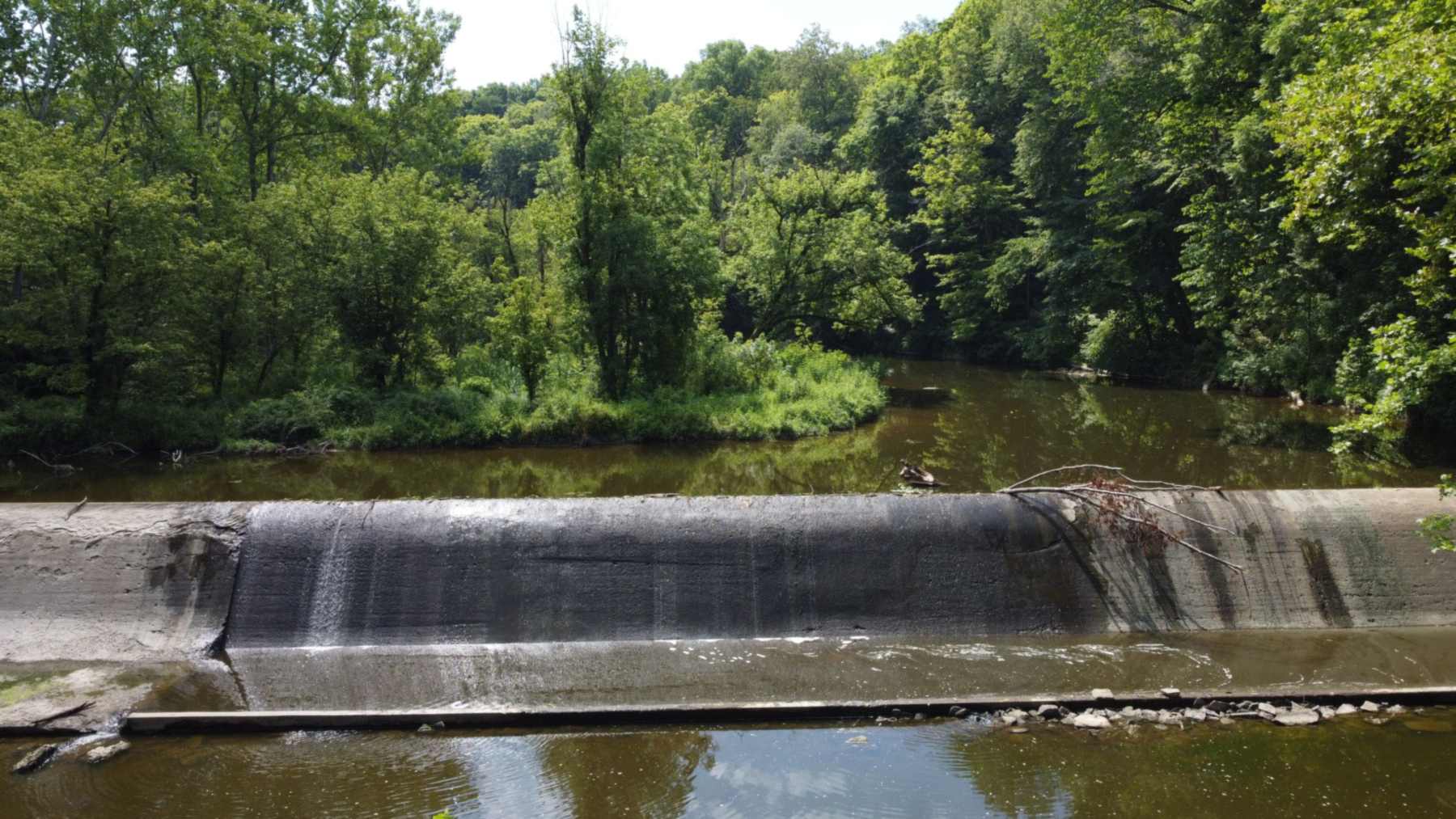
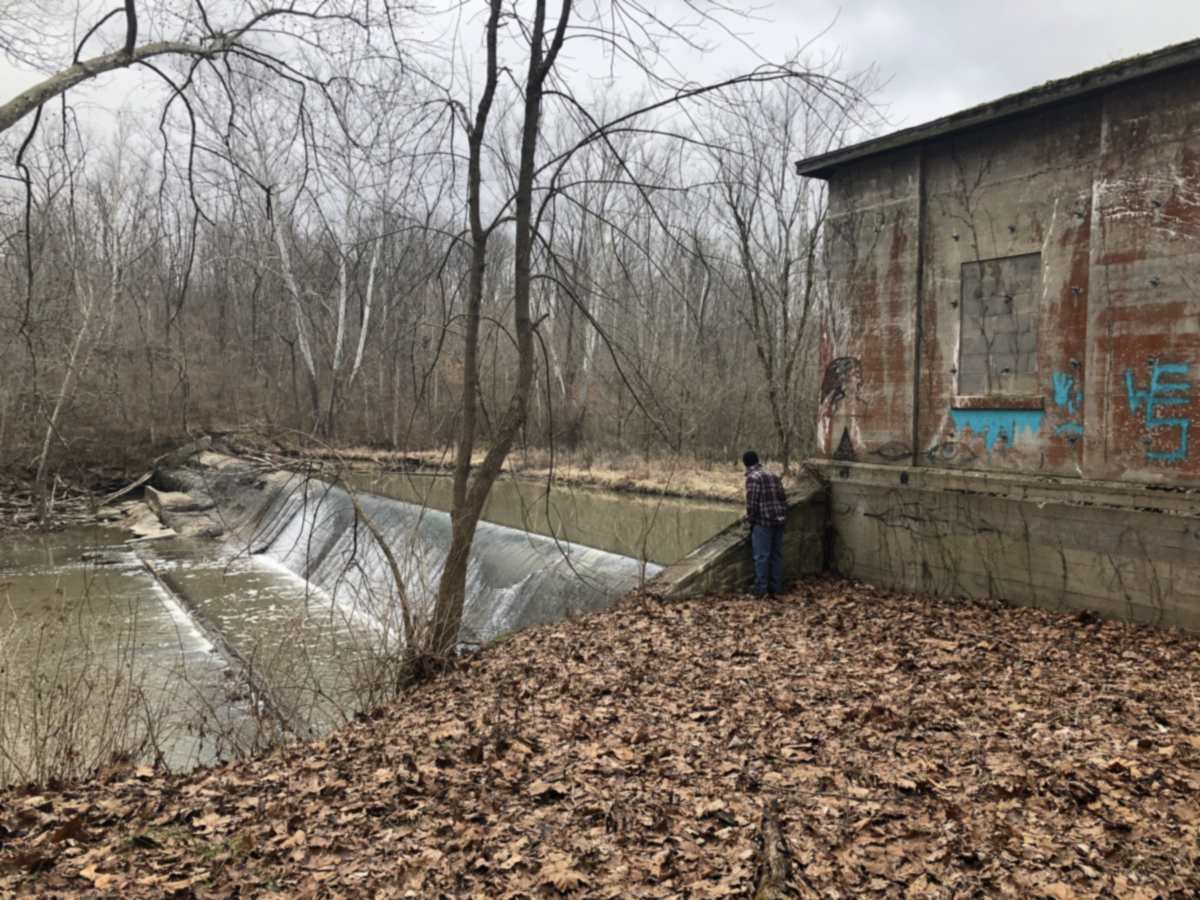
The Cloverlick Dam sits on Cloverlick Creek near the village of Bethel, in Clermont County, Ohio. It’s a concrete wall 12 feet tall and a little more than 200 feet long, according to WVXU, which reports it’s the largest low-head dam in the county. On October 20, the Ohio Department of Natural Resources (ODNR), the Clermont Soil and Water Conservation District, the Village of Bethel and several other partners held a groundbreaking next to it. The plan is to take the whole thing out, along with the old pumphouse on the bank beside it.
So why would anyone throw a groundbreaking for a 12-foot wall?
Low-head dams are a lot nastier than they look
A low-head dam is basically a concrete ledge built straight across a stream, with water pouring over the entire width of it instead of going through gates. When that water hits bottom on the downstream side, part of it rolls back toward the wall, and that churning loop can hold a swimmer or a flipped kayak in place.
That’s why the Clermont Soil and Water Conservation District’s project page says these things are often called “drowning machines.” It’s a pretty grim nickname for something that, on a calm summer day, looks like a nice spot to cool your feet. The Cloverlick Dam has been roped off for exactly that reason.
ODNR Director Mary Mertz made a similar point to WCPO at the groundbreaking. Her argument was that kayakers and canoeists often don’t spot a dam like this until they’re already on top of it, even when it’s marked.
Clermont County also has some history here. The district says two people died in the 1970s at the old Williamsburg Dam on the East Fork Little Miami River, which the village of Williamsburg removed eight years ago.
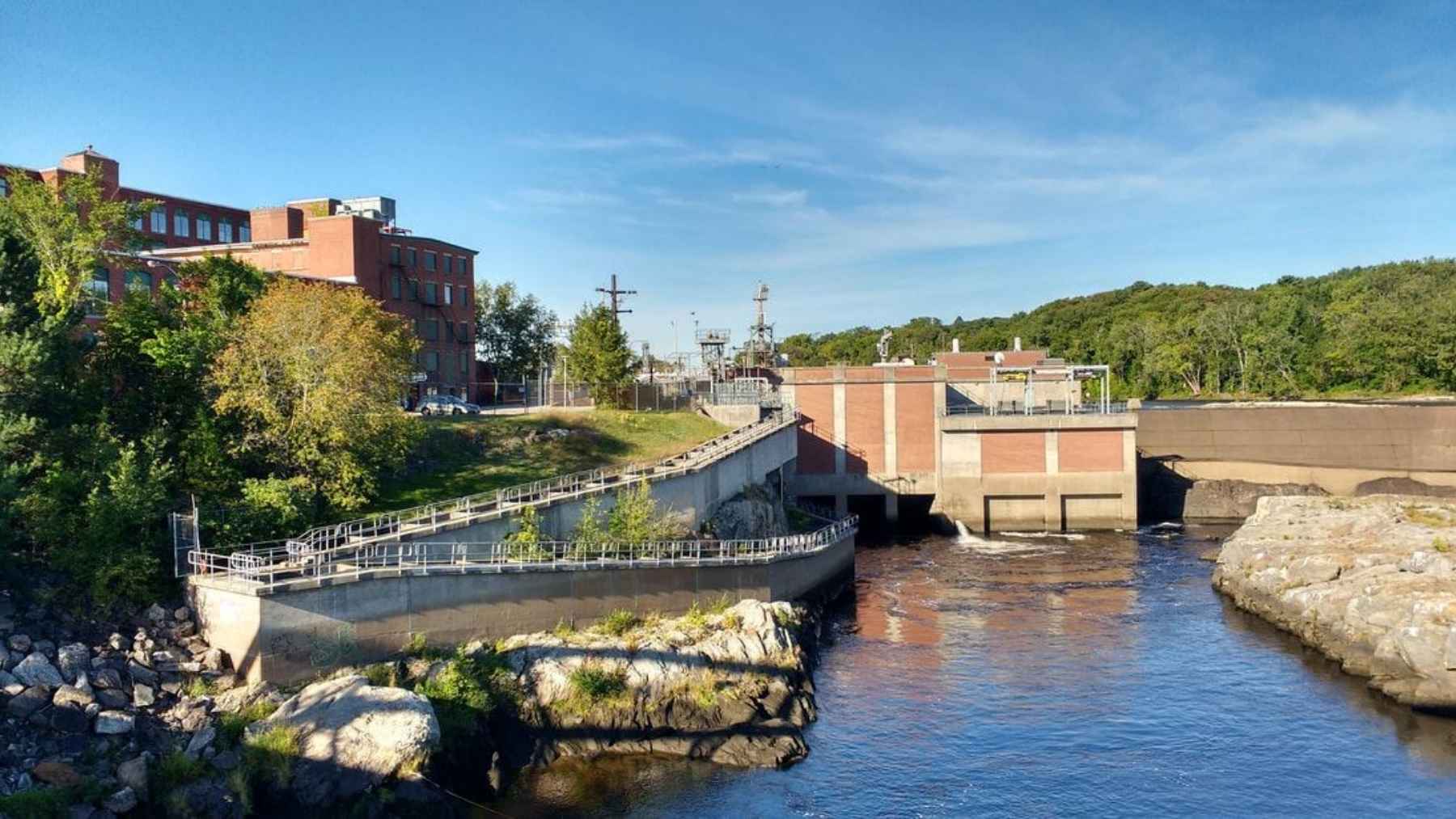
Dams have been a bit of a theme around here lately. We’ve looked at a 30-foot dam on the Connecticut River that gets its top few feet from rubber bladders and a California dam whose concrete is too far gone to repair. Cloverlick is a much smaller job than either of those. But it’s arguably the one that’s most likely to hurt someone if it’s left alone.
Bethel hasn’t needed it in about 20 years
The dam went up more than 80 years ago to give Bethel a water supply, and Clermont Soil & Water says it was paid for by the Works Progress Administration. That’s the New Deal agency that put out-of-work Americans on the government payroll during the Depression, building roads, bridges and pretty much every other kind of public infrastructure you can think of.
Bethel shut down the water treatment plant on the creek in 2006, according to ODNR. The dam hasn’t had a job since. The village still owns it, and with it the liability for anyone who gets hurt there, which the district lists as one of the reasons Bethel wanted it gone.
It’s also bad for the creek. ODNR’s case against it is that slowed-down water heats up, holds less oxygen in summer and drops its sediment behind the wall. Ohio EPA lists the stretch of Cloverlick Creek above the dam as impaired. In plain terms, that means it isn’t meeting the state’s water quality standards, and in this case it’s mostly because the fish population keeps shrinking.
Then there’s the drinking water. Cloverlick Creek runs 14 miles from Brown County, crosses into Clermont County and empties into William H. Harsha Lake, an Army Corps of Engineers reservoir in East Fork State Park. WVXU puts the dam about 3 miles upstream of the lake. ODNR says Harsha Lake supplies drinking water to more than half of Clermont County’s residents. So the state’s case for spending water quality money here isn’t only about fish.
So why does it take a year to knock down a 12-foot wall?
I’ll admit I’d assumed you’d show up with an excavator and a couple of dump trucks and be done by Thanksgiving. It turns out you really can’t do it that way.
There’s a big pool of water and a lot of built-up sediment sitting behind the concrete, according to WVXU. Rip the dam out in one go and, as far as I can tell, all of it would head downstream at once, toward the lake that more than half the county drinks from.
So the district’s plan goes in stages. Site prep is due to start before the end of this year. Crews will then cut a notch in the dam over several weeks to let the pool drain in a controlled way, before demolishing the rest and rebuilding the streambed through 2027. Officials told WCPO actual construction should start sometime in November.
Which means the October event was mostly ceremonial. The district posted a photo of eight people lined up with shovels full of dirt, plus a truck and, for reasons I can’t explain, a Bigfoot cutout in the background.
Bray Construction and Verdantas Engineering are handling the job as a design-build team, which basically means one group both draws up the plans and does the work. I couldn’t find a public figure for what that contract is worth. Nobody involved has published how much concrete is in the dam, either, so I can’t tell you how many truckloads it’ll take to haul it off.
It was supposed to be done by now
When ODNR first announced the project in February of last year, it said removal would begin that year and restoration would wrap up in 2026. The target is now fall 2027.
Bethel’s mayor, Jay Noble, was pretty upfront about why. He told WCPO the village figured it’d be finished by this point, until “the cost started getting more and more.”
The money that’s on the table now comes from a few places. ODNR’s H2Ohio Rivers Program, part of Governor Mike DeWine’s statewide water quality initiative, is putting in $920,000. ODNR’s Division of Wildlife also landed a $1.1 million federal grant through the America the Beautiful Challenge, a National Fish and Wildlife Foundation program. The district lists the Clean Ohio Green Space Program and the U.S. Fish and Wildlife Service as funders too, but doesn’t say how much they’re contributing.
I’d guess a slip like that is fairly normal for a project with this many people involved. ODNR’s release names seven partners, from the Village of Bethel up to the U.S. Army Corps of Engineers. Getting all of them to agree on a design and a budget was probably never going to be quick.
The fish are supposed to notice within a year
The creek is home to white bass, suckers and mussels, and the mussels clean the water as they feed. ODNR’s program manager on the project told WVXU that fish, bugs and other signs of water quality often “respond within a year” once a dam comes out, with slower gains after that.
How much stream actually gets reconnected depends on who you ask. In that first announcement, ODNR said removing the dam would reconnect 86 miles of stream. In last month’s groundbreaking release, Mertz talked about reconnecting the watershed’s 70 miles of tributaries. I couldn’t find anything explaining the difference. Still, the basic idea’s pretty simple: one wall comes out, and fish in Harsha Lake can swim up the whole creek again.
Paddlers and anglers get a safer creek out of it too. Frankly, that’s probably what most people in Clermont County will care about first.
If the new schedule holds, Clermont Soil & Water says the Cloverlick Dam should be substantially gone by October 2027.