
Moving day is bad enough when the heaviest thing you own is a sleeper sofa. You rent the truck, bribe a couple of friends with pizza, and somebody still ends up taking a door off its hinges.
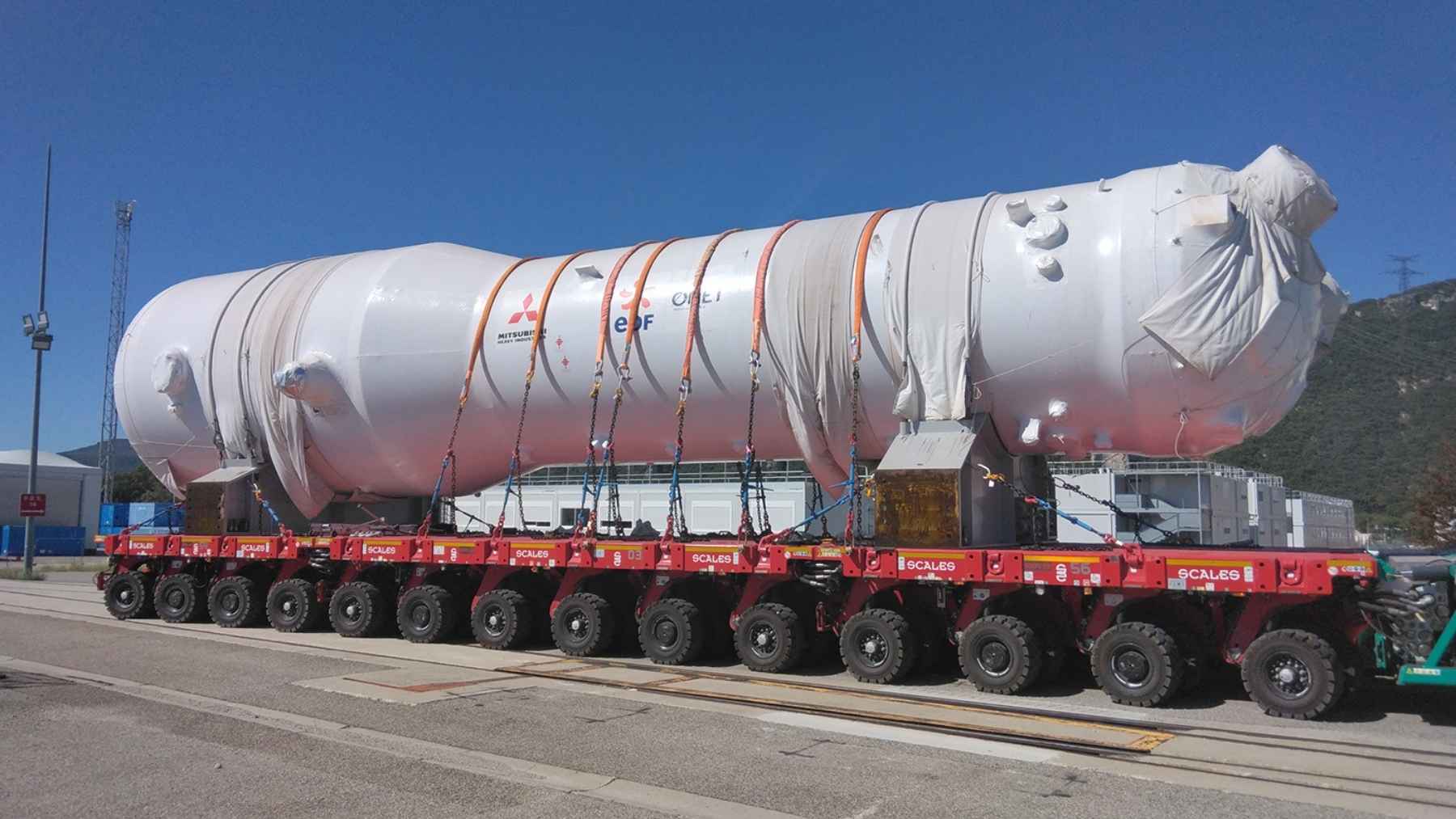
The people who run the Paluel nuclear plant, on France’s Normandy coast, wrapped up a move in early September where each item weighed 474 tons. There were four of them, all brand-new steam generators for the plant’s Unit 3 reactor, and getting them there took two rivers, a long trip by sea, a barge and a pair of road convoys that were in no hurry at all.
They won’t be doing much for a while, either. EDF, the state-owned utility that runs Paluel, is keeping all four in storage on site until the reactor they’re meant for shuts down for a major inspection, which I’ll get to in a minute.
There’s about 75 miles of tubing in each one
Paluel’s reactors are pressurized water reactors, the same basic type as about two-thirds of America’s reactors. The water that flows through the core is kept under so much pressure that it can’t boil. The steam generator’s where that water passes its heat to a completely separate supply of water, which does boil, and that steam is what spins the turbines.
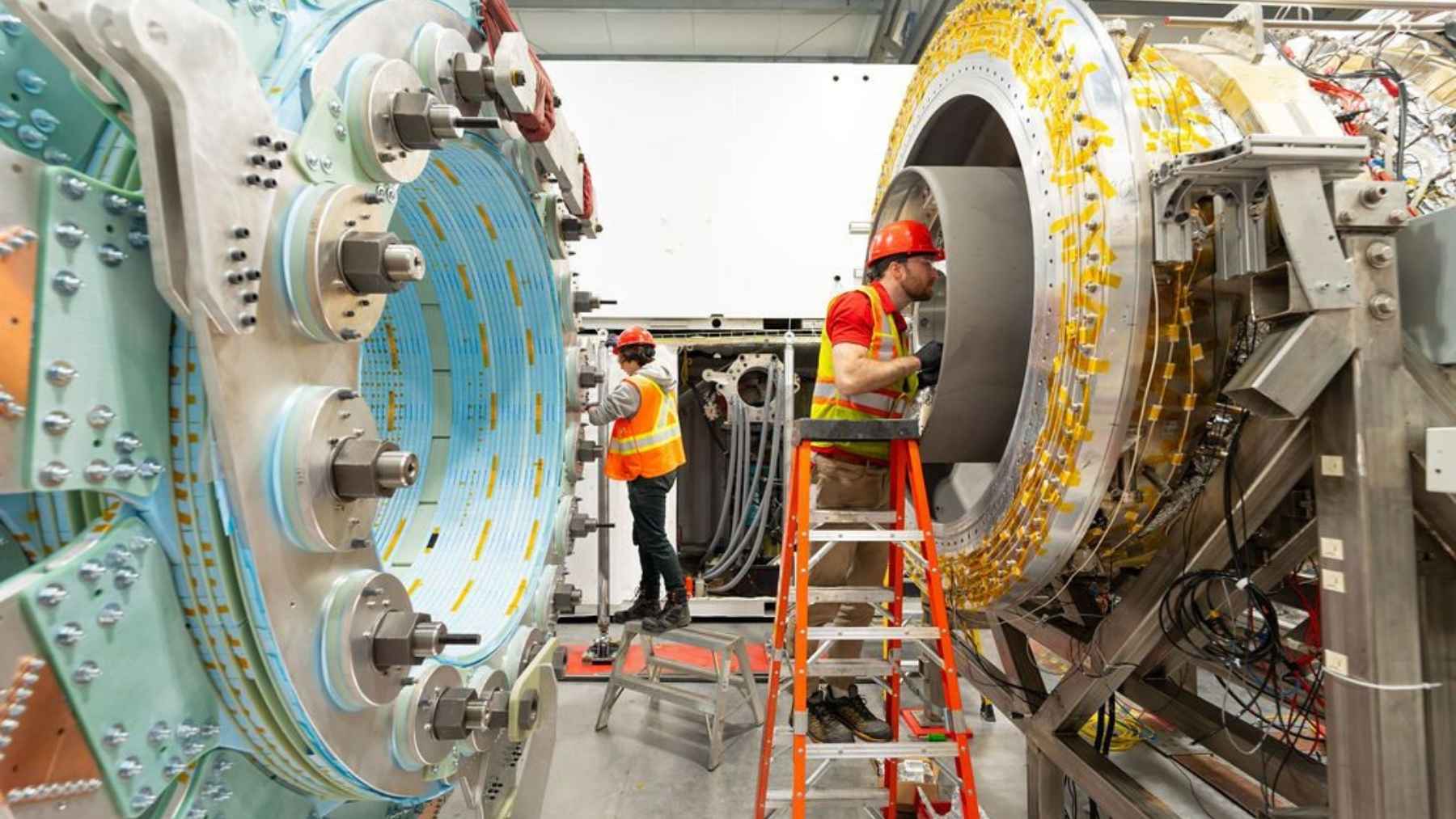
If you’ve got an electric water heater in the basement, you already get the basic idea. A heating element sits in the tank and warms the water around it. In a steam generator, that element is about 5,300 thin metal tubes bent into a U, with water from the reactor running through them.
More tube means more wall for the heat to pass through. That’s why each of these generators packs nearly 75 miles of it, according to EDF. The Nuclear Regulatory Commission says a steam generator can have anywhere between 3,000 and 16,000 tubes, so 5,300 is actually on the modest side.
I divided that tubing total by the tube count, and each tube comes out to roughly 74 feet. That’s a touch longer than the 72-foot generator is tall, which only works because every tube climbs up one side of the bundle and comes back down the other, like a hairpin.
Each generator’s about 16 feet across at its widest, and EDF lists it at 474 tons empty. That’s a little more than two Statues of Liberty, which the National Park Service puts at 225 tons. France built that one too, for what it’s worth.
So why swap them at all? The tubes wear out. Over decades of service they can corrode, crack and pick up deposits, and the NRC says tubes with damage past a certain limit get plugged and taken out of use. Plug enough of them and, as you’d expect, the generator can’t move as much heat.
EDF hasn’t said how worn Unit 3’s current set is. Silvère Roger, the plant’s director, wrote on LinkedIn that the new ones will help the reactor keep running safely for longer.
They took the long way to Normandy
Framatome built all four at its plant outside Chalon-sur-Saône, in Burgundy, a bit under 300 miles from Paluel as the crow flies. They didn’t take a straight line.
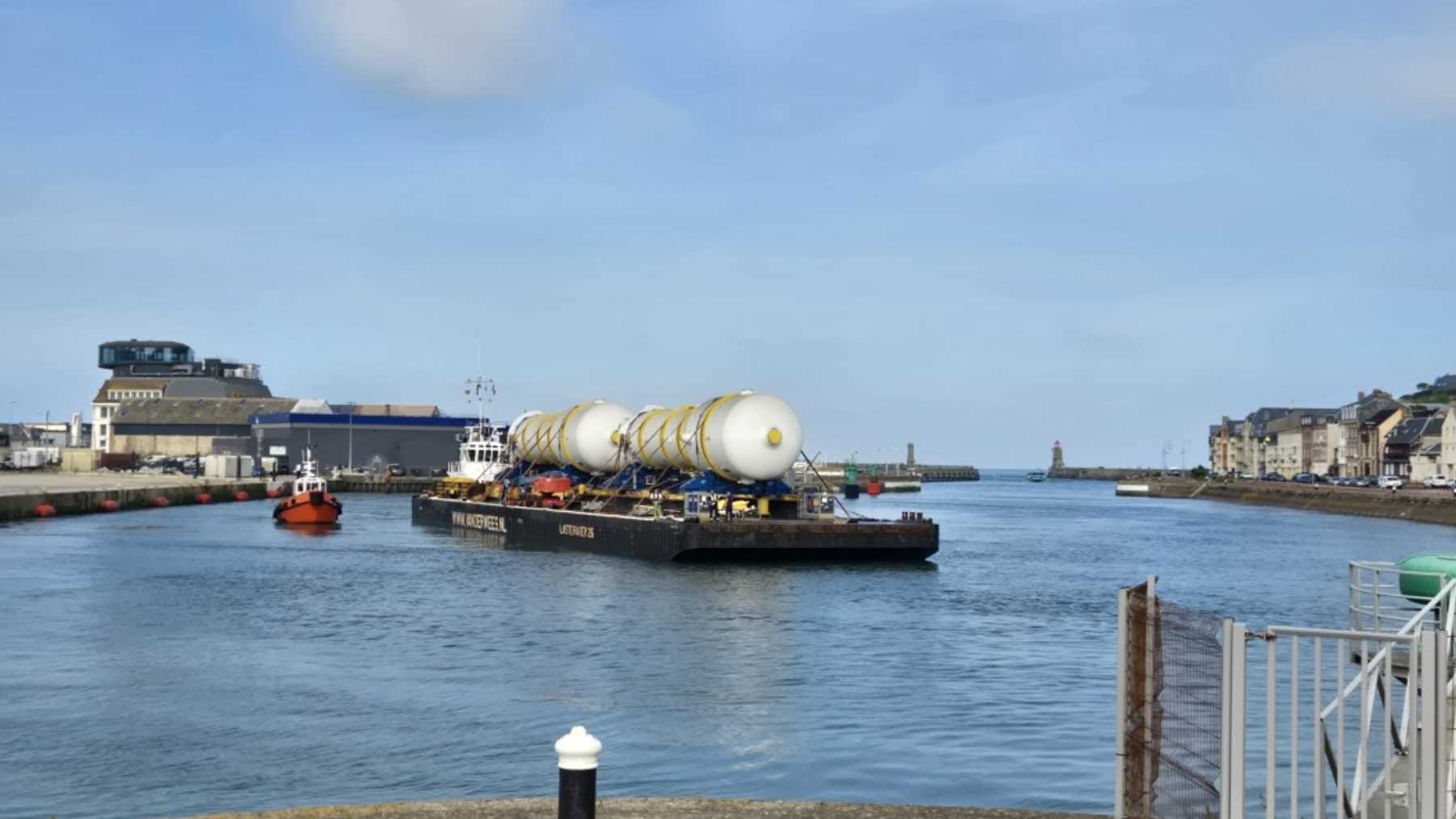
According to EDF’s announcement, the generators went by river barge to Fos-sur-Mer, a port near Marseille, and then by sea to Dieppe on the English Channel. That meant leaving the Mediterranean and going all the way around Spain and Portugal. At Dieppe, they were loaded two at a time onto a barge for the short run down the coast to the port of Fécamp. Then came the road.
So why not just put them on a truck in Burgundy?
I’d bet the answer is mostly bridges. A road trip that long would cross plenty of them, and every one has a weight limit, while a barge simply floats. EDF’s announcement doesn’t spell out its reasoning, though. It does say the whole thing hinged on the weather at sea and the tides, and that the exact convoy dates wouldn’t be known until a few days ahead. Frankly, the sea leg would worry me most, since you can’t exactly pull over in the Bay of Biscay.
The last 22 miles took three days
The road leg started at the port of Fécamp and ran through the town of Cany-Barville and on to Saint-Valery-en-Caux, before turning onto the road to the plant. Roger put it at about 22 miles a trip. Each convoy carried two generators and stretched about 262 feet, most of a football field, and EDF planned three days per trip, with rolling road closures and detours along the way.
The first convoy rolled out of Fécamp on Monday morning, August 31, according to ICI, the local radio network run by France’s public broadcaster. It reached Cany-Barville the next day, and the town’s main shopping street was cleared of cars from Tuesday until the middle of Wednesday afternoon. Each generator rode on its own trailer, about 98 feet long. One pharmacist told ICI the whole thing filled the street and slid past a cross with an inch or two to spare. Honestly, I’d have been out there with a camera too.
Since these generators haven’t been used yet, there’s nothing radioactive riding on those trailers. It’s just a lot of steel moving very slowly.
Three days for 22 miles works out to about 7 miles a day. You could walk it faster. The biggest piece of the retired Florida reactor we covered earlier this month averaged 8 mph across Texas, a pace that would’ve covered this whole route in under three hours.
The second pair followed about a week later, going by EDF’s schedule. I couldn’t find an official date for that convoy, but Roger says all four were on site by early September, and that crowds of locals lined the roads every time one came through.
Figures: EDF and the Paluel plant’s director, converted to U.S. units.
So when do they actually go in?
France has every reactor stop for a top-to-bottom checkup once a decade. Unit 3’s next one is its fourth, the 40-year checkup, and that’s when the new generators get swapped in.
Until then, all four sit in storage at the plant, and Unit 3 keeps going with the generators it already has. Getting them on site this early seems like a pretty sensible call to me, given how much of the trip depended on the weather and the tides.
Unit 1, next door, went through its own 40-year checkup this year, and that’s when its condenser got 80,000 new titanium tubes. That’s a different machine, out in the turbine hall, so don’t mix up the two tube counts.
Moving a steam generator into a reactor building is an adventure of its own. An Ohio plant couldn’t fit its 470-ton pair through any door, so it cut a hole through its containment to swap them. EDF hasn’t said yet how it’ll get these four inside, or where the four old ones will end up.
So the new generators have about a year to kill. EDF has Unit 3’s outage starting in July 2027, and it expects to start moving them into the reactor building that fall.