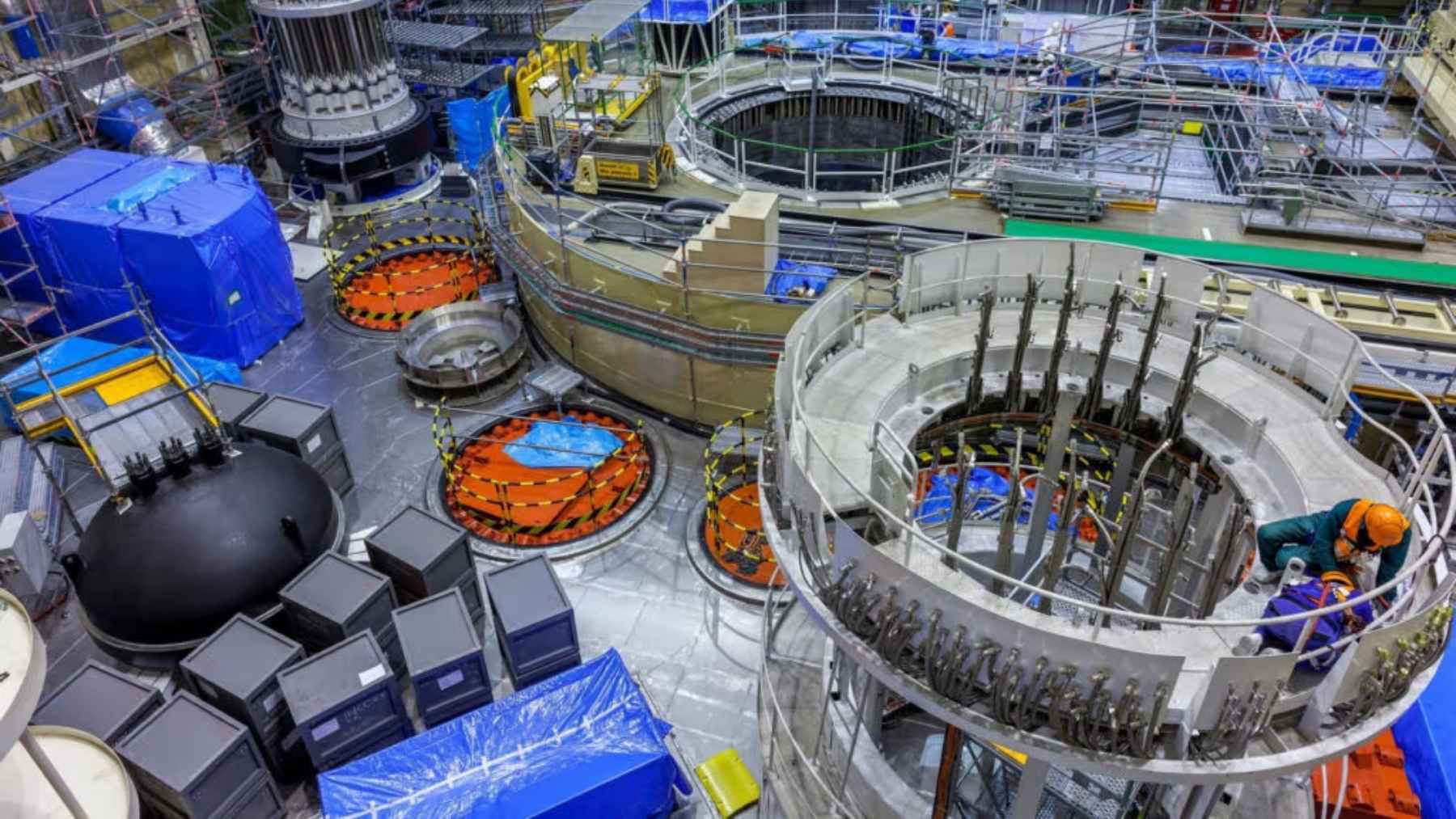

- 3 MONTHS AGO · ENERGYJapan switched one reactor back on at the biggest nuclear station ever built after fourteen years dark, and three weeks later the utility that owns it started switching off solar farms for the first time, up to 3,290 megawatts on a single afternoon
- 3 MONTHS AGO · ENERGYA 1,650-megawatt French reactor is selling power on the English Channel, the most powerful unit in the fleet, a 425-ton vessel and the largest steam turbine ever built — and on September 26 it goes dark for 350 days because the rulebook says so
- 1 MONTH AGO · ENERGYAn 850-megawatt battery pushed 700 megawatts into the grid for two straight hours, pulled almost 850 back out of it, and the grid operator has now cleared it to run at full power, nearly a year after a transformer failure cut its grid contract in half
- 1 MONTH AGO · ENERGYA 5-megawatt reactor sealed in a 1,000-ton steel vault on a Texas university campus got federal sign-off on its final safety analysis, one review away from permission to go critical, with the full-size core of a 20-megawatt reactor fueled for a quarter of the power
- TODAY · THIS ARTICLEA 471-megawatt reactor in Slovakia started climbing toward full power at 3:33 in the afternoon, its operator told the neighbors to expect loud tests on the safety valves that blow off steam, and three weeks in, the unit’s still drawing 17.7 megawatts from the grid
You know that noise that pressure cookers make? It’s like a loud, angry hiss, and it’s usually enough to clear the dog out of the kitchen.
Slovenské elektrárne, the utility that runs all five of Slovakia’s working reactors and generates 66% of the country’s electricity, just gave the people around its Mochovce nuclear plant a heads-up about something along those lines.
In its October 2 notice, the company said it’s testing the safety valves that release steam from the steam generators on Mochovce 4, its newest reactor, and that those tests are “usually accompanied by loud noise.”
So why now?
Mochovce 4 is finally climbing toward full power. Engineers started the climb at 3:33 p.m. local time on September 21, after Slovakia’s nuclear regulator signed off, according to Slovenské elektrárne. The unit’s a 471-megawatt VVER-440, a pressurized water reactor built to a Soviet design. That’s the same basic kind of reactor that runs at most nuclear plants in the US, and the last time we checked in on this one, its 349 fuel assemblies had just gone in.
Branislav Strýček, the company’s chairman and CEO, called the start of the climb “one of the final major milestones before Unit 4 is put into operation.” He’s right, though it’s a pretty long final stretch.
Why not go straight to 100 percent?
For the same reason you don’t take a brand-new engine to redline on the way home from the dealership. Slovenské elektrárne plans to raise the reactor’s power in seven stops. At every stop, its engineers put the reactor, turbines, generators, and safety systems through dozens of checks. The regulator then reviews the results and decides whether they can move up to the next level. The first stop, at 5%, is basically a systems check. Nothing goes out to the grid yet.
The 20 percent stop matters most if you’re waiting on electricity. At that point, there’s enough steam from the steam generators to spin up the turbine generators and synchronize them with the Slovak grid, and the first megawatt-hours can begin flowing.
Synchronizing means getting a generator in step with the grid before you connect the two. The generator has to match the grid’s voltage and frequency (50 cycles a second in Europe, 60 in the US), because closing the breaker while they’re out of step can wreck equipment.
From there, the reactor climbs through four more stops between 35 and 90 percent for what the company calls dynamic tests, which look at how the plant’s systems behave together under different conditions. Then comes the final exam, a run of 144 hours straight at 100 percent (that’s six full days) to show the unit hits its design numbers.
Slovakia’s Nuclear Regulatory Authority says the operator can’t even ask for an operating permit until every one of those tests is done, evaluated, and written up. It’s a pretty slow way to switch on a power plant, and frankly, I wouldn’t want it done any other way.
Figures: Slovenské elektrárne, including its published commissioning output data.
There’s a 39-foot steel vessel in the middle of all this
The chain reaction in a reactor like this happens inside its pressure vessel, the thick steel container that holds the fuel and the water flowing through it. Slovenské elektrárne’s specs put the vessel at about 38.7 feet tall and 11.6 feet across. Škoda JS, the Czech company that built both of the plant’s new reactors, made it. A vessel of this design weighs about 237 tons empty, going by figures the Czech nuclear regulator publishes for this model at the Dukovany plant.
That vessel’s where the reactor first went critical, at 10:10 p.m. on August 6. Critical sounds scary, but all it means is that the chain reaction’s keeping itself going, with each uranium atom that splits setting off about one more split. Every working reactor runs critical, all day, every day.
Running flat out, the reactor makes 1,375 megawatts of heat, and the plant turns that into 471 megawatts of electricity, a bit over a third. The water that carries the heat away is kept under such pressure that it remains liquid at well over 500°F. It runs out to the unit’s steam generators, where it boils water in a separate loop that never touches the fuel. That steam spins the turbines.
How loud is loud?
Slovenské elektrárne didn’t put a number on it. It doesn’t give dates or times for the tests either.
As for the valves, they’re basically pressure-relief valves for the steam generators, the same idea as the little weighted valve on top of a pressure cooker. If the pressure inside climbs too high, they pop open and vent steam until the pressure drops. From the looks of it, testing them means making them do exactly that on purpose.
The company calls it a standard operation. It runs the same tests whenever one of its other reactors comes back from a scheduled refueling and maintenance outage, which each of them undergoes at least annually. Conventional power plants do them too, since the law requires regular checks of the safety devices on any pressure vessel.
And the steam in question comes from that separate loop, the water that never touches the fuel. Honestly, a loud valve test seems like a pretty reasonable way to give the neighbors a heads-up.
So when does the grid get its first megawatt?
Reactors usually make the news for coming off the grid, like the two French reactors shut down by hand before jellyfish could clog their seawater screens. Mochovce 4 hasn’t even gotten on yet.
I went through the commissioning output data that Slovenské elektrárne publishes for the unit, which is available in 15-minute intervals. Every reading in it, going back to mid-September, is below zero, and around midday on October 13, Mochovce 4 sat at minus 17.7 megawatts.
A negative number there means the unit’s drawing power from the grid to run its own pumps and equipment, rather than sending any out. So at the moment, Slovakia’s newest power plant is technically a customer.
The company hasn’t announced a date for the 20% stop, and its press release only says the climb will play out over the coming months. Once the unit’s fully up and running, it’s expected to cover about 13% of Slovakia’s electricity consumption, according to the regulator.
Some of its 471 megawatts will always be used to run the plant itself, so you’ll see a bit less than that reach the grid. I wouldn’t set my watch by any single date, since start-up schedules like this one slip all the time.
Still, as of October 13, the delivery schedule Slovenské elektrárne publishes alongside that data had Mochovce 4 sending its first 28 megawatts to the grid on October 17 and reaching roughly 440 megawatts by New Year’s Day.
 An 882-ton boiler, one of eight at a closed nuclear plant on the English coast, is slated to be jacked and slid out of its bay under a contract announced late last month, a job meant to take away about a third of the buildings still standing on the siteEnergy · 5 days ago
 A 216-foot steel vessel 60 feet high is being assembled nearly a mile underground in South Dakota, one of two tanks that will take 2,600 beams lowered one by one down a shaft and will each hold about 17,000 tons of liquid argon at about 300 degrees below zeroEnergy · 5 days ago
 A 23-foot-wide steel platform on three 90-foot piles driven 45 feet into the bed of a Massachusetts canal lowers tidal turbines up to 10 feet across into a 4-knot current on a lifting arm, then raises them back out of the water so engineers can service them dryEnergy · 6 days ago
 @halbos ROOKIE1 month ago