
A refueling outage is about the most scheduled thing that happens at a nuclear plant. The date gets picked a year or more out, hundreds of contractors get booked into every motel within an hour’s drive, the parts arrive on trucks weeks ahead, and when the day finally comes, the operators ease the reactor down over hours and open it up. Waterford 3, Entergy’s reactor on the Mississippi in Killona, Louisiana, had its outage lined up for the morning of October 17.
Then at 10:45 the night before, the plant shut itself down and skipped the ceremony.
Entergy’s own account went to the Nuclear Regulatory Commission a few hours later, and it’s logged as Event Number 58501 in the agency’s event notification report for October 19. The reactor was at 75 percent power on the way down to its refueling shutdown when the turbine tripped. A turbine trip in a plant like this takes the reactor with it, so the reactor tripped automatically and every control rod went into the core. So far, that’s the system doing what it’s built to do, and you’d expect nothing less.
The next line in the filing caught my eye. Entergy told the NRC that “Fast dead bus transfer of the ‘2B’ bus failed,” and that emergency diesel generator B started on its own and picked up the 3B bus. The plant also got an emergency feedwater actuation signal. Entergy says the unit is stable in Mode 3, hot standby, with decay heat going out through the main condenser, and that routine testing of the turbine’s electrohydraulic system was underway when the turbine tripped. The cause is still being investigated. Remy Devoe made the call to the NRC operations center at 3:00 a.m. Eastern on October 17, a little over three hours after the trip, inside the four-hour window the rule gives for an automatic shutdown with the reactor critical.
So what’s a fast dead bus transfer?
You might assume a nuclear plant runs its own pumps and fans off the grid like everybody else. It mostly doesn’t. While the unit is online, the plant’s big internal loads hang off its own generator, and when that generator drops off in a trip, those loads have to jump to the outside grid instead. The jump happens through breakers in a fraction of a second, fast enough that the pumps don’t even notice, and that’s the fast dead bus transfer. On October 16 it worked for the rest of the plant and didn’t take on the 2B bus.
Which is exactly the situation the emergency diesels are sitting there for. The 3B bus is one of the safety buses, the ones feeding the gear you’d need if things went sideways, and diesel B is built to start itself and carry that bus when its normal supply disappears. From the way the report reads, that’s what happened: the transfer failed, the bus went dead, the diesel caught it. The emergency feedwater signal is the plant deciding the steam generators need water from the backup pumps rather than the normal ones, which is pretty standard after a trip, since the main feedwater gets cut back hard when the turbine goes.
So was the plant running on a diesel in the dark? Not as far as I can tell. The report says decay heat’s going to the main condenser, and you don’t get to use the condenser without the normal side of the plant and offsite power still being there. The diesel was carrying one bus. That’s a long way from a plant on its last generator, and it’s frankly the kind of distinction the NRC’s event pages leave you to work out yourself.
Decay heat, if you’ve never had to think about it, is the heat a reactor continues to produce after the chain reaction stops. The fission products in the fuel go on decaying and giving off energy, a few percent of full power at first and tailing off from there, so a reactor can’t just be switched off like a lamp. Somebody has to keep water moving through the core for days.
I don’t know why the 2B transfer failed, and neither does the public version of this report. Entergy hasn’t named a breaker, a relay or a bad signal, and a trip during a routine turbine test is a slightly odd combination the company will have to explain in its licensee event report. That filing is due within 60 days under the NRC’s rules, which puts it in December, and I wouldn’t expect much before then.
This was supposed to be the boring kind of shutdown
A pressurized water reactor like Waterford 3 runs on one load of fuel for about 18 months, give or take, and then the whole plant stops for a few weeks so the crew can swap out the oldest third of the fuel assemblies and do all the maintenance you can’t do on a reactor that’s running. That’s a refueling outage. The last stretch before one is usually a slow slide in power, because the fuel is wearing out, and the final step is a deliberate, hands-on shutdown with everybody in the control room expecting it.
Waterford 3 was most of the way through that slide. The NRC’s daily reports had the unit at 97 percent for most of September and the first days of October, then at 91 percent from October 14 to 16, and by Friday night it was at 75. According to NukeWorker, an industry outage tracker, the plant had been online for 498 days since its last refueling, which wrapped up in June 2025, aligning with the 18-month cycle these plants typically run.
So the plant made its shutdown date. It just made it early, with the rods dropping on a trip signal instead of an operator’s say-so, and with a diesel running that nobody had planned to run.
Does that matter? For the people around the plant, not in any way I can see from the filing. The NRC logged it as a non-emergency, and what Entergy describes is a plant sitting stable in hot standby with its normal cooling path intact. For the outage crew, it probably matters a bit. A refueling outage runs on a schedule measured in hours, and an unplanned trip leaves the engineers with a transfer failure and a turbine investigation to close out before the paperwork lets anyone put fuel back in.
The outage has a bigger job than fuel this time
Here’s where the timing gets interesting, at least to me. Entergy replaced all three low-pressure turbine rotors at Waterford 3 during its 2025 refueling, and in 2025 it asked the Louisiana Public Service Commission for approval to complete a power uprate based on those new rotors. The plan the company filed in LPSC docket U-37677 would increase the plant’s output by about 45 megawatts, from a maximum dependable capacity Entergy puts at 1,152 megawatts to roughly 1,195 megawatts, with most of the work scheduled for the fall 2026 outage and the rest for 2029.
An uprate like this doesn’t change the reactor. The core keeps producing the same heat, and the plant squeezes more electricity out of it with a more efficient turbine and the surrounding equipment. Entergy told the commission it could add the output from the same reactor thermal power. I can’t find a commission ruling on the application, and Entergy’s own filings as recently as March still described it as pending, so I’ll leave it there. The point is that this was always going to be a busier outage than most, and it started with a trip.
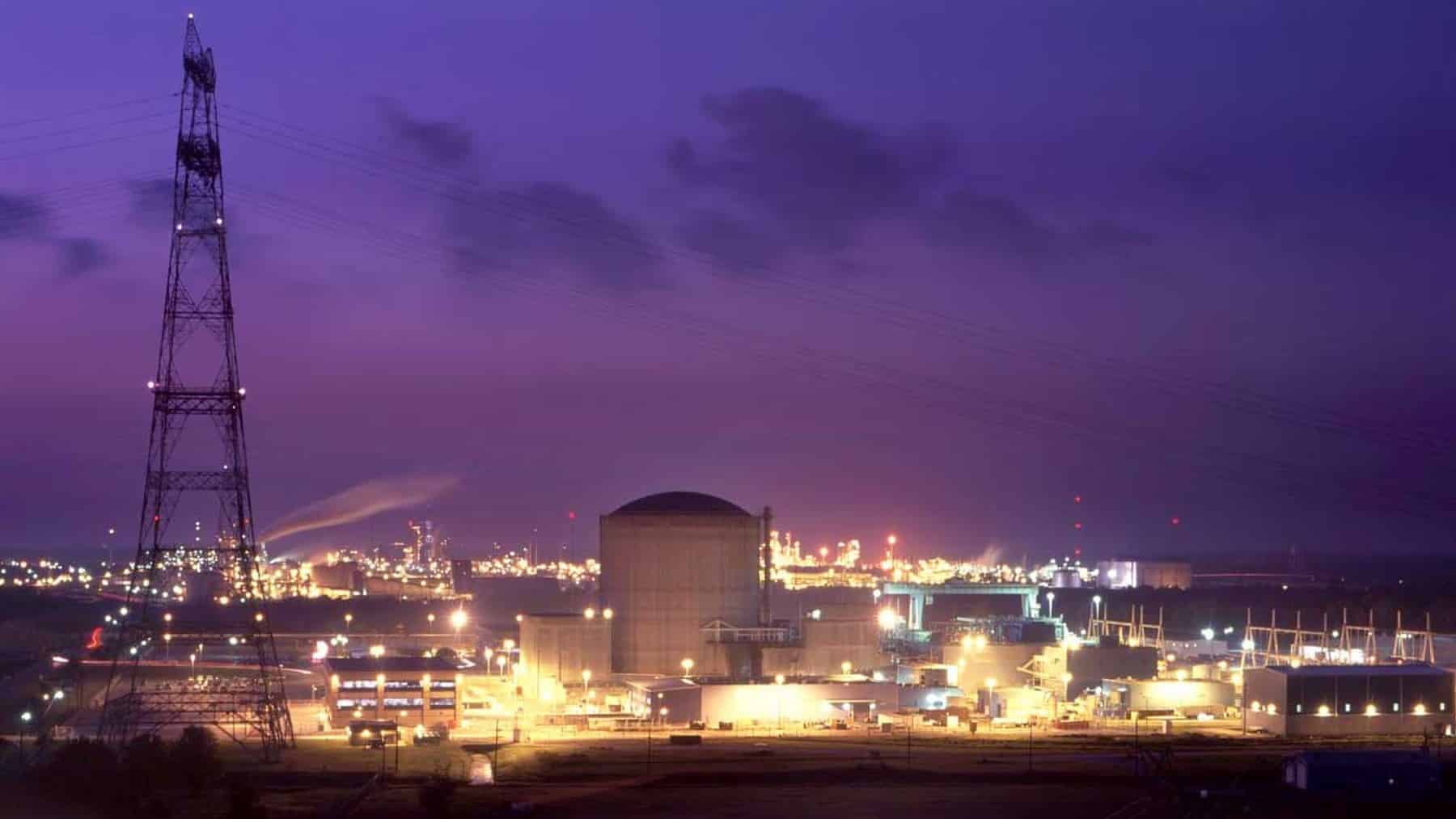
Waterford 3 itself is a Combustion Engineering pressurized water reactor that entered commercial service on September 24, 1985, draws its cooling water directly from the Mississippi, and holds an NRC license through December 18, 2044. Entergy lists about 745 employees at the site.
Three US reactors, three different ways to stop
If you’ve been following these event reports with us, this is the third one in about two months. In August, three control rods dropped into St. Lucie Unit 1 in Florida at full power and the crew tripped it by hand. In September, a bad instrument at Dresden 2 in Illinois convinced half the protection system the rods were moving when they weren’t, and that crew tripped it by hand too, at 4:31 in the morning.
Waterford is a different animal. Nobody pushed a button. The turbine went, the reactor followed automatically, and the only surprise was on the electrical side. Of the three, I’d argue it’s the most ordinary trip, because turbine trips are the bread and butter of unplanned reactor shutdowns, and the least ordinary piece of it is a bus that didn’t switch over when it was supposed to. That’s the detail I’d want the licensee event report to focus on.
Entergy told the NRC the cause of the turbine trip is still under investigation, and the agency’s power reactor status report for October 21, 2026 lists Waterford 3 at zero percent, five days into an outage that was supposed to begin the morning after it did.
Image Credit: entergy.com