
Anyone who’s ever pulled up the floor in an old house knows contractors leave stuff behind. A coffee can of bent nails, a lunch receipt, maybe a pack of cigarettes from the Eisenhower administration. It’s basically a tradition.
The people who built Glen Canyon Dam seem to have left detonation cord.
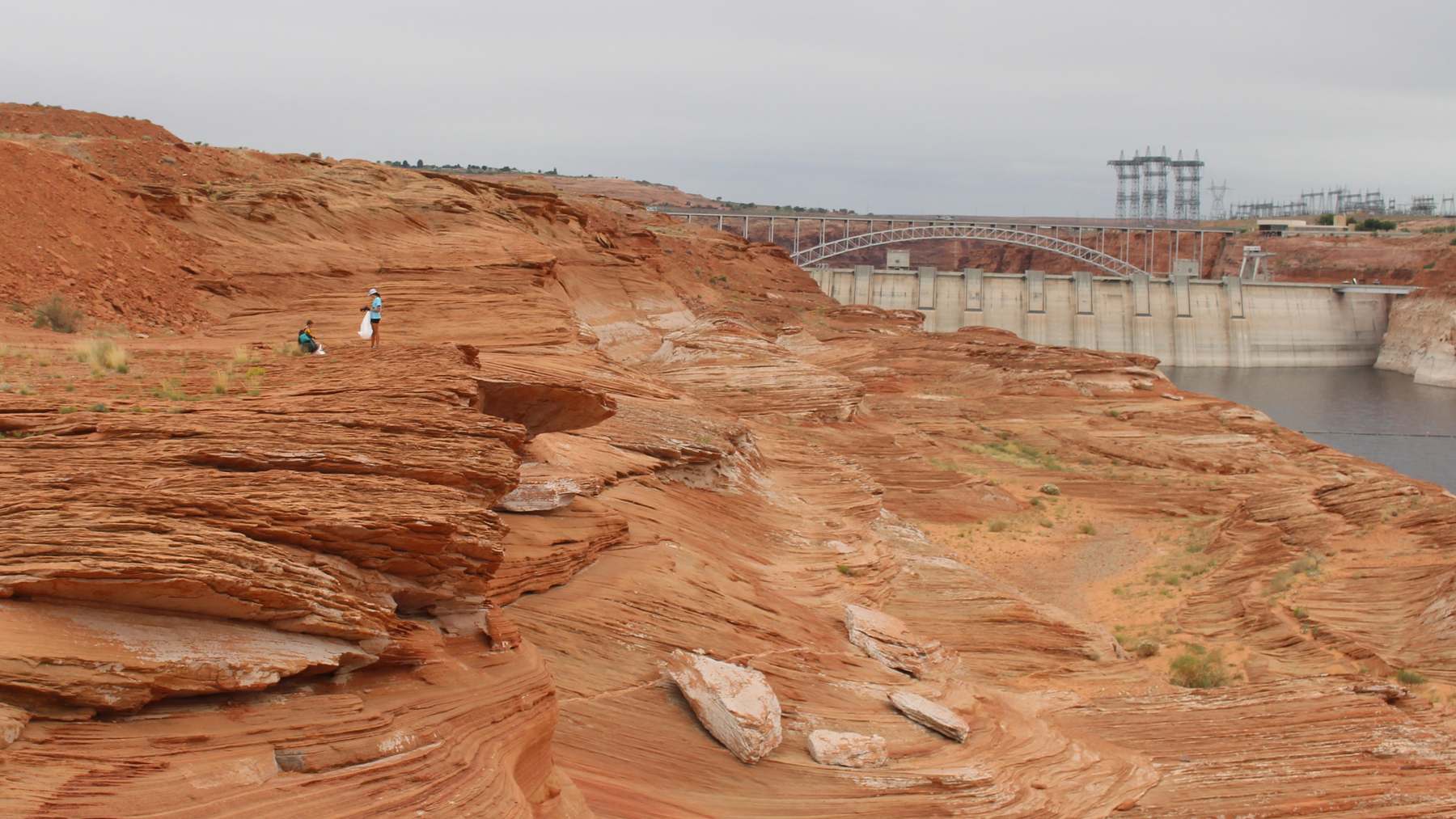
On the morning of Friday, October 30, the National Park Service shut Chains Road and The Chains, a day-use spot just east of the dam, outside Page, Arizona. The park’s alert says old cord turned up in several boreholes along a service road to the dam, one the public can’t drive. An Explosive Ordnance Disposal team took a look and tied the material to the years when the dam was first built. The Park Service hasn’t said whose team it was.
Arizona’s Family, the Phoenix TV news operation, calls it a bomb squad, dates the material to the 1950s and 1960s, and reports that officials are now working out whether to remove it or detonate it right there.
So should you be worried about the dam?
Probably not, at least according to the people standing closest to it. The Park Service says there’s no threat to the public and that “the risk to the dam remains low.” And while at least one headline made it sound like the cord was in the dam itself, the Park Service’s wording puts those holes along the road. The closure only covers Chains Road and The Chains, so as far as I can tell, your Lake Powell houseboat trip isn’t affected by this.
So what is detonation cord?
Picture a heavy clothesline with explosive where the fibers should be. OSHA’s blasting rules describe it as a flexible line with a high-explosive core, and it’s strong enough to set off the charges it touches.
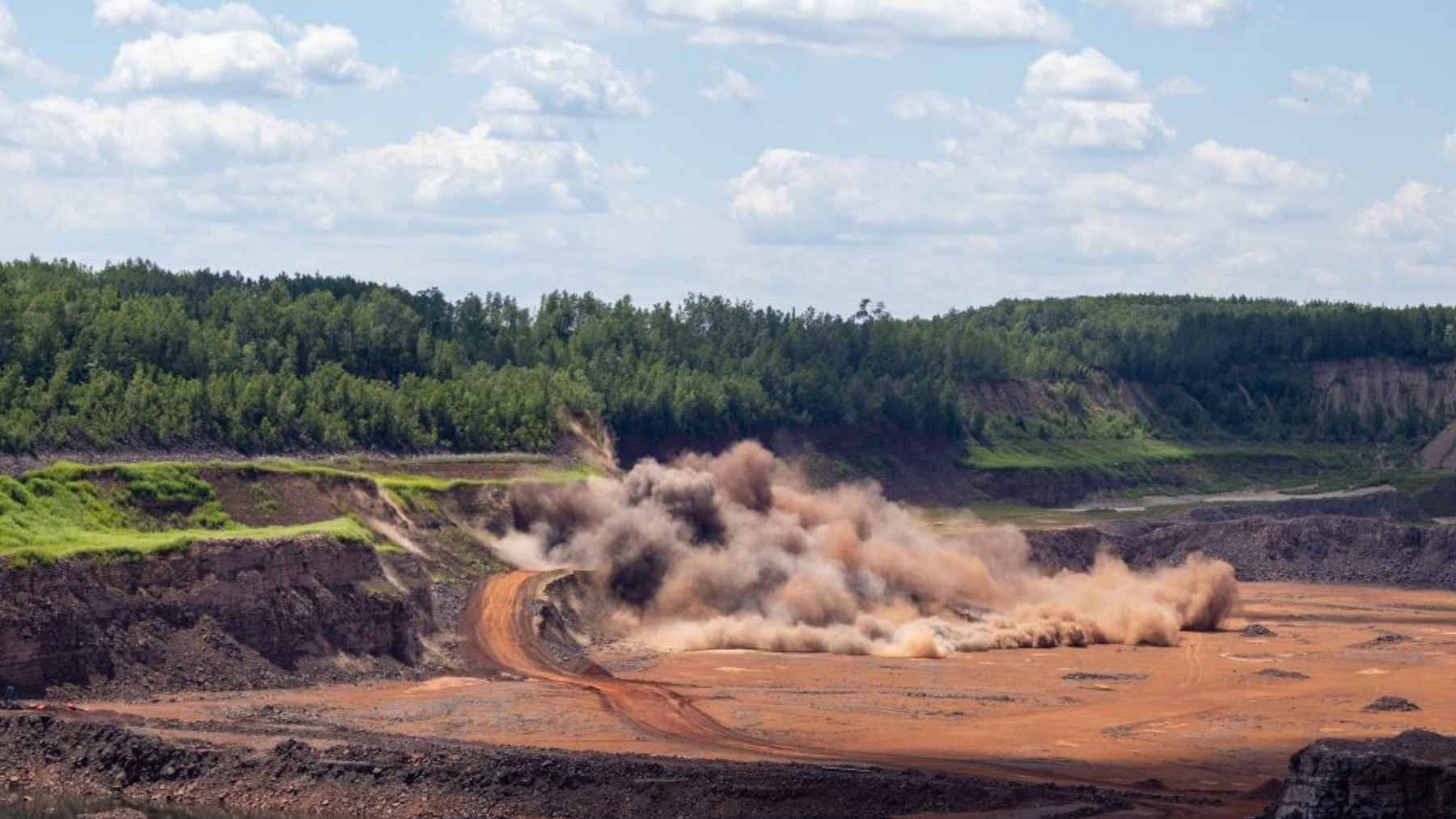
Blasters use it as a very fast fuse. Forget the slow-burning fuse from old cartoons. This stuff detonates, so one line can fire a whole row of holes at pretty much the same moment. I’d call it the wiring of a blast more than the blast itself, though I still wouldn’t want to meet it with a shovel.
A borehole is exactly what it sounds like. You drill down into the rock, load the hole, fire it, and the rock breaks.
Here’s what I can’t tell you: how many holes there are, how much cord is in them, or how far they are from the dam. “Several” is the only count anyone has offered. The Park Service also hasn’t said who found them or what that person was doing at the time. It’s only been a few days, so I’d expect some of that to come out.
Why would there be blasting holes along a road?
Because this canyon got blasted a lot, long before any concrete showed up. According to the Bureau of Reclamation, the work kicked off on October 15, 1956, with President Eisenhower pressing a telegraph key in Washington to fire the first dynamite blast.
What followed was years of moving rock. Two diversion tunnels went through the canyon walls, each one 3,000 feet long and 45 feet across, so the Colorado River could be sent around the site. Workers then dug 137 feet down to reach bedrock. A two-mile access tunnel also got blasted through the east wall so heavy equipment could reach the canyon floor.
The first concrete didn’t go in until June 1960, and from there the job ran around the clock.
The Chains fits into that history pretty neatly. The Park Service’s page for the place says it was a construction staging site in the 1960s. These days it’s where people go to hike, fish and swim. That same page warns that cliff jumping there is against the law and can get you killed, which I’d guess was the scariest thing anyone associated with the area until last week.
So how do you lose track of cord in a hole for 60-odd years? My guess is a charge that never went off, or a hole someone loaded and never shot. Blasters call a charge that fails to go off a misfire. But that’s only a guess, and nobody involved has said it. On a job that size, running 24 hours a day, I could see a few holes slipping through the cracks.
You may also be wondering whether the shrinking lake had something to do with this. Lake Powell was sitting at a record-low 3,517.24 feet on September 10, according to NASA, and we’ve spent plenty of time on what that means for the dam’s turbines. I can’t find anyone connecting the two, though, and the holes are along a road, so I wouldn’t assume it.
Why is the risk to the dam rated low?
The alert doesn’t explain the reasoning, so this part is me thinking out loud. I’m not a blaster, and you should take the disposal team’s word over mine.
Start with what the cord would be up against. Glen Canyon Dam stands 710 feet above bedrock, which makes it the second-tallest concrete arch dam in the country, behind Hoover Dam and its own set of problems at 726 feet. It’s 25 feet wide at the crest and more than 300 feet wide at the base.
It also holds 4,901,000 cubic yards of concrete. Reclamation’s brochure says you could lay four lanes of highway all the way from Phoenix to Chicago with that much, and it’s a comparison I’m frankly happy to steal.
Behind all that sit eight generators rated at 1,320 megawatts and a lake that can hold 25.16 million acre-feet when it’s full. So you’d expect the people in charge to take this seriously, and shutting a popular swimming spot over a low risk seems pretty reasonable to me. Low isn’t zero, after all.
So do they pull it out or set it off?
No one’s announced a decision yet, as far as I can tell. The Park Service’s alert only says that it, Reclamation and explosives experts are evaluating ways to deal with the material. The remove-or-detonate framing comes from Arizona’s Family.
Neither one sounds like a fun afternoon. Pulling it out means someone has to work around decades-old explosive material by hand or with equipment. Setting it off means a controlled blast on a site where I’d guess no one’s needed one in a long time, though admittedly this canyon has seen plenty of those.
For what it’s worth, OSHA’s rule on misfires tells blasters not to try extracting explosives from a misfired hole. The default is to fire it again, and if that’s a hazard, to wash the explosives out with water. Those rules were written for working construction sites, and I don’t know how much they apply to a bomb squad looking at cord that old. But they do suggest which way the profession leans.
If you’ve got a trip to Page coming up, the Park Service’s request is simple: obey the closure signs and keep out until it says otherwise. When I checked on November 3, the alert for Chains Road and The Chains was still up, with no reopening date listed.