- 4 MONTHS AGO · ENERGYMinnesota just plugged a 710-megawatt solar farm into a coal plant that once burned 30,000 tons a day, the two sharing wires until the last boiler dies in 2030 — and one retired coal unit will keep spinning, fuel-free, to steady the solar that replaced it
- 4 MONTHS AGO · ENERGY177,675 solar panels are going up beside 940 megawatts of coal in Minnesota and plug into the grid through 2.5 miles of line, while 255,000 more from the same auction need 3.5 miles and a substation built from nothing
- 2 MONTHS AGO · ENERGYA 500-megawatt battery passed its last reliability test at a shuttered Australian coal plant, plugged into the same 330,000-volt switchyard the plant’s four coal units fed for 50 years, and it can push a quarter of their power for two hours before it runs empty
- 2 MONTHS AGO · ENERGYA battery of ceramic bricks runs the current straight through the brick itself, no heating wire to burn out, and hands back heat at up to 3,275 degrees — more than the 2,642 a cement kiln needs — and one of the biggest cement makers on Earth just signed up for the first two
- TODAY · THIS ARTICLEAn 850-megawatt battery on the site of a demolished coal plant is now cleared to run flat out in Australia, and its job is to sit beside the state’s biggest power lines and dump its output in milliseconds when one drops — so the wires run harder than they safely could alone
You might remember this one if you’re into powerful, big batteries. Back in mid-September, we covered an 850-megawatt battery in Australia running its first full-power tests, holding 700 megawatts on the grid in New South Wales for two straight hours and then pulling nearly 850 megawatts back out. At the time, the tests hadn’t been verified yet, so the full contract couldn’t start.
Well, the tests apparently passed. On September 28th, Akaysha Energy declared the Waratah Super Battery at final commercial operations, and the state’s energy minister confirmed the same day that the Australian Energy Market Operator had cleared it to run at full capacity.
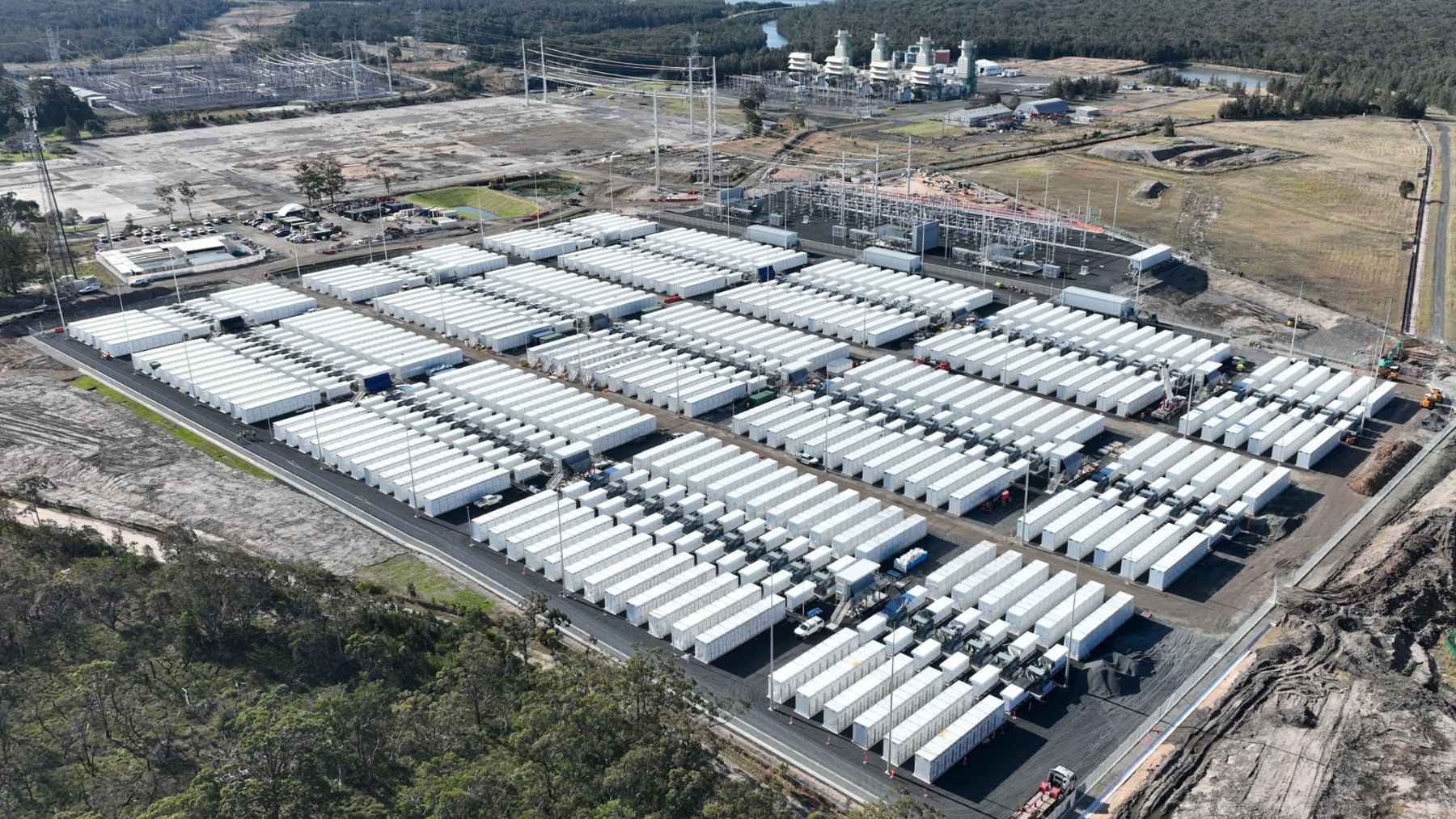
That’s 850 megawatts of output and 1,680 megawatt-hours in storage, built where a demolished coal plant used to stand north of Sydney, now fully on the clock 11 months and 10 days after a transformer failure cut its guaranteed service in half. This thing was supposed to be doing its job by late 2025. But there’s no time to dwell on that delay: Australia’s biggest battery is done practicing.
So what actually changed on September 28?
It took surprisingly less than you’d assume to get to this point. The hardware already proved itself during those September tests, and the battery had been running in a reduced state since August 2025.
What’s actually changed is the paperwork. AEMO signed off on full-capacity operation, and “final commercial operations” is corporate-speak for “the whole machine now counts.” I call it corporate speak for “we just wasted a year.” But again, I digress…
After the year this project’s had, I’d argue that’s the only milestone that matters. One of its three high-voltage transformers failed catastrophically in October 2025, a second came down damaged next to it, and the replacement had to be rebuilt from scratch. We went through that saga in the September piece, so I won’t drag you back through it.
Akaysha CEO Nick Carter called it “a landmark moment for Akaysha Energy, our project partners and most importantly, for NSW.” Which is standard CEO phrasing, but I’ll forgive the man during this little moment of celebration.
So why does a grid need a shock absorber?
Waratah’s a different animal from your average grid battery. It doesn’t mainly buy cheap solar at noon and sell it back at dinner. New South Wales runs its big transmission lines harder than they could safely run on their own, because this battery sits ready beside them. When a line drops out, the control system dumps the battery’s output into the network while paired generators wind down, so the stressed wires never see the surge.
Hitachi Energy, which supplied the project’s 288 power conversion systems and the two plant controllers running the show, says the setup detects a grid disturbance within milliseconds and tells the battery to respond. Hitachi’s Australian boss, Bernard Norton, calls the whole arrangement “a giant digital shock absorber,” and honestly, I can’t improve on that. Hitachi also signed on to service and monitor the electronics for 20 years, so someone’s going to be watching this battery’s vitals into the 2040s.
The state government says the battery can carry up to 340,000 New South Wales homes at peak demand at maximum output. But this differs from Akaysha’s own math from September, which boasted 970,000 homes for a single hour. These figures don’t exactly line up, although it’s tough to really make sense of it since they are using different time measurements. Treat both as a ballpark, I guess. The undisputed number here is the megawatts.
A billion dollars and 170 people at the peak
Akaysha says the project attracted more than $1 billion in private investment. That’s in Australian dollars, which is about $700 million for those of us in the U.S. And that’s still a serious check for a field of containers on an old coal site.
About 1,000 people worked across design and construction, with 170 on site at the peak of the build. Akaysha’s thank-you list ran five companies deep: Consolidated Power Projects Australia, Hitachi Energy, Wilson Transformer Company, REPT Battero, and EVE Energy. The New South Wales government ordered the project up, and Akaysha built it, owns it, and runs it.
Does a clear battery change anything for you if you live in Phoenix or Houston? Eh, not directly. But the trick it pulls off here, renting a fast battery so existing wires can run closer to their limits instead of waiting a decade for new transmission, is one that US grid operators are going to keep borrowing. Australia keeps building the test cases, like the pumped hydro cavern it’s digging half a mile inside a mountain, and the rest of us get to watch what works.
Akaysha dated the final commercial operations on September 28, 2026, and Hitachi’s monitoring contract on the site runs for the next 20 years.
 A 5,100-foot well in the woods of northern Minnesota flows gas that is 8 percent helium, more than 25 times the grade the industry calls worth producing, with no water and no pumping, and it sits in a state where no gas has ever been producedEnergy · 2 weeks ago
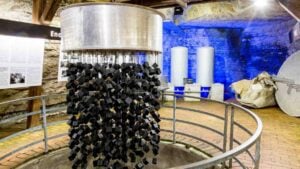 A reactor built from 664 two-inch uranium cubes hung on wires in heavy water under a German castle was Heisenberg’s last shot at a chain reaction, and two of the surviving cubes now show it needed about twice the uranium and heavy water it held, more of both than Nazi Germany hadEnergy · 2 weeks ago
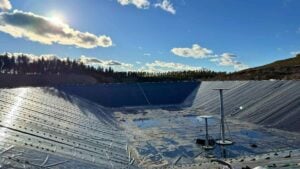 A 66-foot-deep gravel pit in Finland just started taking in about 100 million gallons of tap water, and once a nine-acre lid goes on top, it’s meant to hold enough summer heat at up to 194°F to cover as much as nearly a quarter of the town’s yearly heat demandEnergy · 2 weeks ago