
Most grid batteries earn their keep the boring way. They soak up cheap solar in the middle of the day, then sell it back around dinner time when everyone’s home and the AC is running. Australia’s biggest battery has a stranger job than that, and it spent Friday afternoon proving it can finally do it.
Between 1 p.m. and 3 p.m. local time, the Waratah Super Battery pushed an average of 700 megawatts into the New South Wales grid and held it there for two solid hours. Then at 4:20 p.m. it swung the other way and pulled close to 850 megawatts back out of the same network. Renew Economy, which has been following this machine for years, called that the biggest single charge the Australian grid has seen.
That’s the second test of its kind in three days. The first one ran on Wednesday morning, September 9, when the battery held at least 700 megawatts for about two hours. Two days before that, on Monday afternoon, it touched its full 850 megawatts for a five minute interval, which it hadn’t managed before.
So that’s three good days after almost eleven bad months.
So what’s it actually getting paid for?
Here’s where Waratah stops looking like the battery your local utility is building. It isn’t there to arbitrage power prices. It’s there to stand still.
New South Wales runs something called a System Integrity Protection Scheme, which is a mouthful, and which an American grid engineer would recognize right away as a remedial action scheme. The principle’s the same on both continents. You let your transmission lines carry more power than they could safely carry on their own, because you’ve got something parked nearby that reacts faster than any human operator if one of those lines drops out.
EnergyCo, the New South Wales agency that planned the project, lays out the sequence plainly enough. A control system spots an overload, tells the battery to dump power into the network, and at the same moment tells three paired generators to wind their own output down. Those three are the Metz solar farm, the Sapphire wind farm and the Tumut pumped hydro station. Power goes in at one end and comes off at the other, so the stressed corridor never sees the surge.
That control system isn’t a small piece of work either. Transgrid, the network operator, says it watches 36 transmission lines in real time from equipment installed at 19 sites around the state, and that it has to spot an overload and act within seconds.
So why pay for a battery instead of building another line? Because if you live in a part of the US where the wind and solar sits 400 miles from the people who need it, you already know how long a new line takes. A decade, if you’re lucky. Renting a battery so you can run the wires you’ve already got closer to their limits is, frankly, the cheap trick, and it’s the sort of thing nobody holds a ribbon cutting for.
The transformer took almost eleven months to replace
Now the bad months. On Saturday, October 18, 2025, one of the battery’s three high voltage transformers failed. Akaysha Energy, which owns and runs the site, called it a catastrophic failure in its own statements at the time, and a second transformer came down damaged alongside it. Energy-Storage.news reported that the dead one was beyond repair and had to be rebuilt from scratch, with the manufacturer lining up long lead materials before production could even start.
For most of the year since, the battery has owed 700 megawatts of guaranteed service and delivered 350.
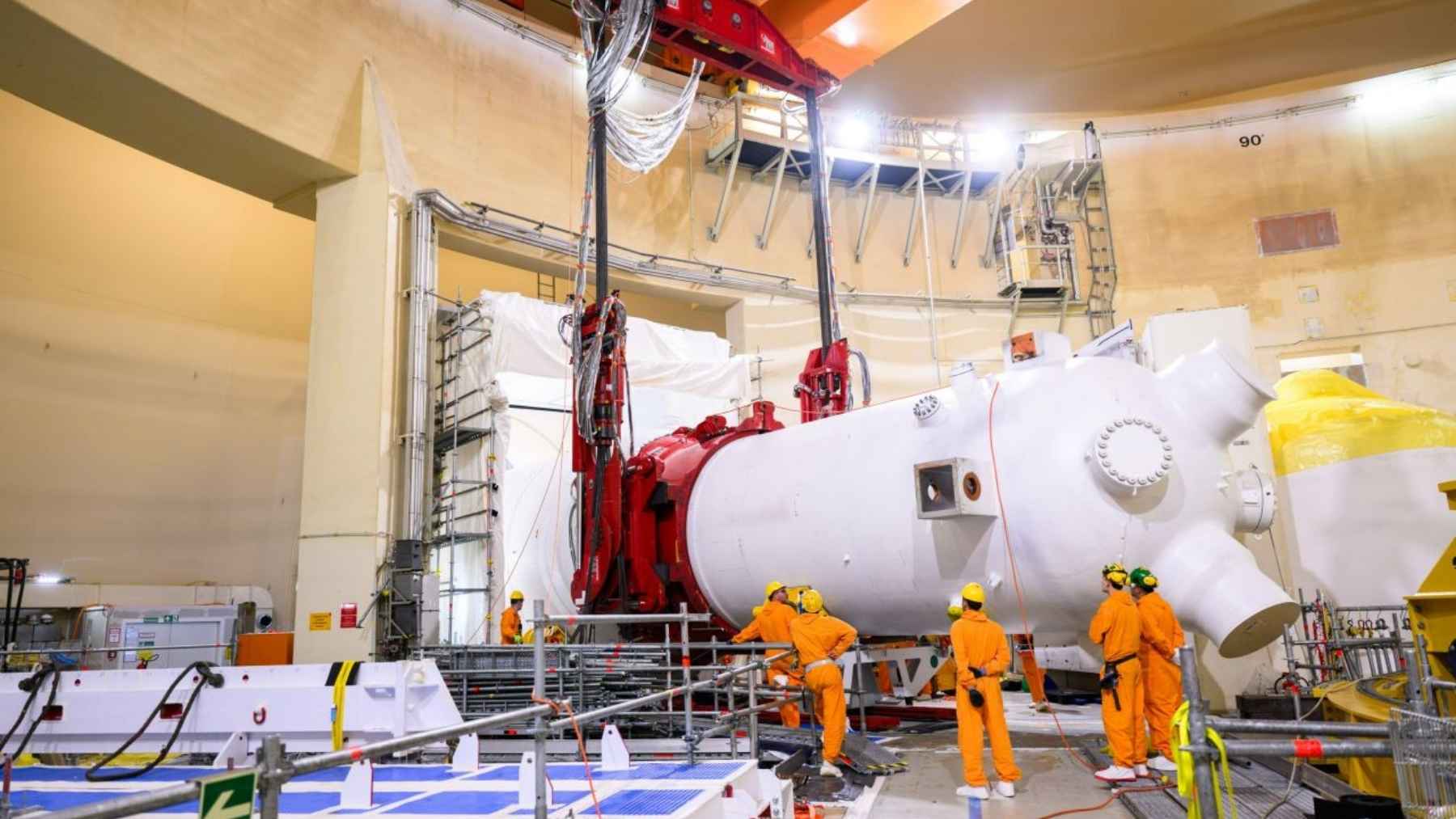
The damaged transformer went back into service in June. The replacement for the dead one, all 187 tons of it (170 metric tons), arrived and was energized in early September, and that’s what made last week’s tests possible at all.
I can’t tell you what the delay has cost, and nobody outside the companies can either. Payments run through Transgrid to Akaysha under a contract of up to five and a half years, and the Australian Energy Regulator has decided not to publish the updated schedule of payments. Renew Economy has reported that the figures come out blacked out in the documents that do get released. What’s public is where the money starts. New South Wales electricity customers pay it through network charges on their bills.
The coal plant it was built for is still running
Waratah was ordered up for a deadline that keeps moving. It was meant to shore up the grid ahead of the closure of Eraring, the 2,880-megawatt plant on Lake Macquarie that’s the largest coal generator in the country. Eraring was once going to shut in 2025. Then August 19, 2027. Then, in January 2026, Origin Energy told the market operator it’ll run all four units until April 30, 2029.
So the shock absorber has turned up at full strength about three years before the shock. That’s not wasted money, because the same trick that covers a coal closure also lets more wind and solar reach Sydney, Newcastle and Wollongong while everybody waits. It’s still strange to buy insurance against something that keeps refusing to happen.
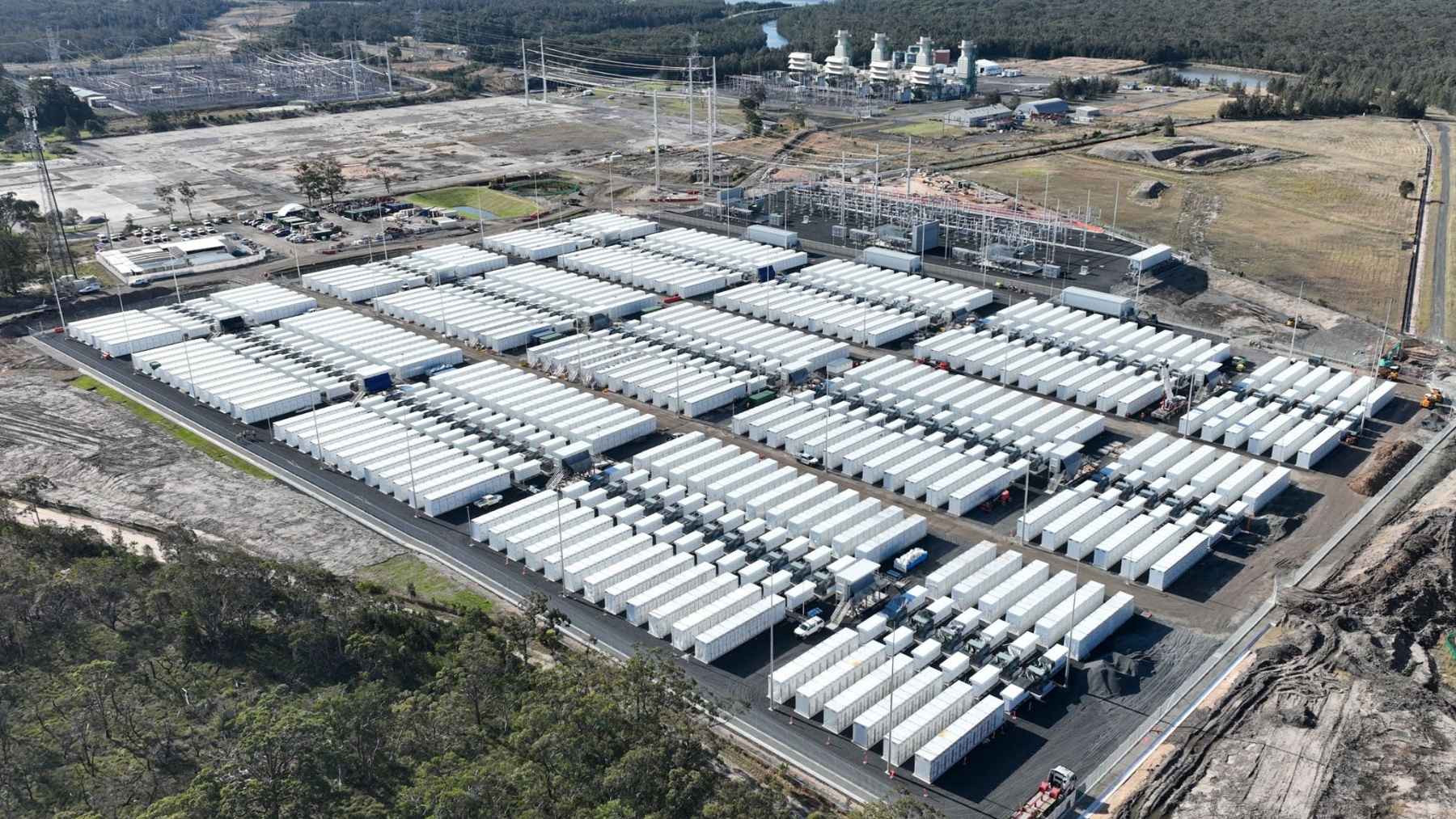
We’ve gotten used to batteries replacing coal plants on paper. This one did it on the same patch of dirt. Waratah stands on the footprint of the Munmorah power station, a 1,400-megawatt coal plant about 60 miles north of Sydney that ran for 45 years, closed in July 2012 and got knocked down. What’s there now can push out more than half of what the old plant managed, for two hours, from a field of containers nobody has to feed.
It isn’t the only one down there, either. The same owner recently switched on a wall of 448 Tesla Megapacks in the New South Wales outback, and a utility outside Brisbane has plugged in a sodium sulfur battery running at 645 degrees. Lithium’s winning by a mile, but it’s not the only chemistry turning up on the Australian grid.
Akaysha chief executive Nick Carter put the Friday numbers on LinkedIn and said plant performance “was good”, which is about as excited as you’re allowed to sound after the best part of a year waiting on a transformer. Renew Economy reported on September 12 that the tests have to be verified before the full contract starts, more than a year behind the original schedule.