
- 2 MONTHS AGO · ENERGYA 935-foot wind turbine in Bavaria carries its hub 653 feet up, the tallest on land, on a concrete-and-steel tower its maker builds more than 1,000 times a year, and the company stood it in its own yard to cover two-thirds of the factory’s power
- 1 MONTH AGO · ENERGYA 100-watt nuclear reactor went critical on Texas ranch land that held nothing but grass a year ago, the building around it rose in 229 days, and its entire planned life adds up to about 100 hours — practice, before its maker bets on cores 150,000 times hotter
- 2 WEEKS AGO · ENERGYA 75-year-old nuclear lab in South Carolina caught fire in one room and put a 310-square-mile federal site under emergency for more than four hours, with trains, barges and planes held off the area, and the Energy Department said the next day that nothing radioactive got out
- 2 DAYS AGO · ENERGYA 1-megawatt reactor that rode a flatbed more than 1,000 miles from a Los Angeles suburb to an 80-foot concrete dome in Idaho has been approved for a test no microreactor has been cleared for before, 60 days at full power with at least 150 hours untouched, and it still has not been fueled
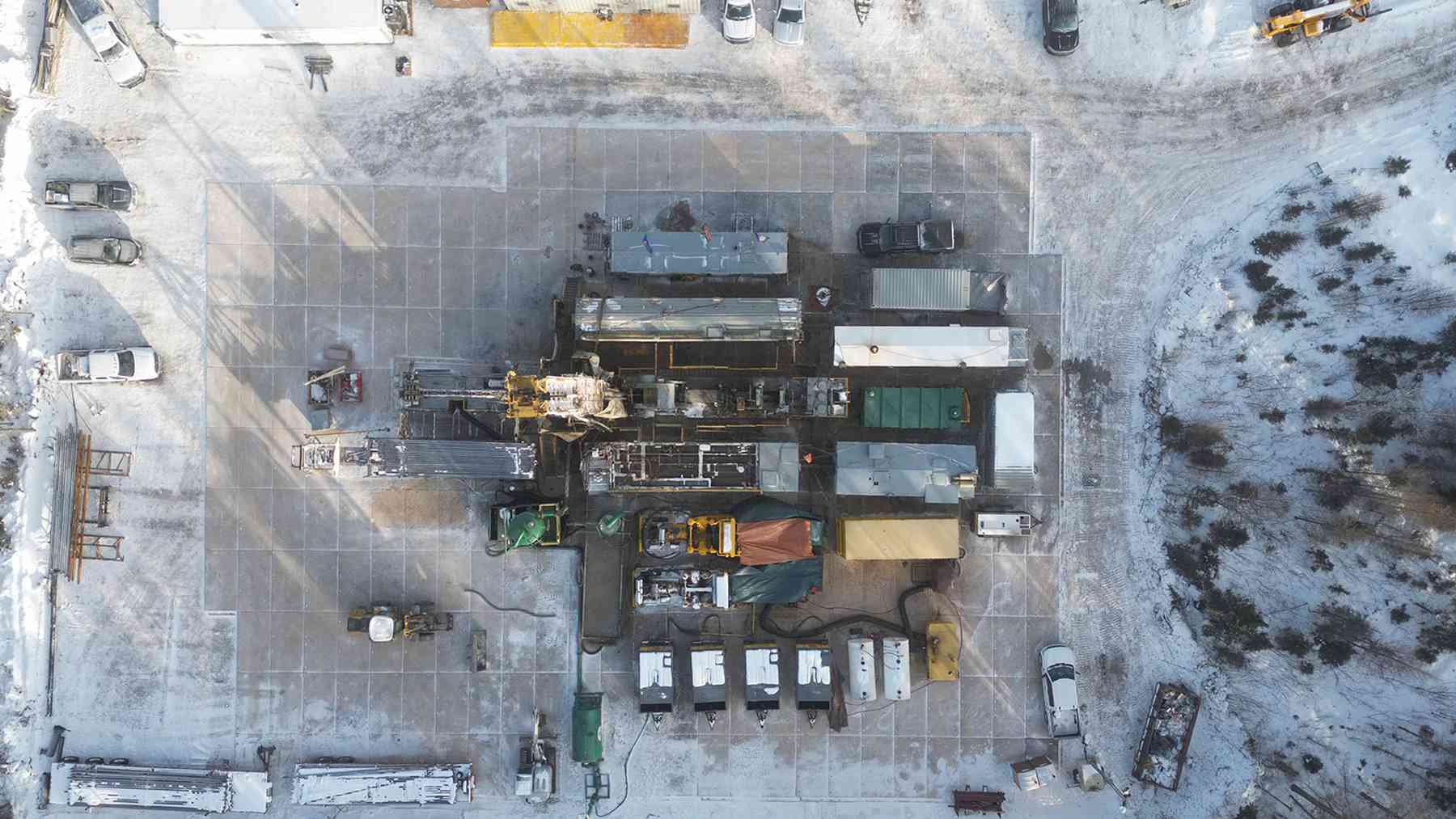
- TODAY · THIS ARTICLEA 100-watt nuclear reactor sitting in a 35-foot concrete pit under Texas ranch land has been cleared by the Energy Department for unrestricted operations three months after its first chain reaction, and its maker will use it to train operators and check its math for an isotope reactor
When we wrote about the tiny reactor outside Lockhart, Texas, back in September, it had already pulled off its big moment. It went critical on the night of August 5, less than a year after Oklo broke ground on leased ranch land in Caldwell County. But a reactor that’s gone critical still has some federal boxes to check before anyone gets to put it to real work.
As of this week, those boxes are checked. On November 11, Oklo announced that the Department of Energy has cleared the final operations hold point for its Groves Isotope Test Reactor, which the company calls Groves-1. World Nuclear News ran the story the next day. Groves-1 now moves into what Oklo calls its research, testing and training phase, and the company’s headline describes that as unrestricted operations.
So what’s a hold point?
A hold point is basically a mandatory pause written into a reactor’s test plan. The operator runs a set of checks, stops, and waits for the regulator to look over the results before it’s allowed to move on to the next step.
Groves-1 just cleared its last one. That’s a pretty big deal for such a small machine, because it means there aren’t any operations hold points left between Groves-1 and the work it was built for. Oklo can now get on with that work, inside the limits of its authorization.
And those limits are tight. I went back through the DOE’s environmental review from June, and it puts the reactor’s maximum power level at 100 watts. That’s about what an old incandescent bulb draws. The same document describes Groves-1 as a zero-power critical assembly, which basically means it’s built to study the chain reaction itself rather than to make heat or electricity.
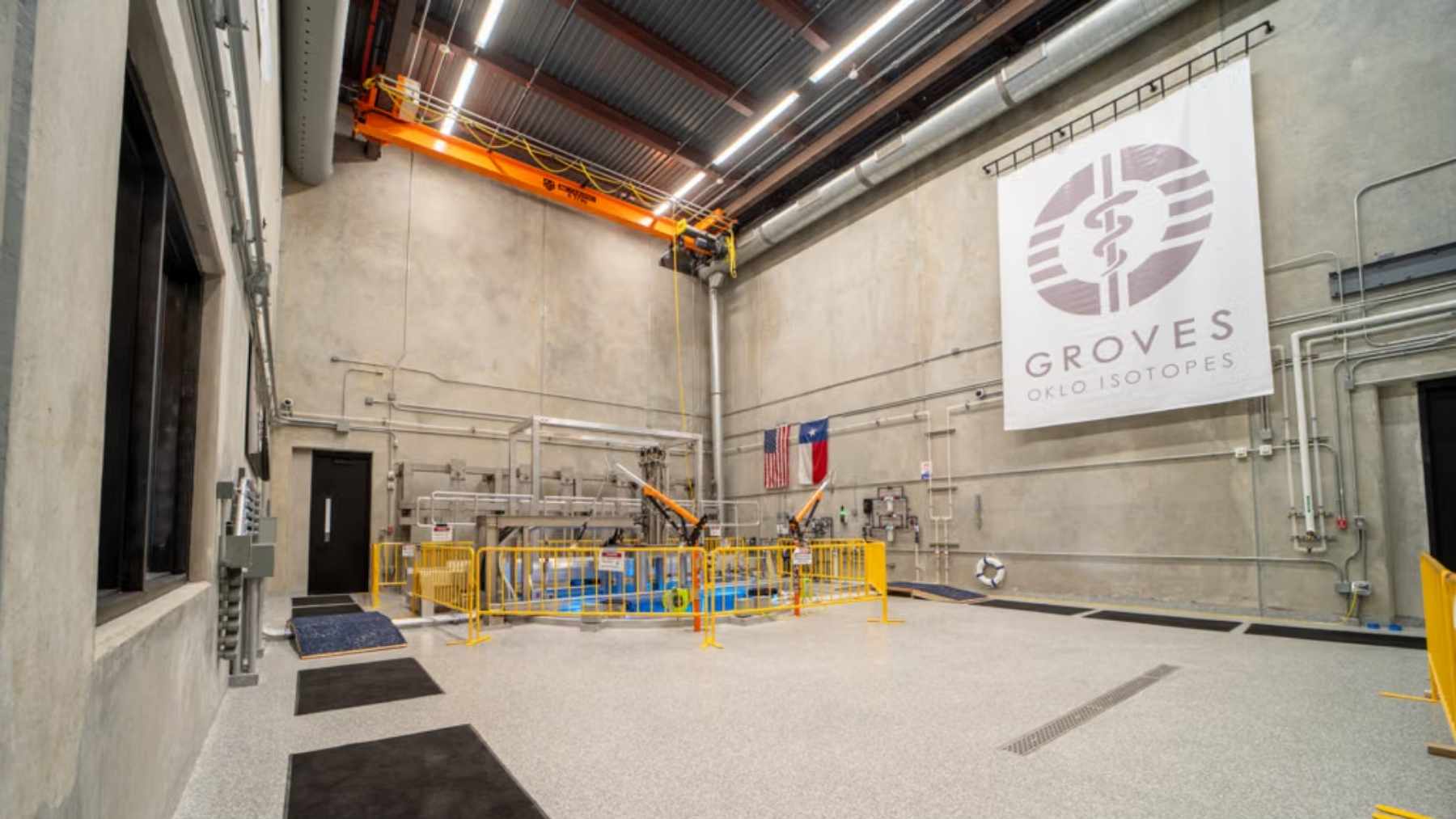
Here’s the machine, for anyone who missed the first piece. The power, building and pit figures come from that DOE review, and the build time is Oklo’s own number.
Unrestricted, but still a research reactor
The word unrestricted comes from Oklo, and World Nuclear News uses it too. I’d read it pretty narrowly, though. The clearance covers research, testing and training, and it came from the DOE rather than the Nuclear Regulatory Commission.
That’s because Groves-1 went through the DOE’s Reactor Pilot Program. The NRC is the agency that licenses commercial reactors, like the ones that put power on your grid. The Atomic Energy Act also lets the DOE authorize research, development and demonstration reactors on its own, which is how Oklo ended up running one on a ranch instead of at a national lab.
Groves-1 was one of 11 projects the DOE picked for the program, according to WNN, and Oklo says it was the first in the program to go critical on private land. It’s been a busy stretch for DOE-authorized reactors in general. Just this week we covered a 1-megawatt microreactor in Idaho that cleared a DOE safety review for its full-power test.
The DOE/NRC split also matters a bit more than it did a few months ago. In October, the NRC finalized a rule that lets companies use data from DOE or Pentagon reactor demonstrations in their commercial license applications, WNN reports. So every hour Groves-1 logs in Lockhart is arguably worth more to Oklo now than it would’ve been back in August.
Now what’s it going to do?
According to Oklo, the first jobs on the list are pretty unglamorous. The company plans to train and qualify operators for its future reactors, keep testing how its control rod drive mechanisms perform and how reliable they are, and run criticality and reactivity measurements.
If you’re wondering what a control rod drive is, it’s the motor-and-gear hardware that moves the control rods. Those rods soak up neutrons, so sliding them in slows the chain reaction and pulling them out lets it pick back up. You’d want to know that hardware’s reliable before you build anything bigger around it, which is presumably the point.
The measurements are where Oklo gets to check its own homework. Its engineers have computer models that predict how a core should behave, and a real core is the only way to find out whether those predictions hold up. Oklo says the data will feed models for its isotope reactors and its Aurora fast fission reactor, and it could potentially help light water reactors too. WNN adds that, according to the company, that could mean better fuel performance and power output at those plants.
Then there’s the detail I frankly didn’t expect to find in a reactor announcement. During a recent startup, Oklo had its operators wear eye-tracking glasses to improve what it calls the human-machine interface. As far as I can tell, the idea is to see where operators actually look on their screens and panels while they bring the reactor up. That kind of data could tell designers which readouts people lean on and which ones they barely glance at. That’d let future control rooms get laid out around how operators really work. Oklo hasn’t said what the glasses turned up.
What about the 100 hours?
Back in September, we reported that the reactor’s entire planned operating life added up to roughly 100 hours. That figure comes from the same DOE review, which also says the operational phase should wrap up by the end of 2026.
Oklo’s November 11 announcement doesn’t mention operating hours or an end date. WNN’s story doesn’t get into either one.
So does that whole to-do list fit inside 100 hours?
Honestly, I can’t tell you. My gut says training a crew and benchmarking a core sounds like a lot to squeeze into 100 hours, but my gut isn’t a DOE filing. It’s possible the latest clearance came with a bigger operating envelope, and it’s just as possible all of this was always meant to fit inside the original one. I also couldn’t find a running tally of how many hours Groves-1 has logged so far, so the June review is still the last public word on it.
Groves-2 is next
Groves-1 is basically the warmup act. Oklo says what it learns here will feed into Groves-2 Forge, a planned pilot plant that’ll produce and process isotopes, and the DOE picked that project for its Nuclear Energy Launch Pad.
The plan pairs a reactor that irradiates material with hot cells, which are heavily shielded rooms where workers handle radioactive material through remote manipulators. Oklo says Forge will cover the whole chain, from separating isotopes to recovering, packaging and shipping the finished product. Its first focus is lutetium-177, an isotope doctors use in targeted cancer therapy. Oklo didn’t put a date on Groves-2 in this week’s announcement.
I couldn’t find a separate DOE release on the clearance, either. Instead, Oklo’s announcement carries a line from Chimi Zacot, the DOE’s acting Deputy Assistant Secretary for Nuclear Reactors: “Successes like Groves-1’s criticality are now paving the way for what comes next.”
Oklo announced the DOE sign-off on November 11, which works out to 98 days after Groves-1 first went critical in that concrete pit outside Lockhart, a milestone the Energy Department marked the next day.
 An 882-ton boiler, one of eight at a closed nuclear plant on the English coast, is slated to be jacked and slid out of its bay under a contract announced late last month, a job meant to take away about a third of the buildings still standing on the siteEnergy · 15 hours ago
 A 216-foot steel vessel 60 feet high is being assembled nearly a mile underground in South Dakota, one of two tanks that will take 2,600 beams lowered one by one down a shaft and will each hold about 17,000 tons of liquid argon at about 300 degrees below zeroEnergy · 17 hours ago
 A 23-foot-wide steel platform on three 90-foot piles driven 45 feet into the bed of a Massachusetts canal lowers tidal turbines up to 10 feet across into a 4-knot current on a lifting arm, then raises them back out of the water so engineers can service them dryEnergy · 2 days ago