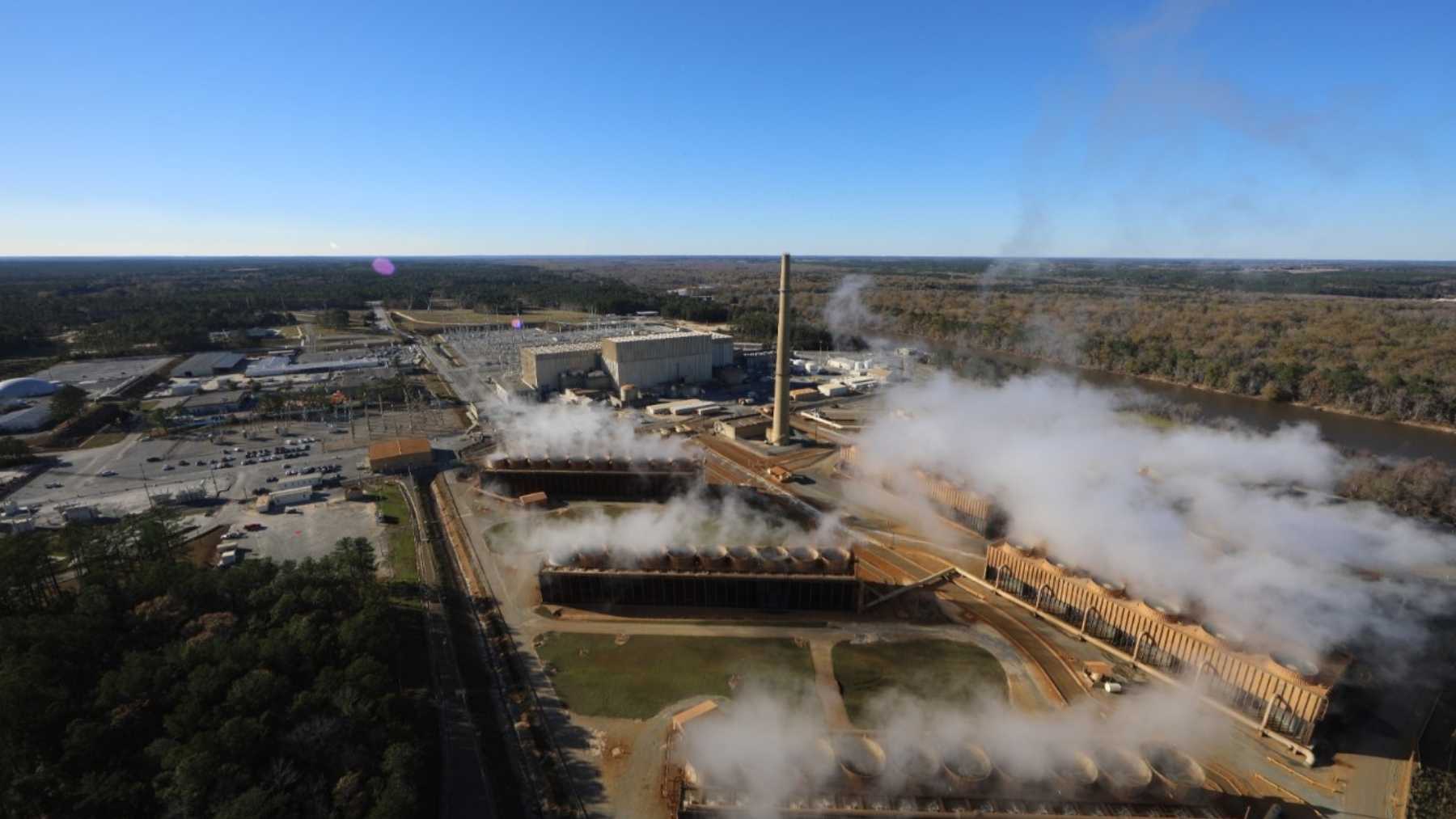

Every morning, the Nuclear Regulatory Commission posts a list of every power reactor in the country with one number next to each: the percentage of full power it was making somewhere between 4 and 8 a.m. There’re 95 units on the current list, and on most days the whole thing is about as thrilling as it sounds. Last Saturday, though, Hatch Unit 1 in Georgia went from a 100 to a zero, and the reason turns out to be a pretty good little story about what a reactor does in the first few seconds after something upstream goes wrong.
Here’s what Southern Nuclear told the NRC. At 4:14 in the afternoon on October 10, with Unit 1 running flat out, something in the electrical system took a jolt (the agency’s word is “electrical transient”) and that knocked the turbine generator offline. The reactor protection system saw the turbine go and scrammed the reactor on its own. Safety relief valves lifted. A set of containment isolation valves closed. Within a few minutes the unit was sitting in Mode 3, hot shutdown, with the fission stopped and the operators holding things steady.
Nobody pushed the button on this one. The NRC’s event notification logs it as an automatic trip, filed at 7:22 p.m. that evening under the rule that gives a plant four hours to call it in. The notice says all systems responded as designed, the trip wasn’t complex, nobody on or off the site was put at risk, and the cause is under investigation. Unit 2, which shares the site, kept running the whole time.
So why does a turbine problem shut down the reactor at all?
In a boiling water reactor, the turbine is basically the kettle lid
Hatch 1 is a General Electric boiling water reactor, a BWR-4 if you want the model number, and the name tells you how it works. The water boils inside the reactor vessel itself, and that steam goes straight to the turbine. There’s no middle loop like in a pressurized water reactor; the turbine is, for practical purposes, part of the reactor’s plumbing.
Which means that when the turbine trips, the steam the core is making has nowhere to go. Pressure in the vessel starts climbing fast, and in a BWR rising pressure squeezes the steam bubbles in the core, which, counterintuitively, makes the chain reaction stronger for a moment. The protection system doesn’t wait around to see how that plays out. It drops the control rods, and the fission is over in a couple of seconds.
The relief valves are the second half of the same reflex. They crack open at a set pressure and dump steam out of the vessel into a big donut-shaped pool of water that wraps around the base of the containment. Hatch 1 uses GE’s Mark I design, and that pool, the torus, is there to swallow steam and condense it so the containment doesn’t see the pressure. If you’ve ever looked at a cutaway of one of these plants, the torus is the big ring at the bottom that looks like it was borrowed from a submarine. They’re the same family of valves a Slovak plant warned its neighbors would be loud during startup tests last month.
None of this is exotic. It’s what the plant is built to do when a turbine trips, and from what I can tell it did all of it in the right order. Frankly, what I find more interesting is what came next.
The heat doesn’t stop when the fission does
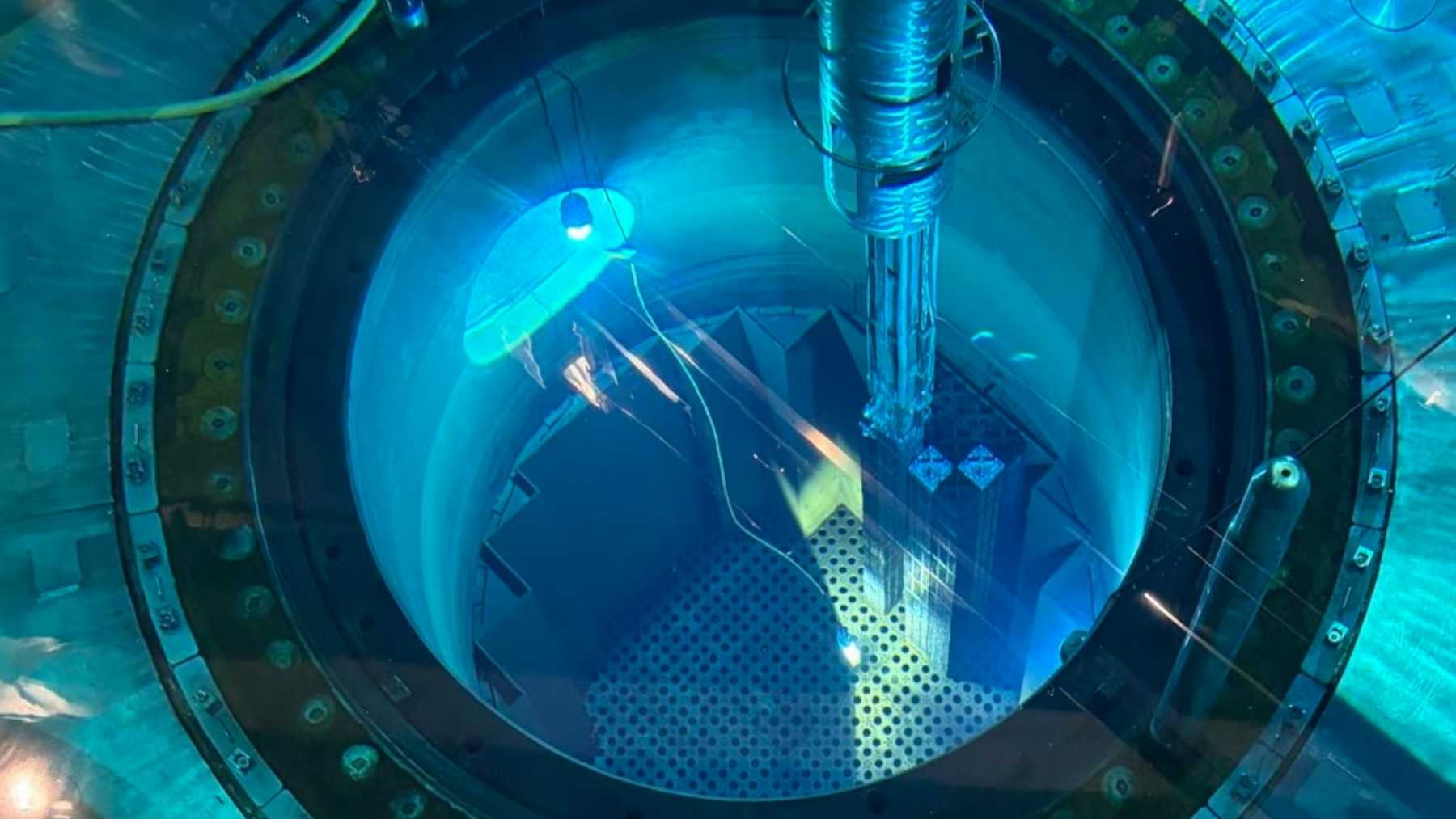
A reactor that’s just scrammed is still making a lot of heat. The fuel is full of fission products that keep decaying and giving off energy whether or not the chain reaction is running, and in the first minutes after a trip that decay heat is on the order of a few percent of full power. For a reactor rated at 2,804 megawatts thermal, a few percent is still a very large furnace that you have to keep cooling.
So the operators did two things, both spelled out in the notification. They kept the water level in the vessel up with the regular feedwater system, the pumps that feed it during normal operation. And they routed the steam the core was still producing around the dead turbine and straight into the main condenser, using the turbine bypass valves. That’s the normal, boring way to get rid of decay heat when the condenser is available, and it’s the path a Florida reactor used in August after its crew tripped it by hand over a dropped control rod.
The notification also mentions a Group 2 primary containment isolation. In GE plants of this generation, that means a particular set of valves on lines running out of the containment shut on their own, and in my reading of how these plants are set up, the usual trigger is a brief dip in reactor water level right after a scram. I’ll flag that the NRC note doesn’t actually say what set it off, so treat that as an informed guess rather than a fact.
Then you wait. Decay heat falls off quickly at first and slowly after that, and the plant has to be walked through the checks before anyone starts pulling rods again.
Five days from zero to 64 percent
The NRC’s daily numbers tell the rest. Hatch 1 showed a zero on the morning reports for October 11, 12 and 13. On the 14th it read 3 percent, which is a reactor that’s critical again and barely making steam. By the October 15 report it was at 64 percent, and I’d expect it at or near full power by the time you read this.
Unit 2 is a useful comparison. It sat at 94 percent through the whole episode, a level it had held for days before the trip, and it went back up to 100 on October 14. Two reactors, one site, one electrical hiccup, and only one of them felt it.
As for that hiccup, “electrical transient” covers a lot of ground. It could be a breaker, a relay, a problem on the grid side, a fault somewhere in the plant’s own switchyard. Southern Nuclear hasn’t said, and frankly I wouldn’t expect it to until its engineers have finished looking. The company told the NRC the cause was under investigation and that’s still where it stands as I write this.
Does a five-day turnaround sound fast? It’s roughly what you’d see from a clean trip at a well-run plant. That Florida unit I mentioned was back at 100 percent four days after its manual trip. A messy trip, one where a system doesn’t respond the way the paperwork says it should, is a different animal and gets a very different kind of attention from the regulator. This one got filed as “not complex,” which is about the best review a scram can get.
A 50-year-old reactor with a license to 2054
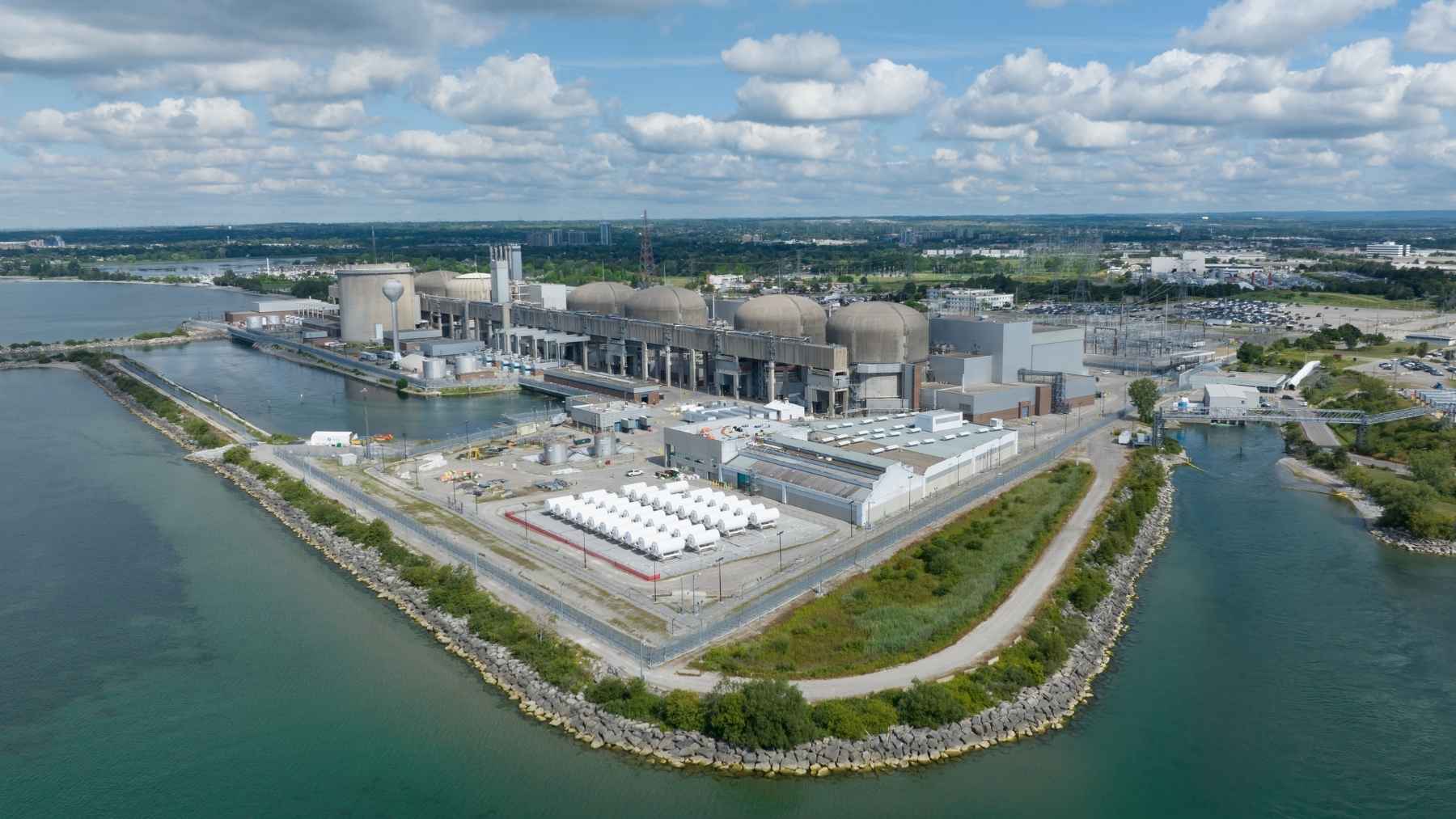
Hatch 1 sits on the Altamaha River outside Baxley, about 20 miles south of Vidalia, and it’s rated at 876 megawatts net according to the Energy Information Administration. It was the first nuclear plant in Georgia, going commercial in December 1975. Unit 2 followed in 1979. Together the two BWRs make a bit under 1.8 gigawatts, and with the four units at Vogtle they cover close to 30 percent of Georgia Power’s output, by the company’s own count.
A reactor built in the 1970s tripping off and coming back in five days is pretty much a non-event in the industry, and I’d argue that’s the actual story here: the reflexes worked, the paperwork was filed, and the unit’s already most of the way back. If you’re the kind of person who likes to see how the sausage gets made, the NRC’s notification is about 200 words long and reads better than most press releases.
The NRC renewed Hatch 1’s operating license on June 11, 2026, its second 20-year extension, and the unit is now licensed to run through August 2054.