
Jellyfish have spent two summers straight making a mess of French nuclear power. Swarms of them clogged the cooling water intakes at the Gravelines plant in August 2025 and took the whole site offline, and this August they came back and shut three of its reactors down again. So when I tell you another nuclear plant lost a reactor to wildlife, you can probably guess the shape of the story. The twist is the location. This one happened on Lake Huron, at Canada’s largest nuclear plant, and the culprit was a small silver fish called the gizzard shad.
The die-off itself happened back in the winter of 2025, and it made Canadian news at the time. The paperwork is what’s new. CBC News obtained more than 1,200 pages of federal and provincial records about the event, and they hold two things the public didn’t get in 2025: fish counts well above anything announced at the time, and a written warning from Canada’s nuclear regulator that the whole older half of the plant could’ve gone dark.
The fish took out one of the two working reactors
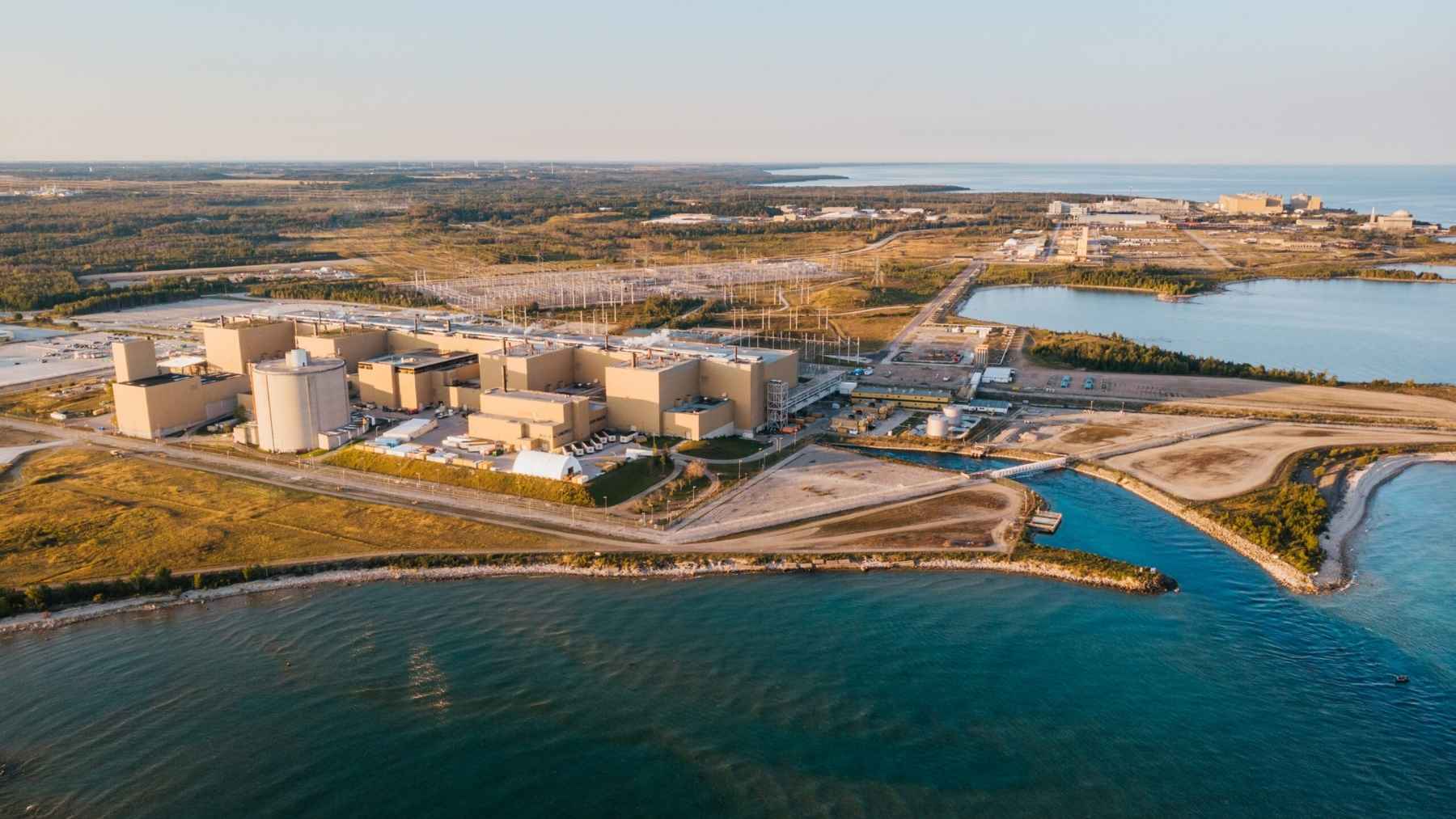
Bruce Nuclear Generating Station sits on the eastern shore of Lake Huron near Tiverton, Ontario, and its eight reactors cover close to 30 percent of Ontario’s electricity. The four older units make up Bruce A, and in early 2025 two of them, Units 3 and 4, were already parked in long refurbishment outages. That left Units 1 and 2 carrying the load.
Gizzard shad had been collecting on the intake screens since January 30, and for two weeks the screens kept up. On February 13 the run turned into a flood, and it wasn’t subtle. Cooling water pumps tripped across Units 1, 2 and 4 through the day, and by 8:13 p.m. ET, when the regulator logged its notification call, the operator had shut Unit 2 down and dialed Unit 1 back to 87 percent power. Bruce Power confirmed the shutdown on February 14 and pointed at the sheer volume of fish in the Bruce A intake channel.
The records rewrite the scale of the whole thing. In a March 2026 report to Fisheries and Oceans Canada, Bruce Power estimated that 8.1 million gizzard shad were around Bruce A on a single day that February. Federal records put the toll at between 3,816,056 and 4,951,993 fish trapped and killed from January 30 through March 26, 2025, and yes, those figures come straight from the filings, precise to the last shad. The old record at the site was roughly 800,000 fish, set in 1977, the year Bruce A’s first two units came online.
If you’re wondering how anyone counts 4 million dead fish, the plant does it for them. The traveling screens guarding the intakes dump whatever they catch into baskets, and Bruce Power counts the catch for federal regulators. Its fisheries permit allows the equivalent of about 14,550 pounds of fish losses a year, and this one event, by the permit’s own accounting, came to somewhere between 832,000 and 1.08 million pounds.
So how do fish shut down a nuclear reactor?
The fish don’t touch anything nuclear. A plant’s turbines run on steam, that steam has to be condensed back into water once it’s done its job, and the condensing runs on a constant torrent of cold lake water. Screens at the intake catch fish, weeds and trash before they reach the pumps, so it’s pretty much a pool skimmer at industrial scale. Pile enough fish onto those screens and the flow drops, the pumps start tripping, and the condenser can’t hold its vacuum. At that point operators pull a reactor back before the equipment forces the issue, and that’s exactly the call Bruce A made with Unit 2.
So what were 8.1 million fish doing at a nuclear plant in the middle of winter?
Here’s where it gets uncomfortable for the plant: the warm water is its own doing. Bruce A pulls in Lake Huron water through an intake about 1,800 feet offshore and 36 feet down, and sends it back out warm. Gizzard shad don’t handle cold. When lake temperatures plunge, they’re liable to die of cold shock in open water, so a plume of warm discharge in a Lake Huron winter works on them like a heated pool. CBC’s footage shows the schools packed under the ice by the millions.
The regulator said all four units could have gone down
Bruce Power’s own investigation, quoted in the records, concluded the event “challenged reactor safety.” The CNSC went further in formal correspondence sent to the company on May 5, 2025, warning that the potential consequences “could have resulted in all [four Bruce A] units being shutdown,” while noting there wasn’t any risk to the public.
Two of those four were already down for refurbishment, so the warning really means Units 1 and 2 joining them at zero. That sounds manageable until you remember a shutdown reactor doesn’t stop needing cooling water. Nuclear fuel keeps producing heat long after the chain reaction stops, and that heat leaves through water drawn from the same forebay the fish were plugging. There’s a second, sneakier threat in the records too: frazil ice, the tiny needle-like crystals that very cold, churning water grows instead of a solid sheet. Those crystals stick to whatever they touch, including intake screens. Bruce A normally holds them off by recirculating warm discharge from its running reactors back into the forebay, so losing every reactor in a cold snap would’ve killed the heat source right when the station needed it.
So Bruce Power did something I frankly didn’t expect to find in a regulatory filing: it restarted Unit 2 at low power on February 16, three days after shutting it down, partly to pour warm water back into the forebay and keep the ice away. It also kept cooling pumps running on offline units to spread arriving fish across three intake systems instead of one. That’s arguably the strangest job a nuclear reactor picked up in 2025. Unit 2 returned to full service on February 22, and the regulator stood down its enhanced monitoring the day after.
The cleanup involved vacuum trucks and a gill net on a crane
Getting the fish out was a brute-force job. The records describe workers scooping shad with baskets, vacuum trucks sucking them out of the pump wells, and a gill net hung from a crane to haul fish out of the forebay. Bruce Power strung diversion nets across the intake and discharge channels, bolted a mesh screen onto the Unit 4 pumphouse inlet, and flew drones and ran sonar to track the schools. Dead shad washed up on Lake Huron beaches for weeks, reported as far north as the Sauble River and as far south as Goderich.
The Saugeen Ojibway Nation, the First Nation beside the plant, put out the first public death estimates of 3.5 to 4.5 million in March 2025, and it’s argued ever since that the site works as a fish trap, with the warm water as the bait and the intakes as the hazard. Bruce Power now runs a livestream of shad schooling in its warm outflow, branded “Nuclear Fish City,” and the First Nation has called that framing misleading. The company declined CBC’s interview requests about the new documents, though it answered questions in writing.
Nuclear plants keep meeting wildlife they didn’t plan for
David Novog, a McMaster University professor and Canada Research Chair in Nuclear Safety, told CBC that losing nuclear stations for days is “a big hit to the grid,” since each one pumps out hundreds of megawatts around the clock. Restarting a Canadian reactor takes at least three or four days, so a fish run that knocks reactors offline takes them off the board for most of a week.
And Bruce has company. Gravelines lost reactors to jellyfish in 2025 and again in 2026, Sweden’s Oskarshamn plant lost three days to jellyfish in 2013, and experts in CBC’s reporting count similar run-ins in Romania and France as part of a growing pattern for water-cooled plants in a warming climate. Bruce Power pinned the shad boom on the species’ fast reproduction and a couple of warm lake years, and the warm plume then concentrates those extra fish right where they can do damage. I can’t tell you whether February 2025 was a freak event or the new baseline at Bruce, and judging from the records, Bruce Power can’t either. In its written statements, the company said it’s still working to understand changing conditions in the Great Lakes basin.
Bruce Power says it’s spent nearly $10 million since the event on mitigation, including physical barriers and AI-assisted monitoring that watches for the next big school. That’s real money to spend on keeping fish out of a power plant, and honestly it reads like a bargain next to losing four reactors in a cold snap. CBC News published the records behind all of this on September 17, 2026.