
- 4 MONTHS AGO · INDUSTRYDubai just started casting the 25,000 concrete rings for a tunnel nobody has begun digging, 100 million pounds stacking up in a yard — the machine that installs them digs and lines at the same time, steered from a control room 8,000 miles away in Texas
- 4 MONTHS AGO · INDUSTRYA 4,400-ton boring machine just began crawling out of Melbourne by night, broken into loads so big that traffic lights come down ahead of her, leaving her twin alone 148 feet under the river, chewing 33 feet a day until later this year
- 2 MONTHS AGO · INDUSTRYAn 18.7-foot drone boat has brought back its first seabed maps for an Italian survey crew, holding its line on two 11-kilowatt pods that swivel and sweeping a strip of bottom seven times as wide as the water is deep, 210 feet across in 30 feet of water
- 12 HOURS AGO · INDUSTRYA nationwide ground stop that held departing flights at U.S. airports for more than four hours has just been lifted after old switches and routers on the FAA’s copper-line telecom network got overloaded with data, federal officials say, and thousands of flights were canceled
- TODAY · THIS ARTICLEA network of 1980s copper lines just got overloaded with data on Friday and produced the longest nationwide ground stop in 25 years, holding departing flights for more than four hours until it was lifted at 8:15 p.m. Eastern as old switches and routers fed inconsistent radar and radio
If you still have a landline at home, you’re in a pretty small club these days. Most of us ditched copper phone lines years ago, and plenty of younger readers have probably never picked up a handset that was physically wired to the wall.
The FAA hasn’t quite gotten there yet. A big chunk of the network that moves radar data and controller voice traffic between its facilities still runs on old analog telecom gear and copper lines, and on Friday afternoon that gear started choking on more data than it could handle. That gave the country its longest nationwide ground stop in 25 years, according to the Associated Press. It held departures for more than four hours before Transportation Secretary Sean Duffy said the airspace reopened at 8:15 p.m. Eastern.
We covered the FAA’s ground stop order as it came down Friday afternoon. This one’s about the hardware behind it, and what officials said broke once they’d had a few hours to look.
So what actually broke?
According to Duffy, the trouble sits in the FAA’s TDM telecom network. Speaking at the White House on Friday night, he talked about old switches and old routers, and then put it about as bluntly as a cabinet secretary can: “We use 1980s little copper lines.”
Those switches and routers were swamped with data, he said, before walking that back a little mid-answer and explaining that the routers had started handing controllers inconsistent data. That was enough for the FAA to shut the affected system down and stop departures.
TDM stands for time-division multiplexing. It’s a pretty old trick for squeezing several streams of data onto one copper line by giving each stream its own fixed time slot, over and over, many times a second. Modern IP networks chop traffic into packets instead and send them wherever there’s room, which is basically how your home internet works.
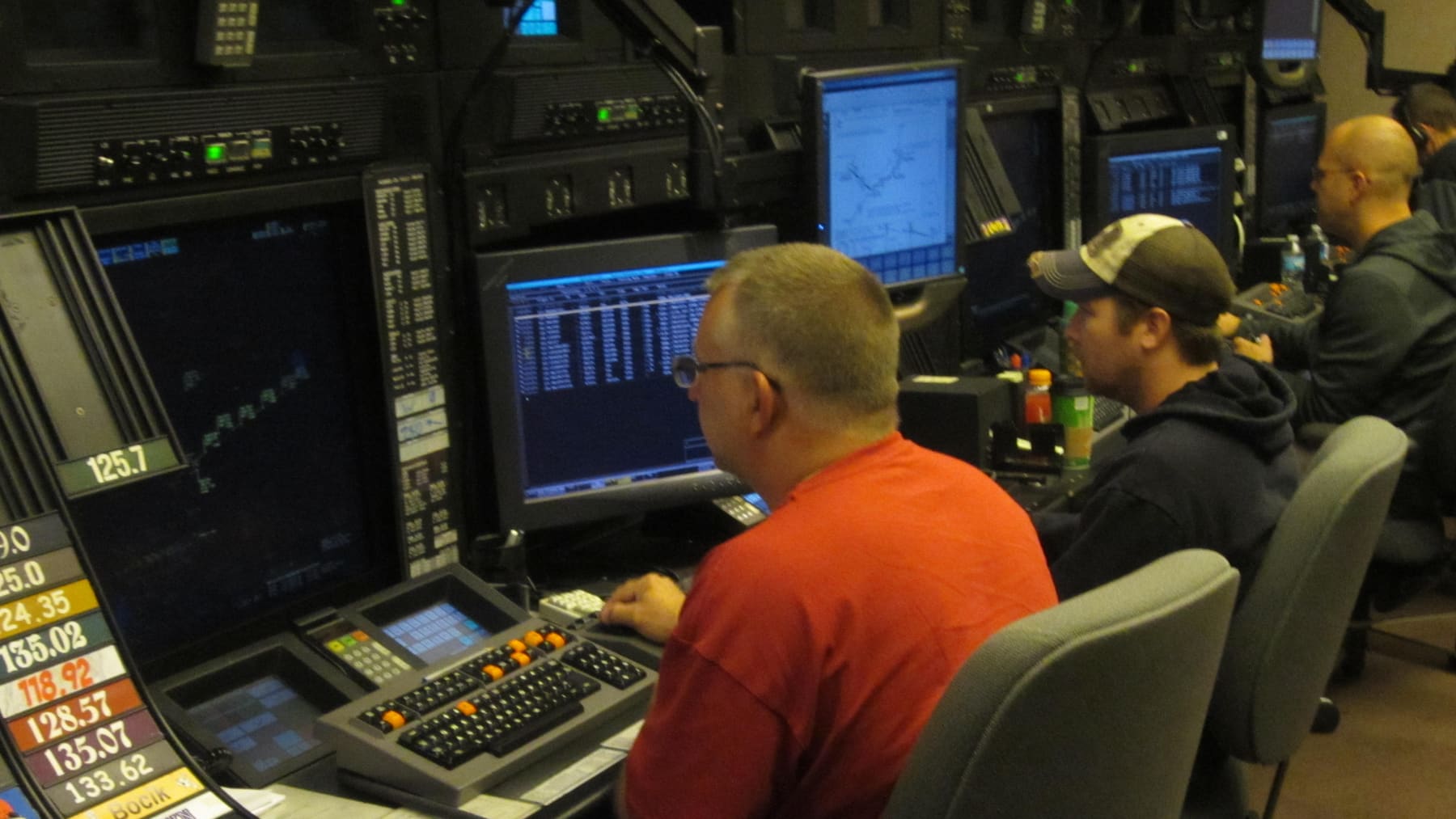
Aviation Week reports that radar and communications problems started showing up around 3:36 p.m. ET, at both centers and TRACONs nationwide. If those acronyms mean nothing to you, centers are the big facilities that handle planes at high altitude between airports, while TRACONs run the approach and departure traffic around busy airports. The nationwide stop on departures followed at 3:54 p.m. ET.
So what’s the problem with data that only drops out some of the time?
Well, a controller needs to see where every plane is and talk to its pilot right now, not whenever the line feels like cooperating. Duffy said some communications kept working, but controllers couldn’t always reach pilots or see aircraft immediately, and the FAA wasn’t willing to keep flying that way. Frankly, I’d rather sit at the gate for four hours than take off into airspace where that’s going on. Duffy put the number of planes in the air at more than 3,500 when the call was made.
He also said the newer IP-based equipment the FAA has already installed stayed up the whole time. It was the legacy hardware that failed.
Why would new gear knock over old gear?
Here’s where it gets a bit messy. Homeland Security Secretary Markwayne Mullin said the overload appears to have started while the FAA was adding new equipment and patching the existing system, and that the new technology ended up overwhelming the older network. Neither of them named the specific equipment.
CBS News, citing multiple sources, reported that an update pushed to the privately run network linking the system triggered a reboot, then a crash, then the outage. That network is the FAA Telecommunications Infrastructure, run by L3Harris, which says it links more than 4,400 FAA facilities. The FAA hasn’t confirmed the CBS account, so I’d treat it as a lead for now.
What about a cyberattack? Mullin said investigators have found zero evidence of an attack and that the failure looks mechanical, though he wasn’t willing to rule it out completely. He also said there’s no connection to this week’s Microsoft outage, and Microsoft said it has no indication of a link either. Duffy, for his part, said flatly that SMART, the AI-assisted traffic management tool the FAA said Tuesday it was rolling out across its en route centers, couldn’t have caused Friday’s failure.
How much of the copper is actually gone?
And this is a little frustrating, because the FAA is already ripping this stuff out. Congress approved $12.5 billion in 2025 for what the administration calls a brand-new air traffic control system, and swapping TDM copper for fiber, wireless and satellite links that run on IP is a big job on that list.
How far along it is depends on which figure you pick, and I can’t line them up into one neat progress bar because they don’t measure the same thing. In May, the FAA said 51% of its copper wiring had been swapped out. In testimony to House appropriators in September, FAA Administrator Bryan Bedford said that as of September 1, more than 64% of the agency’s copper-based TDM network had been replaced with modern gear. And the copper-to-fiber tracker on L3Harris’s own site, last updated November 2, shows 70% of sites upgraded.
Every one of those figures still leaves a sizable amount of old copper in service. That’s what Duffy blamed on Friday.
The long-term replacement network is called FAA Enterprise Network Services, or FENS. In August, the FAA handed AT&T an initial $74.3 million task order to start on it, AvWeb reported, as part of a contract the agency thinks could grow into a multibillion-dollar deal lasting up to 15 years. Verizon, which was picked for FENS back in 2023, is staying on for core network functions. Until that’s finished, the old network keeps carrying the load.
Duffy used Friday night’s briefing to ask Congress for more money. He said he wants $50 billion and that the $12.5 billion approved in 2025 isn’t enough. It’s safe to assume that number is going to get argued over on Capitol Hill for a while.
So when does flying get back to normal?
Not right away. Duffy said departures would restart slowly, and some flights wouldn’t leave until Saturday morning. The FAA said it ran tests to make sure the system was stable before letting flights go. Airlines then have to get planes and crews back where they’re supposed to be.
If this feels familiar, you’re not imagining it. The last nationwide ground stop was in January 2023, and that one involved a different machine entirely: the NOTAM system that publishes safety notices for pilots. Then-acting FAA Administrator Billy Nolen told Congress that stop ran from approximately 7:15 a.m. to 9:07 a.m. EST, a little under two hours, while Friday’s ran more than four.
The FAA’s public statement on the ground stop was still the preliminary version on Saturday morning. AP’s count, updated at 2:11 a.m. ET Saturday, had more than 2,000 flights canceled for Saturday, and Duffy says he expects operations to be back to normal before Thanksgiving, which falls on November 26 this year.
 A 91-ton steel shield was moved overnight into an Italian highway tunnel damaged by fire, the old concrete roof is being torn out and poured again right above it, and the cars and trucks keep driving through the middle the whole time, as long as they stand under 14 feet tallIndustry · 12 hours ago
 A 150-year-old dam built above Lake Tahoe for the silver mines was dug out to bedrock and rebuilt behind a 25-foot temporary dam of three plastic tubes filled with lake water, and the lake it holds back, lowered about 20 feet for the job, may need four to six seasons of snowmelt to refillIndustry · 14 hours ago
 A 215-foot rocket that will weigh almost 2 million pounds once fueled is due to lift more than 50,000 pounds of satellites on Friday, a new record for its builder, with 40 of them riding under a 70-foot fairing when a 29-minute window opens at 12:54 p.m. from a Florida padIndustry · 23 hours ago