
- 5 MONTHS AGO · INDUSTRYSwitzerland just unveiled the first hydrogen train ever built for narrow-gauge track barely three feet wide, an 800-km-range machine that finally opens zero-emission rail to the skinny mountain and mining lines in some 40 countries still stuck on diesel
- 5 MONTHS AGO · INDUSTRYAn American drone crawls out of the deep on tank tracks, drives across the seabed and pushes through six feet of breaking surf to climb onto the beach, hunting the mines in the one strip of coast every swimming drone has to turn around at
- 1 MONTH AGO · INDUSTRYA 369-ton gas turbine came ashore on an Irish beach from a flat-bottomed barge that parked itself within three feet of its mark, settled on the sand as the tide went out and rolled it off over 82-foot ramps, because no road to the power plant could carry it
- 23 HOURS AGO · INDUSTRYA 146-year-old narrow-gauge railroad in the Rockies is cut in two places, with 50 feet of track hanging in the air and an 80-foot-deep washout, and crews need more than $5 million and have until Memorial Day to rebuild the grade before its steam trains can run again
- TODAY · THIS ARTICLEA 7-mile railroad laid along the sand in Southern California washed out again when a king tide just under 8 feet met breaking waves of 6 to 9 feet, three days after Orange County’s transit agency approved a 30-year plan to keep the tracks on the beach
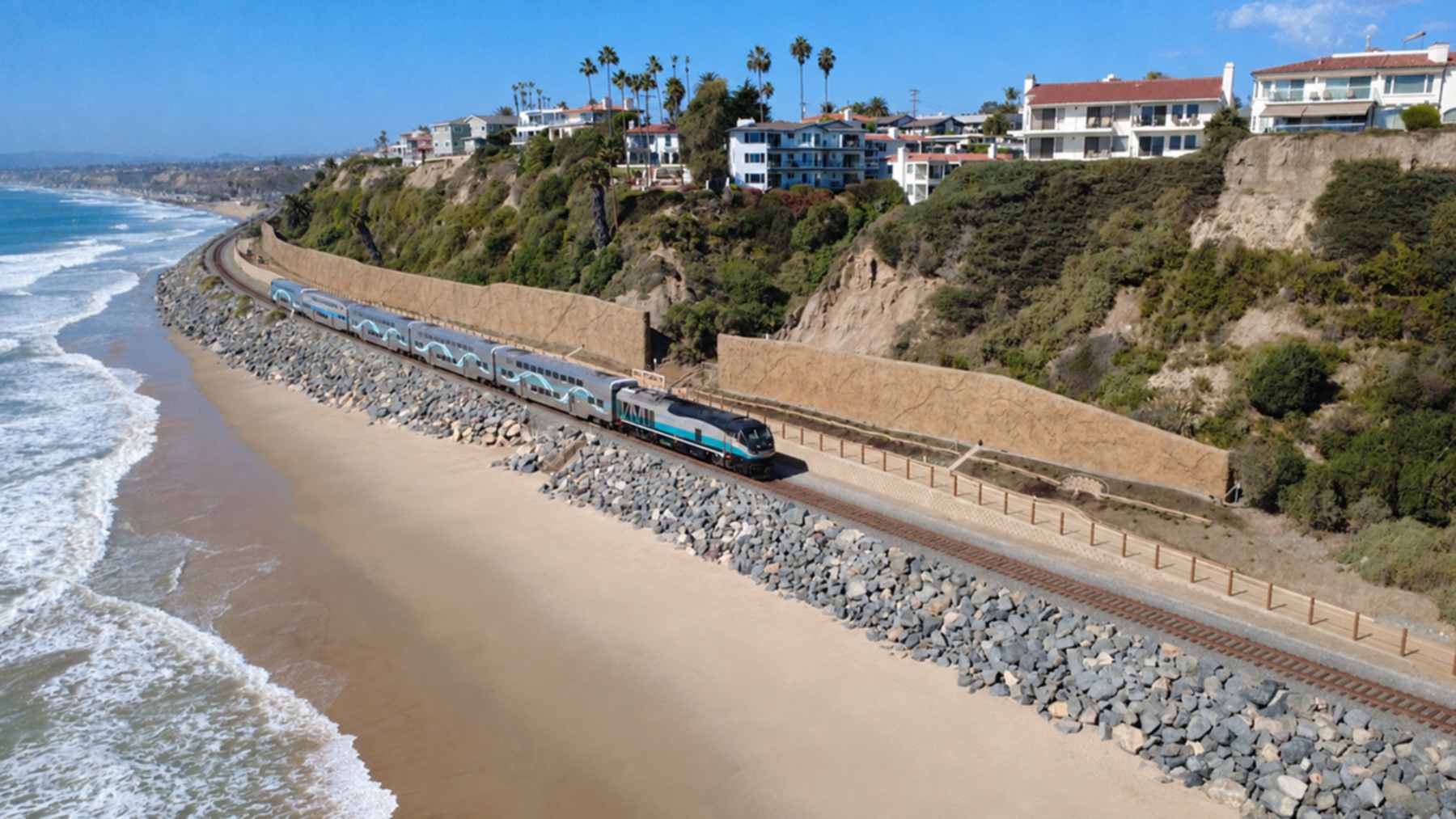
If you’ve ever taken the Pacific Surfliner between Los Angeles and San Diego, you probably remember the San Clemente stretch. The tracks run right along the sand there, close enough that you can watch surfers from your seat, and it’s easily the best view on the line. It’s also where the line keeps breaking.
On Thursday morning, November 26, it broke again. A king tide pushed the ocean up onto the railroad and washed out part of the track in San Clemente, and Amtrak stopped running trains between Irvine and Oceanside. On Thanksgiving. That’s pretty much the worst day of the year to take a train line away from people.
According to the Pacific Surfliner service advisories, trains heading north out of San Diego now turn back at Oceanside, and the ones coming down from Goleta go no farther than Irvine. San Juan Capistrano, which sits right in the gap, gets no trains at all. And on Thursday there weren’t any replacement buses either, because the Surfliner says it didn’t have the bus resources available.
Given that it was Thanksgiving, I get it. That’s cold comfort if you were standing on the platform in Oceanside holding a pie, though.
Friday went a little better. Bus bridges started running between Irvine and Oceanside on the morning of November 27, but San Juan Capistrano still isn’t served by trains or buses. The Surfliner said repairs would carry on into Friday, and that’s about as specific as it’s gotten. I can’t find a date from Amtrak, the Orange County Transportation Authority (OCTA, which owns this track) or anyone else for when trains will run through San Clemente again. If you’ve got a ticket, Amtrak says it’ll contact you directly about changes.
Metrolink, which runs commuter trains on the same track, isn’t going south of Laguna Niguel/Mission Viejo at all on Friday. Its Orange County and Inland Empire-Orange County lines won’t run to Oceanside, and Metrolink blamed track conditions the high tides had made unsafe. It isn’t offering any other way to cover that stretch, either.
So how big was this tide?
“King tide” isn’t a scientific term, by the way. It’s basically what people call the handful of extra-high tides each year, when the Sun and Moon line up and the Moon is near its closest point to Earth, so their pull adds up.
The National Weather Service office in San Diego says this week’s king tides peaked Thursday morning just under 8 feet. That figure is measured from the average of each day’s lowest low tide, so it doesn’t mean there were 8 feet of water sitting on the beach. It does mean the ocean was about as high as it gets around here, and it wasn’t calm. The NWS said breaking waves along the Orange County coast could reach 6 to 9 feet, with some sets up to 10 feet on west-facing beaches.
Stack big surf on top of a tide like that and you can see how water ends up on a railroad. The NWS kept a coastal flood warning in place for Orange County until 1 p.m. PST Friday, and it expected the surf to drop to 3 to 6 feet by Friday morning’s high tide.
Why does this one stretch keep breaking?
It mostly comes down to geography. Through San Clemente, the railroad runs on a narrow strip between the Pacific and a wall of bluffs, so it gets hit from both sides. When the beach in front of the tracks erodes, waves reach the embankment directly, and when the bluffs behind them slide, dirt and rock come down onto the rails.
That’s what happened back in September. On the night of Monday, September 7, waves overtopped the rails and chewed into the slope next to them, according to OCTA. They also damaged some of the protective rock that had already been placed there. That rock is called riprap, and it’s basically big boulders piled against the embankment so the waves hit stone instead of dirt. During that closure, the Surfliner only ran as far south as San Juan Capistrano, with buses covering the gap between Irvine and Oceanside.
And September wasn’t a one-off. A draft resiliency report OCTA’s board reviewed on August 24 added up the disruptions through San Clemente since 2021 and got to nearly a full year. OCTA lists coastal erosion, bluff movement, landslides, high tides, storms and big ocean swells as the causes. Frankly, that reads like a list of everything the coast can throw at a railroad.
Water is pretty much a railroad’s oldest enemy, and San Clemente isn’t the only place it’s winning right now. This week we also covered a 146-year-old narrow-gauge line in the Rockies that floodwater cut in two places.
So why not just let the trains stop at Oceanside? Because there’s no other way through. The San Clemente tracks are part of the 351-mile LOSSAN corridor (Los Angeles-San Diego-San Luis Obispo), and SANDAG, San Diego’s regional planning agency, describes it as the only railroad linking San Diego to the rest of California and the U.S. Metrolink, the Surfliner, freight trains and military traffic all share it.
It’s also getting a lot busier. Amtrak’s preliminary numbers, published November 24, show 2,842,026 riders on the Pacific Surfliner in fiscal 2026, up 36.3% from 2,084,717 in fiscal 2025. So the line is getting split in half just as far more people want to ride it, which is pretty rough timing.
So what’s being done about it?
Quite a bit, on paper. On September 28, OCTA’s board declared an emergency along the San Clemente line so it could move faster on shoreline protection and, above all, sand. The plan calls for roughly 690,000 cubic yards of it: about 240,000 between North Beach and Mariposa Point, and about 450,000 south of San Clemente State Beach.
Sand works as a buffer. A wide beach soaks up wave energy before it gets to the embankment, and San Clemente’s beaches have been shrinking for years.
The emergency declaration lets OCTA’s CEO hire contractors and line up equipment and sand sources faster, but it doesn’t skip environmental review or permits. There’s also a hardware problem. OCTA says the supply of “large, U.S.-qualified hopper dredges” for a job like this is limited, and a lot of them are booked months ahead. A hopper dredge is basically a ship that sucks sand off the seabed into its hull, carries it to where it’s needed and pumps it out onto the beach. You can’t exactly rent one at Home Depot.
The California Coastal Commission did its part on November 5, unanimously approving OCTA’s permit for the program. It runs for 10 years, with a check-in at the five-year mark. OCTA says it’s still working the commission’s amended conditions into the project, and it hasn’t given a date for when the big sand delivery starts. As far as I can tell, the only sand OCTA has finished placing so far is a small first load of about 2,500 cubic yards at North Beach last year.
The emergency work is in better shape on money than you might expect. OCTA has secured about $305 million in state and federal funding: $125 million from California’s Transit and Intercity Rail Capital Program, $80 million from the Trade Corridor Enhancement Program and $100 million from the Federal Railroad Administration’s CRISI program (Consolidated Rail Infrastructure and Safety Improvements). OCTA says roughly $100 million of that is committed to sand and public access. That’s money secured, though, not money spent.
The 30-year plan doesn’t have a budget yet
Then there’s the bigger, longer plan, and this is where the timing gets awkward. On Monday, November 23, three days before the washout, OCTA’s board approved the final Coastal Rail Resiliency Study Feasibility Report and told staff to start turning its final concepts into actual projects. The study covers about 7 miles of coastal track from Dana Point through San Clemente to the San Diego County line, and it’s meant to keep the railroad where it is for up to 30 years.
It doesn’t pick one fix for the whole thing. The study looked at 23 concepts and kept eight, a mix of ways to strengthen the railroad itself, deal with the bluffs and protect the track from the beach side, and every beachside option includes sand. What gets built where will depend on conditions at each spot.
OCTA doesn’t have the money to build any of it yet. It says nothing under this study, from sand placement to design and construction, has secured funding. So the emergency work has cash and a permit, while the long-term plan has a report and a to-do list. I doubt anyone at OCTA would call that an ideal place to be with the ocean already on the tracks.
Pacific Surfliner says its buses between Irvine and Oceanside started running Friday morning, November 27, while repairs continue, and the NWS coastal flood warning for Orange County was set to end at 1 p.m. PST that same day. If you’re heading down the coast this weekend, check the Surfliner and Metrolink alerts before you leave the house.
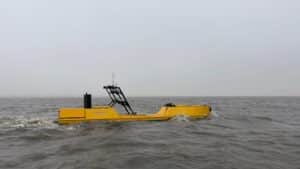 A 40-foot drone boat ran 38 days and more than 4,600 miles without stopping, refueling or anyone touching it, 230 miles out in the Gulf, holding 4.5 knots through gales and 12-foot seas while it dropped eight drifters into the Loop CurrentIndustry · 21 hours ago
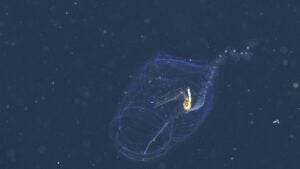 A see-through animal that tows a chain of up to 20 clones of itself has been drifting 920 to 7,200 feet down off California for more than two decades, and after thousands of remote-controlled sub sightings scientists have finally named it the first salp that lives only in the deep seaIndustry · 1 day ago
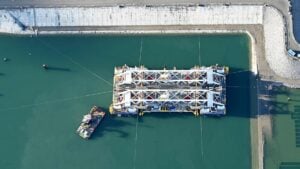 An 81,000-ton concrete box lying in a trench on the Baltic seabed has a damaged rubber seal on its open end, and the next box going down, a 23,000-ton one with a basement and as tall as a four-story building, has to wait until it is fixedIndustry · 1 day ago