- 4 MONTHS AGO · INDUSTRYA 4,000-ton Chinese machine with a cutting wheel the size of a five-story building just bored 11,182 meters under the Yangtze without stopping, guided from the surface so trains can cross the river at 350 km/h and never slow down
- 4 MONTHS AGO · INDUSTRYA 1,100-ton crane as tall as a 20-story building left Wisconsin standing straight up on a barge and has been under tow ever since, 9,000 nautical miles through the St. Lawrence locks and the Panama Canal, never once lying down
- 2 MONTHS AGO · INDUSTRYA 712-foot concrete box took 1,760 tons of water bags on its roof in a Danish harbor so the pontoon holding both its ends could lift it to the height the next box will need, a 128-foot one with a basement under its roadway that has to sit 65 feet down in the Baltic
- 2 WEEKS AGO · INDUSTRYA 91-ton steel shield was moved overnight into an Italian highway tunnel damaged by fire, the old concrete roof is being torn out and poured again right above it, and the cars and trucks keep driving through the middle the whole time, as long as they stand under 14 feet tall
- TODAY · THIS ARTICLEAn 81,000-ton concrete box lying in a trench on the Baltic seabed has a damaged rubber seal on its open end, and the next box going down, a 23,000-ton one with a basement and as tall as a four-story building, has to wait until it is fixed
If you’ve ever hooked a garden hose up to an outdoor spigot, you know the little rubber washer inside the coupling does pretty much all the work. Lose it, or let it crack, and the hose sprays you no matter how hard you crank it down. It’s a cheap part, and you don’t think about it until it fails.
So it’s kind of funny, in a very expensive way, that the tunnel set to become the world’s longest immersed tunnel is stuck on basically the same problem right now.
Femern A/S, the Danish state-owned company building the Fehmarnbelt tunnel between Denmark and Germany, said on November 13 that it was postponing the immersion of the tunnel’s fifth element. That box was supposed to be the first of the project’s special elements to go down. But while it was getting ready, the contractor, Femern Link Contractors (FLC), found that the rubber gasket on the end of the element already lying in the trench was damaged.
That’s the fourth element, named Nykøbing Falster. It went down at the end of September, and we covered the fourth element’s trip to the seabed when it happened. Divers found the damage during a routine inspection, according to the trade publication Global Highways and Swedish business site Dagens PS.
Femern says a thorough investigation found the damage was mostly superficial. It also says the gasket may have been hurt while the trench was being cleaned and prepared for the next box. Repairs are underway, and the special element will go down once they’re finished and the weather allows.
So what does a rubber seal do on a tunnel?
It’s a fair question, because “rubber seal” sounds like a pretty minor thing to hold up one of Europe’s largest infrastructure projects.
An immersed tunnel isn’t dug. It’s built on land as a string of giant concrete boxes, each one closed off at both ends with temporary walls called bulkheads. The boxes are floated out and sunk into a trench dredged in the seabed, and every new box gets pulled up tight against the last one. That’s where the gasket comes in. It’s a rubber ring, known as a GINA gasket, that runs all the way around the end face where two elements meet.
When the new box is pulled in, the gasket touches the face of the box in front and squashes a little. That makes the first watertight contact. Then the water trapped between the two bulkheads gets pumped out. With that pocket empty, the sea pressing on the far end of the new box shoves it against the rest of the tunnel and crushes the gasket hard enough to seal the joint, according to Femern and the German engineering site Ingenieur.de. A second seal, called an Omega seal, goes on the inside as a backup.
Which means the gasket isn’t a nice extra. It’s the first thing keeping the Baltic out of each joint, and if the one on the fourth element is chewed up, the fifth has nothing reliable to press against. Trelleborg, the Swedish company behind the seals, says it’s supplying 89 GINA gaskets for the project and calls them the largest of their kind ever made.
How do you fix a seal at the bottom of the Baltic?
Honestly, I can’t tell you, because Femern hasn’t said. Its notice says repairs are underway and stops there, so I don’t know whether the gasket is being patched or partly replaced, or how many divers are working on it. The Danish engineering magazine Ingeniøren reported on November 24 that the repair was still in progress and that it wasn’t possible to say exactly when it would be done.
Depth probably doesn’t help. Femern hasn’t published how deep the fourth element sits, but it says the Fehmarnbelt averages about 100 feet, twice the depth of the Øresund strait where Denmark built its tunnel to Sweden.
Still, “mostly superficial” is about as good as a damage report gets, I think. A scuffed rubber ring is a repair job. A cracked concrete end would’ve been a much bigger headache.
The box that’s waiting has a basement
The fifth element isn’t another standard box. The standard ones are 712 feet long, about 30 feet tall, and weigh more than 81,000 tons each. The special element is pretty stubby next to that: 128 feet long, 154 feet wide and 43 feet tall, according to Femern’s update on the IVY load test. Lasse Vester, deputy contract director at Femern’s parent company Sund & Bælt, compares it to a four-story building.
The extra height is a basement under the road and rail tubes. That’s where the tunnel’s technical installations go. Up at road level there’s a lay-by, so a service vehicle can pull over without blocking highway traffic. Ten of these special elements will sit roughly every 1.2 miles along the route, and Femern’s technical director, Jens Ole Kaslund, has described them as a way to gather the tunnel’s technical gear into 10 hubs instead of spreading it along the whole length.
If you go looking for weights on Femern’s site, you’ll notice its numbers look smaller than ours. Femern uses metric tons, which are about 10% heavier than the 2,000-pound tons we use in the US. When the first special element came out of casting, Femern’s casting announcement put it at 21,000 metric tons, which works out to about 23,000 of our tons. VINCI, which leads the FLC consortium, has said 24,000 metric tons, or closer to 26,500 tons. I’d go with Femern’s number since it owns the thing, but either way the special element weighs under a third of a standard box.
So why would a box under a third the weight be the harder one to move?
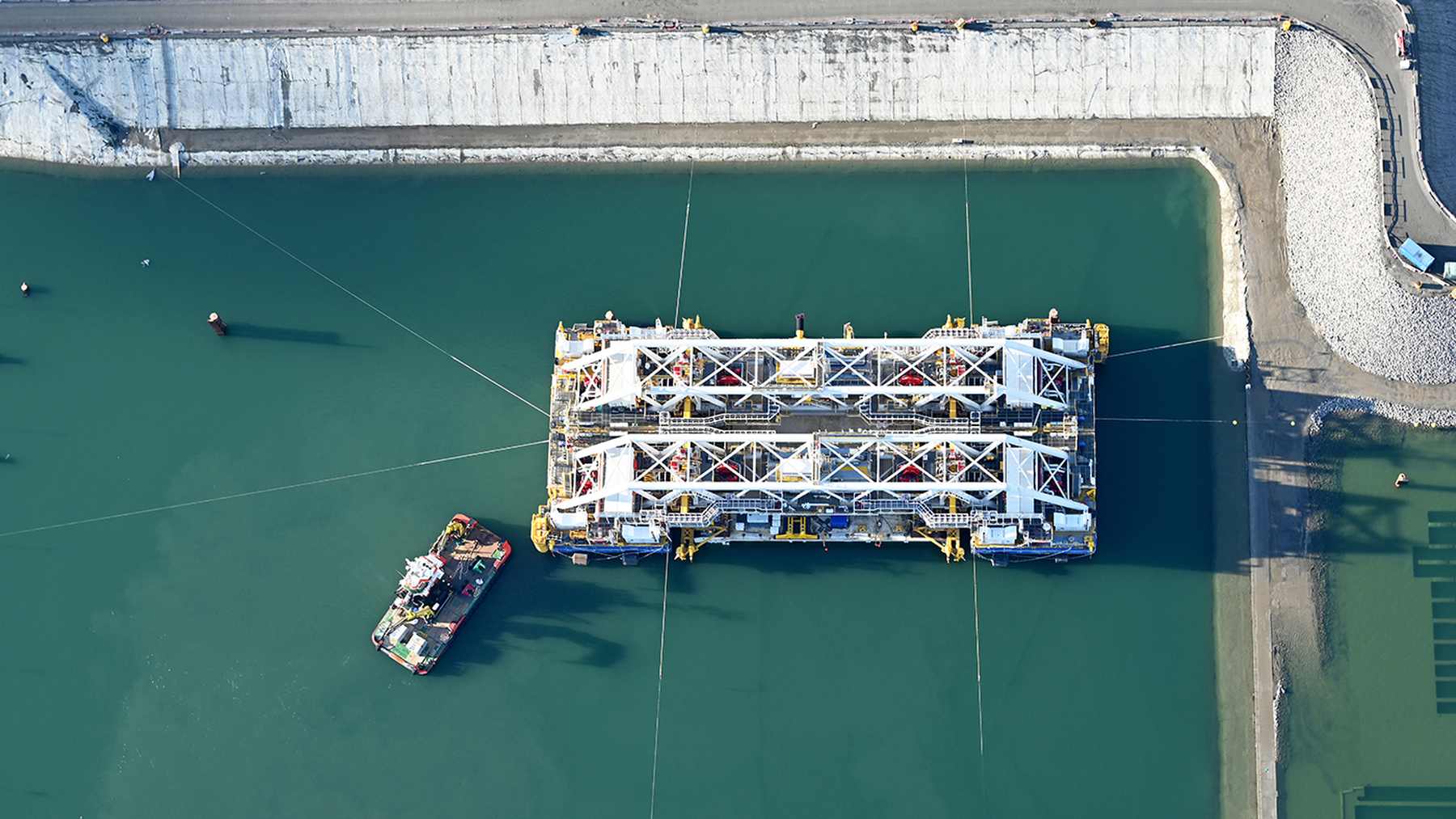
It comes down to the basement. Femern says that extra level means IVY, the pair of custom pontoons that carries and lowers each box, has to lift the special element further out of the water on the trip to the trench, and that puts extra load on the vessel. In September the contractor rehearsed that by stacking about 1,760 tons of extra weight on the fourth element with water bags and internal tanks, which we went through in our piece on the IVY load test. IVY passed. “The test was a rehearsal for a highly complex technical operation,” Vester said at the time. Once it’s out there, the special element has to be set down more than 65 feet deep.
The tunnel was already running behind
The first element went down on May 6, and Femern’s September 28 update confirmed the fourth. That’s nearly 2,950 feet of finished tunnel out of 11 miles. The Rødbyhavn factory is well ahead of the pontoons, too. It had cast 19 elements by then, 16 standard and three special.
Femern was already about two years behind before any of this, mostly because IVY took far longer than planned to finish and get approved. Sund & Bælt has said it’ll publish a new overall schedule once the first elements are down, based on how both the standard and special ones go. So, slightly awkwardly, this gasket has also delayed the delay estimate. Sund & Bælt can’t really know how long a special element takes until it has put one on the seabed.
I ran the numbers on the pace, too. Between early May and late September, the gap between immersions averaged roughly seven weeks. At that rate, the other 85 would take about 11 years, so it’s safe to assume Femern needs the pace to pick up quite a bit once the crews get into a rhythm.
The Baltic in late November isn’t famous for calm weather, so I wouldn’t count on a quick turnaround. Femern’s November 13 notice says the first special element will go down once the gasket repair is finished and conditions allow, and when it does, it’ll be the fifth of the tunnel’s 89 elements on the seabed.
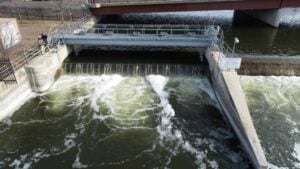 A dam on the Fox River outside Chicago with a 9-foot spillway and a 50-foot hinged steel gate was hit by an apparent cyberattack, and the state cut off access and kept it holding back an 849-acre pool while state police and federal investigators moved inIndustry · 15 hours ago
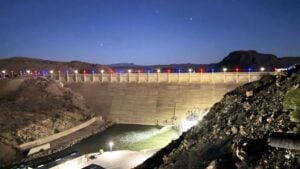 A 301-foot dam on the Rio Grande now has about 112 feet of water against a wall built for 197, up from 66 in September, after the river poured about 2.5 billion gallons into the lake in a single day while the dam let out almost nothingIndustry · 15 hours ago
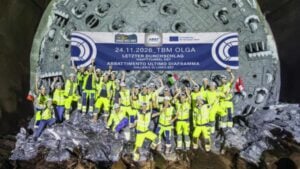 A 2,870-ton boring machine with a 34-foot cutterhead broke through at the end of 4.7 miles under the Alps after 797 days, the last of nine machines on a 34-mile rail tunnel, and there is no rock left for any of them to digIndustry · 20 hours ago