
- 3 MONTHS AGO · ENERGYA 710-foot concrete wall on the Colorado River has 27.85 feet of water left above the line where its eight turbines shut down before vapor bubbles pit the steel. The lake behind it sits 40 feet from the bottom of a gauge never built to read water that low
- 1 MONTH AGO · ENERGYA 710-foot dam on the Colorado River skipped the cold-water flush that stopped bass spawning two summers running, kept its eight turbines turning with the river below at 69 degrees, and a month later the lake behind it hit its lowest level since it first filled
- 1 MONTH AGO · ENERGYA 502-foot concrete dam on the Green River is letting up to a million acre-feet out of its reservoir to keep Lake Powell above the line where its eight turbines shut down, the lake behind it has dropped 34 feet, and the water keeps flowing for six more months
- 4 WEEKS AGO · ENERGYA 390-foot earthen dam in Colorado has drawn its lake down to 17 percent, 19 feet above the line where its two turbines stop making power, after the driest snowmelt on record, and the river below has been cut to about 210 cubic feet a second to keep them turning
- TODAY · THIS ARTICLEA 710-foot concrete dam on the Colorado River now has 51 feet of water above the line where its eight turbines shut down, after fall storms lifted the lake behind it nearly 25 feet off its record low, and the reservoir is still 159 feet short of full
Back in September, one of you asked a pretty reasonable question under our piece on how Glen Canyon Dam actually lets water out: how panicked should we be? Honestly, I didn’t have a comforting answer. The lake behind the dam was still dropping, and the Bureau of Reclamation’s own forecasts had it sliding lower into the winter.
Well, the turnaround showed up anyway. Lake Powell sat at 3,541.18 feet on Nov. 25, according to Reclamation’s daily data for the reservoir. That’s 51.18 feet above the 3,490-foot line where the dam’s eight turbines stop, up from 27.85 feet in the Sept. 2 reading we’d used back then.
It also means the lake has climbed about 24.5 feet off the record low of 3,516.62 feet it hit in mid-September. Reclamation labels every one of these numbers provisional, so the decimals could shift a little once someone’s reviewed them. The direction isn’t really in question, though.
If you missed the first piece, here’s the short version. Reclamation calls 3,490 feet the minimum power pool, and it’s basically the lowest the lake can sit while still keeping the turbines running. Below it, the dam can still send water downstream toward the Grand Canyon, but it stops making electricity.
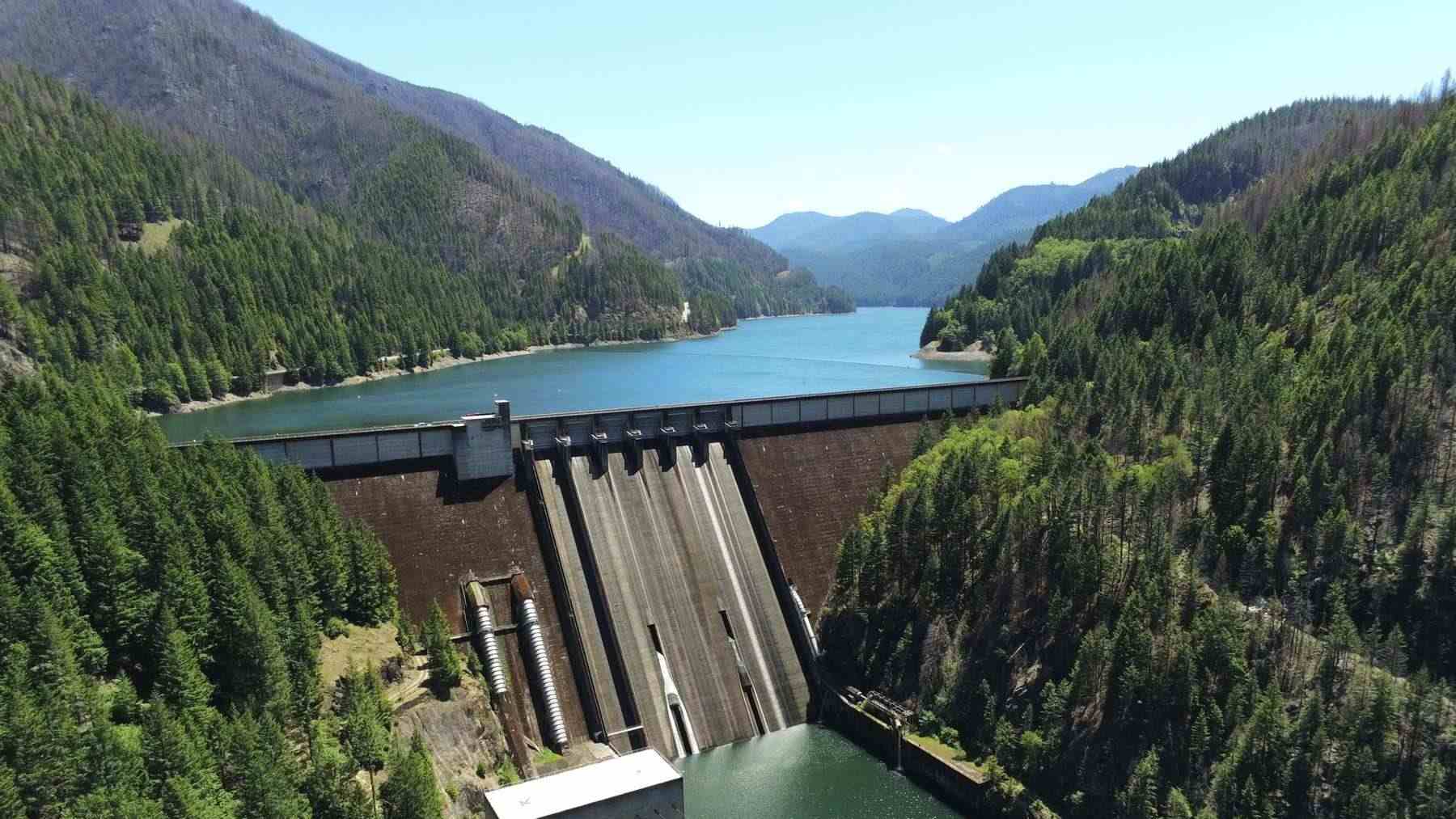
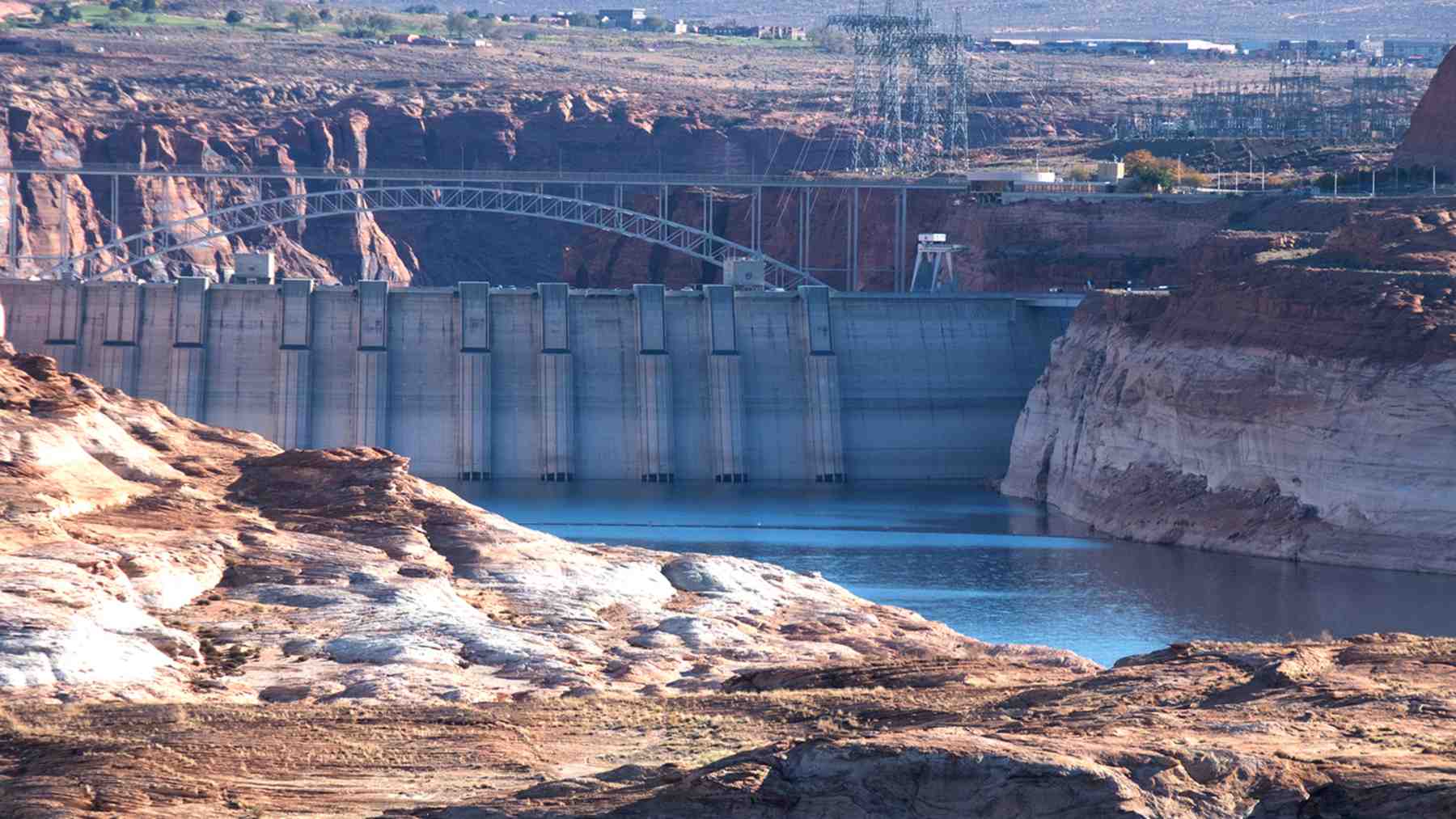
That’s a lot of hardware riding on a few dozen feet of water. Glen Canyon Dam rises 710 feet above bedrock with a 1,560-foot crest, and its powerplant uses eight 254,000-horsepower turbines to drive eight generators, good for up to 1,320 megawatts combined, according to Reclamation.
So where did all that water come from?
Mostly from the sky over the Four Corners. Utah saw somewhere between three and five times its normal fall rain, according to Elizabeth Cotter, a staff engineer with the Colorado River Authority of Utah, who spoke with The Salt Lake Tribune. A lot of it turned into flooding. The San Juan River, which empties into Lake Powell, was out of its banks near Bluff, Utah, on Nov. 1.
Reclamation’s numbers show just how strange October was. The agency’s November 24-Month Study puts October’s unregulated inflow into Lake Powell at about 1.61 million acre-feet, or 356% of average.
If you’re wondering what “unregulated” means here, it’s Reclamation’s estimate of what would’ve flowed in if none of the dams upstream were holding anything back. An acre-foot is enough water to cover an acre a foot deep, which comes out to roughly 326,000 gallons.
The lake’s also had some help from upstream. Federal and state water managers have been sending extra water down from Flaming Gorge Reservoir on the Utah-Wyoming line, with about 540,000 acre-feet released by mid-November and around 660,000 expected by December, the Tribune reports. That plan was agreed to back in the spring, long before anyone knew October would be this wet.
Lake Powell is still rising, just more slowly
Inflow’s been tapering off for a week now. Reclamation’s daily figures show it falling from 14,517 cubic feet per second on Nov. 18 to 9,719 on Nov. 25, while releases from the dam held steady at around 6,650.
A cubic foot per second is about 7.5 gallons every second. So as long as more is coming in than going out, the lake keeps climbing, and it’s still climbing. It’s just doing it at about an inch a day now, going from 3,540.47 feet on Nov. 18 to 3,541.18 feet on Nov. 25.
One thing I’d keep in mind with those daily inflow numbers. Reclamation’s own footnote says it calculates inflow from the dam’s release and the change in storage, so it isn’t a reading off a single river gauge. I’d treat it as a pretty good estimate rather than gospel.
So how panicked should we be now?
Less than in September, I think, but I wouldn’t throw a party yet.
In its most probable scenario, Reclamation’s November study expects 10.01 million acre-feet of unregulated inflow into Lake Powell in water year 2027, or 104% of average. Reclamation’s water year runs from October through September, so that’s the 12 months we’re already in.
Under that scenario, the lake ends next September at around 3,568.57 feet if 6 million acre-feet go downstream, or 3,555.81 feet with a 7-million-acre-foot release. That second figure is up from 3,525.48 feet for the same release in Reclamation’s October study. Even the November study’s dry case ends the water year at 3,523.45 feet, and the Tribune reports the agency’s latest forecasts keep the lake above 3,500 feet for the next year.
The catch is that all of this leans on snow that hasn’t fallen yet. Snowpack was sitting at 70% of median when the Tribune checked in mid-November, and temperatures were running above average. Jack Schmidt, a senior research scientist at Utah State University’s Center for Colorado River Studies, put the fall rain in perspective pretty bluntly: “If we hadn’t had this rain, we would have gone over the cliff by April 30th.”
That’s arguably the most useful way to read the last two months. The storms bought Glen Canyon Dam’s turbines some real breathing room going into winter. The Colorado River’s long drought is still there underneath it.
It’s still a mostly empty lake
Full pool at Lake Powell is 3,700 feet, so even after all that rain the surface is 158.82 feet short. Reclamation had 6,523,584 acre-feet in the reservoir on Nov. 25, which works out to roughly 28% of its live capacity. Reclamation hasn’t published a percentage for that exact day, so that’s my math, using the same basis the agency used to call the end-of-October storage 26% of live capacity.
Gene Shawcroft, Utah’s Colorado River commissioner, also pointed out to the Tribune that the reservoir was still about four feet below where it stood a year earlier. Which kind of tells you how far behind the lake was before any of this rain started.
If this sounds familiar, it’s pretty much what happened at Elephant Butte in New Mexico, where a hurricane’s leftovers more than tripled the water in the lake and it was still under 5% full afterward. I get why a jump like this makes headlines, but reservoirs this size need several good years in a row, not one wet fall.
Reclamation’s most recent reading, for Nov. 25, has 9,719 cubic feet per second coming into Lake Powell and 6,649 leaving through Glen Canyon Dam, so the lake was still gaining water heading into Thanksgiving.
 A 726-foot dam on the Colorado River has 582 miles of 1-inch steel pipe buried in its concrete, laid there so a plant making 1,000 tons of ice a day could pump cold water through it, because poured in one piece the wall would have needed 125 years to coolEnergy · 18 hours ago
 The 37 fuel elements for a 15-foot, 85-kilowatt reactor have arrived at Idaho National Laboratory from France weeks behind schedule, and the lab still plans to take the machine critical in December without a drop of coolant insideEnergy · 2 hours ago
 A hole about a tenth of an inch wide in an underground pipe elbow at Honolulu’s trash-burning power plant let up to 403,000 gallons of fuel oil seep into the ground for months, and with 22 wells pulling back 30 to 50 gallons a day, the cleanup could take 20 yearsEnergy · 16 hours ago