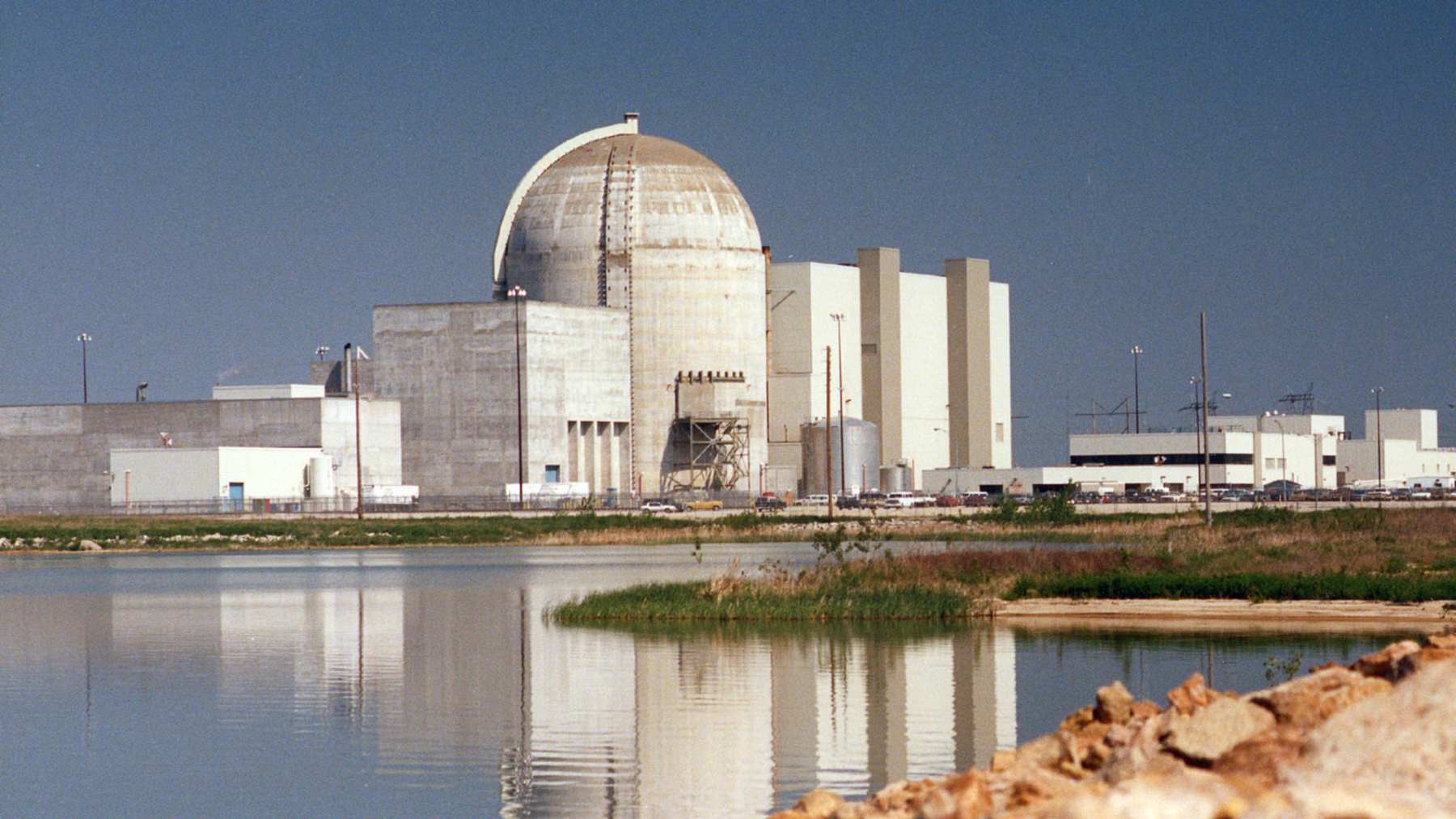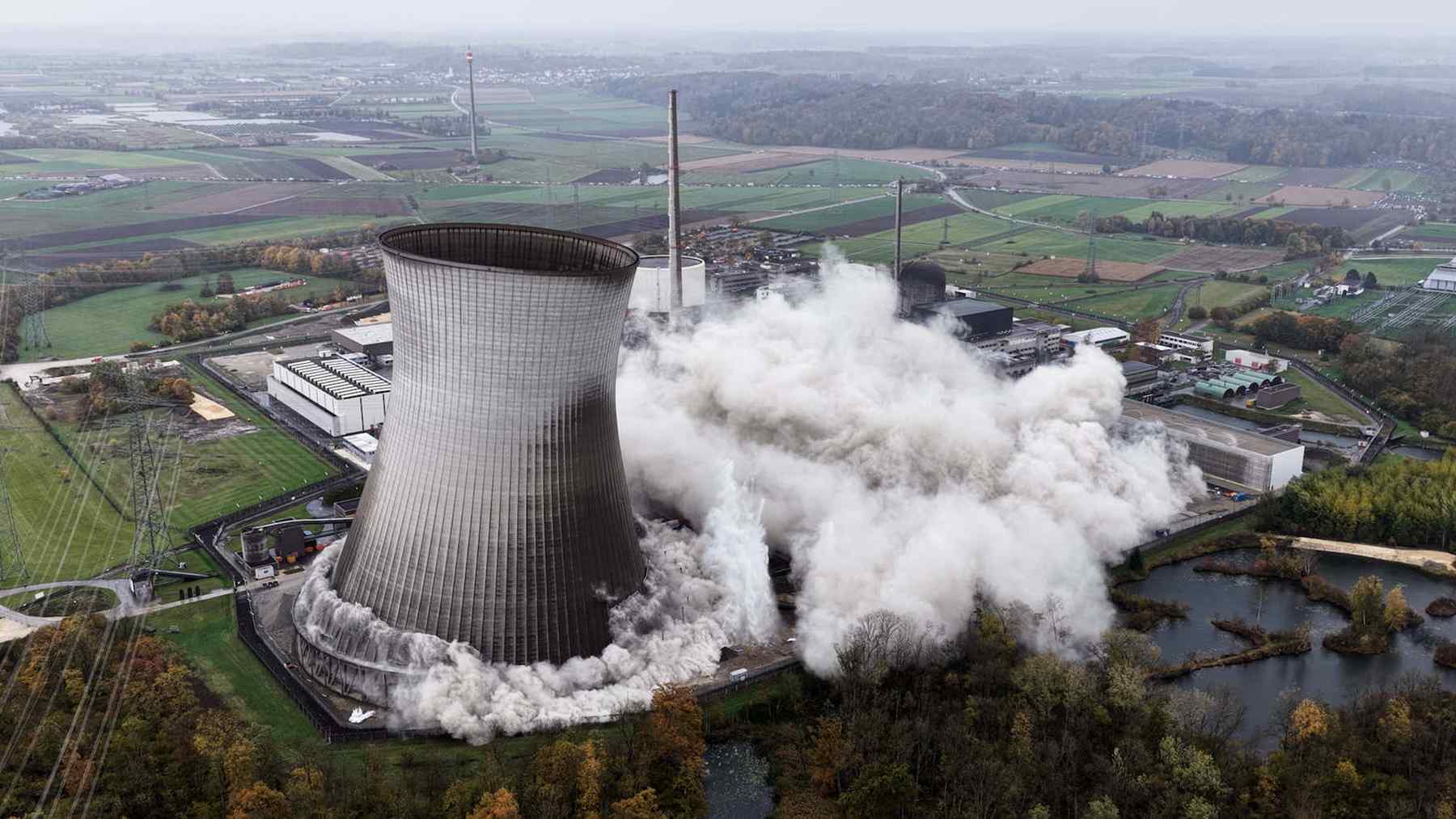

- 2 MONTHS AGO · ENERGYA 262-foot stack at a German nuclear plant tipped onto its side within seconds of the charges going off, and the 157-foot steel sphere that held the reactor comes down next, cleared to be cut up for scrap, so the site can stop being a nuclear plant after 21 years of teardown
- 1 MONTH AGO · ENERGYA 1,764-ton Italian submarine started coming together from its hull sections at a Mediterranean yard, built around a lithium iron phosphate battery, the chemistry in cheaper EVs, that holds almost twice the energy of the lead-acid cells subs have relied on for over a century
- 1 MONTH AGO · ENERGYA 60,000-pound steel cask holding up to 1,900 graphite fuel balls from a German reactor shut down 38 years ago rolled out at 10:40 at night under a police helicopter and reached a storage hall 105 miles away at 1:40 a.m., with 126 more casks still to go
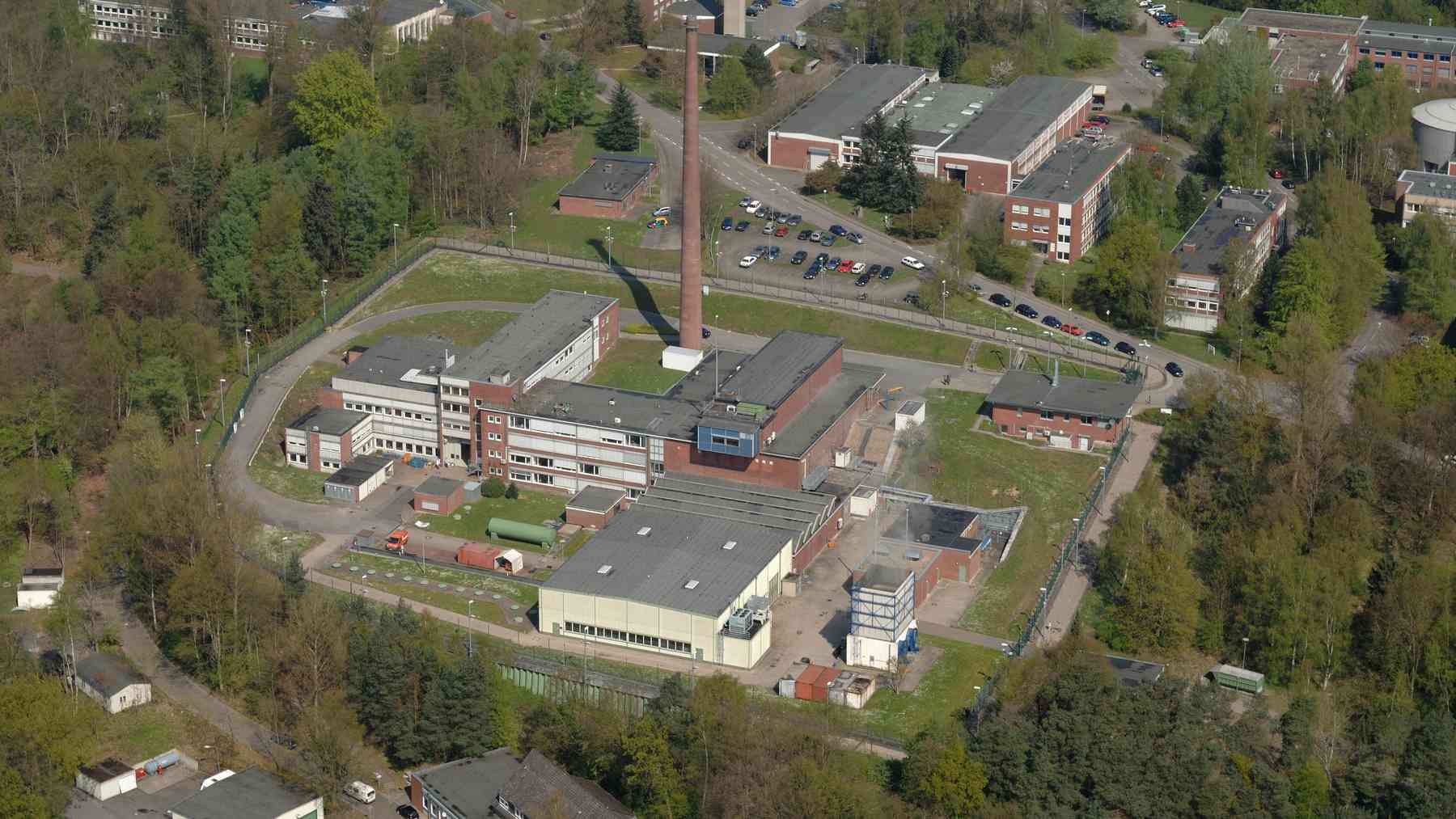
- 2 DAYS AGO · ENERGYA 1,300-megawatt French reactor was cut off from the grid at 6:20 in the morning when a connection box failed on its 400,000-volt line and was shut down by hand, while a second reactor at the plant, down for maintenance, ran on emergency diesels longer than its rules allow
- TODAY · THIS ARTICLETwo 525-foot cooling towers holding 62,000 tons of concrete came down in 45 seconds at a shut-down German nuclear plant, and a 400-megawatt battery of more than 200 containers is now going up on its old grid connection, due to switch on next year
I’ve watched the video of the Gundremmingen cooling towers coming down more times than a grown man probably should. The first one leans a little to one side, then drops straight down into its own cloud of dust. A few seconds later, the second one does exactly the same thing.
That happened in October of last year at a shut-down nuclear plant in Bavaria, and if you spend much time online, there’s a decent chance you saw the clip too.
So why bring it up again?
Because RWE, the German utility that runs the site, is now building a 400-megawatt battery there. It’s plugging that battery into the grid connection the plant’s reactors used to feed, and if the company sticks to its own schedule, the thing switches on next year. Frankly, I find that more interesting than the explosion, and I really like a good explosion.
How do you knock over a 525-foot tower?
With less explosive than you’d probably think. RWE’s demolition release says crews drilled 1,800 holes into the two concrete shells and loaded them with about 1,300 pounds of explosives. In the weeks before the blast, they’d also cut slots into each shell, and those slots basically decide where a tower breaks and which way it goes.
German blasting specialists call this “laying down” a structure. The idea is to knock out just enough of the base that the tower’s own weight finishes the job. Both towers were 525 feet tall. RWE says the whole thing was over in about 45 seconds, with one tower going right after the other.
German news agency dpa identified the contractor as Thüringer Sprenggesellschaft. RWE’s own release just calls it a well-known German blasting company. Police put the crowd at around 30,000 people, and plenty of them turned it into a party, with beer, a band and people camping out. That’s more of a send-off than most power plants ever get.
The town’s mayor at the time, Tobias Bühler, said the towers coming down meant everyone in town was losing a little piece of home. It’s easy to see why. Those towers had been on the skyline for decades.
All that concrete added up to about 62,000 tons. RWE plans to crush it into recycled gravel and sell it as building material, though I haven’t been able to find an update on whether the crushers are done with it yet.
So were the towers radioactive?
No. RWE says neither tower ever touched anything radioactive while the plant was running, and that makes sense once you know what they were there for.
Gundremmingen ran boiling water reactors, which make steam right inside the reactor and send it straight to the turbines. Once that steam has spun the turbines, a condenser turns it back into water. The condenser is cooled by a completely separate loop of water running through its own tubes. That separate loop is what went up to the towers. Their whole job was to get rid of heat, so the plant didn’t dump too much of it into the Danube, and the big white plume coming off the top was basically water vapor.
So the structures most people picture when they hear “nuclear plant” were arguably the least nuclear things on the site.
The reactor buildings are a different story, and they’re still standing. Westinghouse has the contract to cut up both reactor pressure vessels and their internals, and World Nuclear News reports that work is expected to wrap up in 2030.
What’s going up instead?
RWE broke ground on the battery four days after the blast, with Bavarian Minister-President Markus Söder there for the ceremonial shovel. RWE plans to fill more than 200 containers with roughly 850,000 lithium iron phosphate cells. That works out to somewhere around 4,000 cells a container.
Lithium iron phosphate, or LFP, is the chemistry you’ll find in a lot of grid batteries and in plenty of standard-range EVs. It doesn’t pack as much energy per pound as the nickel-based cells in longer-range cars, but it’s cheaper and a lot less likely to catch fire. That’s a pretty sensible trade when you’re lining up 200-plus containers of the stuff in one place.
Then there are the inverters. Batteries store direct current and the grid runs on alternating current, so something has to translate between the two. RWE says it’s using more than 100 of them, and they can react within milliseconds, either pulling power in or pushing it out. That speed is what lets a battery like this help keep the grid steady.
RWE puts the cost at around €230 million, which was about $267 million when the project was announced. CEO Markus Krebber called the battery “just the beginning” for the site. He might be underselling it a little, but we’ll get to that.
What does 700 megawatt-hours actually mean?
Big batteries always come with two numbers, and they’re easy to mix up. Megawatts tell you how hard the battery can push power into the grid. Megawatt-hours tell you how much energy it holds, which is really telling you how long it can keep pushing.
Gundremmingen’s battery is rated at 400 megawatts and 700 megawatt-hours. Divide one by the other and you get a bit under two hours at full output, which lines up with RWE saying it can run flat out for almost two hours.
That isn’t long, and it doesn’t need to be. A battery like this charges up when wind and solar farms are producing more than the grid can use, then sends that power back when the sun sets or the wind dies down. RWE’s groundbreaking release sells it as backup for the hours when the wind’s calm and it’s dark out.
Is it really Germany’s biggest battery? RWE says so, and on power output it probably is. But when the project was announced, ESS News pointed out that Eco Stor was about to start building a 300-megawatt battery in Förderstedt, in Saxony-Anhalt, rated at 716 megawatt-hours against RWE’s 700. So “biggest” kind of depends on which number you care about.
Why put a battery at an old nuclear plant?
Mostly for the plug. Getting anything big hooked up to the high-voltage grid often means years of waiting, and a nuclear plant already has one of the beefiest connections around. E.ON’s chief financial officer, Nadia Jakobi, made pretty much that argument on November 11, saying old power plant sites are attractive largely because the grid connections are already there, according to a boerse-global.de report from November 14.
Gundremmingen’s two big reactors were rated at 1,284 and 1,288 megawatts. RWE hasn’t said how much of that connection the battery will take up, and I couldn’t find a published capacity for the connection itself. But I’d guess there’s room to spare, because RWE doesn’t seem to be planning to stop at one battery.
Söder said at the groundbreaking that a solar park of about 136 acres and a gas-fired power plant are planned for the site too. Then in February, Munich startup Proxima Fusion signed an agreement with Bavaria, RWE and the Max Planck Institute for Plasma Physics to put its first commercial stellarator there. A stellarator is a fusion reactor that uses twisted magnets to hold super-hot plasma in place. This one’s a long way off, though. The demonstration machine it’s supposed to follow isn’t expected to run until sometime in the 2030s. The same boerse-global.de report also says RWE is open to an AI data center on the site, under a condition the report doesn’t spell out.
That’s a pretty busy future for a town of about 1,400 people.
Over here, most nuclear news is about keeping reactors running, like the Connecticut reactor that paused its restart over a failed safety pump, or getting new ones going, like the fuel that just showed up for a 15-foot reactor in Idaho. Germany made its call years ago, and Gundremmingen is what that decision looks like once the concrete’s gone.
When does it switch on?
That depends a little on who you ask. A handful of trade sites that wrote up RWE’s announcement in the days after it came out put the start date in 2028, which had me checking twice. So I went back to RWE. I also couldn’t find a construction update from the company since the groundbreaking, so we don’t know how many of those containers are already sitting on the site.
As of November 27, RWE’s English and German releases both still have the 400-megawatt Gundremmingen battery down for commercial operation early next year, and neither carries a correction notice.
 An 8-foot fence of 16 solar panels stands upright along a California yoga studio’s parking lot, facing the cars instead of the sky, and the studio painted the wall behind it white so the back of every panel catches the bounce, without losing a single spaceEnergy · 2 hours ago
 A 710-foot concrete dam on the Colorado River now has 51 feet of water above the line where its eight turbines shut down, after fall storms lifted the lake behind it nearly 25 feet off its record low, and the reservoir is still 159 feet short of fullEnergy · 4 hours ago
 The 37 fuel elements for a 15-foot, 85-kilowatt reactor have arrived at Idaho National Laboratory from France weeks behind schedule, and the lab still plans to take the machine critical in December without a drop of coolant insideEnergy · 6 hours ago