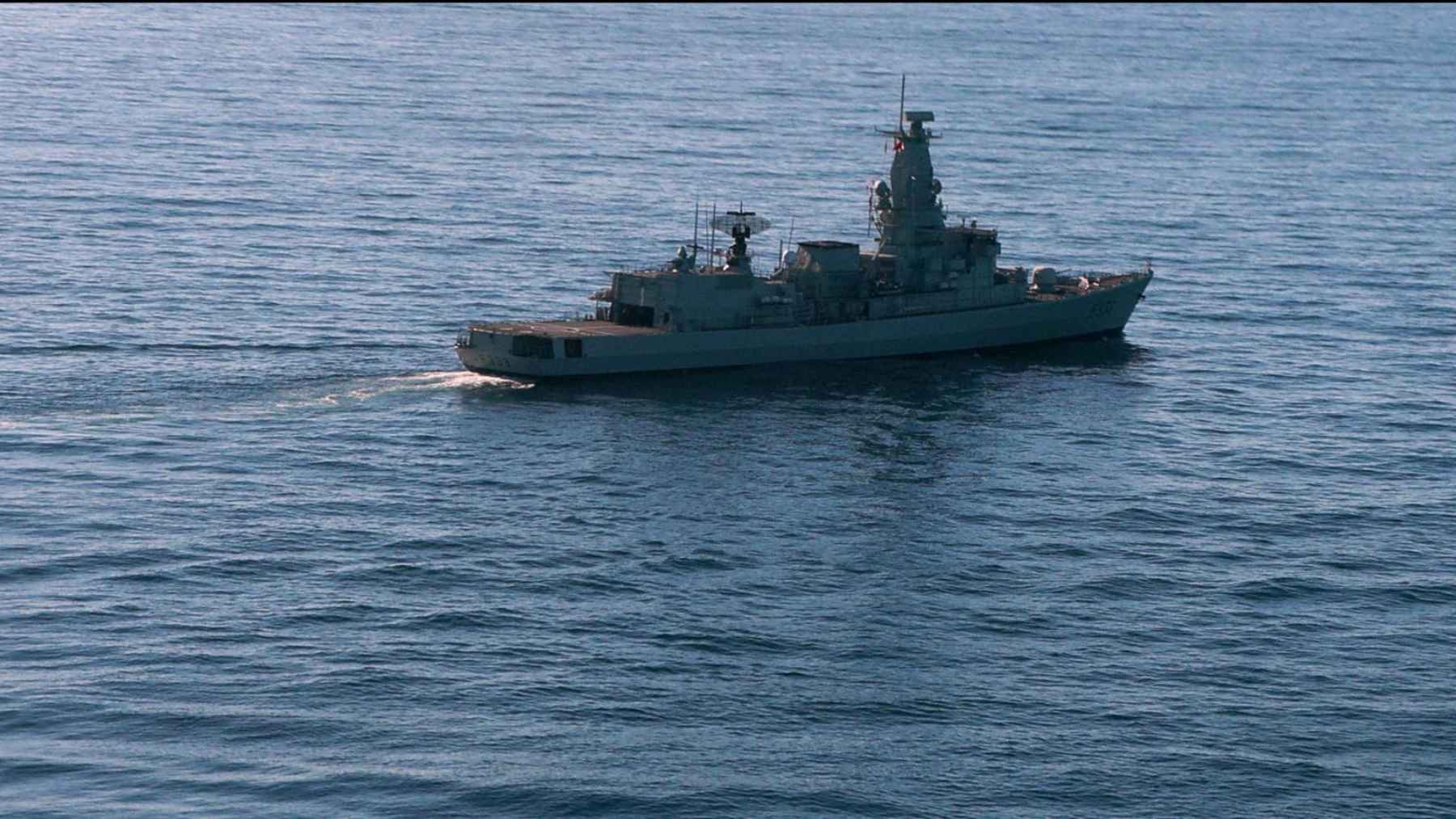

If you’ve seen any footage of drone boats or drone aircraft going after a warship, you probably noticed it’s just a few of them at a time. One slams home, a couple get shot up on the way in, and analysts spend the next week arguing about what it means for the future of navies. The biggest real-world drone wave attacking a US destroyer was 14 aircraft back in December 2023, according to US Central Command.
So what happens when more than 60 uncrewed attackers come at one ship at the same time?
NATO just ran that experiment. On one of its own frigates.
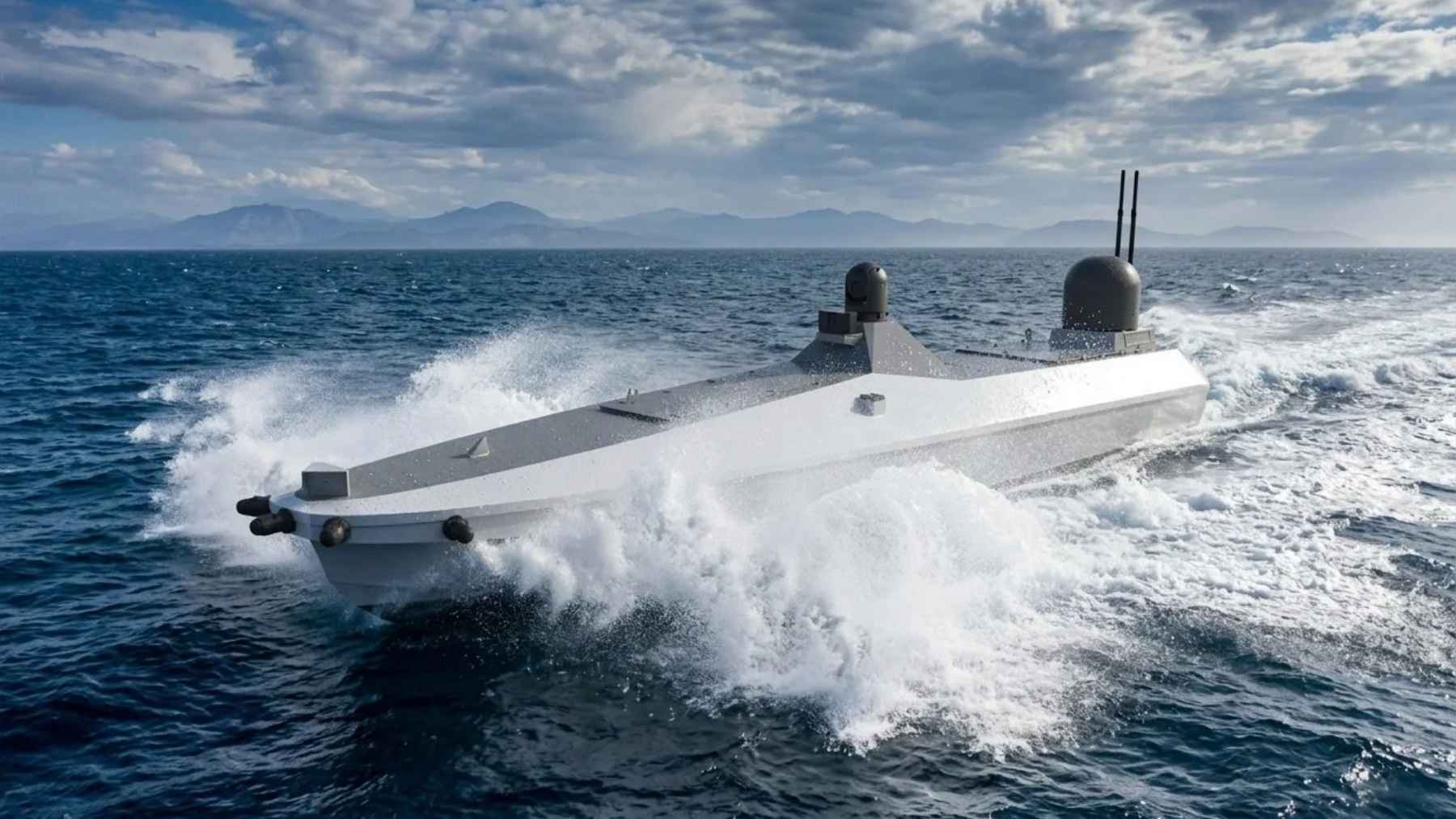
During the night of September 20th, off the Portuguese coast near Tróia, a force of more than 60 uncrewed attackers staged a simulated strike on the NRP Bartolomeu Dias, a Portuguese Navy frigate. Janes, the defense intelligence outfit, reported the details after interviewing the director of the Navy’s operational experimentation center at Tróia the following day. Naval News, which also covered the exercise, reports the frigate worked with around 30 drone boats and aircraft of her own to defend a maritime exclusion zone. That’s basically a patch of sea you declare off-limits and then have to actually keep stuff out of.
Simulated means the hits were scored electronically rather than with warheads. The machines, the sensors, and the chaos weren’t simulated at all.
The two outlets don’t count the attackers quite the same way. Janes puts the strike force at more than 60 drone boats, with drone aircraft flying on top of that. But Naval News counts more than 60 boats and aircraft combined. Either way, it’s a bigger uncrewed attack than any warship’s actually had to survive, and the defending side wasn’t just the frigate’s guns: somewhere between 20 and 30 uncrewed escorts sailed and flew cover for her, per Janes.
The aircraft made the finding. According to Janes, drone aircraft located the frigate in the dark and then guided the attacking boats onto her, with human operators keeping approval authority over every move. Nobody cut the swarm loose to make its own decisions.
So what was playing the target?
The Bartolomeu Dias isn’t some retired hulk towed out to take a beating. She’s actually one of the Portuguese Navy’s active M-class frigates, bought secondhand from the Netherlands, where she sailed as HNLMS Van Nes. Now, she’s been in Portuguese service since January 2009. Per the Portuguese Navy’s fact sheet, she runs 401 feet long with a beam of about 47 feet, displaces 3,660 short tons (3,320 metric tons), draws 20 feet of water, and carries a crew of 158, plus a 15-person detachment for her Lynx helicopter. Her gas turbines push her to 29 knots, call it 33 mph.
She’s properly armed, too. A 76 mm gun, 16 Sea Sparrow air-defense missiles, eight Harpoon anti-ship missiles, torpedo tubes, and a Goalkeeper close-in gun whose entire job is shredding whatever gets too close. Which is exactly the hardware a swarm’s designed to overwhelm, and presumably why she keeps drawing this duty. The ship NATO picked to rehearse the newest problem in naval warfare has been afloat since 1992.
Nine command systems talking is the quietly impressive part
Janes also reported a figure that sounds boring at first, but it actually isn’t. Nine separate command-and-control systems were integrated into a single shared network to run the night. That’s nine different pieces of software, not nine people with joysticks.
This means every navy and every drone maker ships its own control software, and those systems have historically treated each other like strangers at a party. A Portuguese drone boat, a British control console, and a German sensor feed (sounds like the beginning of a joke) don’t naturally share one picture of the fight. Getting nine of them to coordinate a single engagement, at night, with 80-plus machines in the water and the air, is the unglamorous plumbing that decides whether any of this stuff works in a real war. I’d argue it’s a bigger deal than the swarm itself.
Launching 60 drones is a logistics problem. Making 60 drones from different countries fight as one team is a software problem. And that’s the kind of problem that’s embarrassed NATO before.
REPMUS is basically NATO’s robot lab at sea
The venue explains how a night like this is even possible. REPMUS, short for Robotic Experimentation and Prototyping with Maritime Unmanned Systems, is a yearly exercise the Portuguese Navy runs with NATO out of Tróia, south of Lisbon, and 2026 was its 16th edition. This year’s run from August 31st to September 25th, drawing about 1,500 people from 36 navies, according to NATO. The Portuguese Navy says more than 300 unmanned systems took part, supported by 14 crewed ships.
Everything else there orbits the same idea. A fleet of 19 underwater drone gliders spent weeks hunting submarines as part of the same exercise, and a 39-foot German drone boat launched attack drones there days before its maker announced anti-ship missiles for it. The simulated attack on the frigate is what you get when you pile all of that into one scenario and press go.
A few things haven’t been published, and you should know that before drawing conclusions. Nobody’s released a scorecard for the night, so I can’t tell you how many attackers the defenses stopped or whether the frigate would’ve survived the real version. There’s no breakdown of which drone models flew and sailed on each side, either. This particular run didn’t use live weapons. REPMUS does do live fire, just elsewhere in the schedule: during the same three weeks, the Bartolomeu Dias and her Lynx helicopter each put a real Mk46 torpedo in the water, per the Portuguese Navy.
The Portuguese Navy will haul the whole circus back to Tróia next September for round 17. If all goes according to plan.
Image Credit: Marinha