
A lot of the nickel that ends up in EV batteries and stainless steel comes out of the ground in places like Sudbury, Ontario, which has been dug up for the stuff for well over a century. So the Sudbury Basin is dotted with old holes.
Some are still working mines. A good number are full of water with nothing on top of them but gravel, because once a company decides a mine’s done, it usually tears down the headframe (the tower over the shaft) and the buildings, caps the shaft with concrete and lets the groundwater have the rest.
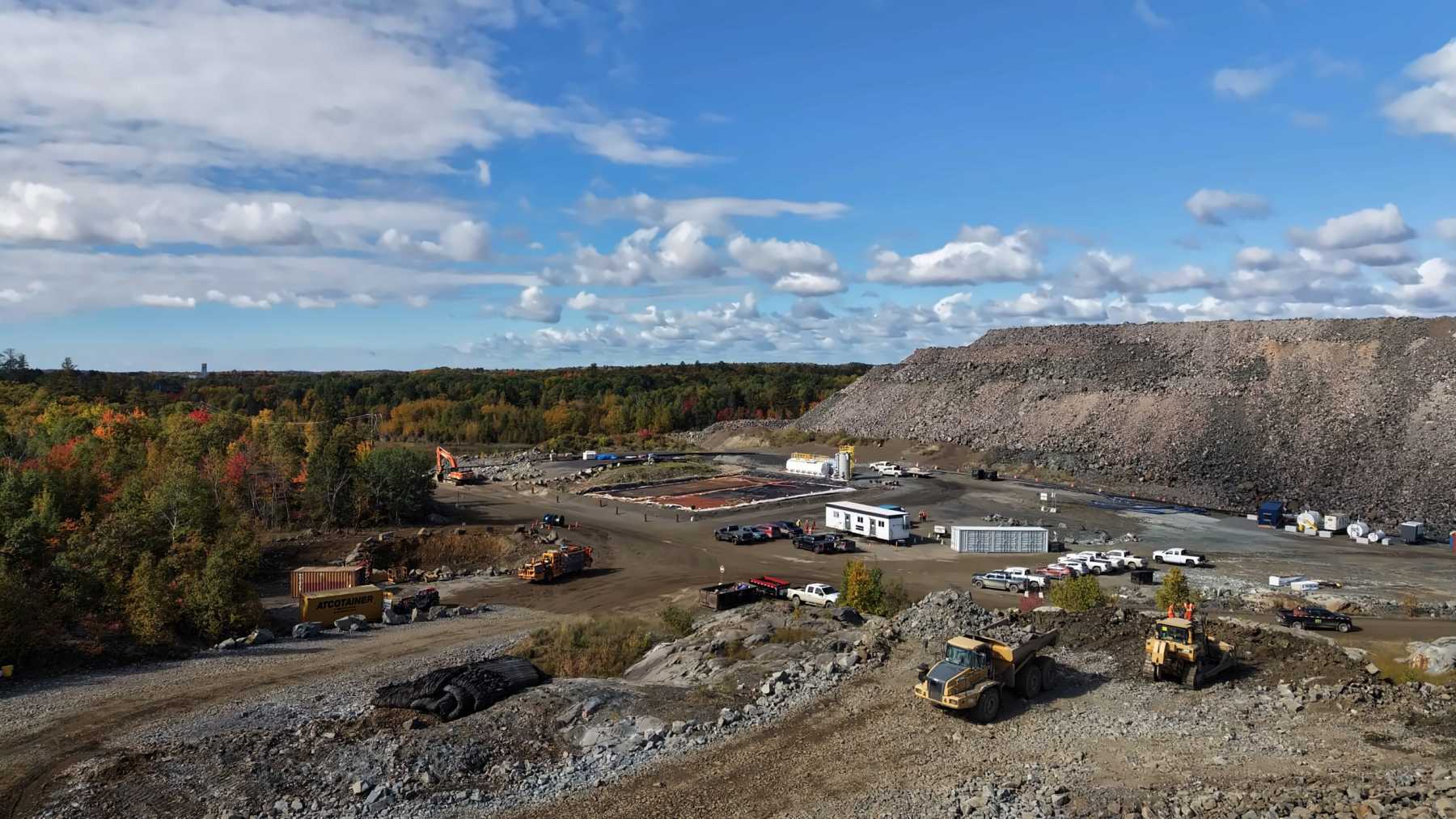
Crean Hill, about 22 miles west of the city near a community called Whitefish, has been one of those flooded holes since 2002. This week its owner decided to go back in.
Magna Mining, a small Sudbury company, put out a prefeasibility study on October 21 and said its board had approved construction. The plan’s pretty simple on paper: dig a new ramp down from the surface, start pulling ore from the top of the old mine, pump the deeper workings out, and eventually put the original No. 2 shaft back to work hoisting rock. Construction’s supposed to start in the first half of 2027.
So what’s a prefeasibility study, and why does a board vote based on one count as news?
We’ll get to that. But first, the mine.
So what’s down there?
Crean Hill isn’t new. Magna says the site has been mined on and off since 1906, both as an open pit and underground, and that roughly 22.5 million tons of ore came out before the last operator shut it down in 2002.
The grades were 1.31 percent nickel and 1.09 percent copper, with a little platinum, palladium and gold mixed in. Inco ran it for most of that stretch, which is apparently how everyone in Sudbury still refers to it.
When Magna bought Lonmin Canada, the company that held the property, in November 2022, there wasn’t much to look at. Northern Ontario Business reports that every surface building had already been demolished and the underground workings were flooded.
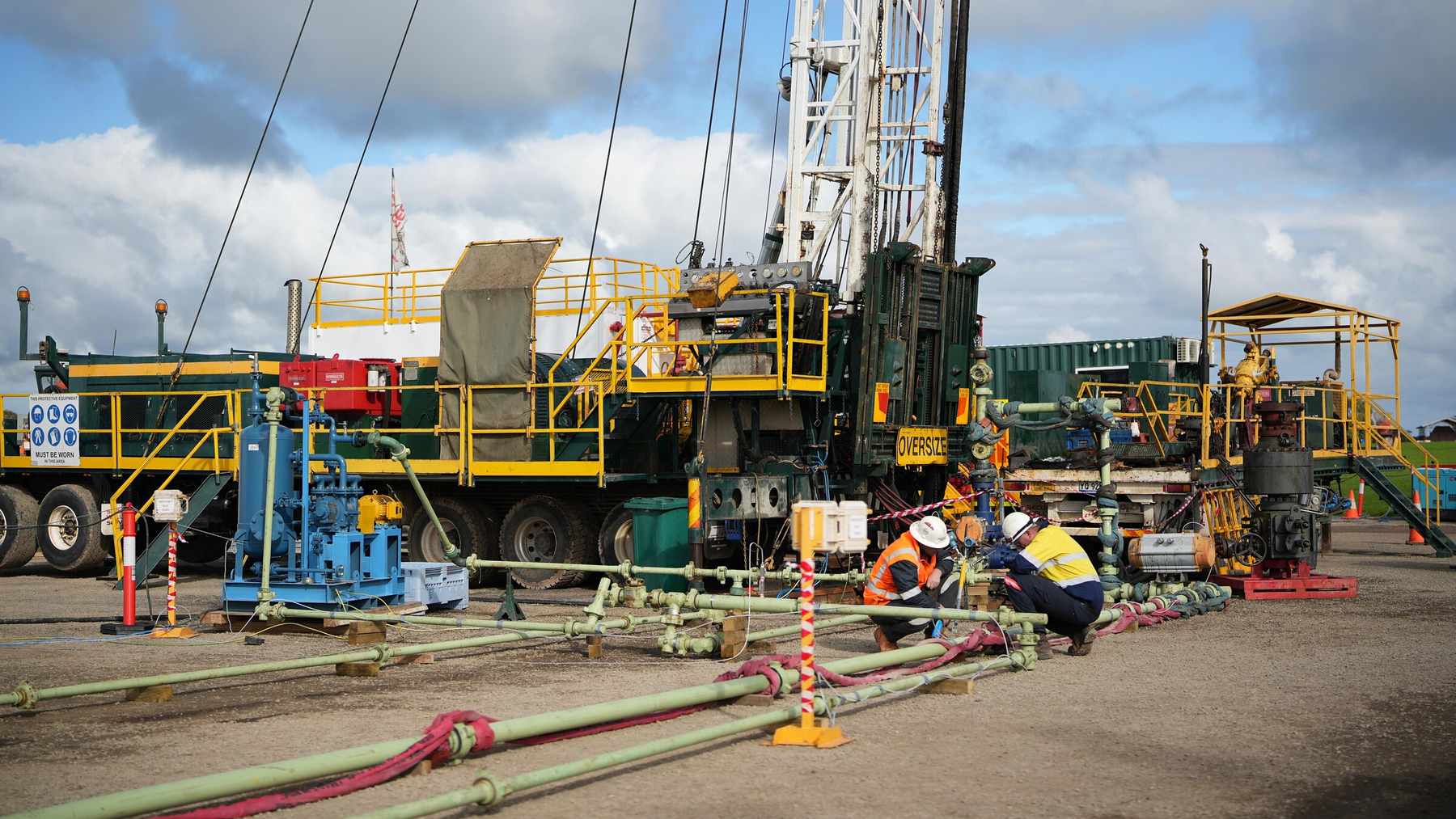
Magna started cleaning the place up in 2024, got a provincial permit that year to begin pumping water out, and blasted roughly 22,800 tons of rock out of the surface as a bulk sample that it trucked to a mill for testing. That sample, plus 199 new drill holes, is a big part of what the new study’s built on.
One detail I found pretty interesting: Magna only owns the rock from the top of the old shaft down to 4,500 feet. Vale, which bought Inco, still holds the mining rights below that. So this is a company reopening the top of someone else’s mine, with the deep end permanently off limits.
A ramp first, then the old shaft
If you’ve never thought about how you get into a flooded mine, the answer is that you mostly don’t, at least not at first. The study calls for a box cut and portal at the surface and a new ramp spiraling down from there, which means the early ore comes out on 50-ton haul trucks driving up a tunnel rather than up the shaft. Those first loads come from areas above the mine’s 500 Level, and Magna says it’ll rely mostly on repairing the old ventilation and service raises that are already there.
The old No. 2 shaft, which is currently capped with concrete, comes later. As mining goes deeper, Magna plans to rebuild a hoist plant on the surface, repair the shaft and start hoisting ore from a loading pocket on the 2000 Level.
It’s basically math: a truck can haul ore up a ramp from 2,000 feet down, but you need a bigger fleet and a lot more ventilation to do it all day, and at some point a cage on a cable is cheaper. Glencore reached the same conclusion a few miles north of here, where it sank a new shaft from the bottom of a mine it had closed in 2009.
Crean Hill won’t have its own mill. Ore gets crushed on site to about 1.5 inches, sampled, and shipped in 2,000 to 4,000-ton lots to what the study calls an existing third-party mill in Sudbury. The study doesn’t name the mill.
CTV reported back in 2024 that Magna had signed a processing deal with Vale, and that year’s bulk sample went to Glencore’s Strathcona mill, so there’s at least two candidates. Either way, skipping the mill is a big part of why the price tag’s as low as it is.
2,400 tons a day for 12 years
Those are the headline numbers from the study. Magna expects to mine about 2,400 short tons of ore a day during commercial production, working through 11.4 million tons of probable reserves over a 12-year commercial life. Roughly 875,000 tons a year gets shipped to the mill.
The metal mix is what I’d pay attention to. The company expects an average of 9.5 million pounds of payable copper and 7.5 million pounds of payable nickel a year, plus about 42,000 ounces of platinum, palladium and gold combined. “Payable” is mining-speak for the metal you actually get paid for after the mill takes its cut and the smelter applies its deductions, so it’s a smaller number than what’s in the rock.
So the mine Sudbury knows as a nickel operation isn’t really one anymore, at least on the balance sheet. At the prices the study assumes, nickel brings in 34.4 percent of revenue and copper 27.3 percent. Gold, platinum and palladium together bring in 37.4 percent, and cobalt and silver top it up to roughly 39 percent from everything that isn’t nickel or copper.
You can see why Magna’s leaning on that. Nickel’s had a rough couple of years, and the study’s base case actually assumes a nickel price of US$8 a pound, above the September average of US$7.50.
Gold and copper went the other way. At September prices the company says its after-tax return jumps from 43.4 percent to 65.4 percent, so most of the upside in this mine is sitting in the metals Inco would’ve treated as a byproduct.
The money, and the catch
Magna puts the initial capital at C$127 million, or about US$90.4 million, spread over three years: roughly C$33 million in 2027, C$35 million in 2028 and C$59 million in 2029. It expects C$17.2 million of that to come back as refundable federal tax credits and another C$37.4 million to be covered by selling ore before the mine’s officially in commercial production, which leaves what the company calls a net funding requirement of C$72.4 million, a bit over US$52 million. Magna says it has around C$175 million in cash after a Peruvian mining company, Alpayana, bought C$140 million of its stock in August, so on paper it can afford this.
The study’s base case has the mine paying for itself in 1.5 years. Now for the catch, because there’s a couple.
First, that 1.5 years is counted from the end of year three, so from early 2030, when commercial production’s supposed to start. The first ore sales are penciled in for late 2027, but the mine isn’t considered fully up and running until the start of 2030.
Second, the payback and the C$251 million after-tax value the study puts on the project only hold if copper sells for US$5.10 a pound, nickel for US$8, and gold for US$3,600 an ounce through the 2030s. Knock all the metal prices down 20 percent and Magna’s own sensitivity table shows the project’s value dropping to roughly zero. That’s not a knock on the company; every mining study works this way. But you should know it before you read “43 percent return” as a fact.
Third, and this is what I’d flag if a friend asked me whether this mine was really coming back: a prefeasibility study’s the middle step. A preliminary economic assessment is the rough sketch, a prefeasibility study is a proper engineering estimate with reserves you’re allowed to call reserves, and a feasibility study is the one banks lend against.
Magna’s board has approved construction off the middle one, which is less common than it sounds and, frankly, a sign the company thinks it knows this ground. It already runs the McCreedy West mine in Sudbury and approved restarting the nearby Levack mine on October 8.
Desjardins analyst Bryce Adams called the update “slightly positive” in a note quoted by The Northern Miner, and pointed out the capital estimate came in about a third above the C$95 million he’d modeled. Magna’s stock moved less than 1 percent on the news.
What happens before anyone digs
Between now and the first half of 2027, Magna says the work is detailed engineering, running grid power onto the site, ordering long-lead equipment, pumping water out of the old infrastructure and hiring people. It hasn’t said how many jobs the mine will support, which I’d have liked to see in a study this detailed, and the technical report behind the summary won’t be filed for another 45 days.
Not everything’s waiting, though. Magna also said it has moved a diamond drill rig onto the property and started testing new targets for copper and precious metals in the footwall, the first exploration drilling at Crean Hill since 2024. So while the ramp’s still on paper, someone’s already poking holes in the ground around a mine that last shipped ore 24 years ago, and the company expects to report its third-quarter results on November 11.