
When you think about hunting submarines, you probably think about aircraft. A P-8 or a helicopter drops a line of sonobuoys into the water, then hangs around overhead, listening for anything with a reactor and bad intentions. That’s been the basic recipe since the 1940s, and there’s one expensive ingredient in it: the hanging around.
A sonobuoy is basically a floating microphone. The underwater end dangles below the surface picking up engine and propeller noise, and the top end radios whatever it hears over VHF, and VHF doesn’t carry past the horizon. So something has to stay close, and preferably high, to catch those transmissions. Usually that something’s an aircraft, and flight hours on a maritime patrol plane aren’t a cheap way to babysit a radio.
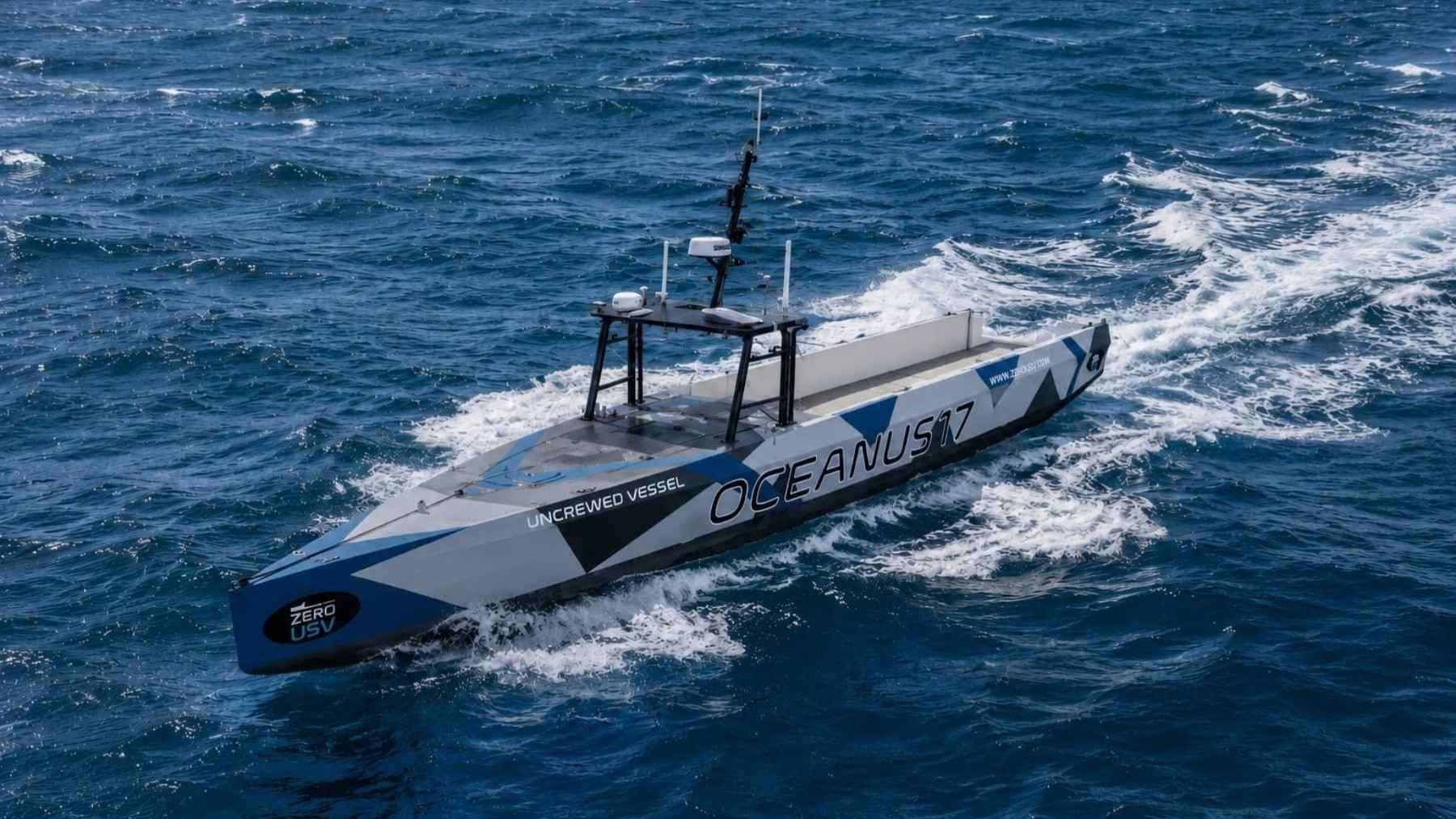
The Royal Navy spent most of September off Portugal testing a different catcher. During Exercise REPMUS 2026, NATO’s big annual wargame for uncrewed systems, the navy put a sonobuoy receiver called Sonix on board the Oceanus17, a 56-foot British drone boat with nobody on it, and worked it into live anti-submarine scenarios. Warsight documented the trial on September 30 after an in-person briefing from the UK’s Defence Science and Technology Laboratory, better known as Dstl, and the Royal Navy published its own wrap-up on October 1.
If the boat sounds familiar, that’s because it is. We covered this 56-foot drone boat and the 20-foot shipping-container slot cut into its deck back in August, when it was named in Plymouth and nobody would say what goes in the hole. Now there’s a tenant in the hole, at least a part-time one.
So what exactly is Sonix?
Sonix is a receiver and processor package, hardware plus software, that catches what sonobuoys transmit. It’s made by TKMS Sonartech Atlas, an Australia-based supplier, and it’s already in service on German Navy vessels, so the Royal Navy didn’t bet on an exotic prototype here. It’s spent roughly four years adapting a working system with the supplier instead, shrinking components until the same package fits on a drone aircraft.
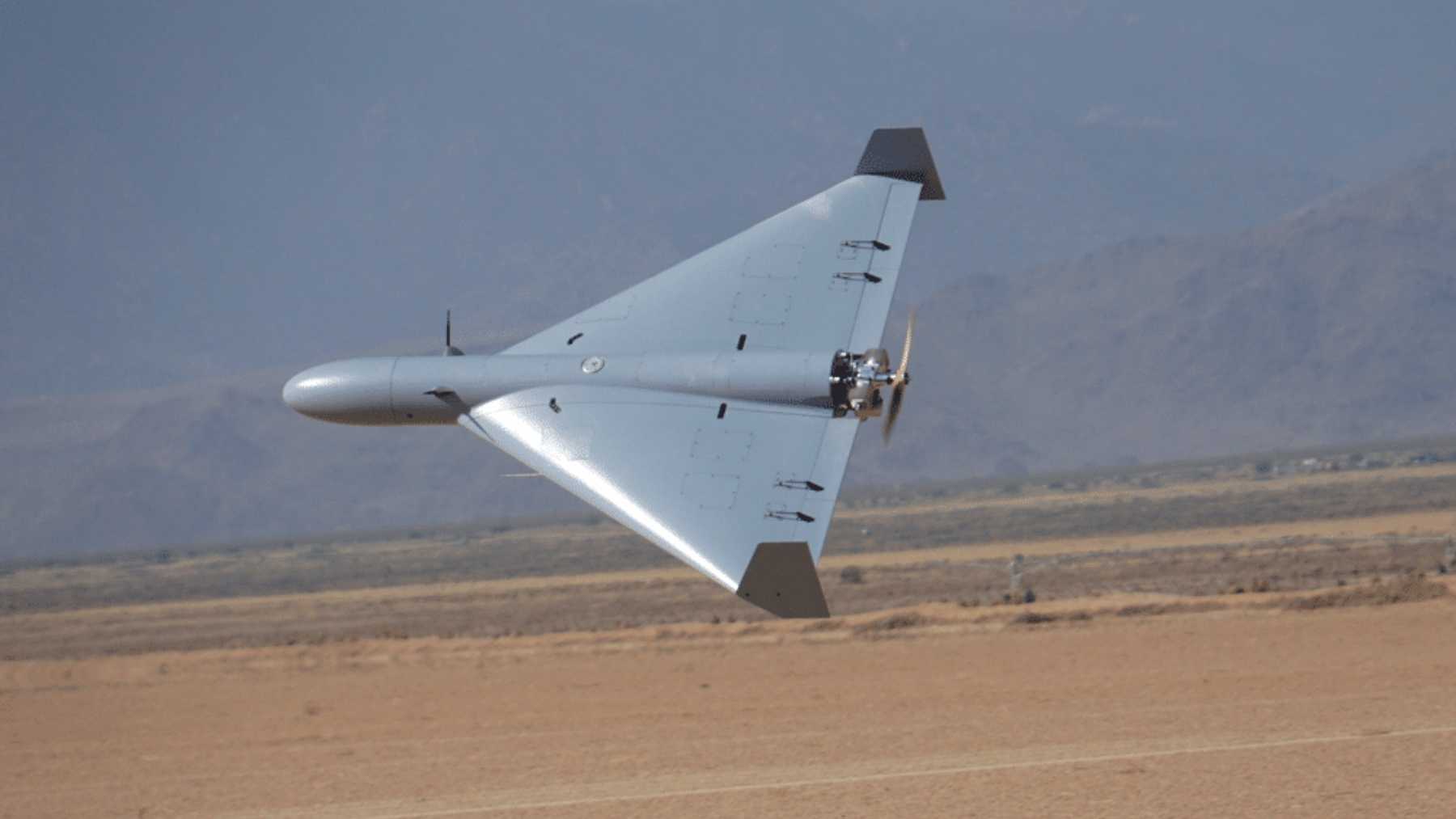
The selling point is that it isn’t picky: it’ll take signals from any sonobuoy and ride on pretty much any vehicle. A military adviser to Dstl described the project, at the REPMUS briefing Warsight attended, as building “a low-cost, platform-agnostic sonar sensing capability” that can scale as autonomous platforms multiply. At the exercise, the same package flew on a Tekever AR5 drone aircraft and sailed on the Oceanus17.
So why bolt it to a boat?
Because the boat can stay. An aircraft catches sonobuoy traffic until it’s time to fly home. A hull rated for 50 to 100 days at sea can sit on a buoy field for weeks, turning disposable microphones into something close to a fixed tripwire, with no aircrew on the clock. And the buoys themselves are cheap, interoperable and small enough for drones to carry, which is exactly why the Royal Navy picked them as the backbone of this project back in 2022.
What the exercise showed is the catching part working from a crewless hull. The judging still happens on land. The acoustic processing that turns raw noise into a contact and a track runs ashore for now; the boat’s basically forwarding its homework to the shore station. Dstl’s stated goal for the next 12 months is to layer AI onto that processing and push it out to the platforms themselves, which would cut the bandwidth bill and the lag.
This is the boat with the hole in the middle
The Oceanus17 is built by ZeroUSV, working out of Turnchapel Wharf in Plymouth, and the 17 in the name is the hull length in meters. In American, that’s 56 feet of aluminum displacing about 15 short tons. The company rates it to carry 8,818 pounds of payload, about 4.4 short tons, in a bay cut to 20-foot shipping-container dimensions, with up to 30 kW of electrical power reserved for whatever gets bolted in. A sonobuoy receiver barely dents either number, which is sort of the point: the slot stays open for the next job.
A few of the smaller details look like they’re tailor-made for this mission. The hull carries a gondola keel 5.6 feet below the waterline, which ZeroUSV pitches as a quiet mounting spot for acoustic sensors. The drivetrain’s hybrid diesel-electric and can run 12 hours on batteries alone, and for a machine whose job description is sitting still and listening, a propulsion mode with no diesel clatter seems like a pretty useful thing to have. The endurance and range figures are the manufacturer’s ratings, to be fair, not something anyone timed with a stopwatch in September. The boat itself was christened The Lady of the Lake at that August ceremony, because the British will work King Arthur into anything that floats.
There’s a family history here too. At last year’s REPMUS, the 39-foot Oceanus12, the smaller sibling of this 56-foot hull, spent the exercise launching G-size sonobuoys from a prototype launcher and recovering a towed sonar array on its own, a world first by ZeroUSV’s count. So in 2025 the little boat learned to throw the microphones, and in 2026 the big one learned to catch what they say.
September was crowded off Tróia
REPMUS ran from August 31 to September 25 around Tróia and Sesimbra on Portugal’s Atlantic coast, and the Royal Navy sent about 200 people, leading a contingent from ten NATO and partner nations. The UK’s lane this year was anti-submarine warfare, with the navy running the operational scenarios in support of Atlantic Bastion, its program for defending UK and allied waters with a mix of crewed ships and uncrewed systems. The driver behind that focus, per Warsight, is Russian submarine activity in the North Atlantic.
The navy’s October 1 write-up says two autonomous boats, one 39 feet long and one 56, were tested towing sonar systems, dropping automated sonobuoys and launching underwater gliders. It lists those jobs between the two hulls without saying which boat did which, so I won’t guess. What Warsight’s reporting does pin down is that the Sonix receiver specifically rode the 56-footer.
Around them, underwater gliders fed real-time ocean readings to larger sentinel gliders towing long vertical hydrophone arrays. Sweden flew fixed-wing reconnaissance drones. Portugal flew drones that drop sonobuoys and relay the data to a command center ashore, and five support ships from Germany, France, the Netherlands and NATO’s Centre for Maritime Research and Experimentation backed the whole thing up.
One gap the navy wants to close is altitude, because a boat’s antenna doesn’t see far over the curve of the ocean. Also at the exercise was an airship from the Finnish company Kelluu; it’s built to loiter for up to 12 hours, and the Dstl adviser said the plan over the next year is to integrate Sonix onto it, parking a receiver high enough to hear a much wider buoy field. That integration hasn’t happened yet.
The navy hasn’t published detection ranges from the trial, and as far as I can tell that’s standard for this kind of work. So what you can verify here is the installs and the sorties, not a submarine getting caught. Still, alongside the test unit, the Royal Navy has already procured a second Sonix system for fitting to its own platforms, which reads to me like a navy that’s already made up its mind.
The Royal Navy posted its REPMUS summary on October 1, and Dstl put a clock on the next step: within 12 months, the plan is to move the acoustic processing off the shore station and onto platforms like this one, so the 56-foot boat graduates from mail carrier to listener.