
If you’ve been following our coverage of the Navy’s underwater drone problem, you’ve probably noticed the solutions keep getting bigger. A seabed fence stretching nearly a mile across a harbor floor. A 34-foot drone submarine that fires things out of itself while submerged. So I was not expecting the most interesting counter-drone machine of the summer to be something you could lose in a golf bag.
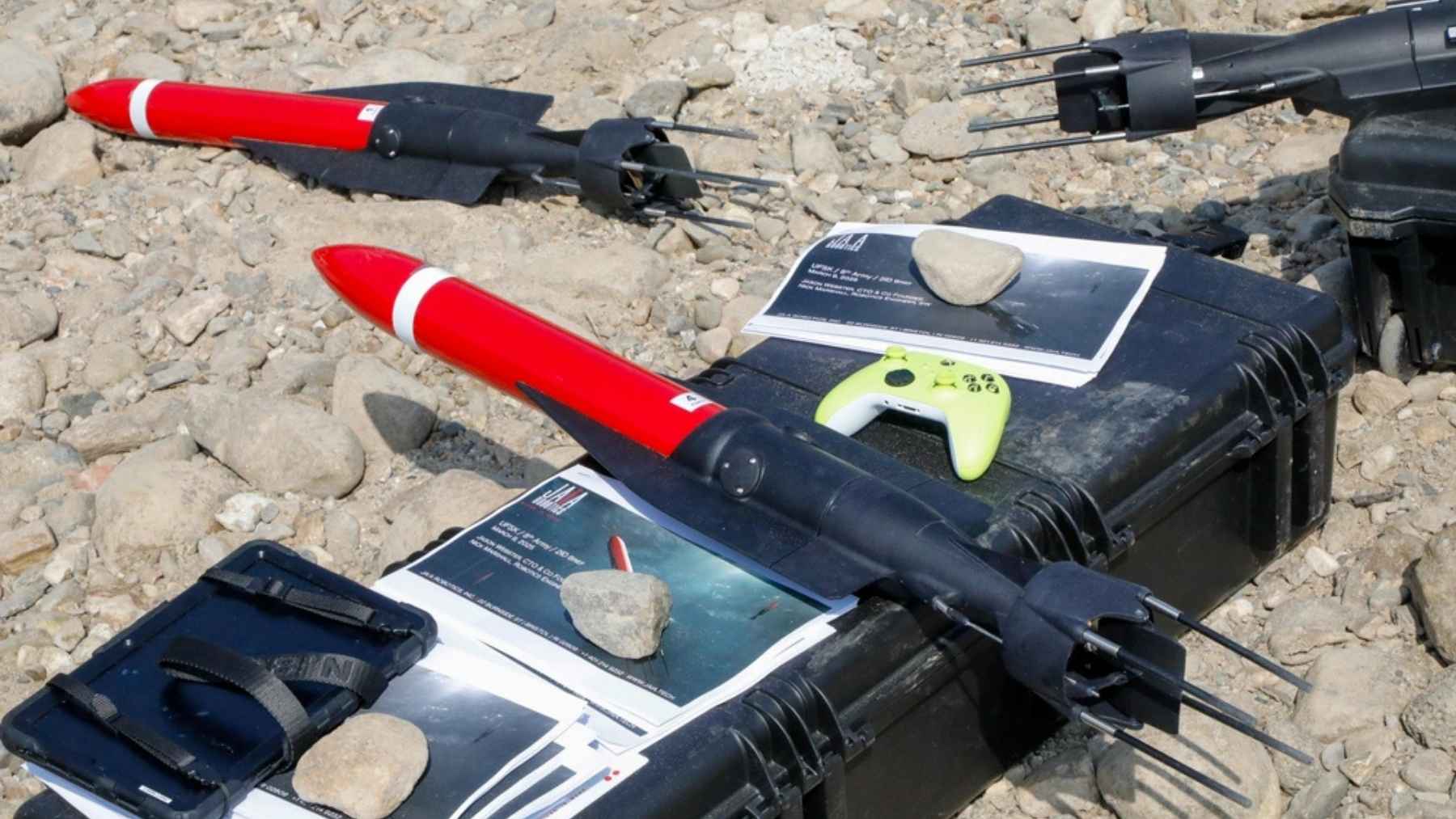
The machine is called the JaiaBot, and it comes out of Jaia Robotics, a small shop in Bristol, Rhode Island, founded in December 2020. Each one weighs 6.5 pounds (3 kilograms), runs 38 inches (96 centimeters) long, and has a hull 2.75 inches across. You launch it by throwing it off a dock or a boat.
That’s the whole procedure.
So what does a 6.5-pound drone actually do?
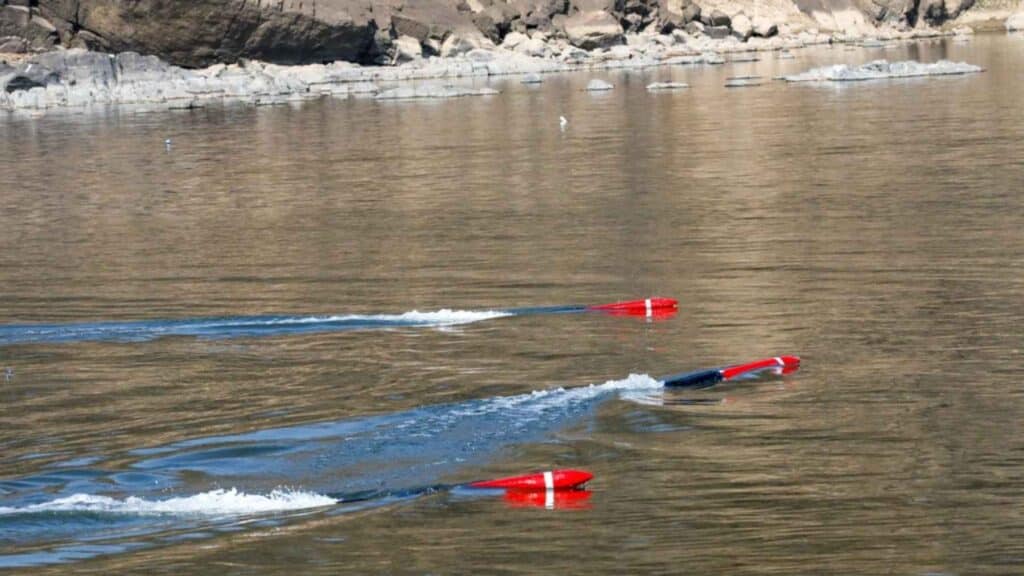
Mostly, it collects data fast and cheap. On the surface, a JaiaBot planes along at better than 7 knots (about 8 mph), which is quick for something this size, and there’s a reason it works that way. Pushing a hull across the surface costs far less energy than dragging it through the water below, so the bot sprints on top, stops where you want a measurement, dives straight down as deep as 197 feet (60 meters), takes its readings, and pops back up. Jaia rates the surface range at 7 miles (11 kilometers), and an extended-range version stretches that past 20 miles with up to 115 hours in the water. The software is open source, built on two robotics middlewares developed at MIT, and one operator can run a whole pod of them at once.
The spec I keep coming back to is the dumbest-sounding one. According to the company’s own spec sheet, a battery swap takes one minute. A dead bot goes back in the water before you’ve finished tying up the boat, which quietly matters more than the top speed, because the whole point of a pod is keeping lots of bots wet at the same time.
At BlueTIDE, the little drones went hunting other drones
BlueTIDE is an annual demonstration that Polaris Tech Bridge runs with the Naval Undersea Warfare Center’s Newport division, and the 2026 edition took place August 26-27, with the public demonstration day at Fort Adams on Narragansett Bay. The 2025 edition drew 650 registered attendees and 52 companies from four countries, so this is a real shop window with the Navy watching.
The official program gave pods of JaiaBots the opening serial, called Coastal Surveillance & Harbor Defense, working alongside fixed sensors from Xtreme Sonar and the University of Rhode Island. The program’s own description reads: “JAIA JBOTS demonstrate counter-UUV operations designed to help protect and defend the harbor.”
The next serial is the one I’d have paid to watch. A surface drone from Tactical Composites drove itself into the operating box under autonomous control, in a serial the program calls Preparation of the Undersea Battlespace, and launched JaiaBots to map the seabed and identify objects on the bottom. So you had a drone boat launching underwater drones to prepare a fight against other underwater drones, while an aerial drone from Juice Robotics dipped a sonar into the bay at 10:15 a.m. and again at 1:00 p.m. If you’re keeping score, that’s air, surface, and subsurface covered without a crew anywhere.
What the program never spells out is what “counter-UUV operations” means for a machine you can throw. Jaia sells a variant with a hydrophone that listens for surface and subsurface vessels, so the plausible answer is detection and tracking rather than ramming anybody, but I can’t find anything public that says a JaiaBot can disable another drone. Nobody has published detection numbers from the drills either, and the printed schedule carried a subject-to-change label, so treat the serial descriptions as the plan until somebody at the Navy publishes results.
The demonstrations apparently ran well, though. Polaris Tech Bridge handed its Collaborative Integration Award for Best Overall On-Water Demonstration to the combined team of Robosys Automation, Tactical Composites, Persistent Systems, Jaia Robotics, and Juice Robotics, with the winning demo built around the SHARC, an autonomous landing craft running Robosys navigation software tied into Anduril’s Lattice command system, according to Ocean News & Technology.
The rest of the counter-drone catalog costs real money
Put the JaiaBot next to the other harbor-defense hardware we’ve covered this year and the size gap gets almost comical. A Connecticut company laid that 4,921-foot barrier across a harbor floor and will not say what it’s made of. Ultra Maritime’s newest sonobuoy pings at underwater drones once, gives away its position doing it, and sinks. The Navy’s Lionfish program buys a 10-foot, 154-pound underwater drone under a five-year deal that can scale to 200 vehicles with a ceiling north of $347 million.
Jaia’s pitch runs the other way: put a lot of cheap, fast, expendable sensors in the water and accept that losing one costs a shrug instead of an incident report. Whether that logic holds against an actual hostile drone is a question this demo was never going to answer, but as a way to fill a harbor with eyes in a hurry, a bag of 6.5-pound bots you can hurl off a pier is arguably the lowest bar to entry anyone has proposed yet.
The Marine Corps already voted with its wallet
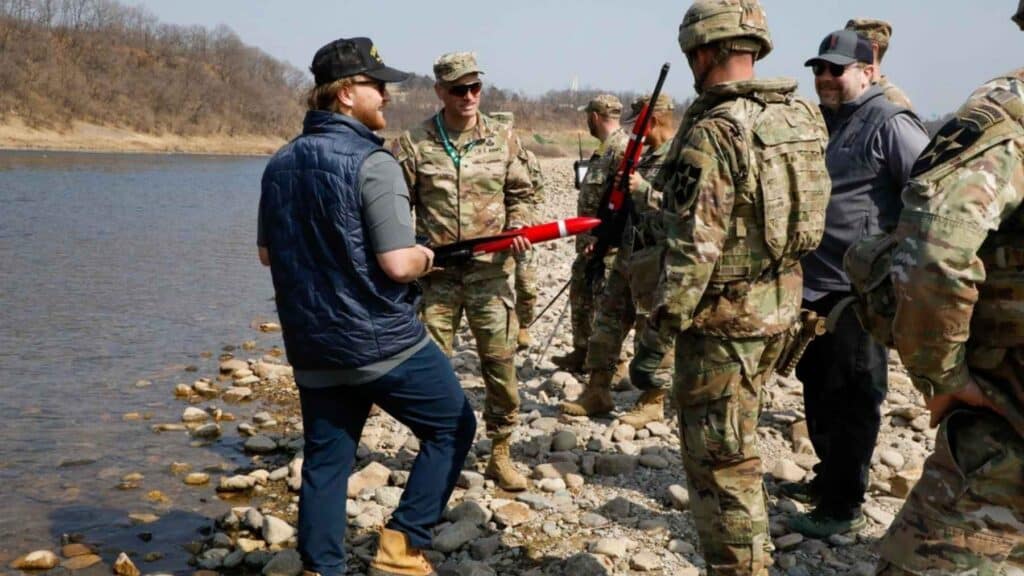
Weeks before Newport, Jaia announced a $6.1 million firm-fixed-price contract to deliver JaiaBot-HYDRO systems for Marine Corps littoral and amphibious operations, covering the drones, training, and an acoustic bathymetry variant being developed with the Army Corps of Engineers. The job is surveying beach landing sites and surf zones, which Marines currently do in person. Josh Mickles, a former Marine staff sergeant who now runs customer success at Jaia, made the case plainly: sending Marines into the surf zone to gather that data by hand takes time and exposes them to risk a robot can absorb instead.
Jaia Robotics announced the $6.1 million Marine Corps contract in August 2026, and Polaris Tech Bridge handed out the on-water award at the ceremony that closed the Fort Adams demonstration day on August 27.